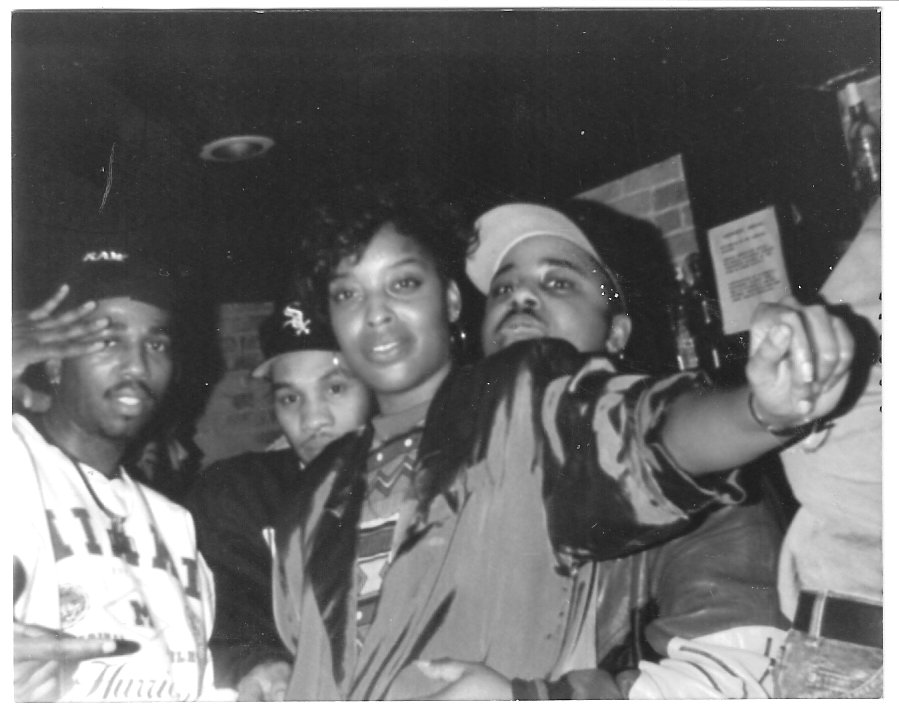
In the early-to-mid-eighties Cedric Neal was one of the Chicago clubbers drawn to the Music Box, and to Ron Hardy’s maniacal energy. In this vivid interview he tells us about the fashions, the sex, the drugs and above all, the music, that made it such a unique and influential place.
Tell me about the old days. When did you first go clubbing? The first time I ran across dance parties was late ’82, and that was when I stumbled across the Music Box. We were just driving along and we were wondering why all these people were standing outside. One o’clock in the morning, and they kept talking about this guy Ron Hardy, and then we decided to stand in line with everybody else, and that was the point which more or less – quote unquote – changed my life. Because that was the first time I saw him spin. And it was… it was amazing.
I’d never been to a party where the DJ had a control over the people where they would dance and scream, and at some points cry, and depending on how high you were, they were passing out from pure excitement. It was, the energy that was there. I haven’t been to a party in probably five years that had the energy that Ron Hardy and Frankie Knuckles had over people.
Frankie Knuckles was more refined in his spinning. He was more orderly. Ron Hardy was more raw. he just had an energy over the people that made them the moment: people were living for the moment. that’s all that mattered, in that time and space, was the moment.
“The sex that you would have – in the club! It was what we called the big speaker.”
The house music scene here in the early ’80s was basically black. There was another club Medusa’s, on an upper North side, and blacks were kind of like… they let you in but the music wasn’t really for you. So after a while the black gays and the younger blacks had to have a music. And this was right around when rap started coming, but we had to have a soul culture.
The Music Box was basically the black gays, and the black kids that liked Medusa’s but wanted a place to call their own. And there’s a debate about that, but I know ’cos I was there. It was basically a 60/40 mix gays and straight, and if you couldn’t stand to be around gays you didn’t party in the city of Chicago back then. You either accepted this and this is how people were… You would get high with a person, you would get drunk with a person and you just didn’t care about that. The most important thing at that point in time was the music. And following the DJ of the time. For me it was Ron hardy, I was a loyal follower.
See they had nights. Frankie had Wednesdays and Fridays, and Ron Hardy had Tuesdays, Thursdays and Saturdays. They divided the days, or when they had marathons, the lockouts, where the party would start Friday night and end Sunday morning, or Monday morning. And they were, I’ve seen Ron spin consistently probably ten hours.
What was the atmosphere? Freespirited.
And what were the styles of dress? Basically what I’m wearing now. the jean cuts and the stuff. It hasn’t changed. There was cardigan sweaters, and turtlenecks: that was the preppie look. All the stuff that’s commercialised now, the Doc Martens and the Timberlands, and the combat boots. They’re big time fashions now but that was just what you wore. When Guess first came out it was the thing to get.
And what about the drugs driving the scene? The drugs were the best part. There was a lot of PCP, a lot of acid, but it was very clean. When you came down you didn’t have a bad trip like kids are having today. With the crack you just have a negative vibe. Back in the day, if I had a happy stick – a joint dipped in PCP – everybody that was in reaching distance of me got high. I would smoke it and they would smoke it. It was everybody shared. Ecstasy, I really found out about ecstasy around ’84. It was really big among the gays. A lot of the straights stayed away from it. I had a bad trip and blamed it on the ecstasy. It didn’t really hit the straight clique that was part of the club. They had the happy sticks, they had the mint leaf, another PCP based drug, and it was just the ecstasy didn’t click with the straights. And the people who used to do acid.
And then with the onset of the different venereal diseases that’s when the party took on a different turn. Back in my day the worst thing we knew about was herpes. When AIDS first came out it was called GRIDS [gay related immune deficiency syndrome]. Back then it was still a gay disease. Straights didn’t worry about it. We worried about herpes. I still remember a guy, with his death the party started to take a turn. The health department kept coming down and we kept having raids. this would be around ’84, ’85.
Ron Hardy spinned a lot of Philly, a lot of disco, but back then that was new music. So that’s what we had. But that’s the beats, the drive to get to the party. The music itself was the drug. It was in ’85, ’86 that the beat tracks started coming in. Chip E and Jesse Saunders, they started coming onto the scene. The tracks were being accepted but people wanted the songs that had substance. ‘The Love I Lost’, or ‘There But For The Grace Of God Go I’ by Machine. Because these songs portrayed the feelings that people had back then. The way Ron Hardy spinned you could tell how he was feeling. The way he played records, the sequence he played them, how long he played them. You could tell if he was depressed, because him and his loverman had had a fight. You could know if he was up and happy or you could know if he was just high, out of his mind because of the drugs.
So you would get there, me and my best friend Cortez and another buddy called Mike. We would get there early ’cos we wanted to sit outside and get high and drink. And it was one night we got there and it was early before the party started, and the front opened up at a quarter to one. And Ron always start with ‘Welcome To The Pleasure Dome’. This was ’84, it just came out, And he would play that for 20 minutes. And you just sit around and wait till the crowd just build. And it was a momentum. Just gradually, first you had the little snowball. And then come five o’clock in the morning you gain the momentum, and come six you’d pick up speed. People would come in there and just dance all night. I know young ladies that would dance probably two hours non-stop. There was a juice bar because it was illegal to serve liquor in underground clubs.
And the sex that you would have. In the club. It was what we called the big speaker. The big speaker was located all the way in the back of the club, so if you just could think of an 8,000 square foot space and the main speaker was probably ten feet tall, and you could crawl under the stage behind the main speaker. And we had girls back there. You could get a blow job, get you a quickie. It was amazing behind the big speaker. If you talk to anyone else about the Music Box ask them about the big speaker and they’ll know what you’re talking about. In the girls’ bathroom they had pillows, you know so, you go past there’d be guys in there, getting high, having sex. Maybe you’d see two lesbians in there. It was honestly the end of the sexual revolution.
It slowed down late ’86 early ’87, by that time rap had came on the scene, so a lot of people were torn between the two music types, those who were still loyal to dance music, this is our lives. House music which New York I have to give them credit for, they taken house music, that attitude and the lifestyle that we started. Because it was the way you did everything, it was the way you interacted with people. The way you interacted with your girlfriend, the way you interacted with your family. It was just your whole being.
The Music Box closed in ’88. There was about four years of hardcore partying. Then the crowd got younger, and you didn’t have the people dedicated to true dance. Like we had back in ’82, ’83 when I started. When Farley was at the Playground. The attitude just changed, ’cos you had all these hip hoppers coming down. And they would come down and start trouble. They would get into it with the gays. We never had that problem, early on, when Frankie, I guess he just got tired and couldn’t deal with it no more, after they passed the ruling that underground dance clubs were illegal in Chicago, he finally packed up and went to New York.
But Ron Hardy, he was like an idol. The first time I saw him spin it was his birthday, and just to see people literally crying because this man had them so hyper, seeing people pass out. I was like, ‘Hey! this is my type of party’. Towards the end he got worse with the drugs. He was pretty mellow, he got high like everyone else, but he started shooting up, I’m not sure the drug of choice that he was doing, and not to defame his name, because he was one of the best DJs in the world. But he got caught in that turmoil, and by the time he got down to the Powerhouse he hated spinning. I talked to him a couple of times and he was like, ‘I got to feed myself, I got to pay my bills’. And when he was at the party in the early ’80s when I used to talk to him, his attitude was this is what I live for: to spin.
The Warehouse was the first one from ’77-’82, the original Warehouse catered to the underground crowd for the gay blacks that had nowhere to go. The original Music Box opened late ’82, ’83. Frankie started spinning at CODs when the Powerplant wasn’t open. Ron did CODs a few times, but when the Music Box closed he went to the Powerhouse. That was when he really started to lose his appreciation. He started looking real bad. He started selling records, I mean real out-of-print stuff for two dollars just to get a fix or to eat. I seen him a couple of times and I wasn’t sure if I should speak to him or not.
And then Frankie, his parties were so clean, and his crowd, you could almost compare them to the voguers how precise they were, clean cut. That was the division. Ron Hardy was more raw, into his music. He didn’t care about blends, as long as he had the crowd rocking. Frankie Knuckles it was more or less of a science. He had it real clean. I was just that type of person: rough around the edges. I gravitated towards Ron’s music. People who went to the Powerplant had on their Guess and they’d be pressed with the creases, and you know maybe they have a Ralph Lauren shirt. That was the thing for them it was more of a fashion statement.
The best night over at the Music Box was 1985, Memorial day marathon. It was a Friday to Tuesday morning. Who didn’t spin? Everybody! Frankie came through, Ron Hardy came through, André Hatchett spun, Mike Wilson, but he had quite a few people helped him out. People brought changes of clothes, some people stayed down there for the whole duration. I went down there Saturdy night at midnight, I went to Great America Sunday, After I left Great America I went straight back to the party, partied most of Monday and then when they shut it down…
I mean, it’s really to see four guys dancing with one girl, and then she chooses one. I even had instances where girls asked me, you have a car? Lets go to your car. I’d have sex with them in my car and then we’d go back into the party and they’d disappear. This was before all of these things started happening. Like I say the drugs were cleaner. When you would get high with a person you didn’t have to worry about going on a bad trip. People weren’t there to hurt each other. We were there to help and that was the main goal.
‘Are you a child or are you a step-child?’ or ‘Do you belong to the family?” If you belonged to the family you were gay. If you were a step-child you were straight but we accept you. If you were a child you were just straight. But there was one time when it was fashionable to be bisexual. They went through a period where people would experiment with bisexuality to be in. Some of the gays tried to portray to the straight people they wanted to get into the sack that that was how you should be. I know people who did it, and they were ‘Well it wasn’t that bad.’ Just that period, the city and house music went through so many turns. With AIDS, with the drug scene, with peoples sexuality. I know a couple of people who looked like Rob, with a goatee and everything, and now they’re women. That attitude changed their lives so much, and now they went full tilt.
As for the parties themselves. That quality, that unity that we had it would be a long time before we see that again, ’cos we skipped a whole generation of dance music – because of the onset of rap and the onset of AIDS – it put a stigmatism on house music, ’cos the ignorant world, that didn’t know about the dance music scene, or what came of it automatically….
With those two main forces it was like a driving nail in the coffin. People associated being gay and AIDS with house music, so the generation that should have taken over from us said naw I don’t want to be stereotyped like them, so they started gravitating towards hip hop. It’s a generation that should have picked it up from us.
A rare female DJ on the early Chicago house scene, Celeste Alexander DJed at parties across the city and at The Music Box where she regularly warmed up for Ron Hardy. She learnt to DJ after asking Steve Hurley why there weren’t more women trying ‘hot mixing’. When he told her the general feeling was that women didn’t have the necessary co-ordination, she was off! As well as establishing herself solo, in answer to the city’s famous Hot Mix 5, Celeste was briefly part of an all-girl alternative. The Fantastic Four hot mix crew was Celeste, Chrissie Hutchison, Kenya Lenoir and Berlando Drake, or sometimes Steve Hurley’s sister Angie, who had to play first to be home by 8pm for her strict parents.
Which neighbourhood did you grow up in? I grew up in Hyde Park, South Side Chicago. Born and raised on the South Side, Chicago. In the lovely campus town for the University of Chicago called Hyde Park.
Was there a lot of music in your household when you were growing up? Oh definitely. My dad was a renaissance man, athlete, musician, all the way around. They’d do parties. I grew up where my dad and his friends threw what were called Charlie Parker sets, and John Coltrane sets. So there was always music around me, mainly jazz, I grew up with the children of Oscar Brown Jr. his daughter Maggie Brown, and his late son Oscar Brown Jr. III, (we called him Bobo), if you’ve heard of the pianist Willie Pickens, his daughter and I, Bethany Pickens, was a jazz musician and she was a wonderful musician in her own right. We all grew up from kindergarten all the way through together. Jimmy Ellis, the trumpeter, his son so there was a lot of music around me. Hyde Park was a hotbed of different music, but mainly jazz.
What year were you born? 1962.
Chicago also had a tradition for electric blues, was that something you came across? I remember there being blues in Hyde Park, of course, but my dad and my mom were more geared towards jazz, soul, R&B, Motown sounds. I grew up with the Motown sound and the Philadelphia sound, so it was more R&B but the blues was definitely goin’ on.
What was your first encounter with dance music? I’d have to say 7th or 8th grade with disco crossover, so Johnny Taylor Disco Lady, Donna Summer, Natalie Cole, Nat King Cole’s daughter. I remember meeting him on a couple of occasions because some of the musicians were around my father I was blessed enough to meet people like that. I’m a distant cousin of Curtis Mayfield. There was a lot of freedom music goin’ on too, with the late ‘60s and early ‘70s and Curtis Mayfield and the Impressions and things like that.
So were you attending concerts quite early too if your parents were involved in music? I used to go to festivals with my parents as a young child. They used to have a big jazz fest in Detroit and there were always jazz fests goin’ on in various neighbourhoods around Hyde Park, like the Brownsville area. But by the time I was 13 or 14 and going my own way I fell in love with George Clinton so I was real big Parliament, Funkadelic fan. Then as a child I was crazy about the Jackson 5 so i did a lot of J5 concerts when I could. Think I went to one when I was 9 and one at 11.
“I asked him what hot mixing was and you how did you do it, and asked did girls do it?”
Celeste Alexander
Were you listening to the radio a lot? Radio was all we had and we all had different tastes for different types of radio. My father was with jazz, there was a station WBEZ which was an all jazz platform. I geared towards a station called WVON and that’s where Herb Kent came from and that crowd of disc jockeys. When I was about 13 my mom had a friend who had a radio show on the campus radio station WHPK he did what they would called a Dusty Steppers. We have a dance form in Chicago called stepping, which is a slower R&B type of music that I was really into. Our parents called it bopping. We called it stepping. I started working at the station, volunteering on Sundays.
Was that the college station for Uni of Chicago? Yes. It was only four blocks from my house. It was a guy who did a Sunday afternoon R&B show. Think his name was TJ The DJ. I became his record girl. I’d go there on a Sunday and I would pull the records from the library, do the logging, and load up his PSA announcements. I was maybe 12 or 13 years old. My third class FCC license because you had to have some sort of FCC license in order to work in the station. I was too young to get it but they managed to waive that and got one when I was 14 years old.
What kind of music were they playing? ‘70s soul. Stevie Wonder, The Dells, Diana Ross, The Impressions, Loggins & Messina, James Brown, The JB’s.
When did you start going out to parties? In high school. I went to Kenwood; I graduated class of 1980. At the time my preference would’ve been for the slower R&B stepper music. I didn’t like a whole lot of disco but I went to school at Kenwood which was a party school and I was in the same graduating class as Jesse Saunders who, as you know, was from the Chosen Few. I went to the school sock hops, the school dances. Kenwood was a real moving forward, trend-setting party school. Hyde Park was a trend-setting type of neighbourhood to grow up in. It was very liberal, very advanced and non-segregated so HP was a very cultural melting pot to grow up in, so exposure to everything was readily available.
So what was the racial composition of the neighbourhood? There was a whole lot of black, white and Jewish really in Hyde Park. It was an acceptable neighbourhood for mixed marriages. We were a lakefront district too so we had a promontory point which we just called the point. So there were a lot of hippies, free love, flower power, and my dad was a photographer as well, he was a medical photographer for North Western University which was unprecedented for a black man in the ‘60s. It gave him opportunity to move in different circles so I’ve got loads and loads of old B&W pictures from some of the events they used to have in Hyde Park back in the day. They used to have a Love In at the point. It was definite the opposite of what was going on in segregated areas of Chicago.
Where was the first time you saw a DJ playing and it inspired or hit you that you wanted to do this? I think I got when I was 12 or 13 watching TJ and working in the Uni of Chicago. I don’t think it came full circle so I started learning the art of mixing or playing club music or dance music. That was much later on when I was in junior college.
Celeste and Steve Hurley, about 1982
What age is junior college? 19? Yeah about 19. I went to college with Steve ‘Silk’ Hurley. I had a real crush on him. We became friends and mixing, or hot mixing as we called it back then, was all he really talked about. I asked him what it was and how did you do it and he explained it to me and I asked did girls do it? He had a younger sister named Angela, but she was much younger. I asked why other girls weren’t doing it and he said it was because they believed they can’t. The guys believed that it was a specific thing for them to have that hand, to eye, coordination in order to mix and blend. That got my attention immediately.
I guess the problem is if you don’t have role models it’s hard for you to project yourself as being in that role. It was pretty hard. There was only one other female that I knew of at the time was Lori Branch. She was with a group called Vertigo. We had groups back then.
“Andre took me to the Warehouse, introduced me to Frankie Knuckles. Once I met Frankie, I connected a lot easier with the underground scene than the more commercial scene.”
celeste alexander
Like Gucci Production? Exactly. She was with Craig Loftis, that group, that was really younger queer kids and they did loft parties. I didn’t meet Lori until around six or seven months later when we got booked to play together or battle with each other. I started asking the guys in the neighbourhood, can you teach me how to do that and collectively they did. Then I was introduced to a guy named Andre Hatchett who was one of the Chosen Few as well. Andre and I struck a friendship that’s been more like brother and sister ever since, and he was my original mentor. He taught me everything from A through Z. And it took off in the high school, straight crowd, because the music at that time was starting to catch fire. There were hot mix groups forming like the Hot Mix 5, but I was more in the underground scene because Andre took me to the Warehouse, introduced me to Frankie Knuckles. Once I met Frankie I connected a lot easier with the underground scene than the more commercial scene. Radio restricted what you could play and sometimes the stuff that you played was a little raunchy and there are all types of federal regulations about what you can and cannot say and play on the radio. It was hard. When I did the parties as a DJ I dressed in big baggy clothes and a baseball cap so they really didn’t know it was a girl playing.
Was that a deliberate ploy by you to earn their trust? It was deliberate to let you see that it wasn’t gender specific. I started off in a baseball cap, but didn’t end up in one. Once you drawn them in, you can do whatever you want, and that’s when the hat came off. When I first started DJing I was also modelling and a lot of the brands I modelled for were gay kids from the underground and they would throw fashion shows during the parties, so I was known a little bit more for the modelling thing but i was still anatomically boy-ish and skinny, flat-chested. I crossed over into DJing at that time. I was 22 years old and doing both and I was getting ready to go to Europe to do fashion week and you used to have take a physical to get a passport and my physical came back that I was pregnant so I never made the crossover with the modelling because I decided to keep on DJing.
Celeste with Lidell Townsell and his crew
You said you went to the Warehouse and I know you’re the only female DJ to play the Music Box. How did that come about? I was only able to experience the Warehouse maybe three or four times before it closed so I was there at the very end. I’d already met Frankie. I believe I had met Ronnie by then and I was making a lot of noise as a DJ then and Ronnie and Andre were pretty close and I went to the Music Box all the time so after the Warehouse. Robert Williams, who was the owner, opened up the Music Box at US Studios, the first one. Not the one underground at 326 Michigan. It was just before the Power Plant opened and I was at the MB every night. I dated Robert Williams’ younger brother. His name was Rodney, we dated for about three years. I was pretty close to all the MB staff. It was not far before Halloween and Ronnie came up to me and Andre and I thought he was talkin’ to Andre and he says, ‘Look I got another party and we’ve got a big Halloween party, can you open up the Halloween party?’ So I’m looking at Andre waiting for him to answer and Andre’s lookin’ at me saying, ’He’s not talkin’ to me he’s talkin’ to you!’ So I said, ’Who are you talkin’ to?’ He says, ‘I’m talkin’ to you!’ I didn’t even realise that Ronnie had even heard me play before but apparently he had done some backroom visitations. It was pretty cool. He’d have Andre play for him occasionally and I had the opportunity to play for him three times before they moved to the underground site on Michigan. Ronnie and I were pretty good friends.
What was he like? He was pretty much a hoot. Ronnie was a rebel. He was very open to try out things that nobody ever did and that’s probably where the inclination to ask me to play came from. I do remember him trying to to get Lori to play. I don’t remember her coming to the MB like I did. I was a staunch MB fan on Wednesday and Saturday. To the point where I became semi part of the staff and did other stuff around when I was needed. Ronnie was kind of a wildchild but he was really different when he was playing music to when he wasn’t. To sit around and chitchat and talk shit and laugh and joke Ronnie was one person. He was a little introverted and even a little by shy. But when he got behind the decks and was playing music and had that crowd in front of him and half control of the party he was very animalistic. It seemed like he liked stuff in a frenzy. He was the polar opposite of Frankie as a DJ.
A lot of people have said this, he played frenetically; pitching up records. He definitely was a lot of energy, definitely played music very fast, he liked it in a frenzy. I’m gonna leave it at that, I know there are other parts of Ronnie but I don’t know if it’s okay for me to talk about those parts. The club scene back in the 80s, was full of free love, free will and a whole lot of drugs, substances, were going around and some people gravitated towards those substances and a lot of the party atmosphere was dictated by the substance you were on.
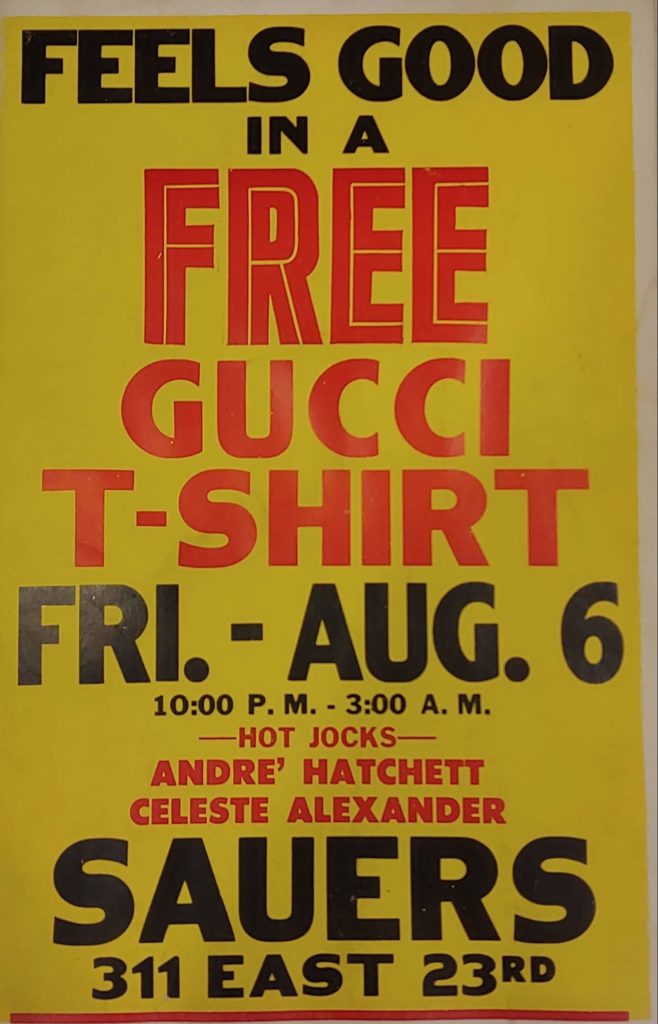
Tell me about Gucci Promotions. There were two. There was a Gucci Incorporated which was David Risque, Then there was Gucci Promotions which was out of South Shore which was run by a guy named John Hunt. John now works with and for Terry Hunter. I DJed for Gucci Inc; they threw these really nice high school parties at a place called Sauers’. It was a huge huge room, almost like a barn type of room. I had a stage and a cobblestone floor. I was there every weekend for the parties. Dave had his exclusive DJs and I was one of them with Steve Hurley, Andre Hatchett and Keith Fobs, who was also from Hyde Park. Keith had equipment when nobody else did. I spent a lot of time with Keith and Andre learning the craft.
What era was this? ‘82 – ‘85 possibly 86? It may have even been late 81. I remember going to those parties before I was actually DJing. Andre would not let me play out before I was ready to do so.
What about Park Avenue? Hmm. Park Avenue put together the female hot mix group that I was in. Park Avenue was Keith Edwards and Rick Lenoir and Stephen Doehrer. They put together the Fantastic Four, we were supposed to be the female answer to the Hot Mix 5, there were actually five of us, with Steve Hurley’s sister Angie they had very strict parents so she didn’t come out with us very often. That was myself, Chrissie Hutchison, She was in high school still, Kenya Lenoir, Kenya had a best friend Berlando Drake, We Called her Bryd. If Angie played with us she had to play first because she had to be home for 8pm. We got to play all over the city but our main club was La Mirage, which was owned by a guy named Calvin Hollands. Later someone set off fireworks in the club and a lot of people died, that was La Mirage under a different name. It was an old car dealership showroom building.
What were the influential parties for you as house started to happen? There were different levels of party and they were segregated with sexual orientation and gender and age. The underground parties, Warehouse, C.O.D., Music Box, Power Plant, those were the underground parties and more liberation. Then you’d have above ground sector, which was the next level a bit more commercial and those were parties at Sauers’, Mendel, the high school parties, it merged with a girls school and became co-ed. They brought Frankie to those parties eventually and it generated money to enable to keep the school open. They were very influential on the above ground scene.
When I interviewed Jamie [3:26] he talked about the basement scene. House parties. There were a lot of house parties. I can’t remember the name of this guy for the life of me. I can think of at least two or three people who had houses on the South Side and they would have these basement parties. I’m talking about two or three hundred kids in these basement parties. It was another version of an underground party but it was a party for heterosexual kids. They were kids who were in high school, maybe in their senior year, or were just coming out of high school. We could drink. There were quite a few of them. In neighbourhoods in South Shore and Pill Hill, out south and in Englewood. They would be off the chain, 100 or 200 kids easily rockin’ house music like there wasn’t nobody’s business and partyin’ until three or four o’clock. It was very instrumental to that second generation or wave of kids. I’m older than Jamie.
Who are the second generation? Kids that are turning 50 now. I snuck a lot of these people into parties. The Pharris Thomas’s and Steve Hurley you know. Steve and I were good friends, the same age but because Steve’s upbringing and his background with his parents he had a curfew at 15 years old. We used to sneak him in. So those basement parties were a bridge. OK we’re gonna create our own way of making parties and that second wave of kids, and Jamie would’ve fallen into that, and that would’ve been the late ‘80s thru to mid ‘90s. But I stopped playing in 1995 till 2006. Second generation kids like Jamie, Hugo Hutchison (married to Chrissie), Gene Hunt should been one of them but he was hanging out in places he shouldn’t have been when he was still very young. I didn’t know he was 14 or 15 years old!
Another name that always seems to crop up in these conversations is Lil Louis’ parties in Medusa’s and the Bismarck. Hotel parties were pretty big. Well Lil’ Louis was a promoter and DJ. He was also from the West Side, he was the one that rose quicker than anyone from that sector of Chicago and they didn’t believe they had any places to party, so he would rent out the room at the Bismarck or the Hotel Intercontinental. There was also another guy Tony Bitoy and Tony was linked in with the radio station so the HM5 parties radio had bigger promotional power than the underground parties. Louis started this cult thing because he was doing this stuff all by hisself. He had his West Side crew, and you could ask my husband cos he’s from the West Side and dated one of Louis’ sisters back in the day, but Louis’ mother owned a speakeasy on the West Side, she started playing in the speakeasies but he was able to earn and put money and his mom had absolutely no problem giving him the money or help him get the money to throw those parties and promotion was all by hand in those days so you print posters and you’re up at three in the morning in the cold put these posters up saturating the city. But you get to Saturday night and there were a thousand kids in the Bismarck, mainly high school kids and they were off the chain. There was another place too called The Playground (after that it was The Candy Store). That was another place that was also a building that was very close to where La Mirage was. The South Loop area had a bunch of failed car dealerships around there and Craig Thompson took one of these warehouses and started the Playground. This was a club specifically for high school kids to go and party at.
Was this the place Jesse Saunders’ played? Jesse was one of the residents, as well as Farley. Jesse was also resident at a place called the Penthouse. In high school I was a little thugged out because I wanted to step and listen to the JB’s ‘Monorails’ but Jesse was the DJ at Kenwood so he’d play all this disco music and then we’d get tired of it and go up and say, ’Hey can you play some steppers’ music?’ I would sneak out to go these steppers parties on the South Side of Chicago and we got stuck in one one day because we came out and there was a snow storm and I had no way of getting home. The guy that was setting up the music for the Steppers’ set was Kirk Townsend, he was also responsible for the Mendel parties; he and I struck up some sort of friendship I guess you could call it a relationship, but he told me he could take me home because it was a Sunday night and I wasn’t even supposed to be out. But I had to help him get his equipment packed up. So I started learning how to pack up equipment, wrapping up cords, then I started travelling round with Kirk helping him to set up those parties. I remember going to the Penthouse and it was already set up and we came back and Jesse was playin’ and immediately started yellin’ get outta here we’re not playin’ that damn steppers’ music in here, he went all off!
Tell me about steppers music It was a slower R&B paced sound because it’s a couples dance. It’s a whole different culture in Chicago. There’s a culture in Detroit that’s very similar that they call walkers. But the music is your downtempo R&B, silky smooth dance music.
Could you compile a top 20 Steppers tracks just so I can get my head around it? Sure! Loggins & Messina ‘Pathway To Glory’. ‘Haunted House‘ by Lee Oskar. Different type of dancing, different mentality. Let’s say urban rather than ghetto.
Andre Hatchett, Celeste Alexander, Frankie Knuckles
The basement parties sound to me like they were just an extension of what was already going on in the Music Box or Warehouse or Power Plant and spread its tentacles around the city. Is that a fair thing to say? It was. They were held in someone’s house, a lot of these kids were younger and their parents didn’t want them going to the South Loop area of downtown Chicago. I can remember there being announcements in the middle of those parties: So and so you’re mum’s outside waiting for you! If you had a house party in your neighbourhood and say it’s in Jamie’s neighbourhood and Jamie’s mom is letting him throw a party in the basement and word gets around and you tell your mom you’re going to a party at Jamie’s house and he lives right down the street, three blocks around the corner. Your mom might say ok in that case you can come in at one rather than giving them a curfew and having to drive into downtown to get them. It was a bit easier and you could be more relaxed by letting your kids go to the neighbourhood parties.
When did the steppers thing take off in Chicago. It supersedes disco and and club music. It probably precedes our parents’ parents. They used to call it the bop. So I can remember my mom being a bopper when I was little and she was born in 1937. So this was a dance that probably started in the ‘50s or even ’40s, but progressively handed down the generations. It was what I gravitated to because it was what my mom did and her friends. Club music, dance music, disco music, that was 100% mine and ours. I evolved out of steppers into club music in my late teens and early 20s. In my younger days it was disco sucks and that was my mantra! I had no idea of the political implications of it, the gender and sexual fluidity that it represented in those days, or what the Disco Demolition represented. You know Chicago is one of the biggest cities that is still segregated and separated.
“I think there are three things that are totally universal: Love, Hate and Music. Music has always had the ability to put the hate and pull in the love.”
celeste alexander
Do you think the music helped break down some of these barriers? I think music has always been a way to break down barriers. That was the beauty of club music and dance music. I think there are three things in life that are totally universal, Love, Hate and Music would be the third. Music has always had the ability to pull out the hate and pull in the love. Music takes you some place different. It calms the savage beast. No matter what the genre is it can be a peacemaker.
Do you have any particular special memories of playing in basement parties. There was a guy who used to be on college radio, KKC, they touched a lot of people and it was very influential. His name was Pinkhouse. Pinkhouse had a lot of basement parties and I played at many of them. They used to be innnn-sane [she laughs at the memory] Now I’m a parent and adult I think wow we could’ve easily been shut down by the fire marshalls or the police. This shouldn’t be happening! How is it that you got 250 kids packed in the basement of 3-bed bungalow?! Dancing, the music is pumping so hard that you can literally see the electricity in the house throb in the lights from the power being used. We were getting the party on and Pinkhouse used to have those parties. Those used to be fun, like really really fun.
I can remember for quite a minute when I first started DJing I went to a lot of parties that Andre used to do. Andre and his brother Tony, two of the Chosen Few. they would get booked to do a lot of house parties. A lot of these house parties were kids whose parents allowed them to have parties in they own houses. In the more affluent neighbourhoods such as Hyde Park, the ones that had those houses in Pill Hill, those kids that went to Kenwood, Hyde Park, Whitney Young, their parents had very nice houses. They were home owners, they were lawyers and doctors. They were allowed to throw those parties, for their birthday, for their graduation, sweet sixteen, and you’d easily have 150 kids inn these parties. Some houses got torn up. Some kids got very severely punished. Some parties they’d even have in the house while their parents were on vacation. I remember having in a party in my apartment. I literally paid my mother to get on airplane and see her sister in California and we had a party in there that had 300 kids in there.
Chicago has also always been segregated by gang affiliation. Venturing out to the Wild Hundreds as we called them, the houses in the 100s, as opposed to coming from 53rd Street, where there was one faction of gangs in the area I grew up in but going to a party one 109th and Michigan that could be a dangerous trek and sometimes things did happen. So there was a whole lot of things we had to contend with. A lot of DJs came up out of that scene, second wave DJs, came out of that scene, and because they were house parties and they weren’t regulated they could play the stuff that was being played in those underground club parties that you couldn’t play on the air or at The Playground.
The Playground, Sauers’, The Gallery were more commercial. The Loft, The Penthouse, The Edge of the Looking Glass, were a little more undergroundish. Mendel could be considered a little of both. It was a high school gym, that picked up more underground flavor once Knuckles started playing there. The younger straight crowd were more commercial….we had a few names for them… ‘Woogies’ was one. Or ’Goodies!’ But pronounced Goo-DEEz.
When I interviewed Jesse Saunders, he named a bunch of clubs: The Loft, Burning Spear, Blue Gargoyle, Tree of Life, The Mansion in Hyde Park. Were these all South Side spaces? Yes. All south side. The Burning spear was a showcase type of space, so they did everything there. From jazz, blues, steppers and disco. BB King did some big sets there. But he did have his own place on the South Side as well, On 43rd street, then it moved to Hyde Park.
OK. So I found an old interview with Wayne Williams, where he was talking about bringing the sound of the Music Box to the straight scene in South Side Chicago. He says he started DJing at Mendel High, after Kirk Townsend had been the DJ there. Is that true? And if so, what was Kirk playing at that time, more commercial stuff like Earth, Wind & Fire etc? Yes Kirk was the house DJ at Mendel before the house/disco thing erupted in Chicago. Kirk played it all, I met him on the steppers scene, he was a sound man. It’s fair to say that Kirkland Townsend is the Godfather of Mendel. Pretty much responsible for its curation and growth. He saved that school from shutting down for many years with the money generated from those parties
Finally, Steve Poindexter mentioned a mobile sound system called Foxxplayers he used to play for in Mendel High and Burning Spear, for Kirk Townsend. Was Kirk the guy that ran Foxxplayers or was he just one of the DJs that took the rig out to play? I think that’s what they use to call it…you may be better asking Kirk though….he is a wealth of information.
You know, Jamie said I ought to tell you the story of the time I played at the Music Box for Ronnie and how the night ended, which was not so well. So, I have always had a nervous stomach when it comes to playing in front of my mentors, like Frankie and Ronnie, they both knew it too. I guess Ronnie was in the club the last hour of my set, but never came to the booth, he just hung out in the crowd and listened. He came to the booth to relieve me, and gave me a hug, told me he was ready and said I played a very nice set. I was overjoyed! ‘But how did you know?’ ‘Oh I’ve been here over an hour in the back listening,’ he said… My stomach kicked in, and I… …threw up all over his shoes. He kicked me out the DJ booth for a month. I had to buy him a new pair of Converse All-Stars. Oddly enough I think Ronnie and I bonded after that. He teased me and called me Velma Vomit. I hated that name. He found it extremely funny, and called me that EVERY TIME he wanted to pick at me. He said, “Bitch you just bought a pair of shoes”!
Murdered for his devoted reporting from the Amazon, Dom Phillips was a truth-seeker who wrote with both his head and his heart. Before he fell in love with Brazil, Birkenhead-born Dom had been editor of Mixmag through the rollercoaster years when dance music exploded in the UK and house music became big business. He originally went to Sao Paulo to finish writing his book, Superstar DJs Here We Go, which skewered the whole idea of superstar DJs and traced the rise and fall of several. At Mixmag he nurtured a generation of writers and photographers, and created a magazine that challenged as well as celebrated its subject. In 1999 Dom was one of the last people we interviewed for the original edition of Last Night a DJ Saved My Life, and his deep industry insight and behind-the-scenes perspective gave us plenty of glue to bring things together. His passion for the dancefloor, his sharp intelligence and his wry turn of phrase made him an important voice throughout. An amazing guy, we miss him.
When you started writing about dance music did you ever think it would become a global pop thing? No. When I first heard it I was living abroad and I came home because… it was on MTV and in little gay clubs. I heard it in a gay club in Australia, and I heard it on MTV in Denmark and I came home to find out more. This was in about ‘88. I moved to Bristol, and it was in blues clubs and there was one club called the Moon Club, which was in the dodgy part of town, St Paul‘s and you’d get a mixture of hip hop and house. I knew it was going to get bigger because I would play friends things like Soul II Soul and they’d hate it at first, then they’d finally get it. But I think there was a big gulf between growing up on rock and melody to these grooves. I didn’t grow up on soul. I grew up on indie. It took a long time to get it. I thought it’d be like punk; where you’d get a big band like the Clash…
A fad? Not a fad. Maybe as big as reggae.
Do you think it was inevitable? I think it was inevitable after the critical mass of the summers of love and the rave years. And the massive free advertising campaign on behalf of The Sun, which was very generous of them. Once the tabloids had written that 5,000 kids were dancing all night on drugs and having sex, 500,000 kids were asking, ‘Where’s the party?’ [laughter]. It was just so obvious. And after that it suddenly went BANG! I remember hearing ‘The Theme’ by Sabres of Paradise on the Chart Show. I think it was Bruno Brooks had to play the full length version and it was eight minutes; twice as long as everything else in the Radio One top forty. I thought that was pivotal moment. I thought, ‘Fucking hell’.
Is the DJ an outlaw? I think the thing with the DJ is that the DJ is a cultural outlaw, not necessarily a political outlaw. People get confused with dance music and how to categorise it; and where it fits. And the reason is that it doesn’t fit anywhere, because it never existed before. It’s a totally new thing since DJs came out in the ’60s with reggae. So the DJ is not an artist, but he is an artist. He’s not a promoter, but he is a promoter. He’s not a record company man, but he is. And he’s also part of the crowd. He’s an instigator who brings all these things together. Politically, I think they tend to be very very safe. They’re quite content to stay in with the record companies. They’re quite content to stay in the with the clubs, because it’s their business. It’s an interesting point that throughout dance music’s history it has always been ruthlessly opportunistic, entrepreneurial and capitalist. It’s always been about making money. In a way that was quite rebellious compared to the Red Wedge, PC thing you had before. In terms of the power a good DJ can bring. Turning a crowd into a throng. It is quite a powerful, weird role to play. So I guess they can be an outlaw in that sense. But more cultural, because they’re bringing all these things together into a new kind of creative expression. The idea of creating hotch-potches and putting them together. That’s what DJs do. And that’s quite radical. So, in that sense, yes!
Why do you think the DJ became such a superstar? Pressure. The incident that everyone refers to at Mixmag was when David Davies, who was editor at the time, put Sasha on the cover with the phrase: First DJ Pin Up. We were accused at the time of creating the idea of a DJ superstar. Firstly the idea that a magazine can create something is wrong anyway, because it can’t. It can push things that are already going. But the reason that was happening was because were were getting reports from Sasha at Shelley’s where people were queuing up to shake his hand and guys were getting him to kiss their girlfriends and things like this. Because emotionally he was connecting with people in a way on ecstasy. The way he was putting record together. The Whitney Houston acappella. He really was making people quite emotional. It was at that point that we had a star develop. And again it’s about the money. People saw how much Sasha could get paid, and how much a personality could help, I think some DJs went to push a personality and develop a distinctive thing of their own. Some DJs had a bit of personality that the magazines and media would push. I think in the case of Wall of Sound or Jon Carter I think they fairly blatantly played up the ‘We are the mad bastards’ Loaded mad fuckers to gain attention. I think a magazine like Mixmag was happy to play along at that point because needed stars. In the case of Sasha I don’t think he really wanted it and that was what was quite intriguing about it. But at the same time, once it was offered, he was quite intrigued and flattered and excited by the prospect. And ever since he’s constantly sat on that knife-edge. He loves it .He hates it. He’s a tortured artist. But there’s people cheering. Whatever.
The impression I got at the time was that he wasn’t happy about it. Oh, he always said he wasn’t happy about it. I think the reason he wasn’t comfortable about it was that all his mates used to phone him up and take the piss out of him. He’s quite a lad. When we did the Son Of God? cover, he really hated that. We actually had a wrestling match about it outside the Ministry of Sound.
Halo boys!
A wrestling match? Yeah, me and Sasha wrestled. We had this protracted argument for about an hour that people were trying to break up. It didn’t become a fight, but it became this magical wrestling match. ‘You shouldn’t have said that!’ ‘You should have co-operated with the photos!’ [laughter]
Was that the one with the halo? Yeah, the reason was he’d been a nightmare all day and wouldn’t do anything. I had to go down. At the end of the day, the photographer, exasperated, just said, ‘Go like that’ [clasps hands]. The pictures came in and Pembo [Andrew Pemberton] said, ‘Son of God’. So we did. It was more a case of necessity than we set out to do it.
How much did DJs becoming big have to do with record companies looking for new stars? It didn’t have very much to do with record companies. There aren’t very many of them that have made it successfully as artists are there? Some of them have gone and formed bands, but they tend to be the less successful ones. Mike Pickering with M People. He wasn’t really A-list. The big DJs – Carl Cox, Jeremy Healy, John Digweed, Sasha, Pete Tong – how many of them have made great records?
Well some of them have made commercially successful records. Jeremy Healy’s had a couple of top twenty hits. Yeah. Sells 6,000 in the first week [laughter]. Their big hits are compilation albums, which are all done on Pro-Tools anyway. They don’t even go near them.
That’s a terrible thing to say Dom! It’s absolutely true.
I know it is. And I hope you put it in your book! Sorry, to try and answer your question. I think one of the reasons DJs became stars was confusion in the audience. And one of the ways to give a night a badge of credibility was to put a name on it. I was involved in the first ever Mixmag night in Bristol. It was the first time Andrew Weatherall had come to town. Nobody had any idea who Andrew Weatherall was. Or what he played. Or what he stood for. But they did know that he was a DJ and he’d never been to town before so the whole city went out. It was rammed. It’s like a badge isn’t it? But then there are some DJs who are capable of magic, aren’t there? When it all connects, I don’t think there’s anywhere where you can have more fun on a Saturday night. If you’ve had one of those experiences with a great DJ, that’s been brilliant. You’ve seen Carl Cox, and you’re off your head, you’ve made loads of friends, you’re always gonna remember it. And you’re always gonna remember it was Carl Cox.
It might not even have been Carl Cox. He might have come at half ten and left! I’ve come out of a club convinced I’ve seen a great set by so-and-so and discovered years later it was by someone else. Frank Tope is a classic. I remember seeing Frank out one night at Debbie Does Dallas. Suitably refreshed. He was dancing wildly to a bootleg of ‘Stayin’ Alive’ that John Kelly was playing. An hour later, Jeremy Healy played the same record. And the same Frank walked off the floor in disgust. It’s so subjective. I hope this doesn’t sound like I’m taking the piss out of DJs… I don’t mean to.
(L-R) Photographer and Time Out Clubs Editor Dave Swindells, Time Out Clubs reporter Sam Pow, Dom Phillips, unknown
What were the most dramatic changes you saw in dance culture when you were at Mixmag? The first one was the rave scene blowing up and burning out in 1991. There was a big rave called Vision. It had 40,000 people. It was massive. And it was an utter disaster. It was deep in mud. It was when the complaints came in and the violence got really out of hand. Then you had all the cartoon records which seemed to be musically and creatively bankrupt. We were wrong. What was happening was the beginnings of jungle were being sown, and perhaps the tension of what was happening at those events contributed to that. I think around 1991 people started going to clubs to avoid ravers. Venus and those kind of places. Dress codes. Leather trousers. The music was slower, the whole thing was cooler.
I noticed when I came back in ’96, that it had really exploded and permeated the whole of our culture I think the biggest change – and people always say ’88 – was 1994 and ’95. A club called Vague had been described as handbag. You had that mixed-gay glamour thing. I remember when Renaissance opened that was quite pivotal moment. We went to the opening of Renaissance in Mansfield. In the middle of nowhere. Like the secrecy of trying to find a rave. Finding the club, and it was full of pillars, and girls dressed in satin. Chris Howe had done the decor. I remember going to Venus and the opening of Renaissance in the same night and thinking things are really changing. But that whole thing, handbag, glam, just went BANG! I guess you wanna trace it back to the Criminal Justice Act. Was that ’94? Suddenly you’d got Cream, Renaissance, Ministry, loads of others start popping up. The little Balearic network becomes this massive thing. At that point it was so accessible. It was easier than raving. It got to the point where everybody got greedy. Talk to any promoter about 1995 and they’ll tell you, ‘We made so much money’.
Damon Rochefort of Nomad, Dom and Frank Tope, backstage at the DMC mixing competition
I was looking through Mixmag last night, and in them, the promoters were whinging about how much money DJs were earning. It’s a supply and demand, free-market economy. You’ve got the Americans starting charging four or five grand and first class flights. So they priced themselves out of the market. They disappeared. It was the first time, I think, where DJs thought they could really make serious amounts of money. Some of them were going from making £500 a night, Sasha might have been getting share deals on the door that were taking him up to £1,800. And in 1994, for one gig that was a lot of money. And it just started to go from there. I think people, if you were top, were getting around £1,000 to £1,500 a gig. If you’re doing six gigs a week… And there were so many clubs coming up that you could do that.
I remember Dave Seaman telling me he was getting offered £1,500 to play a Tuesday and that was in ’95. I think we really started kicking off in ’96 with the backlash. I think in ’95 we were more enthusiastic. But, as with everything we did at Mixmag, we were really responding to the letters we were getting. A lot of feature ideas came from readers’ letters. It was like the ’80s before Black Friday. It was ridiculous. I’ve got very vague memories of that year to be honest. Its a bit if blur.
Did house finish off punk’s DIY aesthetic? I suppose, politically, it was because anyone could make a record and have a huge hit. The early bleep stuff, LFO and the like all crashing into the charts. No big deals, just pirate radio and stuff. And a lot of the jungle stuff now. So it is possible to make a living and you almost live completely outside the music business. I don’t think musically it had anything to do with punk because it’s always been quite musical and funky and that’s one thing punk wasn’t. There’s also a lot of hippie dreams in house music. A lot of people in the early days of acid house were hippies. I think it’s easier putting that on it.
But I don’t think it was conscious. The imagery they use; the smiley faces; the flowers, the day-glo colours. And also disco. Disco fantasies. That’s another set of dreams. It seems to me the disco fantasy, the gay utopia, the ghetto we live and everyone will be free before tonight. Dance music has a lot of different ideals and dreams compressed into it. I also think it’s a music that everyone puts their own agenda on. Everyone’s got their own agenda.
Is that DIY aspect still intact today? I think in the good clubs, the individual is as important as anyone else contributing to the club. If you go to a club, you are a star, as much as the DJ is. If you want to be. But there’s still so many records that seem to come out nowhere. This ‘Sweet Like Chocolate’. It’s gonna be a hit. I sent Stan over to get a copy, and he had to go to this fucking tower block in Old Street. What a great record. Record companies can’t keep up with it.
Do you think this is why they’ve forced groups like Prodigy into their rock template? Yeah, it’s for students isn’t it? Students would listen to Steel Pulse, but they wouldn’t listen to Jamaican reggae. The Bee Gees but not proper disco.
This is when the NME got involved wasn’t it? No I think Midi Circus, when they started doing this live thing. The Megadog.
But they were never cover artist… They put Orbital on the cover in ’94. Allan Lewis, who was then the publisher, told me at In The City, that they would put someone like Orbital on the cover and take a hit in sales, because it was good for credibility. We used to have similar philosophy in Mixmag.
You mean like putting Method Man on the cover? Yeah.
But they love Fatboy Slim! Fatboy Slim is a pop star. And there’s Zoe Ball. I do like his records, but I do agree that it’s student music.
But it’s like the Prodigy. It’s an illusion. They’re not really playing live. ‘But it’s not a cabaret, okay?’ (He’s paraphrasing Liam.) Because they get out there, and they just express themselves.
Are they the new rock and roll? Are they the Big Audio Dynamite of the ‘90s, mixing guitars and samplers? I always hated Big Audio Dynamite! I think bands like Prodigy, the Chemicals, Underworld very cleverly, have large elements of rock and roll in a way that rock audiences can understand them. Lots of clever stuff on top. The Prodigy have all this theatre stuff going on. It’s more akin to a heavy metal band. It’s almost like Kiss. It is a cabaret. They change costumes. They blow fire. You watch them and it’s a total performance where they act out certain roles. I don’t know whether they’re the new rock and roll or something else. What they do is more interesting. As far as I can work out rock and roll hasn’t changed for thirty years. It’s been exactly the same.
Except with bigger amplifiers. Yeah, with bigger amplifiers. There’s still good records though. I think a lot of rock people were really alienated by the glamour of it all. I remember Pembo really had a thing about it in 1994 and ’95. We are anti-rock! Rock kids are saddoes. Rock journalists are saddoes. They don’t know how to enjoy themselves.
Is this the same Pembo who is now editor of Q? Yeah, absolutely [lots of laughter]. Let me put it this way. There was a feeling at Mixmag that we were out to convert the world. Pitting ourselves against people from the rock magazines who we despised. We were flasher. We had a better time. We travelled five star. That kind of thing.
How much is club culture an essential defining part of young people’s identity? I don’t think so much now. If you’re 18 now, you might go see Daft Punk, you might go see the Chemicals, you might go see the New Radicals. It doesn’t really matter. That’s my perception. Up until a couple of years ago, though, I’d say it was a key defining point.
Has a decade of E culture left us more open, sharing like the evangelists said it would? Has it left us more sharing and more open? I think it has actually.
Do you think what it did was to show possibilities, because Terry Farley told us about his friends going from being plasterers to designers and A&R men and DJs and producers… I totally agree with that. I think for a lot of men, particularly from places like the north, where I’m from. There was a great article Damon Rochefort wrote on Donna Summer once. And he described this scene where he used to go to his local club in Cardiff. And there was an edge of carpet and only the girls were on the floor and the boys would gather around the edge. What dance music did was take those boys from the edge and integrate them on the dancefloor. They learned to enjoy themselves. And be a bit more like women. Feminise them a bit. I think what you said about Terry Farley’s friends changing jobs is very true as well. I don’t think I could have become a journalist if it wasn’t for dance music. I don’t have a degree. I think a lot of people were like that. A lot of people who make records, might have been in prison or whatever. Yet they’re able to produce incredible sounds from inside their heads. I don’t think Sasha would’ve been a pop star. Sasha would’ve worked in a clothes shop or something.
How much is dance music controlled by consumerism? No I think people are far too clever for that. I think people know what brands are and consume dance music the same as if they walk to Selfridges and buy Hugo Boss or Maharishi. They may choose to have a Cream logo etched into their hair, but it’s not because they’re brainwashed by Cream it’s because they’ve made a choice. And they’re happy to associate with that. I think it’s quite playful the way that’s done.
Have we reached the House Sucks stage? I think we were there just before Stardust. Stardust and ‘Needin‘ U‘ were quite important, because they were two classic house records. And had they only ever been released on independent labels by unknowns, would still be massive trainspotter records. That’s the point when it all got quite classy again. You know that Lucid trance stuff? Now that really sucks. I think last year was a bit of a pivotal year, because it brought us back from the brink of Cheese Hell.
Is it really a victory for dance music that dance acts can now play in American stadiums? It’s a really difficult question. It’s certainly a financial victory. It‘s probably a victory in terms of artists coming through, because it would help them. It‘s a shame it‘s had to fit into that template. It‘s not a perfect scenario, but again, I‘d rather it was the Chemical Brothers than Aerosmith.
Do you think it’s become so fragmented now that we will never get anything like punk or house again? I think the only thing you can be sure of is more surprises. Other than that I really don’t know.
What is the most lasting legacy of club culture? I think the thing we were talking about earlier, where boys can get on the dancefloor. Express themselves in a different way. The very uptight, guys, aren’t they? You‘re my best friend, but I can‘t tell you! It’s been really helpful in allowing men, in particular, to relax and relate to each other and women in many different ways. And also learning to appreciate women in non-sexual ways. I think it challenged rock’s dominance. It allowed a lot of people to listen to jazz, disco. It helped give people a better perspective on gay people. Racism, perhaps. I think it may even have made us better dressed.
How ridiculous did the DJs fees get? Utterly, utterly, utterly ridiculous. God knows where these people got the idea that they were worth anywhere near that much money. At least some of them had the grace to admit the whole thing was a fucking scam. Unfortunately, some of them took themselves seriously. The only way it was justified was in terms of them bringing in more money. A DJ would get paid four grand because the promoter was going to get 12 grand. But it was just greed. DJs get paid ludicrous amounts of money. I don’t think any of them are worth it [laughter].
Why not? Personally I think the guest DJ culture we have here has taken us two steps back in terms of DJing as an artform. I’d agree. I’d totally totally agree. A DJ should want to play four hours. How much better are the really big DJs than a bedroom DJ like Stan? How much better are they, really? Some of them are. Carl Cox is. He radiates enjoyment. He’s got presence. He can pump people up. He’s probably worth his money. And then there are one or two other ones, particularly the younger ones, who turn up, play a load of bog-standard hard-house records and bugger off again, having hoovered up half of Bolivia and groped the promoter’s girlfriend. These same people have the nerve to kick off, if anyone dared criticise them because they’re losing touch with all reality because they’d taken so much cocaine. I mean, that’s more than doctors get. If you’re getting more than quarter of a million pounds a year, you’re getting more than a surgeon.
It’s the skinny models argument, Dom. The really funny thing is how many of them never paid the taxman and got caught. How could they be so stupid? Switch it off for a second [he then tells a story of a massive ’90s DJ going on the front cover of Mixmag and asking Dom’s advice about whether to pay his tax bill].
The thing with Healy is he really did live that life. Definitely. Rock and roll, models, glamour. He hung out with Galliano. We did a feature in Mixmag about him playing at a fashion show in Paris and all the girls hanging round. Some people move in that fashiony world. They know stars. He certainly did.
How do you feel about someone taking someone else’s records, and yet still being considered an artist? I totally accept it.
There’s a Q this month in Muzik from Steven Wells saying DJs are wankers and they do nothing. Do you think there’s still a lot of misconceptions about what DJs actually do? I do. Give Steven Wells a big bag of tunes in the main room of Cream and say there you go mate. Show us how easy it is. It’s not easy. Of course it’s not. It’s difficult to understand what the art of DJing is because some of it is quite mystical. It’s about picking up on what the mood might be, and might possibly become. And trying to get it there, in the context of where you are and what you’re doing. There’s a great amount of sensitivity involved. And a really great DJ is totally capable of doing that. They’re totally capable of making a bad record sound okay, a good record sound great, and a great record sound fantastic. They can improve records by the context they put them in. And what they put around them. How they steer them. They can do all kinds of tricks. They can make people spontaneously cheer just for a little squelchy noise. Which is quite insane really. A little noise like wha-wha-wha and people go, ‘Yeeeaaah!’ You can have people clapping along to a cymbal, just by the way they’re bringing it in. When it’s done well it’s fantastic. If it’s done really well it can be quite transcendental. It’s very difficult to explain what the difference between a bad one and a good one is. When the DJ gets it right, it’s definitely artistry, I think. You obviously do. You’re writing a book! You’re a DJ aren’t you? What’s the difference between you and Louie Vega?
Er, dunno. He’s shorter. I think good DJs are not just chucking them on. They’re very thoughtful about it. What Frankie Knuckles tries to do is get inside the hearts and the minds of the people at the centre of the dancefloor. Try to hear things as if for the first time. How would I feel if I was hearing this for the first time? I think if you talk to the great DJs, they’re probably all quite thoughtful.
Is the DJ a filter? I think one of the bit mistakes of dance music was that album artists were going to be the saviour of it. And then what happened was you got the excellent mix series coming out: Mixmag Live, Global Underground, Journeys By DJ, United DJs of America. The records are going to sound better in their mix than on your turntable. There’s absolutely no point in buying those records. You‘re much better off buying a snapshot of their sound at a certain time.
Do you think that’s better than buying a Masters At Work original album, because it reflects who they are better? With the albums they’ve released so far, definitely! No, I do. Some of my favourite pieces of music are mixes and I play them again and again.