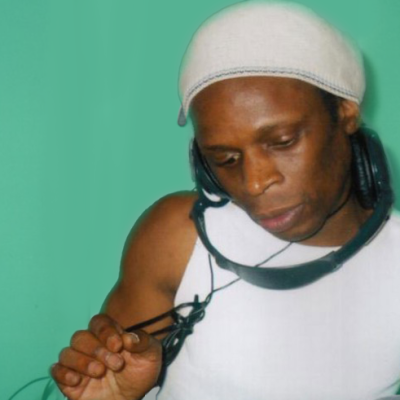
Pete Wingfield hit the Soul Beat
One of the UK’s original soul superfans, Pete Wingfield was switched on in the ’60s by rare US import 45s and the network of collectors, stores and reviewers that worshipped them. His fanzine Soul Beat opened the door to a life of musical adventure, and he has some priceless tales of blagging his way across America in the ’60s, when he parlayed a gap year into meeting the stars of Stax and working in a Chicago record store. As a producer and keyboard session player, Pete has made or contributed to hundreds of great records, with everyone from Hot Chocolate, Edwin Starr and The Everly Brothers, to Sugarhill Gang, Johnny Bristol, The Proclaimers and Dexy’s Midnight Runners. A hit under his own name, “Eighteen With a Bullet,” is a big track in gangland LA, and his ’70s band Olympic Runners laid the foundations for Brit-funk. As well as the inevitable record-nerdery, Bill asked him to paint a picture of Record Mirror star journalist, James Hamilton, who Pete knew most of his life.
Interviewed by Bill in London, 22.3.23
We’ll cover all aspects of your many-splendoured career, but first I want to talk about your memories of (pioneering dance music journalist) James Hamilton.
He was my absolute hundred percent role model of record reviewing. I just aimed to be like him, basically. At the time, you couldn’t actually hear a new record, you had to rely on somebody else’s opinion. Well, his opinion was totally reliable as far as I was concerned. And he wouldn’t put himself into the review particularly, or score cheap journalistic points. He would just give the information about the record for people who might be interested in it. And if you weren’t interested, fair enough. And I loved that.
When did you first meet James?
Mid-’60s. 1965 maybe, something like that. We came from pretty similar backgrounds. Almost uncannily similar, meaning public school, and his father, who was equally bemused by his choice of career as mine was, was a submarine captain in the Royal Navy and a war hero just as mine was.
His family was quite high-standing, wasn’t it?
I would think so, yes. He was six and a bit years’ older than me. I was running this fanzine called Soul Beat, which maybe he knew of. And I was an avid reader of the Record Mirror, as everybody was at the time, because that was where you got all the SP on soul from James, from the great Norman Jopling of course, and Tony Hall. James was the number one guy as far as I was concerned.

How did you meet?
When I was at school I had a band that did the odd gig around the holidays, and he let me stay on his floor a couple of times in his place in South Kent somewhere, so I was in a sleeping bag next door to this great big thing of decks and these massive boxes everywhere of records. He had one up on everybody because he had connections in the States.
Yeah. I knew that he was going over there when a lot of people weren’t.
James had made these connections in New York and used to get stuff very quickly. In the wake of the Beatles’ success in the States in ’64, there was a group of Chelsea-ites, presumably young men of independent means, who had the bright idea of taking advantage of Brian Epstein’s naivete in these matters by going over to New York and presenting themselves as US marketeers of Beatles memorabilia. They called the company Seltaeb, Beatles backwards. And they made an absolute fortune in a very short time.
James was a very distinctive character.
He definitely had an affected persona, or at least he didn’t try to disguise his persona for anybody’s benefit. He would just be himself. He always wore the same thing, for one thing, which was a really upper middle-class type sports jacket with elbow patches.
He’s always struck me as quite an eccentric.
Yeah. He was just dedicated to what he did, really, and keen to spread the word. He wasn’t particularly “Hail fellow well met,” you know. But once he’d sussed you were alright, he was right there.
The actor James Robertson Justice has come up quite a few times as a comparison.
Yes, or the comic Willie Rushton, who acted much older than he actually was. Which was a thing in the ’50s and ’60s. I don’t think James thought about it at all, he just was himself. He was quite dogmatic and didn’t suffer fools gladly, but you know, we seemed to get on.
I have a very clear mental image of him. Because he always looked the same. He never changed his style of clothes or anything. So I can picture him instantly in my mind. He must have had carte blanche in the end from the magazines. He used to riff on non-musical subjects like the relative merits of chicken shops in Wilsden. They let him write what the fuck he wanted.
The way he wrote was so idiosyncratic. He used words like jiggling and what even is jiggling?
Grammatically, yeah, he had his own vocabulary which if you knew him, you knew what it meant. It was a kind of code. And you know where he got his syntactical approach from was (US music paper) Record World.They’d put everything with dot-dot-dots. News like a ticker tape, sort of a gossip column. A few words, then dot-dot-dot, then the next thing.

I think there’s also something a little bit Lord Buckley about the way that he wrote. (Bizarre 1950s jazz performance poet)
Lord Buckley! My first band was named after him. It was called The Nazz.After Lord Buckley.
I love Lord Buckley.
Another thing I’m amazed you know about, Bill, which is brilliant. Nobody knows Lord Buckley.
I had a musical mentor when I was very young who ran the local music shop in Grimsby. He introduced me to so much music, and he introduced me to Studs Terkel, to Lord Buckley, to Tower of Power, to Mike Westbrook, to Carla Bley.
Were you aware of James Hamilton as a DJ?
Not as a mobile DJ, only as a journalist, yeah. He was Dr. Soul. I saw him vaguely from time to time, but I didn’t really keep up with him. And once he moved into the more dance music era, that’s not really my thing. I’m a soul man. When he got more into the BPM side, I’m not really with that.
There is some crossover.
If I was going to be cruel and provocative about it, I would say that dance music is soul music without the soul, but anyway.
It depends which dance music. You’ve been involved in some great dance records.
Yeah, okay, fair enough.
We met up again when I was part of this loose studio-based act, the Olympic Runners, that had stuff in the late ’70s. We met on the club circuit with the old DJ mafia and all that. Chris Hill and those people.
The Soul Mafia.
James was on the periphery of that. He had this slightly avuncular air.
When you were doing your fanzine in the ’60s, it seemed to me there was a very close-knit community of soul aficionados.
There was.
So people like Dave Godin, Guy Stevens, Dave McAleer…
Tony Cummings. And Roger St. Pierre as well.

Tell me about your fanzine Soul Beat
It was just a little Roneo-ed thing that I wrote up in the school bursar’s office. I used to charge a pound. One and three including postage, and advertised in Record Mirror. And I mean, it sold fantastic amounts, at least 100. And I handed it over to Mick Brown.
Mick was on talking about me on Rock’s Backpages, and although I passed the magazine over to him, I’m not sure we ever met. I think it was one of those things where I just sort of wrote a letter, the way you did at the time. I wanted it to carry on and I had to do A-levels.
But did you meet and get to know people like (UK A&R legend and early UK club DJ) Dave McAleer and those sort of guys?
Only later. I did meet certainly Dave McAleer later, but more when I was a musician and he was running record labels. Most of these people I met later on, and they’d say, ‘Oh, you’re Pete Wingfield from…’
Where would you find soul records? Which record stores were you going to?
The best place I used to go to was a stall called Lee’s Record Stall at Cambridge Circus right by a jellied eel stand. And this was where all the media offices were at the time, and they used to sell their review copies to him. This thing called retail price maintenance came in in 1971. Before that, you couldn’t buy a record for any less than the recommended price, unless it was second-hand. Which you had to have some sort of proof. It was absolutely ridiculous. So these were basically review copies of records that were of no interest of the reviewer in question. They’d be mouldy fig jazz guys who didn’t like anything funky. I may be wrong in exact minutiae, but the spirit of the thing was, when the actual price was 32 shillings and 11-pence, he used to charge 27 and 11. Something like that.
And Transat Imports, which was a basement in Lisle Street in Chinatown which had a lot of hi-fi places at the time. It was only open on Saturday mornings, like 10 to 12 or something. And he had the imports. I don’t know who ran it, but I suspect he might have had some sort of connection with an airline, because he had things the week they came out in America.
That must be the one that Jeff Dexter told me about. He couldn’t recall the name of it.
All the very top DJs were always there. I went down there and ogled the wall because they had these things on the wall, but I didn’t buy much, because they were charging 42 and six. It was a lot. But on the other hand, they had Otis Blue by Otis Redding months before it came out here, and Walking the Dog, Rufus Thomas, I remember coveting that on the wall. And James Brown Live at the Apollo, which wasn’t issued here for ages. And where else did I used to go? Dave Godin’s shop, of course, a bit later on. Soul City in Monmouth Street, WC2. That was good.
How did you get started collecting?
I started when I was 10 years old. The basis of my collection came from a stall in Petersfield Market in Hampshire. I have no idea who he was, but he had zillions of American 45s of every sort of genre, mostly R&B. I used to go there on my bike and spend about six hours and buy two or something every month. But it all added up.
Where were you living?
Liphook in Hampshire.He used to send out these little lists with uppercase print, but so small. Even as a sharply-eyed boy, I still had trouble reading it, because he had such a huge list. That was called Lyndum House in Petersfield. He used to have demo discs, UK ones. And they were a bit cheaper. They were four and sixpence. I’ve got a lot of Motown ones with the big A on them.
The collectors’ market seems to be struggling a bit when it comes to older stuff.
All the values have just plummeted. Possibly because all the music’s available elsewhere, but ’60s soul I don’t think is the goldmine it used to be.
I’ve written a few pieces about how the market in Elvis Presley stuff has tanked because basically all the Elvis collectors are dying.
Well, yeah, the grim reaper does play a part in it, but most definitely yes. I think it’s more than that. Singles don’t seem to have the fascination that albums do amongst younger collectors. I’ll tell you where I go now just to get my fix of vinyl – Spitalfields Market. The twice monthly thing up there. It’s been encroached by all these trendy food places. It’s hilarious, you’re leafing away through the records and you can see these people, they don’t even know what these objects are. They’re looking in dumbfounded amazement.
What did you do after you left school?
I went to Sussex University, and I had a band at Sussex called Jellybread. And the posh way of saying it is we went professional in 1970, but the fact of the matter is we didn’t get proper jobs so we just carried on doing the band.
What kind of music?
It was blues, wasn’t it? We were on Blue Horizon. Very collectible, we are, mainly because we didn’t sell for shit.
That’s a good guarantee of collectability.
I just drifted into things, really. Mainly through Mike Vernon, I’d started doing sessions when I left the band

How did you meet (’60s producer) Mike Vernon?
He had a fanzine, too. R&B Monthly. Legendary. Sold it from his parents’ house. He ran it with his brother Richard. And they also had a record label called Out Of Sight. Well, they started Blue Horizon too. The first Blue Horizon record I believe was… Was it Mississippi Fred McDowell or something? No, it was Hubert Sumlin possibly.
Was that a license deal? Was it an American label?
No, they recorded some things. In the front room on a tape recorder. But they also licensed stuff. Yeah, they had a few things on Out Of Sight and what was the other label? In between things, around about 1971 when I’d left Jellybread and hadn’t joined Keef Hartley, I was working at the Blue Horizon record store, which was a short-lived thing on Parkway in Camden. I was helping out behind the counter, and we had some of these old things from Mike’s … from original Blue Horizon. Couldn’t sell them for nothing. I remember this Little Mack Simmons EP called Chicago Blues, we had a box of 25 and you just couldn’t sell them for anything. And now they’re worth 500 quid each or something ridiculous. There was a thing whereby you only printed 100 because if you did over that, you had to pay purchase tax.
That’s how I started with Jellybread. A school friend of mine was doing an internship at IBC Studios opposite the Beeb in Portland Place, and we sneaked in one Sunday and made an album, or made sort of six tracks and put a 10-inch album out of it, and put it out and made it look like a bootleg, although it wasn’t a bootleg. Letraset letters and everything. And I took it round all the hip stores like One Stop in South Molton Street and sold out the hundred really quick. And that’s also collectible now of course because of rarity. Amazing, the energy one had in those days. I thought nothing of schlepping all around with these fucking things, but I would never do that now.
I always got the impression that until punk rock it was quite hard to start your own label.
Well, it was. But I mean, this wasn’t a label. It was like a demo. We didn’t intend it to be a label. It was just a piece of product to get us a deal, which we did, with Blue Horizon.
And later on, Mike Vernon ran a label called Chipping Norton
No, I knew him before that. I knew him mid-’60s. But yeah, that was the start. They sold the premises in Camden in ’73 and built a studio in Chipping Norton, where I must have done about 40 albums, I should think. Both producing and playing on over the years.
You actually put a single out on Chipping Norton: ‘They All Came Back?
That’s right. Okay, that was Richard’s thing, yeah. I’d forgotten about that entirely.And they put out a single by the group that became The Real Thing as well, The Chants. The two Amoo brothers were The Chants.But they were in Liverpool rather than London. Liverpool was all about Merseybeat so they didn’t catch the wave there.
Where did you go out to hear music?
I’ll tell you one place which I was too young or scared to go to was The Scene in Great Windmill Street, which was the absolutely epicenter of all that hip mod soul that I loved.
Why were you scared?
Because I was quite young and it was late, basically. I was a very well-behaved middle-class boy. I used to love what we call new wave R&B, which was music with lots of major sevens, Curtis Mayfield kind of stuff. You know, the sort of major seven to minus seven that basically was the root of reggae, coincidentally. All those cool groups like The Impressions. All that Chicago stuff. I love Chicago soul. Particularly mid-’60s with all those Chess people and Brunswick, I loved all that. I spent a whole summer in Chicago in ’68 working at a place called Delmark Records that I’d been to the previous year, working behind the counter in the record store in Chicago, which was a trip.
Wow. That must have been amazing.
It was. Best summer of my life, that was. It was quite amazing. Yeah.
How did you manage to get a job at a record store in Chicago?
There was a thing called BUNAC, British Universities North America Club. You could get a cheap flight and employment for a short time. It was some sort of government thing. I had secured a place at Sussex for September of ’67, but I’d left school in ’66. So I had a sort of gap year. I did a few odd jobs and then I spent four months in the States in the summer. Bob Koester who ran Delmark was on my mailing list, so I applied for that. It was fantastic.
Which neighbourhood was the record store in?
It was Near North Side. It was just south of the area that was shortly to be redeveloped into these nightclubs and everything. It was a scuzzy area. But scuzzy in a nice way because it wasn’t overtly black or white. It was a kind of intermediate area, which was probably why Bob chose it. You used to get some real characters coming in. You know, strippers, druggies. Intellectual jazz guys like the AACM (Association for the Advancement of Creative. Musicians), people like Anthony Braxton, as well as down-home blues guys. Big Joe Williams used to kip in the basement when he came to town and try to get me to give him money out of the till for his lunch. All sorts.
Did you come across any of the Chicago producers like Carl Davis?
No, no. I was pretending to be a journalist at the time. But I didn’t have any connections. I had my little band, but I wasn’t a professional musician at the time. Bob let me play on something called Sweet Home Chicago that he was doing. That was my first session ever in Chicago. But yeah. No, I wasn’t … I never met any of those blokes. They were just mysterious names on record labels.
A soul community.
Although people are as keen on music now as they used to be, the key difference was the paucity of information back then. And that made somebody who had that information very sought after, like James Hamilton, for instance. In retrospect, that soul thing in the ’60s was a real pioneering community. The pirates made the crucial difference. There were lots of great hits that were purely because they were on pirate radio, like ‘Shotgun Wedding’ and ‘I’ll Do Anything’, Doris Troy. All sorts of things the BBC would never have touched. I think I’m right in saying that Radio Caroline was started by Ronan O’Rahilly because he couldn’t get his client Georgie Fame’s record played on the radio. Isn’t that right?
That may well be right. Yeah.
I was absolutely crazy about the pirates. I used to listen all the time. There are certain moments in life you just will never forget. And when I first came over to the states, in May ’67, part of this deal with BUNAC was you went on a boat with other students from Europe. And so I was on this boat going over. We flew back but we went on a boat.
I remember coming into New York Harbor. America was like the promised land. We looked at everything from rose-coloured glasses. That attitude still maintained right through probably till Vietnam. So I’m on this boat and I have this little cream transistor the size of the palm my hand, and I went up on deck. I woke up early and I could see the Statue of Liberty looming in the distance, and I turned on the thing and it was Eddie O’Jay on WLIB, soul at sunrise. Wow, that’s Eddie OJ who gave his name to the OJs. It was the greatest thing I’d ever heard, you know? That sort of radio. I just thought, “Boy, I’m here. I’ve done it. I’ve got there.”
I got a job as a dogsbody in a hotel in the Catskills, the Hebrew Himalayas as they were known. I was cleaning the pool and everything. I did six weeks there, and then I went round on the Greyhound Bus for unlimited travel for $99. And I managed to blag going to WWRL, which was the top black AM station in New York, WWRL 1600 which surprisingly was nowhere near a black area. It was in this rather salubrious suburb right at the end of the subway in Riverside. And I went there and chatted up the program director that I was a journalist. Because this was a top 40 station playing all the hits 24/7. And they used to change the copies of the records, the physical copies they played every week, because they’d get worn, and used to let me pick the old ones out of the trash. 1967 was one of the greatest years of all time in my opinion musically, and I’ve got an incredible amount of the top R&B hits of that summer with a little chart number written on it as a sticker – the actual copies that were played in WWRL.
That’s amazing. Where else did you go?
Everywhere. Chicago, San Francisco, Texas, Wyoming, Philadelphia, Washington, Memphis.
What happened in Memphis? Did you go visit any of the studios and labels?
I surely did. This Greyhound thing was only available for people outside of the US. It was like a cheque book with counterfoils. And mine had run out. This is right at the end, September ’67. I was in Washington, DC. I’d slept underneath the Lincoln Memorial and got moved on by a cop. I’m thinking, actually, what should I do now? I was due to leave in three days’ time or something, and run out of money. And my ticket had run out. But I figured that if I just held the edge, the counterfoil bit, open, the bus driver would just take the thing. And that’s exactly what happened.
So I went to Memphis. On a whim, I just went nowhere else but 926 East McLemore Avenue, which was Stax. The Stax Review had just toured Britain. And they were absolutely blown away by the response. They had no idea anybody knew who they were at all, Steve Cropper and all these guys. I don’t think it was a hugely commercial blockbuster, but they had incredible love from the fans.
But anyway, I got there. It’s this old cinema. And they were all very well disposed to people from Europe, particularly from England. And I saw this character leaning up against the door with a trumpet, and sure enough, it was Wayne Jackson from Memphis Horns. So I went up and I was trying to be as English as I could. “Oh, excuse me. Is this Stax Records?” He said, “Hey, man, are you from London?” I said, “Yes, I am.” He said, “Come on in. We’re recording.” So he introduced me and I say hello to Deanie Parker on the reception. And I get ushered through to the studio which is a cinema with the sloping floor, and the control room is the projection room. So it’s a curious place. And all the instruments are nailed to the floor.
I can’t remember what the track is. It was some record which never came out with a girl singer, possibly Deanie Catron, Dorothy Catron or something? But all the Stax people are just in there. If they’re not playing, they’re hanging out. You know, The Bar-Kays, who were still alive. Booker T was there. Isaac Hays was there. Eddie Floyd, Otis Redding. Otis was there. It was only a couple of months before he was killed. All the bods. And he says, “Come on through,” and Steve Cropper’s in there in the control room, running things, as he does.
And he says, “This guy’s from London.” “Oh, okay, great. Come on. Anybody from London is welcome here,” kind of thing. “What’s your name?” “Pete.” “Pete, have a listen to this. We cut this last night.” I said, “Okay.” And he’s got this acetate, you know? And it’s Eddie Floyd, “Saturday Night.” You know that … It’s got that slip groove, you know? Great groove from Al Jackson. And he plays it, and of course I’m loving it. And he says, “What do you reckon?” I said, “It’s great.”
Anyway, so I put my fingers on the organ as I passed through coming back, which they didn’t mind, and Deanie Parker gave me a handful of singles as I left. I was on such a cloud nine. I just floated away. That was incredible. I mean, that was in that absolute apex.
And it was before they discovered the terrible clause in the Atlantic contract whereby they didn’t keep their masters and they had to sell to Paramount and Gulf and Western. Start again with 30 albums in one month. But it was before all that, so there was a great vibe there. They were kings of the hill, really.
Were they super well-known in Memphis at the time?
I don’t think so. You know, usual thing, no prophet in one’s own land. They didn’t have the mystique that they had acquired in Europe, no.Because they weren’t exotic. They were just blokes down the road kind of thing.
The thing that was difficult in the old days was joining the dots between different labels and different musicians. Is that by the same person that did that? It was all a mystery, wasn’t it?
It was great. It was a great sort of journey. To join the dots. At the risk of grumpy old man talk, that’s another lost art, isn’t it? Because there’s no information about music at all. The good thing is that people on YouTube and Spotify don’t have any preconceptions. Because they don’t know how old something is or where it’s from. But from the collector’s angle, I like to know where it was recorded. Who played on it, who produced it, who wrote it…
Has sampling been good to you?
Reasonable. We’ve had a few taken of the early Olympic Runners tracks, before the disco era, where we were more sort of quirky. The three or four albums for London Records. No big deal, but yeah. Used in a couple of movies. A Spike Lee movie. It’s rather fun. The things just appear, or as a writer, you have to give your say-so.
Tell me about “Eighteen With a Bullet.”
Well, I signed to Island Music as a writer around ’73 or 4. It was Richard Williams who signed me. He was the new A&R head. And the logical following was doing songs for other people.
So had you already written that before you were signed?
I wrote it around that time. I wrote it with The Dells in mind.Because it’s doo-wop. It’s got the falsetto, the Marvin Junior, the mid one, the bass, the Chuck Barksdale, the Johnny Funches. It was a lot of fun, but I don’t think they ever heard it. So I recorded it under my own name.
Classic doo-wop.
This is a surreal story. Late ’80s, early ’90s, a guy brought over a bunch of doo-wop groups for a one-off show, I think he lost an absolute king’s ransom on the thing. But I was one of the musicians in the band. One of the groups was The Spaniels who did “Goodnite, Sweetheart, Goodnite,” which is plainly what I had ripped off for “Eighteen With A Bullet,” right? So I was sitting in a pub in Stockwell, rehearsing for this doo-wop gig. And Pookie Hudson, lead singer of The Spaniels, was there, oldish guy at the time. And we were having a drink between rehearsals. And I thought, do I apologize? What do I do? So I said, “I don’t know if you know a song that I did, Pookie. I was kind of inspired by your great hit there. And it was called Eighteen…” He said, “Eighteen With A Bullet?” He said, “Yeah, we used to do that in the act in the 1970s.”
Really?
Yeah. I think they used to do a medley of current things with a doo-wop flavour.
Oh, that’s amazing. I’m surprised that more people didn’t cover it. The only cover version I’ve ever heard is the Derrick Harriott one.
And even better is the dub version on the other side.There were two other versions. One was Lewis Taylor, British soul singer.The other was I Blame Coco, which is Sting’s daughter.
There used to be a station in Los Angeles and every time there’d been a gang hit in LA, someone would request it? Do you remember this happening?
I used to get the odd phone call from these dubious sounding people in East LA asking me to come over and do a PA in a ballroom. So that’s how I learned about this. Yeah, it’s big in Hispanic American circles, particularly.
So does it get a lot of play on oldies radio in the States?
No, I don’t think so. I think a lot of it is the time signature, the 6:8. You don’t hear many things in 6:8. And also, that makes it hard to sample. It’s not the biggest money earner really now. The two Mel Brooks records I did have proved to be quite good. “It’s Good to Be the King” and “The Hitler Rap, To Be or Not To Be” I did the first one in John Kongos’ studio.
Oh wow. You worked with John Cameron at RAK a bit as well, didn’t you, during the 1970s?
Yeah, he was the big arranger for Hot Chocolate. He also did a lot of library records as well.I don’t recall ever meeting him. I think he might have done strings on some of the things that I did for Mickie Most.
You did “Are You Getting Enough Happiness” by Hot Chocolate, didn’t you?
Well, “It Started With a Kiss” is basically all me with a drum machine. I’m singing backups as well.None of the band are on it other than Errol. He was a nice guy, Errol. Great bloke.
So was Hot Chocolate essentially just Errol?
Phil Cranham on bass. Me and Chris Cameron, no relation to John Cameron, singing backups. And I’m doing all the instruments, plus Errol. I worked on twoor three hits and a couple of albums, around ’82, ’83. All for Mickie Most.
Mickie was quite a character. A lovely bloke. Didn’t take himself at all seriously. Real hedonist. He was another air-miles champion. That’s how he got a lot of songs. He used to go over to New York and get Brill Building songs recorded before any American acts because he would go over and get demos.Like Lulu and David Bowie and Herman’s Hermits. Yeah. Everything was very last minute always. You know, get the record out. But yeah, he was great to work for. I mean, his session was so short that you barely remembered it. With Hot Chocolate, it was a bit more painstaking, piece by piece because that was the time when you had the drum machine. You built it up, rather than all playing at once.
The drum machine must have really changed the way you put a song together.
Yeah, it really did.
Do you remember playing on a on a Johnny Bristol album?
Oh, yeah. For Gus Dudgeon. I used to do all of Gus’s stuff other than Elton John, for obvious reasons, because he’s the piano player. Johnny Bristol was a lovely guy. He came to dinner one time with us. He’s a great guy. I asked him once, “What were your favourite acts to work with in Motown?” And he straight away said two, very different. Junior Walker because it was always just like a party, and Gladys Knight because she’s the best singer out there. Since those are my two favourite Motown people, I couldn’t disagree.
Gladys is the queen, isn’t she? I’d take her over any other singer.
I think I would too, you know. Even from only age 16 or whatever with “Every Beat of My Heart.”
That Johnny Bristol album has a track on it called “Love No Longer Has a Hold on Me”, which is one of my favourite disco records. Do you play on that one? Gus didn’t produce all the tracks I don’t think, and I think that’s one of the other ones, I think.
There’s a really brilliant Italian record that I really love and you played on that as well. Ivano Fossati. He had a big record in Italy called “Traslocando”. Do you remember him?
You’re coming out with some amazing shit here. Come on, hit me. I can remember one guy. It could be this session. It might not be. There were two brothers who had the greatest names ever. They were Carmelo and Michelangelo la Bionda. It might have been them because they got a bunch of British guys over to Rome to do a session. That might have been it. I don’t think I ever knew anything about the artists or anything. I just was so impressed by the guys’ names.
What about Sugarhill Gang?
I did the Sugarhill Gang “Lover in You”. Sugar Hill’s modus operandi was to record everything live and then they’d only even think about a 7-inch if the 12-inch had sold like 300,000 or something. And that was great.
Presumably you met Sylvia Robinson and all of the backing bands.
Absolutely. Absolutely. It came about through that first Mel Brooks record, which was a cult New York record, big on WBLS. And Sylvia did her own version, “It’s Good to Be the Queen”, which wasn’t very good. She somehow found out my phone number and phoned me here and said, “Do you fancy coming over and making a record?” She was thinking she might as well use the actual guy that put the other one together. So I just got on a plane and went over. I made up a little thing on the plane, the basis of a track in my head, and just marched in and said, “What do you reckon about this?” And I got picked up at the airport by her cracking chauffeur in a gold Rolls-Royce, taken to Englewood Cliffs, New Jersey, where the studio was. I mean, stories abound about the Robinsons. I’m sure you’ve heard them. Until they went bust, they had a very tight operation. They were serial bankrupters. But they had a very autonomous operation. They had the studio and pressing plant, everything right there. And they were making records under the radar that didn’t get played on the radio, were selling ridiculous amounts of copies.
I was in New York in ‘79, and there was this record store called Barry’s Stereo. And I walked past and they were playing “Rapper’s Delight”, and they just had it on constant replay with a speaker out in the street. I walked in the store and was sort of browsing about, and every single person that came in bought that record.
I’m assuming that Wood, Brass & Steel were the backing band. Skip McDonald, Doug Wimbush, Keith Leblanc. Did they all play on “Lover in You”?
Yeah, they did. I was playing live. I was playing the Rhodes. The way they did it was so exciting. It was live, man. It was the moment. So I have a mic which didn’t go to tape, and I’d be just directing it, saying, “Bridge. Okay, breakdown.” You know, all that stuff. We were just fucking busking it. It was absolutely great. And then I added a bunch of Prophet-5 stuff on it. But the basic guitar, bass, drums, keyboard was live, and then he cut it down later. The band played as Wood, Brass & Steel. They’d just hang out in the parking lot waiting to be called in for a session. They moved over to the UK to work with Adrian Sherwood, didn’t they? Renamed as Tackhead.
We didn’t have an artist. I thought it was going to be a song. Then Sylvia was so keen on it that she wanted to put it out with their hottest act, that was the Sugar Hill Gang. They were lovely guys. They weren’t very cutting edge. They just kind of hopped on that bandwagon, really.
Like all those people, Sylvia wasn’t nostalgic in the slightest degree. She wasn’t impressed by her own past or anybody else’s. I did spend some time with her, but never really talked about the past at all. I mean, yeah, she had Shirley and Johnny, Shirley Goodman, the R&B duo from the early ’50s. Shirley was on the switchboard, before she did “Shame, Shame, Shame.”
Oh, wow.
Yeah, and Joey Robinson, her husband then, he was the hustler. Although she’d been married before I think to somebody named Vanderpool. They operated like an old-fashioned black independent. All cash. I don’t think they ever paid any royalties. I made the mistake, being so frightfully well brought up, of going through the motions of negotiating a deal, and basically Joey said, “Yeah, great. Sure. We could do that, yeah.” Of course I never saw any fucking contract of any description. And Jane, my wife, had to take up residence in the accountant’s office in order for them to pay anything.
I don’t feel bitter about that, because I knew that’s the way things were. Had I been a bit more streetwise and said, “Yeah, before I go in the studio, I want you to give me $5,000,” they’d have just reached into the drawer and given it to me. But I wanted to be by the book. I was one of very few white guys. There was a couple, but everybody else in the company was black apart from the accountant, who was this guy Milton Walden, who had an accent like the thickest Eastern European. And the buck stopped at him, literally. He had the purse strings seriously tied up. The fact they were in Englewood Cliffs rather than New York was crucial, because once you went over that bridge into New York City, it was unions. But they didn’t really operate in New Jersey too much. They could get away with more that they couldn’t in New York.
Do you remember working with Edwin Starr?
Yeah, up in Chipping Norton. Did an album, a few tracks on an album.
“I Just Wanna Do My Thing.” Do you remember that?
Yeah, and there was a song I co-wrote on the spot called “Not Having You.” It didn’t have a title at the time, but we did the track and then he put words on it later. A ballad. Yeah. He ended up moving here too, didn’t he?
He did. Nottingham.
Mr. Thatcher. Isn’t that his real name? Charles Hatcher.He says we’re doing the session and he comes up. He was cool, but quite in-your-face. I’m sort of doodling the piano. And he comes up, he says, “Give me a Barry White groove.” So I did an exaggerated lugubrious groove, and he said, “Yeah, yeah, yeah.” Was that for Transatlantic Records possibly?
It was for Dragonfly Days, the album by Catherine Howe.
That would be through Ritchie Gold, who I’ve kept up with. Lovely guy. New Yorker expatriate over here who worked for Nathan Joseph at Transatlantic.
Okay, well, what about The Bureau?
Well, The Bureau were sort of the rump of Dexys.
But also a band called The Young Bucks. I think the lead Singer was originally Archie Brown?
That’s right. Because the rest of the guys were Dexys.
I’m assuming that you got that because your involvement with Dexys before that?
Yeah. I think they’d had a fall-out with Kevin or something. There’s so many internal politics going that I didn’t really keep up with it. I was cool with everybody so I wasn’t partisan one way or another.
And how did the Dexys gig come about?
Roger Ames, who was the A&R head of EMI at the time, who went onto London Records after that, gave me a call. It was one of the very first productions, actually, so he must have seen me in the studio working on a session for one of his acts or something. And yeah, I ended up producing Searching for the Young Soul Rebels for Dexys. I hadn’t really produced anything up to that point. I produced a couple things for Ritchie for Transatlantic, a group called Red Beans and Rice.
What was the experience of working with Dexys? They seemed like they had their shit together.
Yeah. We just did the album quick and it’s all happening. There was that business with the tapes after all that. I don’t understand really what happened, but they wanted to increase their bad boy credibility and did a late-night flit with the tapes. They wanted to hold EMI to ransom for a better deal or something.
You also worked briefly with John Martyn, playing on the Well Kept Secret album.
Yeah. I don’t remember anything about that. I know I’m listed as that, but I don’t have any memory of it at all.
What about Chris Youlden from Savoy Brown?
Chris Youlden. I did three albums with him. There’s a few more obscure people that I did quite a bit with. Bryn Haworth for Island, who’s still around and still plays great.
There’s a track I play sometimes by Chris Youlden called “Nowhere Road”. I don’t know if you played on that. It’s got a nice clavinet on it.
That’s me. Yeah. He’s a good guy. I don’t know what happened to him. Or even if he’s still with us, I have no idea. There was a guy called Barry somebody, his manager and producer. He was a magician. He was a member of the Magic Circle.
And my final one is…
Your level of knowledge is incredibly wide and far more esoteric than I expected it to be, for which you have my congratulations. Carry on.
I’m a record nerd, so…
It takes one to know one. Right on. Okay. Hit me.
Okay. The Hollies. You worked with them mid-’70s?
I was with them on the road and in the studio from ’74 through ’77.
There’s a song called “Draggin’ My Heels” by The Hollies.
Yeah. It’s one of the few tracks I did with them. Yeah.
So you played on that?
Yeah.
That was a really big disco record in New York.
I had no idea. To this day… That’s something new to me, Bill. I had no idea.
Do you remember playing that song on Supersonic? It was a kid’s TV show.
I don’t remember that, to be honest. I don’t remember doing many TVs with The Hollies. The first gig I did then was a sort of scampi-in-a-basket place in Wythenshawe. That was my first gig with them, a week at the Golden Garter. But they were absolutely super people. I’ve got nothing but good memories of The Hollies. They treated me great, partially because there was only one of me, and they’d just come off working with an orchestra, so I was considerably cheaper, although they actually paid me very well. Because I was doing all the strings with my trusty little string machine. We used to work a lot in Germany and the Commonwealth, like New Zealand, Australia, Canada. I think we did about four tours of Germany in my time and couple in Canada. Yeah, I’ve got lots of Hollies stories. But yeah, they were great. I mean, it wasn’t really my sort of music I was known for doing, but I mean, I could handle it. And they were just great company.
Their manager, Robin Britten. I don’t know how these things happened, but there seemed to be a template for British group managers. Gay, very civilized, fiercely protective of their charges. And Robin was all of those things, and he was great. His parents ran a short-trip airline between the UK and the Isle of Wight as an alternative to the ferry. And he ran The Hollies. Everybody they worked with, they worked with for a very long time. We did a live album in Wellington, New Zealand, believe it or not. Although it doesn’t say where it is on the sleeve, possibly because they thought it might put people off, I suppose. But I didn’t know that about “Draggin’ My Heels.” Brilliant.
Yeah. It’s appeared on a few modern compilations as a disco classic.
I have to have another listen. We used to do it live. It was a bit of a spotlight for me, as far as I remember.
It’s got a lot of keyboards on it.
I had a very, very early synth which was an ARP Pro Soloist, with presets. There was a preset called comic wow, which was made famous by Billy Preston on “Space Race.” And there was also a steel drum thing, and I used that the solo in the middle of “Carrie Anne”. Must have sounded absolutely crap, but at least it reminded people of the original solo.
What was your favourite synth?
Well, the one that was on the most hits was the Prophet-5, which is still sought after now, although it was notoriously unreliable tuning-wise. It was all analog. But it sounds great. And it was beautifully built wood. No plastic. Wood and metal. But yeah, I went through the usual ones that everybody had to have, particularly as a session player. You had to have certain things like a Yamaha DX7 and some kind of Roland.Not a 101. Either a JX-3 … a Jupiter synth of some kind.
The DX7, that really reminds me of Toto.
The Yamaha had different manufacturers, and there’s something about that. It had a proprietary name for their process. But it’s so spiky. Any of those records from that time, if you listen to them on a little speaker, like a clock radio, it just comes through ridiculously loud, you know? It’s some sort of sonic phenomenon. But yeah, most of the time I was playing songs on a piano Rhodes or a real piano, you know.
What music are you most proud of being involved in?
Oh, Bill, difficult question. I don’t know, really. That is a hard one. I don’t really know. I don’t think I have a favourite. I never listen to anything I’ve done. Never have.
Really?
The only time I listen to it is when somebody else asks me to, or for some research reason or whatever. But I mean, in common with a lot of people I know, I’ve always just moved on to the next thing.
You’ve led a pretty amazing musical life if it’s all happened by accident.
Not only by accident, but nothing was ever written down. Never had a contract. You do as a producer, because you’ve got to take care of business. But as a session player, you just get a phone call saying, “Can you make such and such studio at 10:00 on Tuesday?” People are incredulous today about that because they think, “Well, how do you trust …” You just did, because if you didn’t turn up, they didn’t trust you. And if they didn’t pay, then you would never work for them. It was mutual.
But do you think that’s very much a British thing? Because I worked in the States for a few years in New York, and my experience of the States was that everyone was trying to fuck everybody else over.
It was probably a little bit more civilised over here. I think a lot of it was possibly also the fact that the musicians’ union, although America’s not known for such things, but the union in America was more powerful than the British union, so there were less shenanigans going on here. But yeah, people got paid. I remember an interview a few years ago with Björn Ulvaeus from Abba, and he had a great phrase which just stuck with me, he said, “We were really lucky in that our heyday coincided with the golden age of copyright.” Which is very hard-nosed thing to say, but true because people got paid and writers got paid. Musicians got paid. They didn’t before and they haven’t been after. But during the ’70s, ’80s, when I was most active, was possibly a golden age for music producers. Not so much for consumers, but for people who made music. Because you got paid live. You got paid in the studio. Everybody got paid, from musicians to artists. Contracts were reasonable. Yeah. I really don’t know how you would go about doing all that today.
It’s much harder to make a living as a musician now.
Can’t make any money from streaming, can you? And as far as live goes, I mean, Brexit just poleaxed the whole bloody thing. Nobody remembers what it was like before we were in the EU. It was shit as far as working in Europe. It was just murder. You know, so much bureaucracy. And it was light years difference when we joined the EU. Because suddenly, all that was swept aside and there was no trouble. And now it’s all back. The paperwork, you had to have a carnet for every country. The last drumstick had to be counted for. Oh, it was just absolutely ridiculous. A truck with equipment couldn’t stop more than two times or something without coming home or… It was absolutely ridiculous. And all that’s back. It’s back even worse. Brexit is the most inexplicable thing that’s happened in public life my whole life, I think. It’s got no plus side.
No, there are two sides normally.
It’s all bad and none good. So what’s the fucking point of it?
I should talk a bit more about James Hamilton. I lost touch with him in the ’70s. But he obviously kept my contacts, and I got a call out of the blue in 1995 from him saying, “Pete, I’m dying and I want you to play at the funeral.” He was very matter-of-fact and he gave me a shopping list of songs he wanted me to play. I’m flattered, but I didn’t keep the piece of paper. The only thing I remembered he asked me to play was “Night Train”, James Brown style. God, it was weird, just turning up. I mean, obviously I’ve never met his family. I just turned up, nobody knew who I was. “Why are you here?” “I’m here to play piano.” “Okay.”
When I interviewed his stepson, he said you played “Love Me Tender.”
That’s right. I was surprised by that, but I did. Yeah.
He also said that you’d played with The Everly Brothers at Wembley the week before.
Yeah, I played with The Everlys for 18 years. They’ve been my most longstanding employer. I’d done an album with Phil Everly in 1982 including that duet with Cliff Richard through Stuart Colman, the producer who I did a lot of stuff for, Shakin’ Stevens and all that rock and roll stuff. And Stuart was producing Phil, who was a solo act at the time, who was actually signed to EMI by Terry Slater, who had been the bass player with The Everlys. And then when The Everlys reformed in ’83 to do the legendary reunion concerts at the Albert Hall, he got me in on it. The rest of the band was Cliff’s rhythm section. And then when they decided to make a go of it on the road, they called me up and I spent quite a few months every year in the States with them and elsewhere, as part of their band. And Phil became a good friend. Not so much Don, but Phil became a really good friend, and I played at his memorial service and all sorts.
Is it true they detested each other?
Yeah. How long have you got? The thing with The Everlys, They didn’t really have anything to do with each other.
But they could tolerate each other enough to go and play on stage together?
Yeah, yeah. That’s basically it.
Sam and Dave were another duo that were not keen on each other, weren’t they?
Yeah, that’s right. With brothers, it’s different. It’s deeper, you know? And also, you had the thing of closing ranks in the face of an external threat, which they would also do.It’s probably the same with the Gallaghers, actually.Sam and Dave weren’t actually brothers. I’m big on brothers because I did The Proclaimers stuff as well.
Oh God, yeah, I forgot about that.
That’s unbelievable. “500 Miles,” it’s kind of like the unofficial Scots’ national anthem, isn’t it?
Absolutely.
We did that at Chipping Norton. And it was before they had a band, so it was Paul Robinson on drums, Phil Cranham on bass, and Jerry Donahue on guitar. Used to play with Fairport Convention. Just occasionally you do something and you listen to it back and you think, “Yeah, that’s it. Don’t change a thing.” And that was the case with the 500 Miles. I just thought we’d managed to capture lightning in a bottle. The Proclaimers are very much what you see is what you get. They’re completely the same off and on stage. I did two albums with them. And “Sunshine on Leith,” people seem to think that’s some sort of a classic as well. I just put the music together around them, I didn’t mess about with their material. They worked just as well as just them playing on their own, you know? It’s not naivete exactly, but a kind of straightforwardness. Nothing’s particularly metaphorical or round the houses. It’s, alright, this is it.
Thanks Pete. This has been amazing. Thank you so much.
Cheers. All the best, mate.
© Bill Brewster & Frank Broughton