Andrew Weatherall was our compass
Until he proved otherwise, we’d always assumed Weatherall was immortal. He was one of those eternal flames – dependably alight, as if preserving some important lesson for humanity. With unwavering charm and vinyl-hunched shoulders, inside an impeccably tailored grandad-collar shirt with sleeves rolled up for Victorian foundry work, topped out with the signature facial hair of a fisherman, wizard or wing commander, he was the closest thing dance culture had to a guardian angel.
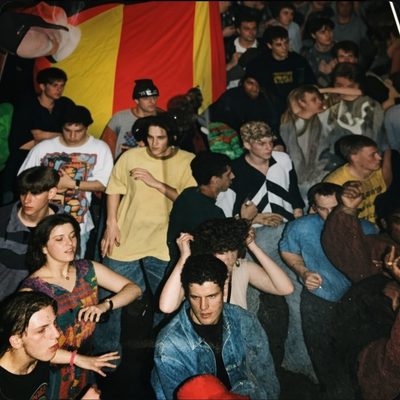
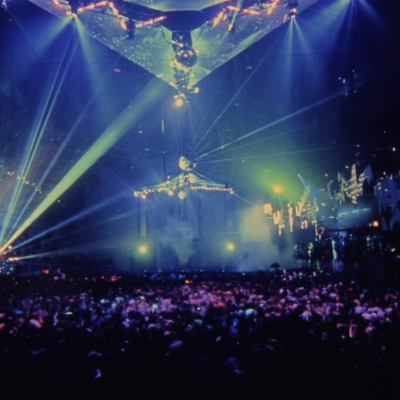
Emerging with the Boys Own collective who bonded in Slough and Windsor over punk, soul and football, Andrew Weatherall co-founded and wrote much of the Boys Own fanzine, which became the village newspaper of acid house. As the scene’s events grew in size, his DJ role expanded from “the guy who plays weird records at 6am” into something more like “techno-shamanic overlord”. His remix work with Primal Scream led to great success and allowed him to plough a most singular furrow, both in the studio and behind the decks, for the rest of his life.
Seeing him DJ was to witness a master of energy and communion, but he was never one to forget the silliness of the whole DJing game, or as he put it, “a series of beautiful but ultimately futile gestures.”
interviewed in London by Bill, 28.05.09
What made you want to become a DJ?
It was only quite recently that I considered myself a DJ. I first started collecting records when I was 12 or 13 years’ old, and whenever there was a get-together I would be asked, “bring your records” when everyone else was more interested in copping off and drinking Party Sevens.
The next step was, “Get that bloke with the weird record collection, get him to play some music”. That was a couple of years before Shoom, so that was ’85-’86. And the same happened at the birth of acid house: “Call that bloke with the weird records to play at six in the morning”.
What was the pleasure of DJing for you?
I had that same sort of joy I had when I was 11 or 12: I’ve had the experience of hearing this for the first time and now it’s your turn. I was just playing records, I wasn’t skilled. I was playing such varied music you couldn’t mix it. But then because my name started to get associated with Shoom, Spectrum and things like that, people would book me without really hearing what I did. They probably booked me so they could put Shoom in brackets. So I was getting booked to play main spots and going down like the proverbial turd in the salad because I’d been playing weird music at six in the morning. So I had to incorporate more and more house and disco tracks and learn how to mix.
I didn’t have any decks for about two or three years because I didn’t particularly need them. I just played a lot. It’s your own thing, so just be a citizen of the game. My first pair of record decks was from a record company I did a mix for. Can’t remember who it was for but they did some sort of Italo-disco compilation that I did the sleeve-notes for and my payment was a set of decks. It was about 1990. So it was a gradual progression until about five or six years ago I kind of realised I was a DJ.
So the thing that attracts you is that evangelism of finding interesting stuff and playing it to people?
Yeah… but without straying into righteous zeal territory, if you know what I mean! Without getting snotty about it. It’s just, you know, it’s just nice. It’s almost as good a feeling looking in someone’s eyes and seeing their joy of discovery In a way it’s a little bit selfish. It’s almost like re-living your own joy. Although you’re sharing stuff, a good part of it is for your own gratification, cos you want that feeling back that you’ll never get again. It’s a bit desperate really! [laughs].
There’s also a certain amount of ego involved, because it’s exciting when you see a room full of people light up like that. Was that an attractive thing?
Not to start with because a lot of times the DJ was one step above bottle-washer. It was only when people were so desperate for heroes that they thought DJs would be good ones. I’ll be honest with you, I did fall for it hook, line and sinker because being such a music fan and buying the NME and music magazines all of a sudden you find yourself in them, it can turn a man’s head. I did go a bit silly for a number of years. Then you throw the obvious drug into the equation as well, which is super-duper ego expanding powder and yeah, you do get sucked in. I don’t sympathise with people on that star trip but I can empathise with them. You’re living in lala-land and people are coming up to you every day and saying how great you are. I thought, hold on a minute, are we so desperate for heroes that we’re going to have DJs for heroes? That’s not right, it should be something a bit more substantial than that. And that’s when I realised it’s all a bit, it’s all a bit silly.
How did it affect you personally?
Well without going into too much detail, it affected relationship on every level from friends to girlfriend. Just general every day dealings with human beings. I was a bit arrogant. To be honest you some of that was a defence mechanism. I’d been told I was the best thing since sliced bread and in the back of my mind was this feeling that all these people would find me out in a bit. Someone’s gonna go look he’s not wearing any clothes! So partly the arrogance was to put up a wall because of my insecurity. But it’s part of getting older, really. The artistic world is full if insecure people and I was just one of them. You get older and become more self-aware. It’s nice that people come up and say nice things about what you’ve done. But you, know sometimes I think I’d rather people think I had a shit back catalogue but thought I was a decent human being!
What were your first musical passions?
’50s rock’n’roll and glam rock, without a doubt. It was about the time the film That’ll Be The Day came out. 1973, so I would’ve been 11 or 12. They had these adverts on the cinema and there was “Poetry in Motion” Johnny Tillotson, “Runaway” Del Shanonn, “Johnny Remember Me”, all those kind of things. Look, I’m getting goosebumps talking about it! It sounded like music from another planet. Coupled with a film about blokes on bumper cars with leopard skin drape suits and David Bowie on Top of the Pops. It’s the classic kid in the suburbs. You know, I had a nice upbringing but it was a bit dull. This was like a gateway to a parallel universe. Then a few years later punk came along, then post-punk business, rockabilly revival. Yeah, and I’ve been on every bandwagon since! [laughs].
How did you meet the Boys Own lot then?
Well I lived in Windsor and they lived in Slough and it was that classic suburban thing of people meeting at the one decent clothes shop. Can’t remember what it was called offhand but it was this guy Johnny Rocka worked there. I met Gary Haisman there, the guy who did the “We Call It Acieeed” record, and Terry Farley. We used to go to the same sort of discos. Cymon Eckel lived there as well. We just kinda of hooked up through Johnny Rocka at the clothes shop really. I was really hanging out a lot with Cymon but not so much with Farley, and another guy called Phil Goss, who now lives in Italy. Every Friday, pre-acid house we used to meet up every Friday at 9 o’clock and drop a tab of acid, which is where that post-punk compilation I did for Nuphonic got its name from. Then we headed into town and go to the Beat Route or Mudd Club or something like that. I got to know Terry gradually over those years going to clubs.
When you started it, what was it, was it a club or a magazine or what?
It was a magazine first. Terry was enthralled with The End, the Liverpool fanzine. His words at the time, “If fuckin’ scousers can do it then I’m sure we can!” or somesuch pep talk. And we did. It was Pritt sticks and cutting things out on my coffee table.
Were you aware of the End?
Yeah I’d seen it; I knew exactly what he was talking about. I wasn’t into football. [Steve] Mayesy and all that lot they were into football and they’d get these things from football and I totally got what he was saying. So it was like, let’s give it a go.
What were your influences for this?
I didn’t read much to do with football.
I mean reading generally.
Well I can’t remember exactly, but it would probably involve Camus and Kafka and the usual kind of youthful follies. I was and still am a Joseph Conrad fan. But I just saw it as a chance for expression and I’d be able to write about music. It’s a fanzine, so you it doesn’t have to be particularly current, you’ve got nobody’s product to push so you can be quite abstract. I was The Outsider.
Why was your column called The Outsider?
Because I was a bolshie little bastard! I always wanna be in a gang but then I don’t wanna be. I want the best of both of worlds. So I thought I’d be able to write a sarky piece deconstructing or taking the piss out of everything you’re about to read about. I wanted to have my cake and eat it I suppose.
Is that a theme that runs through your whole career?
I’m totally like that. I wanna be accepted but get annoyed when I am. Groucho Marx said I wouldn’t want to be a member of any club that accepted me as a member.
How did the ideas come about for Boys Own?
It was literally what anyone had listened to that week, or read, or what had happened. After acid house kicked in it became the village paper for the acid house scene. There was only two or three clubs! There were pictures of parties where only two or 300 people had been. It was very insular. After a couple of years, John Brown Publishing offered us national distribution and we were like it’s pointless, cos people’ll just think “Silly cockney cunts”. It would have appeared too cliquey. Obviously people from up north did buy it but they were people that came to the parties. It would have been like making a parochial local newspaper and then selling throughout the British Isles. It wouldn’t work.
How do you feel about it now? It’s still revered and a lot of it is still funny.
Yeah, but I don’t actually own a copy. There was a certain point – on too many ecstasies – that I gave away most of my possessions, you know what I mean? Most of my test pressings, acetates and everything. “Yeah, go on, I love you!” [laughs] I’ve seen bits of it and I think it’s alright but there are a bits of it that I find a bit embarrassing and a bit un self-aware but other people might think were really funny. If you looked back at some of the stuff you wrote 20 years ago you’d probably think the same.
Indeed.
And throw the vernacular of acid house into the equation as well!
And the drugs.
Yeah. It’s a good, unpretentious document of those times I think. It would be pretty essential in years to come for people researching the birth of acid house. I’d say it was a jolly good read for historical purposes but for entertainment purposes it would be very dated.
What bound all of you lot together?
A common love of going out and all that that entailed. The music, the clothes, what happened afterwards when you discussed things like books, art, it was the whole social scene that generations before us had had. I just wanted my scene. I was a bit too young for punk. So it was kind of my thing. Again it’s that thing: I wanted to part of a scene, but I want nobody to understand it! It was that again.
What about places like the Mudd Club.
Well it was good, the dressing up was fun but there didn’t seem to be any kind of scene and I suppose there was, it was new romantic, what Robert Elms called it the Scene With No Name. Actually what it’s like is what’s it like round here now [Shoreditch], a weird mish mash of rockabilly and punk. No one’s quite sure. You’d go to a gig in the mid-’80s and there’d be rockabillies, goths and there’s that kind of feel now. While they’re looking for something new they’re pillaging what’s gone on in the past.
Is it less tribal now?
As I see it, I live in London’s fashionable Shoreditch so I’d go no, it’s like one great big village! But if I lived on some estate in the north of England where this a big divide between say, casuals and goths it might be a different story. Some goth kid was killed by kids off an estate recently so it’s all very well for me to say it’s all fine but you can’t get any more tribal than people killing each other.
What effect do you think acid house has had?
It helped push music technology forward. Everyone said it had a great social effect; I don’t really think it did. The biggest effect it had was the push and development of music hardware, firstly, and then software. Cos kids were going out and hearing these records and wanting to make them themselves. I would imagine that people who went to those early clubs, a good proportion of them ended up being involved in music technology. That lit the blue touchpaper for where we are now, where we can sit here and make tracks on our laptops. That’s what acid house did. It had a few momentary social consequences, like the poll tax riots and the club laws, but it was only made political by the press.
Do you not think, unconsciously at least, it was a political, the idea of reclaiming and remaking communities?
To a certain extent, but a lot of that community was fuelled by ecstasy. It was there and I don’t want to downplay it and I don’t want come across as a curmudgeon. It was the same with the ’60s; it was a bit of false dawn. It affected people’s lives but it didn’t… usher in a new Age of Aquarius! [laughs]. It really didn’t. it depends on whether you want to see breaking into a building and dancing as a political act. It was just another strand, another part of London and Manchester discos. It’s the same sort of tempo. Upbeat music from Detroit. It was just the next generation’s I want my dance thing.
What effect did punk have on you when it happened? How old were you?
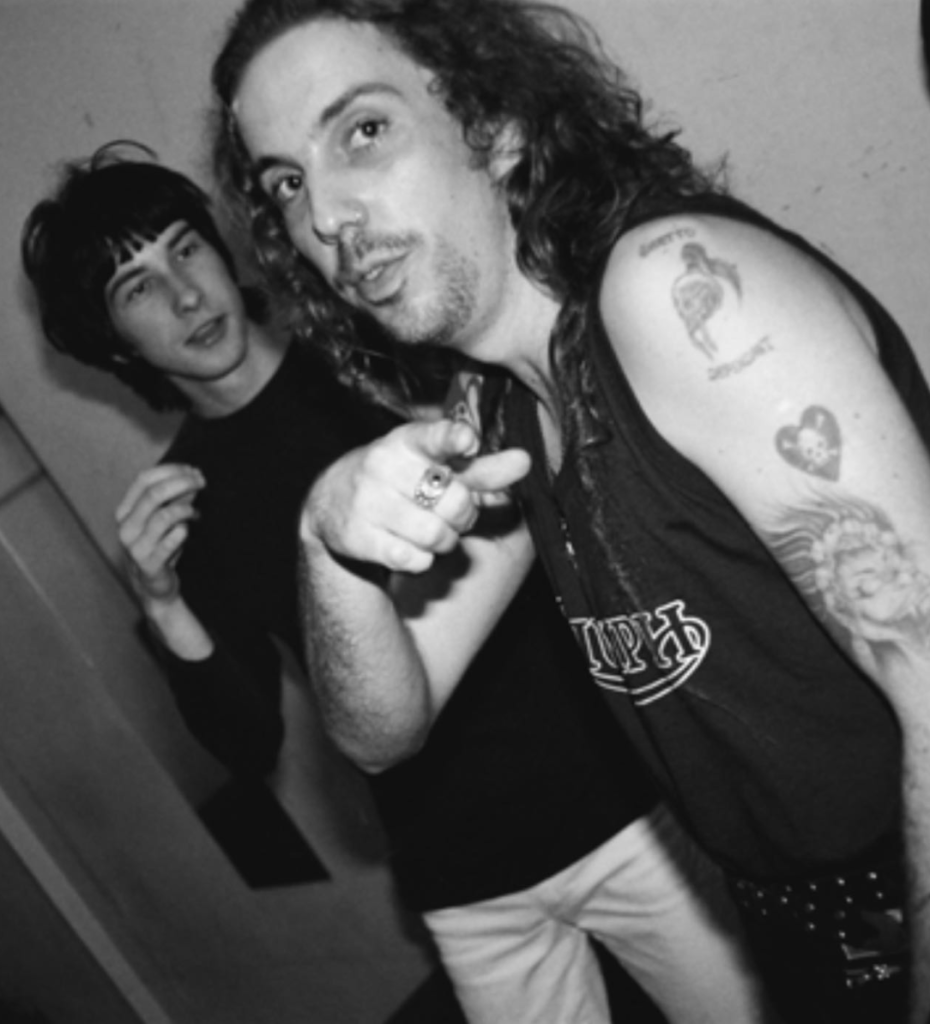
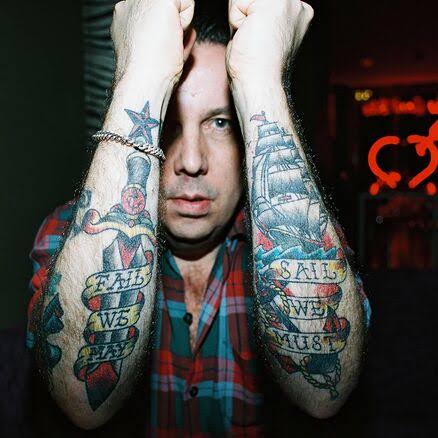
I was 13 in 76. I remember the day after the Sex Pistols were on Today with Bill Grundy, I had shoulder-length hair and I remember sitting in the barbers and pointing to a picture of them in the papers and saying, “Chop all me hair off!” You can’t describe it to younger people. People thought it was the end of civilisation. It was like a bomb going off, especially in suburban England, it frightened my parents to death. My dad was a bit of a reprobate himself, he wasn’t totally square, but this was just ridiculous. It really put the fear in people. But what English people do very well is: anything we fear we start to make fun of it. So very soon you’d have Michael Barrett on Nationwide going, “Ho ho, look at these crazy characters!” But initially the Sex Pistols on Today was a proper bomb going off. It had an effect on me. Anything that scares the old folk is good. That’s why I’m covered in tattoos. When I was a kid my parents were so against them they thought they were evil, so I gravitated towards them. It’s the way youth culture works.
Did you see any parallels between punk and acid house?
Briefly when it hit the papers, but that was more to do with the fact that it was so drug fuelled. It wasn’t the politics or nihilism or against society like punk was. It was the accoutrements that they were against.
For you personally did it have any resonance?
Not really, no. I was always a bit of a confused person. I liked punk but I liked disco music, so the two were always separate. So Acid house was the development of my disco side, it wasn’t a development of the harsh, more political, more abstract music side. It was a revolution in my disco world rather than my political world.
So did you have compartmentalised little worlds that you dipped in and out of.
Well yeah really! I never got that thing that disco sucked when punk was going on, because I knew all the original punks were bored soulboys who used to go to Chaguarama’s. That’s where you got dressed up. You could go to a weekender dressed like Bryan Ferry or David Bowie and you wouldn’t be hassled. It’s like that early thing John Lydon said: it’s all about selling trousers! Sorry everybody, it was primarily a London fashion thing. It was bored soulboys and people going to gay discos and wearing mohair jumpers and plastic sandals and not get hassled, and they followed the punk scene. Sorry Conflict, GBH and Crass, it was a London trouser thing! [laughs]
Tell me something about growing up and your musical interests as a kid.
I was brought up in the suburbs in Windsor and my grandparents lived in Slough. It was suburban but it wasn’t too far away so I could go on raiding parties, I could jump on a train in an hour I’d be in London. The great thing about that is you don’t take it for granted. You may even have a couple of months to assimilate what you’ve seen and heard and done. Sometimes when you live in London, you get blasé, it washes over you a little bit. But living in suburbia you had a chance to discuss the skirmishes you’d been involved with, which is what I really liked.
So what did you do in a typical trip then?
I’d save up and then I’d probably go to Kensington Market to a rockabilly shop. I’d go to World’s End. I’d do any number of jobs and save up so I could go into town and buy records to the Cage in Beaufort Market in the Kings Road which was the first shop that sold post-punk records, apart from Rough Trade. It was a pop culture thing: clothes, records, haircut, and tattoos! Which is what led me to finally being thrown out of my house. I’d been expelled from school….
What for?
I went to a really strict grammar school and it was really divided between arts and science and I was in the arts camp. It was very strict right down to what colour socks you wore, and I really pushed them to the limit. It was the last day of the Easter term before breaking up and it was A-levels and they had a prize-giving thing at the end of the term. Me and my mate were sat at the back thinking no one could see us and we tried to be the last one to clap think we couldn’t be seen and they could.
They had mortar boards and gowns and everything. The headmaster spotted me in the courtyard with his gown billowing – couldn’t have been more Dickensian if he’d tried! – “Weatherall, go home put your proper school uniform on and come back and stand outside my office!” He walked off and said, “On second thoughts, you’re a buffoon, you’re expelled, get out!” so I had three months block release. Not long after that I saw Dennis Cockell the tattooist on the telly and made my way to Swiss Cottage and had a tattoo which I managed to cover up from my mum until she found a book in my dock drawer: How To Care For Your New Tattoo. [laughs]. I was sent packing. Packed a bag, stayed with a mate for a week then moved to Slough.
What did you do for jobs?
First job I had was a furniture porter for an old school shop called Pyle Brothers. They had no lifts and they had a storeroom on the third floor and they’d buy up bankrupt stock, and us four had to unload articulated lorries full of Chesterfields and take them up three flights of stairs. I’d just discovered amphetamine sulphate as well, so I was a tad wiry and more than willing to start some of fracas on a Friday night. Loads of jobs. Whenever I could I get jobs in clothes shops, and my last job was a stagehand building film sets. That was around ’88. I’d work on a film set for a couple of weeks and I was beginning to DJ a bit and there was a bit of dilemma. Do I start DJing properly? I’d been offered a job abroad with this set company and in the end I didn’t go because they let me down at the last minute. If I’d have gone on that trip I probably wouldn’t be sitting talking to you now.
Did you see music as an escape from what you’d been doing?
Not really. It was literally here’s a chance to make some money. I like to have money to buy clothes. It’s feast or famine. I thought I’d give the DJing a go. But even when “Loaded” came out I remember going for a job interview at London Records to be a record plugger or A&R man or something. I still thought it was just the latest way to make some money. It felt like another stopgap. It’s the same as the Rolling Stones reflecting on how they started. “Oh, we thought it’d be over in eighteen months!” That’s how I felt. I’d plough on in my direction and things seem to turn out alright.
You wrote the column The Outsider and you’ve been seen a bit that way throughout your career. Is it a natural part your personality?
It’s natural part of my personality. I am quite gregarious but I’m not totally majorly touchy feely. I do my own thing. As long as I can do it without fucking anybody else off… I know what my shortcomings are and I live with them. I put up with them. Hopefully I’m not arrogant because I’m a little more secure in myself. You do what you wanna do and take as little shit as possible and people think that’s somehow wrong. Some people might think that I’m difficult but I’m just… doing things. Let me do it my way and I’ll do a much better job for you. It might be three months late coming but I’ll do a better job.
What did you think of the superstar thing?
I’ve looked at certain DJs and though “Fuck, I’m gonna give this up.” I’m not gonna say who but I’ve been to see some high-end DJs and there’s times I’ve come out and I’ve been embarrassed to say that I’m a DJ. I could’ve been that person if I’d carried on a certain route. It’s probably part of myself I don’t like, rather than them. Most times I get angry with the music industry it’s because I don’t want to be reminded of the person I was.
Do you think the scene is in a better state now that the superstar thing has sort of imploded?
It’s still there.
Well it is but it’s more fluid than it was.
I think kids have got wise to the fact that you need better heroes than DJs! Even Pete Doherty’s a better hero than Judge Jules, let’s be honest, and Pete Doherty’s a bit ropey. DJs should be heard and not seen, really. That thing where you’re playing [gestures up on high] and people are looking at you… It’s not what it’s about. I like Moodymann and playing behind a screen.
But that actually accentuates everything!
Yeah you’re right. You still need that contact, but you don’t need to be bathed in light, you don’t need to be the centre of attraction.
How important is mystique in music?
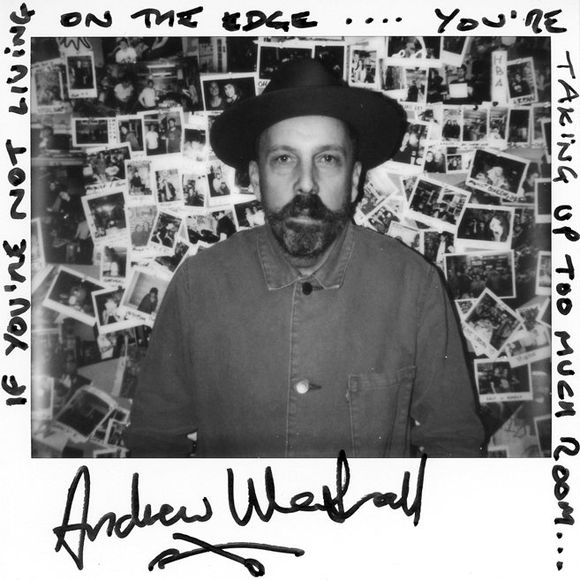
Very important. I was always drawn to the fact I’d never seen a picture of Martin Hannett or Adrian Sherwood. It was years before I saw a picture of either. That really attracted me. It added a little bit more substance to things. When I first started, I didn’t want to use my real first name and I refused to be photographed for years. I think the first photo shoot I did I wore a big medicine hat and a big pair of glasses and a scarf. I love the hidden, it’s always more exciting. Anton LeVay was the head of the Church of Satan in San Francisco and he used to play organ in burlesque and strip shows in the 1940s and there’d be a room full of guys watching someone almost naked, but if a woman wearing a pencil skirt walked in, every head in the place would turn, because they’ve seen that. They want the hidden. I’m with Anton on that! [laughs]
What makes a good DJ?
It can be as simple as playing good music. Good music, well programmed. Even if you’re playing wildly different music, I try and make some sort of connection or some sort of flow. I don’t like to be jarred too much. There has to be a connection, where I can see there’s some sort of thought process, not ooh haven’t I got an eclectic record collection. I want to listen to something in slightly open-mouthed wonder, doesn’t matter whether it’s a rockabilly track or techno. Doesn’t have to be dazzlingly new. I got hooked on the idea that everything has to be new and original for a while. But nothing dates quicker than a new sound. Believe it or not I’m in the Billy Childish camp. Originality is not what is important, it’s authenticity.
How did the studio work happen?
Jeff Barrett was managing me and he did Primal Scream’s press. He gave me a copy of the album. He said it was getting slated left, right and centre, and I came back to him and said I loved it. So he said, why don’t you write a review for the NME and he wangled that, so I went down to Exeter to see them play and reviewed it [The headline was Sex, Lies & Gaffer Tape!] and got on really well with them. Then I’d see them in clubs like the Future. Andrew Innes was in Spectrum one night and he said, we’ve got this track and you can do whatever the fuck you like with it. That was “Loaded”. I made one attempt where I reined back a bit because I didn’t want to upset them. I played it to them and Innes said, “No man, fuckin’ destroy it!” So I went back into Bart’s Studios in Walthamstow with a very talented man called Brian O’Shaughnessy, who’d actually produced and engineered the original.
So you never actually worked with the band?
No, and that was pretty much how Screamadelica was made as well. I think there was only one time I got it wrong. I did a version of “Shine Like The Stars” they didn’t really like and I went back in and did it again, and I’m really glad I did because it’s one of my favourite tracks on there. Obviously they’d have to do overdubs or they’d drop in to see how it was going, but I didn’t have the joy of the drummer setting up his kit or the guitarists saying “I’m a bit toppy”. Which is a working method I’ve applied: Have as few musicians in for as little time as possible! Otherwise it gets very tedious.
Were they immediately happy with the results?
Yeah. They might have come in and suggested things. I don’t remember really, because it was a very hazy time. It was just people hanging out and making records.
How many things had you done in the studio before?
Not a lot. Happy Mondays, East India Company, maybe St Etienne. Apparently there’s a website dedicated to this information.
What was your role?
Well when I got the demos I knew exactly what Bob G had been listening to to get that song. So I would inject my approximation of that. You know, it’s weird but I was listening to “I’m Coming Down” and I spoke to Bob on the phone and said, “For some reason I’m getting Pharaoh Sanders, the sax player, don’t ask me why.” And he said, “I’ve got a Pharaoh Sanders CD in my hand at the moment!” It was like that. Whether it was a chord progression or a vocal line, I knew exactly what the ingredients were that went into that. So I’d go into the studio and say to the engineers this is why this sounds like it does and play them Big Star or whatever and we’d build it up from that.
I was the conductor, basically. “This is what it should sound like, I’m not sure how to do it, that’s why you’re here.” I was learning as I was going. I knew what it wanted. On one track I knew we needed those plastic tubes that kids swing round their heads, it was the only sound I could hear. And we did indeed have five people swinging them round in the studio! But I couldn’t have done it without Hugo Nicholson, who would hear my suggestions and say, yes but what about this? So I was open to that. It was my blueprint, even if it did get smudged. Hugo did all my early stuff till about ’94, when Sabres of Paradise started when I worked with Jagz and co.
How did Sabres come about?
Can’t remember exactly. I was looking for new people to work with and I got introduced to Jagz and Gary at Full Circle probably. And they knew of a studio in Hounslow West in this really rough council estate. There was a pub at the end of our road, we were above a newsagent, it was like a room inside a room so you’d never know from the outside it was a studio. There was a pub at the end of the road and the landlord had recently been put away for murdering one of his clientele! It was pretty hardcore. If anyone had known it was a studio it would have been done over in minutes.
Listening back to the music you’ve done over the years, which are the ones you’re most pleased about?
Well there are things that I’ve done and been a bit embarrassed about over the years, but then you actually hear them still being played. Often the very things that made those records work are the things I don’t like: the mistakes and the simplicity and the obviousness of them. I didn’t think about them too much when I was making them but over the years I’ve thought about structures and so on too much.
Brevity? Don’t know the meaning of the word, sir! One kitchen sink? Let’s have two or three. It’s that naivety I like, but it’s that naivety that I always go mmm, shouldn’t have had there. It’s like the drum loop on Loaded, it’s ridiculous. There’s a crash on every bar! It’s a mistake but it’s one of the things that makes it.
One of the things I’ve learned about the studio is if you think about things too much it’s time to stop. I’ve had some killer tracks that I’ve noodled out of existence because you always think it’s got to have more. Last week I was going through the computer and I found ten new tracks, basically a whole new album, really good beginnings of songs that we’d got bored with. The stuff I’m doing at the moment has a sound that almost similar to the early stuff. It’s closer to my vision of what I was trying to do 15 years ago. I’ve got more technical knowledge. So now I’ve got the best of both worlds, my naïve approach but with a bit more technical backup. I’ve gone backwards in sound a little bit, but it’s authenticity over originality! If you do something authentically it somehow ends up sounding more original anyway.
When’s the album [A Pox on the Pioneers] coming out?
End of August. I’ll send you one. It’s a weird collection of dark pop songs. The overall consensus is that it’s got the touch of the Fun Boy Three about it. A lot of this stuff comes out subconsciously though. I never go in thinking I’m going to put a touch of the March Violets in this one. It’s like 30 years of record collector instinct, yet I don’t think it’s record collector rock.
Are you still hunting for new sounds?
All the time. I can’t walk past a record shop. Even if it’s a supermarket or garage, I still know there’ll be a £3.99 Best Of by someone vaguely interesting. Even if it’s one song you’ve not heard before.
Do you collect particular stuff or is it random?
Collect as in rare records…? I’ve got a lot of early electronic music from the 1950s, quite rare stuff….
Like Raymond Scott?
Yeah. There’s a label called Nonesuch. Seventies funk, library pieces, the expensive stuff I buy at the moment, ’60s garage music and rockabilly records. But a lot of that is because I’m getting booked to play those gigs.

© Bill Brewster & Frank Broughton