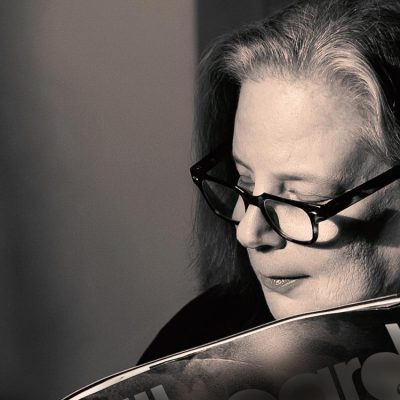
John Hedges, who was known colloquially as Johnny Disco, was one of the pioneers on the gay scene in San Francisco. He started out playing at the Mind Shaft during the pre-12-inch days, spinning 45s on a rudimentary setup (before discovering mixing at NYC’s 12 West). He went on to play at City Disco and Oil Can Harry’s, at the same time as working as disco consultant for local label, Fantasy Records. Sadly, John died in June 2022.
Tell me how you came to move from Cleveland to San Francisco? Cleveland was very backwards then and being gay was not a good place to be. We’d heard that San Francisco was the place to be. So we packed up the car and drove all the way across the country to San Francisco. And from the day we got to San Francisco, we stayed for 25 years. I’m in Palm Springs, California now.
When did you move to California? I believe 1971.
Did you have an occupation when you moved there? No.
How did you come to work into the music business? We were all looking for jobs and the local nightclub down the street from where I lived had jobs going. I went in there and I don’t know how it started but i met the manager and said I can play music because I had a bunch of records and so he hired me. It was called the Mind Shaft and it was on Market Street. I worked there for many years. That started me into the music business as a DJ. Then I moved on to some super clubs, which connected me up to meet some people from Fantasy Records, Sylvester’s managers.
Can you tell me a little more about the Mind Shaft, like what it looked like, what music you played etc? It was a medium-sized club, but in the main dancing area the middle of the club was a raised gazebo and that was the dancefloor and I had all the lighting and all that stuff. The music I played back then was pretty much Motown stuff or anything danceable. We were hungry for that. Near the end of my time at the Mind Shaft that’s when the record companies started noticing that the clubs were selling records so they started making 12-inch records. I remember getting, I think the first one was ‘Fly Robin Fly’ by Silver Convention.
If you were getting 12-inch singles there, you must’ve been there until 1975 or 76? I would say that, yeah.
Were you mixing at the Mind Shaft? Not beat mixing because it was mostly 45s, you know, but they’d have Part 1 and Part 2 of course and we’d mix those. But that came a little later.
When was the first time you saw someone mixing? At a big nightclub called 12 West.
Jim Burgess played there, right? Yes, he was the first DJ that really turned my head around. I was playing at Oil Can Harry’s at the time. The really neat thing was he played one song that went to the other beat-matched. I didn’t know what the hell was going on! But the crowd was going nuts and the energy level kept going up and up. I brought that back to San Francisco, turned it onto a lot of people and got vari-speed turntables installed and it took off from there.
Hi-NRG sounds from the ’80s
Do you remember what year that would’ve been? Oil Can Harry’s was 77 I think.
And that’s when you took the trip to New York? Yes around that time.
How did you come to move to City Disco? I went from the Mind Shaft to the City Disco, which used to be called Cabaret (After Dark). Think that was in 1976. I worked there for many years. That was a super, huge disco. Two floors and the dance area upstairs, huge lights and sound. The DJ booth was built to look like a big jukebox and we were inside the jukebox, the top part of it. It was such a big disco it got a lot of newspaper press, which is how Fantasy found me.
Is it true that City Disco was almost like an entertainment complex with restaurant? It didn’t have a restaurant but it had a downstairs with a cabaret showroom and they had all kinds of acts there. Smaller shows, probably 100 seater.
Who were your peers in the City? Jon Randazzo, Tim Rivers, Michael Garrett.
Bobby Viteritti? He was very influential, but he worked at Trocadero Transfer.
What was the difference between City Disco and the Troc? The Troc was a huge big disco with a floating dancefloor and as the crowd grew the dancefloor expanded. It would go all night until 6am in the morning. People wouldn’t get there until 11pm and party till the sun came up. City Disco closed at 2 o’clock when the liquor stopped.
Did t feel like a political time in San Francisco for the gay community? It felt extremely political, yes. It was the days of Harvey Milk running for supervisor and he won and things started changing. He’d always come to the discos and hustle for votes. We were very political to get our rights. We sure did.
How did that express itself? There were some demonstrations with anything negative like Anita Bryant [singer and anti-gay activist]. Literally people would start marching in the streets and scream, ‘Out of the bars, into to the street!’ I remember that distinctly. People would come out of the bars and start marching down Market Street, the main street in town to City Hall, trying to get some action going – which they usually did. I had to do this on the mic many times especially when I worked in the Castro. And we did get out of the bar and into the street. It was amazing the pool of talent that came out of San Francisco in these wild, crazy, liberating days of gay pride. I think that because of disco we gained power because we would group together and talk about politics. I think disco was a major, major part of gay liberation; getting it out to the media and showing our power.
You were one of the Billboard DJs of the year right? I won Billboard Best DJ for 1976.
How did one win Disco DJ of the Year? Billboard magazine would have reporters in major cities and I was one of them for San Francisco which put me on the national map. I’m not sure how they did the voting, I don’t know how. That’s a good question I don’t know how that happened. They just said you’ve been voted best DJ you have to come to New York, which I did. And I won, so that was nice. It really got me credibilityy.
Did it change your career? Yeah and it just helped get me into the studio at Fantasy Records.
How did you first come across Fantasy? I was working at the City, and the local paper had recently done a story on disco and I was featured in the article with an interview, Harvey Fuqua and Nancy Pitts from Honey Records, distributed by Fantasy, they came into the City Disco and they invited me down to Fantasy to see if I could be a consultant on mixing. I did and I got to work on many more projects.
How did that work? I worked right alongside Harvey in the studio. Harvey was really laidback, a nice guy. I think he was from Motown days. He knew how to get performers to do what he wanted to do and he came out with some good records including a big hit with ‘Mighty Real’ by Sylvester which went pop and he was happy for that.
Did you meet Sylvester and get to know him? Yes I did. As a matter of fact, we were neighbours. Working with him he was genuinely a nice guy and I initially met him before I worked with him. I was working for Fantasy on other artists, not producing yet, but mixing. It was my job to make anything they’d produced into something more danceable.
Sylvester was someone who’d hang out at the studio? No. I just knew him socially.
Did he come to discos and dance? All the time in San Fran, yeah.
Presumably he was a pretty notable in the city? Very famous in the city. He was funny, a very unique character, flamboyant. And he loved shopping, that’s why he was happy. He was being successful in the music business. He would spend money like crazy. He collected diamonds. He brought in a bag of diamonds into the studio, can you believe it?! He died penniless. He spent all his money on clothes, costumes and diamonds.
Assuming you knew Patrick Cowley because he worked at the City Disco right? Ooh yeah, he was the sound and lighting man at the cabaret downstairs. He was a really nice, gentle man. We would hang out and talk about music.
Who inspired you back then? I was inspired by a lot of people in this business but one especially was Harvey Fuqua. He was Sylvester’s original producer. He’s the one who taught me how to work the controls in the studio, along with the engineers. The other person was Patrick Cowley. Unbelievable. He’d come into the studio with his little boxes, tape boxes, echo chambers, and made all these fabulous sound FX that made him so famous, even today.
Did you work with him in the studio? The favourite things I produced were always by Sylvester because he would come in to the studio, help us on the controls, explain what he was doing and he was a pretty big star by then, so we were overwhelmed, but we learned a lot. His original producer Harvey Fuqua, who was the person who got me into the studio with Fantasy also told me how to do this and that’s where I learned that I could do it too. On the All I Need album by Sylvester he’d come into do tracks. In fact, I think he was on every record I was involved in until he died. He’s very famous now, though, I can always tell when it’s his birthday or the anniversary of his death because I always get calls from journalists. We weren’t hanging out buddies, but we loved music and he loved that electronic sound which was the San Francisco sound.
When you were moving away, is it true that Honey Sound System discovered some unreleased Patrick Cowley music on your quarter inch tapes. Is that true? Yes it’s true. When I took over Megatone Records I moved it… I had a huge three storey house and the lower level we converted it into Megatone Records. I was getting ready to move to Palm Springs in 2008 I put out the word to local DJs that if they wanted to get anything they could get whatever they wanted but they’d have to haul it down because it was three storeys down. So they came and took just about everything and when they were going through everything in the boxes, they found Patrick Cowley tapes. They were never released. And they said they might be able to put some sounds to it to finish it in their little studios and put it out which they did.
That’s amazing! Yeah the lost tapes! Lost in my basement!
Did you have any idea? No I had no idea. I sold Megatone before I moved and if I’d known I would’ve done the same thing , taken them back in the studio and released them on Megatone.
Do you remember working with Fever? Fever was the first production I ever did with Marty Blecman and Fantasy on our own where Fantasy actually signed us to a contract to produce this group out of Cleveland, Ohio. It was a non-stop vinyl album, three songs on each side, all segued together. It became a Billboard number one hit. Fever got us into a place where everybody was coming after us to produce for them. It was the first album we ever did at Fantasy. We did a 12-inch, Fever ‘Beat Of The Night’, and the flip side was ‘Pump It Up’. That’s where we learned how to work in the studio. Fantasy had the latest stuff you know and we learned how to operate it all and the computer stuff. That’s really where I learned how to produce. It was a great learning experience.
How important was disco in the story of gay liberation? Discos were the hangouts for gays, almost like a church thing. It rallied all the gays and anything that was happening in politics, you could get the news from the discos. Everybody would hang out and share the news. It pulled us together.
And how did Aids affect disco and the dance scene in San Francisco? Tragically of course. It came on so fast that just about every day there was someone you knew who was dying. People walked down the street looking very sick. It was a very very sad, awful time but people rallied to help. It’s interesting that in the gay bars it was usually men and not very many lesbians but as it turned out when the Aids thing hit us, the lesbians came out and really helped the gay men when they were sick.
Did that bring the two communities together? Yes big time. They helped nurse men or helped them when they were going broke. They’d feed them and house them, help with medical stuff and the lawyers. San Francisco was right on top of everything to help everybody.
Judy Weinstein more or less invented the workings of dance music as we know them. She’s a powerhouse of the New York dance industry, a fixture behind the scenes since the days of disco. With her party girl persona hiding a fearless approach to business, and an ease for making canny connections, she created a role for herself as the mother superior of the developing scene. She helped David Mancuso run his Loft and start his groundbreaking record pool. She followed that by starting her own pool, For The Record, which became her unassailable powerbase as it forged links between labels, clubs and DJs. She was effectively the artist liaison for Paradise Garage, and more or less manager for the largely unmanageable Larry Levan, a role she formalised later for Frankie Knuckles, David Morales and Satoshi Tomiie within her famous production and management company Def Mix. Through it all, her aim has been to fight for respect (and proper remuneration) for the DJ, gaining recognition for dance music within the wider industry. Today’s monster superjocks are reaping the rewards of things Judy Weinstein fought for.
Interviewed by Bill, 15.1.07
What has given you the greatest satisfaction? The boys [Frankie Knuckles and David Morales] winning their Grammys. It was sort of the highlight of their careers, and of my efforts. Helping to get them there. That was such a great moment with Frankie and David winning the first two.
When did you start Def Mix? 1987.
And was it set up specifically to manage DJs? No, David was working for me at the time and he had been taking off a lot of time to do some editing and learning his skills and I had to fire him because he was missing so much work, and then I managed him. It turned out the productions he was doing – or the editing or the mixing – were like re-producing from scratch. So we talked about starting a production company and I would be the business person and he would be the DJ. He came up with the name Def Mix; it was something he was using on his mixes. That was the beginning. Then Frankie, who was an old friend of mine for many years, was in town playing at a club called the World and I introduced him to David and then he joined us. He brought us Satoshi and then life goes on. You know, we all stuck together.
Judy with Larry Levan, Thelma Houston, and promotion guy Bobby Shaw and friends.
How has that changed over the years? They’re more individuals now, they pretty much all work on their own. Satoshi made the biggest change, because he was the keyboard player. As the keyboardist, he was pretty much the sound of Def Mix for so long, but he felt stifled by it, I think, and so broke out of the mould first. He wanted to do his own music. At first I was resistant, because they were losing their keyboard player, but it worked out to everyone’s advantage, because it changed everything about Satoshi’s career, And Frankie went on to work with other keyboard players.
How has travelling affected the way the music has developed? I think it gives them a better view of what’s happening around the world and that influences what they’re playing and making. But it’s all one world, which is interesting.
Judy with McFadden and Whitehead, Frankie Crocker and various Philadelphia International employees
Do you think the world has got smaller? Very. The internet has a lot to do with that. Myspace is a big influence on all them. David was travelling through Europe and he was on Myspace and noticed that Junior Jack of Kid Crème was online. And so he said hello and suddenly they invited him to dinner at their house in Belgium.
Who or what has been the biggest influence on your career? David Mancuso, I guess, moulded me a lot. He was so special as far as influencing my taste in music and opening my mind to something new. Some of the guys out there are blinded sometimes and think there’s only one format of music but I’ve been blessed enough to have the owner of Ministry of Sound turn me onto opera on a dare. I listen to everything. Music is music.
Why do you think David had such a profound influence on so many people? The man, the place, the drugs… everything. It was the early ’70s, you had Marvin Gaye’s ‘What’s Going On’, the Vietnam war, a lot of things going on in America. It was a runaway home, in a sense, and you were a captive. Just the whole experience of going to the Loft, it was all about the music, the speakers, the people you were with and you ran out the next day and bought the records you heard. It was fun. It was a fun time in the business. It wasn’t a business yet. The only clubs that were open were Régine’s, just fancy schmancy bars and DJs playing top 40 music.
Judy, Sylvester, DJ Howard Merrit and friend
Do you think that’s why it has retained its purity in people’s memories? Absolutely. But it’s also remembering certain times in your life.
You’ve kept a lot of friends from that period, haven’t you? Well the ones that are alive yes. During the ’80s, I lost 30 DJs to HIV which was a horrible time. So those that have survived, yes. They’ve grown up, and had children…
What does Ibiza mean to you? Back in 1978, Richard Long, who installed the sound system in Studio 54 and the Paradise Garage, installed the system in a new Studio 54 in Barcelona and he needed someone to programme the music and the DJs and he hired me to do that. It was my first trip to Europe so I looked through the pamphlets and figured I’d better go somewhere else as well. And I ended up picking out Ibiza. So my first trip to Europe I ended up in Ibiza, not knowing anything about the island except that it was some of party society place. I lasted about 48 hours, I walked into the old town, it was raining, it was full of Germans, nobody would talk to me… so I went back to Barcelona. Then I came back to New York. Thirty years later suddenly [leading promoter] Danny Whittle is giving us some wonderful opportunities to be resident on Saturday nights in Ibiza. So returning there was actually a great moment to me. Here I am now, and we’ve got the Saturday nights, which, to me are the best nights to have. So it’s a special and magical place and I’ll always be appreciative of Danny’s attentions.
How’s that going for you? It’s been great and every year it gets even better. I don’t know how long it will last, but to have a home every Saturday night from June until Sept to have an apartment in the old town, overlooking the sea, how lucky can I be?
Do you go there for the whole summer? I did in the beginning, but I never got any work done. Nobody gets any work done in Ibiza; it’s a lie if they tell you they do. You get there, you set up a computer, I have a desk, I have all my papers and I’m ready… then all of a sudden it’s siesta time. Then the next day the morning doesn’t even matter any more; it’s siesta Day. You just can’t work there. So now I go for the opening and the middle of the season and then the closing.
What’s going on in New York at the moment? Well, New York’s going through a very interesting transition at the moment. All the huge superclubs are almost all gone. There are too many problems with the drugs, and the police. We have this huge influx of small clubs that are very trendy. I think the ropes are bigger than the clubs themselves! But it’s a very interesting scene. The thing is though none of the music is very interesting or relevant in these clubs. A lot of them play classic oldies for people like Paris Hilton.
Do you think that will change for the better?
I don’t know. Sooner or later everything changes and cones back around. I’m waiting for vocals to show up again.
What gives you the biggest thrill now? Fitting into something I wore ten years ago! I don’t know…. I still get a thrill seeing a song that the guys produced working on the dancefloor and five thousand people on the dancefloor putting their hands in the air.
After over 30 years of going to clubs does it still excite you when you go into clubs now?No, not as much as it did. It excites me more when it is one of my guys. When you go to clubs in Italy or Belgrade, especially the new areas where music is happening and the scene is happening, it’s thrilling when I watch it on Youtube and see Satoshi. That’s thrilling! I don’t have to walk into a club anymore!
How has the internet change things? Oh it’s changed things for everybody. Sometimes you don’t even think before you send which could be a problem. You buy your music online, you watch a party online, you can do so many things online. It’s very gratifying, but it’s also very dangerous I think.
What do you think makes a good DJ? Passion for what they do. I think anybody can put two records together. I can but I’m not good at it. But if you can make one long song out of a night, you’re the man. Or woman. That’s what my guys do, they make a journey, which a lot of DJs don’t…
Do you think that music matters as much to young people now? No. Well, you know half and half because I have a nephew who’s 19 and whenever I go to his Myspace or website he’s always using quotes from songs and stuff so I can’t say that it doesn’t still matter. But when you get older you expect young people to feel the way you do and they have their own feelings.
Music is now everywhere, in shops and bars etc, and yet it has been diminished somehow. Well, I think music itself has been diminished. When I hear progressive house, it just seems to be hundreds of bars of nothing. But you know kids really like it, so maybe they’re hearing something that I’m not.
Do you still feel comfortable going into clubs? If it’s the right one yes. We were at Frankie’s birthday the other day and there were 16 year-olds and 60 year-olds and I wanted to dance. But then if it’s Pacha and there’s an 80-year-old guy with a 16-year-old model, no, I don’t wanna dance. I like having a dance in my own room when I’m getting ready. I’ve been listening to hip hop lately. I’m into the crunk music, is that what it’s called? The boys are hearing it, shaking their heads and walking away.
Bruce Forest’s long residency at midtown Black gay club Better Days is one of clubland’s more unlikely stories. Forest was the white middle class kid who won over the hearts and feet of a tough New York crowd who didn’t take kindly to an impertinent upstart replacing their beloved Tee Scott. He eventually won them over and stayed until it shut down in 1988. Thanks to his fascination for new technology (he eventually left music to work in web security), he was among the most innovative DJs, using synthesisers, drum machines and samplers live. Later, he added another secret weapon to his canon: a teenage David Cole, whose live keyboard work with Bruce eventually led to the formation of C&C Music Factory. Forest was also an in-demand remixer, both in New York and in the UK, where he relocated in the late 1980s, working extensively with artists such as Boy George.
interviewed by Bill, 17.11.10
Tell me where you grew up and how you got into music? I was born a medical student. My father was a surgeon and my mom was a psychologist and counsellor. It was always planned that I would follow in my dad’s footsteps and become a physician. I learned at a very early age I had little interest in this but you do what your parents want.
Where was home? Forest Hill, Queens. I was never a very good student. My teachers would always say well he’s very intelligent but his work is shit. I floundered my way through school and then I was sent to one of the most elite boarding schools in the country called Choate. Kennedy went there blah blah blah. I left there a year and a half before I got thrown out with cigarettes which you couldn’t have back then. This was about 1971. I came back to New York and went to another boarding school called Millbrook, a little less famous but still an elite boarding school and I lasted there a year and a half before I got thrown out because they found pot seeds in one of my drawers. So I finished my schooling at one of the first schools in the country to have metal detectors: Hillcrest high School in Queens, near Hollis. It was a significant demographic change from the life I had lived.
In the background of all this I was already a music junky, all the great jam bands of the early ’70s like Grateful Dead and Pink Floyd. Finally I graduated high school and went to the University of Miami for two years then decided that was not the place for me. I had a girlfriend of the time who was going to Binghamton, a state university of New York. One day I just walked out of the house got on a bus went up there and stayed in her dorm for a few days. I got a job as an operating room technician at Binghamton General Hospital, while I was still supposedly going to college. Finally something snapped I thought I hate looking at dead bodies, I hate looking at live bodies, I hate looking at people’s guts I need a different job. I looked on the notice board and there was an ad looking for someone to do light electrical work at the Power & Light Company, which was a disco. It was 1976 or ’77. My job was to change bulbs, go into the rafters and change the gels, stuff like that. I was still into rock music and these guys were playing Arpeggio, Foxy and Stephanie Mills. Stuff that I thought, ultimately, was pure crap.
There were two DJs there and I’m still friends with them: Brian Hanley and Fred Coffey. One day I was in the rafters changing some gels and Fred was practising in the DJ booth and I thought, ‘Jesus this music is terrible, but I really liked the way he went from one record to the other.’ He just blended them into each other and it was kinda cool. I went to the booth and said, ‘Can I watch?’ and he said, ‘Sure’. I had the keys to the club so one day when no one was there I walked in and tried it. I found it was very hard but after a few hours of messing around – hey – this is fun. I’d go down there late at night when no one was there and I’d practise and I got so it wasn’t horse galloping across the room. Brian was always into sound. We had a Levan horn there, we had a Bozak mixer, we had 1200s. Brian ran the club with his parents and he was into the best equipment. I slowly got better and better and finally I said, ‘Why don’t you let me play tonight?’ So they let me play some night that was like nothing, a Thursday or something and there were ten people in the whole club. I always skewed towards the blacker stuff, the early Prelude and West End stuff rather than the uptempo stuff. I was into what I guess we would now called proto-house and what would eventually be Garage and Better Days music.
I started playing the Thursday and over a period of about 6 months the place became mobbed, mainly with kids from New York studying in Binghamton and they were mostly black. The owners – not Brian, he was cool – were not the most pleasant of people and they didn’t like their club being filled with black people. They were doing all sorts of things at the door – you need to have an ID – and eventually they said we gotta move you off Thursdays. So I started to do weekends. Brian was number one DJ and Fred was number two but very quickly they discovered I had a talent for it. At that point I was getting tapes from New York on WKTU which was the disco station. I was listening to Studio 92 which was classic DJs like Roy Thode, Jim Burgess and Kevin Burke. It was really cool what some of these guys were doing so I started to get more adventurous. I got a reel to reel and started to do some editing. I taught myself everything, so I didn’t know which side of the tape, the tape went on. I thought it went on the inside.
We took a trip to New York to get some lighting and there was this club called the Underground on Union Square; it was my first experience in a real big New York disco. The DJ that night was playing a lot of rock stuff: Killing Joke and stuff like that and it was Mark Kamins. I managed to get myself into the booth. I was looking around thinking wow this is really cool and I said something stupid to him like do you edit your own tapes and he looks at me as though I’m some sort of idiot and carried on with what he was doing. But he really impressed me with what he was doing because he was doing something that my teachers hadn’t done and that was working the crowd. Not making the crowd respond to me but rather Mark was responding to the crowd. At that point my name was getting around that there was this guy who was ok in Binghamton and this female DJ was playing at a place called Club 37 in Syracuse which was maybe 50 or 60 miles further north.
She shows up with her entourage one night to hear me. She’s got blonde spiky hair and wearing pink and green torn clothes. She looked like a real hip DJ. She listens for a while and she’s out on the dancefloor comes up into the booth and introduces herself. Hi my name’s Lesley Doyle. Oh fine, how you doing? She says you’re really good. Do you wanna come and hear me play at Club 37 one day? Went to see her and she was doing the same thing Kamins was doing: she was reacting to the crowd. Club 37 was this big cavernous space run by the guy who would eventually run 1018 [‘80s New York club]. She was up there in the sky but she was still playing and reacting to the crowd. So we became friends and after a time we started to go out and live together. One day Club 37 was going to change and the club I was working at I was having arguments with the owners so she said let’s get the hell out of here and go to New York. Now I was pretty much the learning DJ and she was the star.
Where were you finding your records? I’d make a trip to New York maybe once a month and Brian had always gone to Downstairs Records and this was when it was actually downstairs in the subway, when Yvonne [Turner] and Junior [Vasquez] were both working there. I didn’t know Junior but I got friendly with Yvonne. I’d go in there every couple of weeks say what’s hot ands sit down there for the next two hours and listen. I always bought two copies of everything, the days of really cool remixing hadn’t come out yet and – Tom Moulton, Walter Gibbons and François aside – there was a lot of great records that needed work to be extended. I’d also talk to other DJs around Binghamton, I was still listening to KTU and at that point KISS FM was just starting, BLS was playing great music. What’s interesting is al that music went to the Power & Light Company because I was using their money so when I left Binghamton I had two records. One was Silk Degrees by Boz Scaggs and the other was a 12-inch of One Nation Under A Groove. I had nothing.
So how did you get the Better Days gig? Did you start hanging out there first or what? It’s a great story. I had gone to couple of clubs in New York and found them ordinary. I went to Bonds and Kenny wasn’t playing and I wasn’t impressed. I went to Magique and François wasn’t playing and I left unimpressed. It was fluffy white disco and I didn’t like that type of stuff. I like it with a bass and a beat. Stuff like ‘Time’ by Stone. That’s what I liked. Lesley and I were in Downstairs one day and I said to Yvonne all these clubs we go to are crap can you please send me somewhere where there’s decent music. She said go to Better Days. What’s that? The DJ there is Tee Scott he’s absolutely fabulous, you’ll love him. So we did. I’d go with or without Lesley. Here’s a skinny white guy wearing a St. John’s sweatshirt hanging out by the booth in Better Days, the only white person and the only straight person in the room. I’d just hang out by the booth and listen to Tee. Tee was amazing. He was more than playing to the crowd. He and the crowd were on the same thought processes. He knew exactly what to do, exactly what to play. He played on Thorens turntables so he wasn’t a turntable wizard. But he was good. He was better than Larry, I thought. He just did things with the crowd that amazed me.
Bruce Forest, live at Better Days, Feb, 1984.
What was so good about him? He would take two copies of something and extend the intro and he would bring in something else (he had three turntables). He would hold back the peak of a record until the place was just screaming and then he would let it go. He would play with the crowd, which I had never seen done before. I’d always seen people respond to the crowd. Tee was the first guy I’d ever seen who never played slow songs. He never used the microphone. He was first real DJ. I can’t say that about Mark (Kamins) because I didn’t hear him for long enough. I heard Tee every night for months. He was first DJ I saw who really controlled his crowd. You could tell that he could do exactly what he wanted because they wanted it. Which was really cool because it was a true symbiosis and I’d never seen that before. It blew my doors off! He’d take two copies of ‘Burning Up’ by Imagination and make it 30 minutes long and it never got boring and the crowd never walked off the floor.
Better Days was 85% dancefloor. If you took a room and cut a 100 foot circle and you put in a bar off to the side that’s what Better Days was. It was a dance club. It wasn’t the sort of club you came to pick up in, though. I’m sure they did. It was three bucks to get in. Maybe you bought a drink and maybe you didn’t. You went on the dancefloor and you stayed there till they shut the music off at 4am on the weekdays and 6am on the weekends. Even the Garage wasn’t like that. It was a bar, a little tiny bar and this mammoth dancefloor. That’s what the club was about. It was about music. You walked in through the door and the bass is pounding your ears out.
Anyway, I remember one night, Tee wasn’t playing and a guy named Derrick Davidson, who was also very good, was playing (he ended up being a good friend of mine). He was very good in a different way. He wasn’t Tee. I’m sitting on one of the banquettes just listening and the owner of the club walks by. Do you remember an old cartoon called Courageous Cat and Minute Mouse? Imagine the quintessential Jimmy Cagney criminal: about 5’ 4”, 200lbs and he spoke like this [talks in Hollywood-style gangster voice].
So walking right through the middle of the club is this podgy little balding white guy with a can full of money in one hand and a .38 revolver in the other. So I went up to him. ‘Can I talk to you?’ ‘Yeah, whaddya want?’ I said, ‘Who’s this playing. It isn’t Tee.’ ‘How the hell do you know are you a DJ?’ ‘Well actually I am.’ ‘What you think he’s no good?’ I said, ‘Who Tee? No, Tee’s brilliant.’ ‘No! This guy. Derrick? Derrick’s good. Do you think you’re better than him?’ I thought to myself NO and said: ‘I’m OK’. ‘Do you wanna audition? Come in tomorrow and play for me.’ I go home and tell Lesley and she doesn’t believe me: ‘Get the hell outta here, you’re not going to audition at Better Days?!’ She, meanwhile, is still looking for work as the number one DJ between the two of us. The next day I showed up with two copies of ‘Burning Up’ by Imagination and five other records. This was on Tee’s Thoren turntables which I couldn’t use. So he turns on the system says go ahead and I start playing around with ‘Burning Up’, he goes to the office and gets on the phone. So I play for about an hour, I come out and turn the music out. He comes out of his office and says, ‘You’re done?’ I said yeah, ‘How was it?’ He said, ‘You wanna job? I’m firing that fat fuck Tee. You got the job.’ I said, ‘Scuse me?’ ‘Yeah I’m done with him. He shows up late. He brings in too many people. I don’t like him. He’s done.’ ‘OK so what night do you want me to do?’ ‘All of ’em! All five of ’em. Show up Wednesday and be ready to play.’ Had I known then what I know now about Better Days history I would’ve probably shat myself because it was like going to Microsoft in the mid 90s and saying yeah I’m getting rid of that Bill Gates. You take over. I had no idea what I was getting into. There was a white DJ from Queens named Jeff Breukmann who I was friendly with and I called him and told him and obviously thought well this guy’s not gonna know what he’s doing, I’ll hang out with him and then step in and save the day. So I went over to his house, I practised a little bit, I went out and bought some records I maybe had 50. So I show up the next night.
Tee’s packed up his stuff and gone. Larry Paterson’s packed up his stuff and gone. The booth is empty and there I am. I couldn’t play on the Thorens so I brought two decks which were kinda the pre Technics 1200s. I put them in and started to play. Club opened at 10 and people started to come in and look at me by about 11.30 I had about 400 people standing in a semi-circle around the booth with their arms folded like this, shaking their heads. I’m like ok this isn’t going very well. I’m working as hard as I can and no one would get on the dancefloor. One guy walks over with a beer and pours it on the mixer. I was not going to be immediately accepted. So I came back the next night, more records, cutting between copies, working my buns off. I guess I was okay because a couple of people went on the dancefloor but most of them just stood and looked at me and shook their heads. Here’s a white guy coming in for Tee Scott?! Oh My God. Jeff Breukmann was behind me. He was waiting to take over.
Anyway it goes on like this for a few nights. And then two people took pity on me, who I still call my friends, Cynthia Cherry and David Steel. They were regulars at this club. They waited until the music was done. They came up and said, ‘Listen we’re regulars here, we’ve been coming for years. You’re actually pretty good. The problem is you’re playing the wrong records. You don’t play ‘Work That Sucker’ at Better Days. You don’t play ‘Is It In’ by Jimmy Bo Horne you play ‘Spank’.
They coached me on about 20 different records that I played that were wrong and the ones that I did play that were right. I went back at it and anther week goes by and the crowd is getting smaller and smaller. Finally the owner, whose name is Al Roth, calls me into the office and says, ‘Look we gotta problem. I’m getting lots complaints about you; I’m getting people who won’t come in the club. I gotta hire a black guy. I said, ‘Is it a problem? Is it a black, white thing?’ ‘I don’t know.’ I said, ‘Look I got an idea. I got a friend named Timmy Regisford. He’s really good and he’s black. Let him do the three big nights and let me keep Wednesdays and Sundays.’ ‘OK fine.’ They put a sign up that Timmy’s playing and everybody’s happy. They love him, they start coming back. About three weeks in he couldn’t do a Friday night because he to play at Fhynixx. He said would you do it so I said sure. At that point we’re having the club painted and there’s tarps hanging all over the place. So I move a tarp in front of the booth so you really can’t see who’s in the booth unless you go round to the side knock on the door and go in. So I played through this tarp. I could see the crowd through this little hole in it but they couldn’t see me. They’re going nuts. Jumping up and down and chanting, Timmy Tiimmy! This is more dramatic than anything I would do now. It gets to 4 in the morning, the music goes off, they’re all applauding I pull on a rope the tarp drops and the room just goes silent. Oh shit, the white boy can play! I never had a problem after that.
Wednesdays started to get big. Timmy started to have more gigs elsewhere he had to do. And after about two or three weeks, the owner comes up to me and says Timmy’s gone you got it again for the five nights. They got to understand me, they understood I was a white straight guy but I just got along with them. They started to come up in the booth, I became friends with them. And they taught me. I didn’t teach them anything. They taught me what to play. They taught me how to play. By 1981 and ’82 I was as good as I was ever going to get. I don’t have any early tapes left but I listen to my tapes from 86 and I’m like ok I was pretty good. I started bringing in synthesisers, keyboards and samplers, so by 1982 I was doing different stuff from what most DJs were. I could play Depeche Mode ‘Get The Balance Right’ at the wrong speed pitched all the way up and they would dance to it, because they trusted me. That was the big difference, and I stayed there till they closed in 88.
Did you play many records at the wrong speed? No I didn’t. In fact, Shep used to say I was completely anal about having to have that green light on the turntable. However I got into the record, I wanted it playing at its real speed. Unless it was a weird record like ‘Get The Balance Right’ which I knew they would get along at if it was 110bpm not so much at 140. I never played anything at that speed anyway; I think the fastest I played was maybe 128-130. Other than that I used to play the ‘Shout’ break at the wrong speed. I’ve never been into playing stuff at the wrong speed, really, unless you’re doing something unbelievably creative that no one’s heard before.
When did you start bringing synthesisers into the club? Probably 1982. I had a Casio CZ-101, it was cheap with a great bass sound. I put that up above and toodle along with songs or play percussion parts. Around then another club downtown, Alice In Wonderland, closed and they had a Richard Long sound system. I went into the club and listen I wanna buy a lot of the equipment. I want the subwoofers, I want the horns and I want their crossover. We went and bought it and Shep and I Installed that stuff and that’s when Better Days’ sound system really started to kick. We had subwoofers before, but now we had 8 18s. Any good DJ will say a good sound system makes your job half done and it did. Tee’s was good but mine was 1000% better. But had some of Tee’s elements in it, but it was now all Richard Long. Everything in that club I felt responsible for.
When it first came out I bought something called an Instant Replay, which was basically a little drum pad that would sample sounds and you could then play it back by hitting the drum pad. Then Korg came out with an SDD-1000, I bought two of those and eventually bought a 2000 which you could set up loops with. Then I needed a separate mixer to put all the outboard stuff through so the booth was getting crowded but it was very unique. I had a Roland 808, a 505 and a 303 in there. I was starting to create stuff in the club which led to my first mix.
I meant to ask you earlier, what was your relationship like with Tee after you took over? We didn’t see each other too much, but we got along and there was no animosity between Tee and me. I loved Tee and to me he was the first really great DJ I ever heard. To this day he’s one of the greatest DJ I ever heard. When he went to Zanzibar he would have me as his guest whenever I wanted. When I was in the booth at Zanzibar I got along with Tee, I got along with Tony Humphries, but everyone else looked at me like I was somewhere I was not supposed to be. He never blamed me for taking over because if it wasn’t me it would have been someone else.
You played from the tail end of disco right through the peak arrival of house. How did that change you and the club? I will claim to be if not the first then one of the very first DJs in New York to play house and that’s because of Lesley. She had followed a parallel path. She played at a black gay club except for women but then she went off into white disco land. She was really good at it. She was playing at places like Sticks and Moonshadow playing to gay white boys playing different music to what I was playing. Rarely would we play the same music. I remember having a fight over Rockers Revenge’s ‘Walking On Sunshine’ because I got a test pressing and she didn’t but other than that we were in completely different worlds.
She was always very social and in late 1983 she brought a guy to my club named Steve Hurley. I’d never met him and didn’t know anything about him. All she said was he was a DJ on WBMX in Chicago. He gave me a cassette of an edit he had done of Isaac Hayes’ ‘I Can’t turn Around’. Ron Hardy had done an edit as well but I didn’t know Ron Hardy. He says play this I know it will work. Listened to it in my headphones thinking it sounds cool, mixed it in and immediately they got it. Then in the beginning of 1984 I got a package from Steve and in it was an acetate of ‘Music Is The Key’. I played it the first night and they went nuts. From that day on there was nothing I couldn’t play in house music. I started to get very friendly with Steve and with Farley [Jackmaster Funk]. Farley came to visit me and he’s a very scary presence when you don’t know who he is, but he hung out in my booth; then Rocky Jones came, Chip E showed up and eventually it became that all these house guys started to hang out at my club. There were a lot of underground celebrity types that hung out there anyway; you’d see Grace Jones, Mick Jagger, and Chris Blackwell. Ralph Rosario showed up, Julian Perez and they would always bring me stuff. House music took over Better Days immediately because everything I was playing was proto-house anyway. I mean it isn’t a big jump from Martin Circus to ‘Jack Your Body’. We’re talking about bass-heavy four on the floor disco music. Almost immediately ‘Music Is The Key’ was a big hit and then they said would you come to Chicago and mix a record for us.
JM Silk – Shadows Of Your Love (Fierce Mix)
I forgot my watch which doesn’t sound a big deal but we’d finish in the studio and go back to the hotel and I wouldn’t know what time it was. We were doing ‘Standing In The Shadows’. Farley was there, Steve and me. Anyway got up the next morning, no idea what time it is, it was 9am so no one was there, I had the key so I let myself in put the tape back on, started doing stuff and started to do some mess about edits. By the time they showed up about noon I had done this mix. That’s what became the Fierce Mix of ‘Shadows Of Your Love’ which is the one everyone played. That was the time Steve Hurley took me to Music Box when Ron was still playing. You have to remember Music Box was a black crowd. It was under a highway so it was real hole in the wall type thing. Steve Hurley, who everybody there knew, walked me in and no one knew because they didn’t know New York clubs, went into the booth and met Ron who was off his face and I don’t think he knew who I was. Then there was some comment like Hey Steve why don’t you leave the white boy at home next time and Steve kinda chuckled because he knew that at that point I was a fairly important DJ in New York.
I got no love at Music Box at all. I sat in a corner for about four hours listening to Ron thinking this guy’s amazing. He didn’t know where he was, but he could still play records. And he was playing stuff I’d never heard anybody play before. He was playing a lot of Eurodisco, he was playing ‘Cannonball’ by Supertramp (the instrumental), he was playing Stuff like ‘Los Ninos Del Parque’, Italo stuff, weird underground music. I was playing Italo stuff, too like Baricentro but not like this guy was, I’d never heard anybody play like that and obviously he was playing a lot of house music and a lot of stuff I’d never heard before. I only went once to Music Box but after that visit I really focused more on playing house music than what had previously been Better Days music, alongside the Prelude, Salsoul and West End classics. I stopped looking for music coming from New York and started looking for music coming from Chicago and coming from London. More unusual stuff. I joined Rock Pool and was playing weird rock music that they would get there. B-52’s ‘Mesopotamia’, I could get away with that. I would stop the music and play the video to ‘Love Is A Battlefield’. I was experimenting, but because I kept the core of it true to either house or proto-disco everyone loved it. We had lines out the door.
I’d say the peak at Better Days for me was early 83 till 88 when it was closed. If it was a Sunday night in the holidays, we would do 1500 people through the door. It was mobbed. The air conditioning couldn’t handle it, the neighbours were complaining. It was great! Those five or six years I couldn’t get enough. I’d always been a bit of a weed smoker and I’d always have a joint in my mouth, people would offer me all sorts of other things and I wouldn’t do anything things else. Fridays and Saturdays I’d finish at six or seven and either go to the Loft or Garage. Larry at Garage was playing the same stuff I was playing he just had Zuki his sound system and he had his crowd, but what was cool was I’d walk through the Garage crowd and people would recognise me which had never happened before. But back to your question I’d say by late 86 or 87 there was a point when half my nights were reel to reel, I was getting sent so much stuff from Chicago. Early things like the Unreleased Mix of Carl Bean which wasn’t out yet, five or six things from Steve and Farley, I was getting stuff from Timmy Regisford, people were just handing me tapes, and half my night was that and the other half was David Cole playing over whatever happened to be playing.
How did you first come across David? David was a regular at Better Days. He was young. He must’ve been 16 or 17. I always saw him in the crowd, he was very identifiable, a red haired kid. I’d started tootling around on keyboards so this must’ve been 84. One day, he comes up, he’s very shy, and knocks on the booth door. He says, ‘Hi, I’m David.’ ‘Pleased to meet, you come on up.’ He said, ‘I’m a keyboard player.’ ‘Cool, where do you play?’ ‘I mainly play at church.’ I said, ‘Do you wanna fool around? So he puts his hands on the keyboard and he starts playing and I realised straight away this guy’s is not ordinary. Now I’d experimented a lot, I’d had drummers in playing over me but this guy sounded really really cool so we started to do things. I’d take this long breakbeat type thing (Adonis was the most famous) and he would just play stuff over. One night I was playing Adonis and he was playing over it and he starts playing the keyboard line to ‘I Heard It Through The Grapevine’. I’m playing with the samplers and I get a copy of the Marvin Gaye record, sample a bit of that he’s playing a line over it and I look up and I realised no one’s dancing: they’re all watching us! Ok this is something special.
David would come every night and as soon as he got in he would come up and he and I would play together for hours. Maybe I’d get the bassline from ‘Beat This’, or use a part of ‘Moody’ or part of ‘Love Is The Message’ and he would just play over it and soon as they heard him playing they’d start applauding and screaming. We did that for long long time. During that time I was starting to remix more and I said to him you’re definitely good enough to come and do overdubs for me. Every time I worked with him, I’d just let the tape run in one 7 or 8 minute long take while he played and that would invariably become the dub mix I could go through 500 records where I’d do a quick mix out underneath it and he would just make the record. The two that really stick out for me and you’ll see what I mean, one is Street Groove Mix of Thrashing Doves’ ‘Jesus On The Payroll’ he came up with that whole de-da-de-da-da impromptu. That Street Groove is one take from David. The other is ‘Tina Cherry’ by Giorgio and he had 20 samples set up through the keyboard and he was playing the samples live to tape. If you listen to it you’ll hear all sorts of samples that sound like David.
Thursday nights I had to eventually give up because I was in the studio so much so I started to give out guest spots: Rob Clivilles, Shep Pettibone, David Morales played there, it was like a who’s who. Funny thing about Shep is they didn’t like him too much there, but he owned KISS FM through his Mastermixes. But the problem with Shep is that he’s very very tall whereas I’m 5’ 9”, so when he played his head stuck up above the booth and he’s as white as I am so they couldn’t help but be reminded hey there’s that tall white guy. Who’s he? But he’s a great DJ, so it’s nuts. Morales did real well. Bert Bevans and Steve Thompson, too. Eventually David Morales became my regular Thursday night DJ and Rob Clivilles did it too and he really hit it off with David Cole. David and I did a song together you ‘Take My Breath Away’. After that he said I really want to get into producing and I said you should you’re amazing. And he hooked up with Robert, Chep Nunez, David Morales got together and they did the Adonis with piano playing over it and called it ‘Do It Properly’. You know and even when he was at the peak of his fame with C&C, he’d still pop in and mess around on the keyboards with me because we had so much fun. It was a blast. I was very upset when I found out we’d lost him.
Did you go to the music wake when he died? Sounds a bit weird for a club DJ, I don’t like big crowd scene type things. I miss David on my own. I miss the David who used to come and jam in the booth with me. The David who used to come up with crazy synth lines while we ate Chinese food together. I miss my David not everyone else’s David. When I think of him, I think of him as more my friend than one of the greatest producers of the past 20 years or so.
How did you meet Frank Heller? In my early days I worked with whatever engineer was around, but eventually once I started to do stuff that wasn’t just going to be club. That was major label stuff that they were gonna use for a 7-inch, so I needed a better engineer. I was doing some stuff at Shakedown [Arthur Baker’s former studio], probably about ten or fifteen records in total. I don’t remember the first mix we did together, but I do remember he was a quantum leap up from what I had been doing. He’s also a pretty funny guy. At that point I hadn’t really established a real pattern. It was still, well I want you to remix this track and I’ve got some time at Electric Lady. From then on it was mainly out of Power Play [Long Island studio]. Spider D worked there, Patrick Adams worked there. They did a lot of hip hop. I guess I met Frank at shakedown. He could run overdubs, he had his own MPC60 his own AKAIs, and he had a lot of outboard gear I had to rent in. I was looking for a room to rent that I could call my own and I learnt that Electric Lady C, which was the top floor, and no one was using it.
Frank and I did a lot of records together. And he’s a very artistic person, he can draw things. If we mixed a record and the faders with the white strip, he wouldn’t use tape. He’d draw each instrument with a little fat guy playing it. He’d photocopy them. He’d sit there for hours drawing them. He was a strange duck, and I worked with until I left for England in 1989. I got asked to go over there and wound up staying there. He actually got really mad at me; he said I’d gone over there on our reputation (though actually I think I went over there on my reputation). We haven’t spoken since. He’s a very very good engineer. The 808 on ‘Planet Rock’ was his. Every time we used it, he’d mention this three days a week for years. He didn’t really get house music. But he’d get these amazing sounds, so he’d get the vocal sounding how he liked them and everything else and then he’d leave and I’d take over. So I’d build on what he did. One example is Patti Day’s ‘Right Before My Eyes’. He got that amazing bass sound and then I’d put other stuff on top.
How did you come to move over in the first place? I was asked to come over and watch a band called Tityo to see if I wanted to produce them. They had me listen to this one song. But I said, listen this is really good and I can’t make it any better. They said, you think it’s really good? Yeah, I do. I was staying at a hotel in Notting Hill and I get call. Hi it’s Martin from ABC. I was called to see if you wanna do a mix for us, it’s called The Real Thing. Yeah ok. So I went over to Sarm the next day. Paul Wright was the engineer and we did a mix, it came out ok. Then I got another call. Can’t even remember what the hell it was. Would you like to do a mix on this? I stayed another week and the guys at Sarm said listen you’re doing a lot of work here, do you wanna stay in our flat? I said, ok. Before I know it, I’m back doing three records a week. They’re sending all sorts of stuff to me. Bros? I’ve never heard of them. This is Gordon Charlton and he says would you like to do one of their records? It’s kinda teenybop but ok. Can you make it house?
I got more and more work. So I closed my apartment in New York, gave my cats away and moved to London. Then I met the woman who would become my wife in 1990. I stayed there for six years. Got married in May 1991. I met Mick Clark at Virgin, who introduced me to Andy Woodford and he said I’ve got this rap record called Dr Mouthquake and I asked whether I could do anything I want to it and he said yeah. It came out really good. Got a phone call from Boy George. He said I’ve got this record called ‘Generations Of Love’. Ended up doing nothing but George stuff for about a year. I was just starting to work with the Love To Infinity guys, went up to Manchester and they said teach us everything you know.
When you moved to the UK, did you make a conscious decision to not DJ or weren’t you getting gig offers? Well, I tolerate producing, I kinda like remixing, and I love DJing. Better Days was my home and I could do anything I wanted there. When I came to England, I did a gig at the Astoria and I played what I normally play and nobody knew what the hell I was playing. I was used to playing ‘Love Is The Message’ and everyone’s arms going up in the air. But they didn’t know what the hell the record was. It must have been 1992 or 1993 and Jeremy Healy said do you wanna play for an hour. I’ll give you £500. £500 for an hour?! Are you sure? OK, that’s stupid. I wasn’t used to the crowd not being involved. This wasn’t DJing to me, it was record playing. It wasn’t fun. Since then no, I haven’t considered it. Since I started the Better Days page, I’ve gotten ten offers a week. When I quit Better Days I gave all my records away. People were quite shocked. Finally my light man, I said take them, I’m not playing them any more, get them out of my face. He got everything. Must’ve been 15,000 records. Now I have 70,000 in MP3. First time I tried Traktor, I thought this is isn’t mixing, it’s too easy! It’s gotten back to selecting. I could probably play a night and be pretty good.
What is the record you’re most proud of making? Probably Carl Bean, because it became such an anthem. It was the only thing I ever did with Shep, who was my best friend at the time. We had an enormous amount of fun doing it, it was very spontaneous. Nothing I ever did got a reaction like that. Close behind that is ‘Bow Down Mister’ by George, only because the original demo, which I wish I’d kept, was a country and western record. He played it for me off a cassette and I thought it was a joke. This is terrible. No it’s great. OK, I’ll do it if you let me have a gospel choir. Fine. I listen to it today and think this sounds really good and it was all completely spontaneous.
A few years ago, Bruce and his wife Mitzi, were involved in a terrible car accident, when the road gave way underneath their vehicle in Costa Rica. The car fell 100 ft. and, miraculously, they survived the fall. Unfortunately, both of them have been left with life-changing injuries. They set up a Go Fund Me to try and raise funds to help towards their costly hospital bills. Read here for more details or to contribute.
Like his idol Larry Levan, Junior Vasquez’s rise to fame was inseparable from the power of his club. Thanks to the simplicity of the space, the power and purity of its sound, and the devotion of its congregation, the Sound Factory was the ultimate environment to experience the era’s music, and Junior’s weekly twelve hour sets were an essential part of the city’s clubbing life. Through the ’90s and ’00s, he was the most famous DJ in America, the first to be known by mainstream music writers and outside the small world of dance music. Born Donald Mattern in rural Pennsylvania, Junior had come to New York to study fashion, but devoted himself to music after falling in love with the Paradise Garage. As he developed his DJing skills he also learnt his way around the studio, working on edits and remixes with Shep Pettibone. The studio side of his career led to a series of huge remixes for the likes of Madonna, Pet Shop Boys and Diana Ross, and thunderous ballroom tracks like ‘Get Your Hands Off My Man’, based on the sound and vibe of the Factory floor. But Sound Factory was the last great secret, the last time a New York club of that scale could survive economically with no alcohol and open just one night a week. And when it closed it felt like Junior had lost his crown. This interview was conducted not long afterwards, a little way into his residency at Peter Gatien’s revamped Tunnel, where he was battling sound issues as he built a new crowd. It had recently been announced that his old club would re-open as Twilo, and plans were afoot to open a new Sound Factory with a relatively unknown DJ Jonathan Peters at the helm. The Sound Factory had held such a unique place in the city’s nightlife for so long, and now instead of having that legendary room to himself, he was cast among the rest of New York’s DJs, looking for a home.
Interviewed in New York by Frank, 2.1.95
https://www.youtube.com/watch?v=i18SgyJRGaQ&t=96s
Does The Tunnel feel like home yet? I’m happy here. I think it’s gonna be alright. Rome wasn’t built in a day, but whatever I need to make it right he’s [club-owner Peter Gatien] giving me.
It must have been strange year It’s weird for me. It’s nightmarish. For four months I started not being able to sleep again. I had to decide to do something because of my talent or my ability. This was the obvious venue, because of what I was offered. He’s got something major in the works. I personally think I’m on the winning team. That Twilo up the street, I was offered it, but I just don’t want to go back there again. It was really my space when it was Sound Factory, and it wasn’t going to be that any more. It wasn’t going to be just me on Saturday nights.
https://www.youtube.com/watch?v=7xX9vsjPDXc
How did it feel when it closed? Probably it closing was the best thing that could happen. It got spectatorish. But I don’t think this will be the same way. Until someone starts that certain little something. I have my following and I guess they’ll put up with things because there’s not a lot they can do about it. My nightmare about it is going from something that’s very personal and personalised, to something that’s already in existence. But after the whole dust settles this will be the place to go.
Where are you taking it musically I’m not grasping, but I’m sort of experimenting a little bit. I’m trying to see what my crowd may like, but there’s such a lot of things going on musically I won’t be able to really focus on what I’m doing until the place up the road [Twilo] sorts itself out.
What about playing in Europe? Doesn’t interest me.
Any longer-term plans? I would like to within the next year, venture out and start from scratch. You have to get planted in a situation where they’re taking me for granted and having a party. If I start fucking with that, I think it doesn’t work. I just go on my course I think. I had a choice to either do something again or absolutely retire. I had to think well either this is going to be my demise, or this is gonna be the reinvention.
It’s hard work to start something new. Factory was never a chore. This is a chore, but only because it’s a beginning. It’s like fighting everything. Its about worrying about pleasing everyone – the lights, the sound, the room.
My vibe of you is that you really feed off the dancefloor. I do, but I didn’t Saturday. I haven’t in a long time. I haven’t at any of the Roseland parties: they were torture. I come from such a Jurassic base that I think it’s really hard to know what’s really happening.
What do you mean? My Jurassic roots is the Garage. That’s where I come from. Everything else thats happening around me I don’t know about. All those green-eyed monsters out there. I know I’ve been oversaturated with and its all about articles, and Junior this, and Junior that, and… Just keep their comments for themselves. It’s not important. Just let me do my thing here, leave me alone.
You’ve never seemed interested in other DJs I think it’s because… It’s in no way because I’m snobbish about what makes my thing work. I could have easily been right back there at Sound Factory with a new system, but the fact that I had to socialise, or be in a market place with Frankie (Knuckles), David (Morales), Lord G, I always stood apart from that, always rowed my own boat. There are those who lead and those who follow. I don’t particularly want to go and pick up anything from anybody. I figure things out on my own. Like sampling and delays and stuff in the booth. There was one person who I liked to go hear, that I thought was different enough, and that was Danny Tenaglia. I used to like listening to him because he was different. But everybody else that I had a chance to hear, played the same goddamn way. I’d rather have heard myself. I never listen to other DJs, why should I?
Danny Tenaglia and Junior Vasquez
Junior with Bassline and Sound Factory co-founder Christine Visca
What about the wider industry? It has nothing to do with the industry, it’s a party. I don’t care who likes me. I never really wanted to be part of the industry. I just wanted to play records and have a party. Unfortunately, it did get to that point. And that’s a big reason why I didn’t go back there [the Sound Factory space, now reopened as Twilo], because that’s all Twilo’s gonna be. Judy Weinstein, the sound system. That place will be Ministry of Sound. It’s gonna be trendy and they’ll have a great booth, but as far as the hardcore underground party, that’s where I want to be.
Its hard to be underground now. But I can reinvent myself. And I will. Obviously there has to be press now, but when that’s over I don’t want the hype. I just want to play on Saturday nights. When the Garage closed I was going to stay underground and do that Garagey thing, not go above ground and play my records. But it happens.
What are you most proud of? Creating that thing after the Garage closed. I idolised Larry, I still do to this day, he was the greatest. And I do live a bit in the past when it comes to that, and I keep striving, wanting to create that feeling that lounge, that booth. These new young kids, they can only replicate raves, they don’t know anything else. Everyone has their moment, and you can never replicate it. You can come close. And that’s a big part of my nightmare now. I created Sound Factory and in essence and by rights, I should have retired. I should have probably not played ever again. I made my mark.
It was very much my home too. I lived for that place. But in the last year or so it really changed. There were a lot of outsiders coming in to take a look, rather than a devoted dancefloor. It used to be so special, so completely together. You feel like a lot of people: that that was your home, and that was your sanctuary, and they created that aura, same as I created it in there. And people were trespassing. And I understand that. But that’s how I feel about that place now [he points towards Sound Factory]. That’s why I didn’t want to go back. I figure, well I’ll play records and if it lasts another six months or a year and then I’m done. I have to find somewhere to go. Where’s my future? Either I keep playing and make people up. I’ll know when people are saying ‘Oh fuck her, she can’t play any more,’ and I’ll get out. But as long as I’m still doing it, I have to have a place to do it.
That place should have never opened again. It should have been Pier One imports. I’m not going to create that thing again. I’ve done it. I just want to play records now. I don’t want to lose to them up the street, it’s gonna be just like Ministry. But I will cherish or encourage that next person who comes and does that next thing from scratch. Struggle and give birth. I give props to the next person to come along and do it, and I hope somebody does. I just think I’m too far into the other direction to do it.
You must have felt devastated. It was really bad. Privately it was really bad. Nobody really knows that. But I was forced into doing those Rosleand parties, keeping it alive. I can understand how Larry felt when he lost the garage. I would never go to drugs like he did, but I can understand how he felt: he’d lost his house.
You’d really never go back? Not even if they offered you that room again? I left the door open up there [Twilo]. Maybe in six months he may struggle up there and come to me and say: Junior it’s yours. That’s what I could be hoping for. But he didn’t come to me and say Junior I got it back, and its your place exclusively on Saturdays. I’m not sharing my DJ booth. I didn’t have to do it for six years. I’m not going to start now.
Everybody knows Normski. If you live in London, you may even be friends with him. If you’ve ever stepped foot in a club you’ve either heard him DJ or chatted with him at the bar. Effervescent, gregarious and definitely boombastic, a lot of people seem to have forgotten how he first made his name: as a brilliant photographer. But with the publication of his first book of photographs, the fantastic Normski: The Man With The Golden Shutter, a collection that is full of larger-than-life street photography and the cream of 1980s and ’90s hip hop grandees. We chatted with him about growing up around Camden Town, drumming, hip hop’s early years in London, his stint presenting Dance Energy and his still passionate thirst for great photography
What was your first encounter with a camera? That’s a great question. The first encounter with a camera for me, actually physically holding one, was when my mum took me to an auction when I was about 11, because I wasn’t too well. Thinking back, it’s very possible that I’d been hammering her about getting a bicycle, because that was all the rage about 1976. We went to this auction somewhere near Westminster, the Horticultural Halls. But was not very much left by the time we got there and there were no bikes. There was an offer of a Kodak 126 Instamatic, which was the box set, so you could get a camera, a little flash gun, and one roll of film. I said, ‘No, I don’t want a camera. I want a bike.’ ‘Well, there’s no bike, son. I think you maybe get the camera.’ ‘Oh, go on, then’, really reluctant. When I got on the bus going home and I opened it and I picked it up and I looked through that viewfinder out of the bus window, and that was the moment when I just had my little secret world again. So that was me outside in the world with this viewfinder, looking through a letterbox at the world. And I found that really interesting.
What were the first kind of photographs that you were taking? I didn’t take very many pictures because I was really scared to put the film into the camera, because I thought, ‘It’s only got 24 shots’. What comes with that is if you want another one of those films, you’re going to have to buy it yourself. That was a really good lesson, because I became a bob-a-job kind of kid in the summer holidays, washing cars, clearing people’s gardens for 50p.
What I did do was point the camera at the local and the most local person was my brother, because I found that roll of film at my mother and father’s house in one of those old photo albums. Awful, really out of focus, shaky. But it was my little brother, the flats that we lived in. Those are the first things I photographed.
Once I’d gotten past that camera, which was really not good enough, I worked really hard at bob-a-job and I begged and screamed for money, and I probably collected a fiver from an uncle at Christmas and I went to Fox Talbot on Tottenham Court Road. It was a very traditional, old-fashioned camera suppliers. I used to look in the window quite a lot and dream of, ‘I’m going to get one of those one day’. So I bought one for £14. Think it was Polish. It used to rip my film to pieces because it was mechanically a bit faulty. The first things I really took photographs of were inanimate objects like the street. I lived in Primrose Hill at the time, so I’d take pictures in the park. I used to be obsessed with things like puddles and quite minimal shapes and textures.
I tell people I was a shy kid, but no one believes me. So I wasn’t ready to take photographs of people just yet. By the time I was about 12, I had a dark room in the cupboard that my stepdad helped me build. Then I then started to take pictures of family members and friends. We were all into music. My mates were making music. We were in bands. So there was a very creative, artistic sort of environment that I was coming out of in Camden; a ridiculously creative hub of people. The general vibration around me was very visual. Do you remember the Dulux adverts, the first time you saw the sheepdog running along the streets, this lovely sort of terrace of these pastoral painted houses. That was round the corner from where I lived. So I used to see a lot of film crews and big cameras and people standing around and then every now and again, you’d see someone who’d been on telly. There were two things I really honed in on, photography and drumming, which was even harder because I didn’t have a full drum kit.
Drumming is really like a DJ apprenticeship, isn’t it? The reason I became a DJ was because I couldn’t drum, coordinating your hands and your feet is so difficult. I was challenging myself of being able to coordinate. I know now I was a naturally gifted drummer. I used to love it. But funny you should say that, because as of now, I DJ. That’s how I get my drumming frustration out of me. But now I don’t have to worry about the guitarist, the bass player, even though I miss that magical thing that you have when you’re in a band where you’re playing off of each other, which is kind of like a DJ playing off of the audience. I’m mixing like I’m playing beats. When I think about what I’m going to bring in, I do it like I’m in the group. I think about the horns, I think about guitar, bass, rhythm guitar. There’s a rhythm to everything I do. There’s the different sounds from each drum, so there’s different people I look at and photograph or the different environments I might be in.
Does that feed into photography? Absolutely. The way that rhythm and that coordination works with photography is the understanding of light, the understanding of speed, i.e. as in to capture movement, and to allow the movement and the balancing of light and movement to get the exposure, to get the image onto the film plane. These are all things that have to be coordinated, otherwise it’s just too bright, it’s under exposed, it’s too dark, or it’s all blurred. I think the same with doing paradiddles and drum rolls. There’s a similar kind of science behind it. You see that? [he’s unconsciously clapping hands] That’s me clapping my hands to a rhythm. So if you converted that sound into movement, that’s me speeding up and slowing down the exposure.
When you left school, did you ever have a regular job or did you do more photography training? I went to college for a year. Did sixth form at college on a course which I was very fortunate to get on, which was a certificate of photographic laboratory skills. It was a brilliant course because it was a way into the photography industry. So I learned how to get a proper job, if you like, and I could have worked at Snappy Snap type places as a processor, because I learned how to use those big machines, but I couldn’t find anything more boring. What I fell in love with when I went to college was the actual photography, the black and white theory of photography, colour processing, art and design, film study, numeracy, which was to get the academic things up that you hadn’t completed in sixth form, related science. Now, the numeracy, the way I was taught mathematics, was through photographic mathematics; fractions, balance, degrees. I had a few part-time jobs, one on Dingwalls market selling, then working in a music outlet which was called the London Rock Shop, on Chalk Farm Road. I was the tea boy to start off. All I really did was sweep up, clean up, make tea, and go and get the goods when someone made a sale from downstairs. Eventually, I started to demo stuff. I did Saturday and Sundays at Rock Shop when I was full-time at college, then when I finished, they gave me some full-time work. It was quite apparent, according to the boss then, that my head was somewhere else. I was always going on about taking pictures and I often had my camera with me. So they would allow me to take photographs of some of the rack-mounted equipment that they would put in the classified ads.I got a couple of work experience modes where I went out and I freelanced at Holborn Studios as a studio assistant, which is wholly photographic. Do you know Anton Corbijn?
Wow, yeah. I didn’t get to work with him. We got the lights from stock, set them up, and then got told it was all wrong because he’s really finicky and really expert. But there were other big name photographers. Then I moved on to work at Camden Studios for a little while as a studio assistant. But one day, I decided to be a photographer and there was a grant you could apply for.
The Enterprise Allowance Scheme? Enterprise allowance. Boom. There you go. So I did enterprise allowance and tried to become a professional photographer off my own back. What I did was I followed my interest in music and passion and started to go to gigs as a hobbyist. Not for the sake of making money, but more for taking photographs. The very first times I went to gigs, I’d just go and have my camera with me and hope that I could take pictures from the back with a 50mm. lens. That was when I found out that you needed a really big lens or you need to be much closer. So the photographs I took at the Roundhouse of Freddie Hubbard Band, all I can see is heads and the spotlight. I can’t see anything on the stage. And there were a lot of things I did where I still was learning how to work in the dark without flash, working with natural lighting, be it concert lighting that keeps going on and off, spotlights, chasing spotlights around. There’s a lot of technique I learned through going to gigs.
A few of those gigs, I’d meet people and they said, ‘You know you could do well with that, don’t you?’ Me, a young black guy with a camera. Very unusual to see that. So I had a lot of people, like the DJ Fat Freddie M, I remember him introducing me to a guy called Ray Edwards who was part of the Marshall Arts promotions team. So I’m now going to gigs that are major R&B acts like Atlantic Starr or Motown acts.
When you went to those, were all the other photographers white? As far as I remember I was the only black photographer. There were photographers like David Corio. I’d never look at David Corio and think of him as any colour. I just thought of him as a guy that shot predominantly black music. Like, he shot every reggae artist.
Yeah, he was working for the NME maybe even before Anton Corbijn, actually, wasn’t he? I used to aspire to these people’s work, not know who they were, but I would look at these magazines and the papers, Melody Maker, NME, and Record Mirror as well before I started working for them. And I’d look at that and I would wish.
Were there any of these guys or women that particularly inspired you as a photographer? There probably were, but I was already inspired by the likes of Don McCullin, Bill Brandt, Henri Cartier-Bresson, and Man Ray. I was already inspired before I started looking at music photo. One of the reasons why I think I really aspired to emulate people like David Corio was because he shot people that I got: reggae artists and early hip hop stuff.
They almost always worked in black and white as well. It was a very expensive thing to be doing colour. Also the art of it stemmed from black and white photography, something I absolutely love to this day. It’s timeless. I always feel has got a period to it when you look at colour photos. Whereas you look at black and white and you think, ‘Oh my God, that’s the most incredible image.’ And then the second thing you think about it is, ‘When was that taken?’ You look at some of my photographs, they look like they were taken last week.
I forgot to mention my friend Zak Ové, he started at my school in the 4th year. And when I’d go to Zak’s house, there were black and white and colour photographs everywhere, because his dad, Horace Ové, was a major photographer and filmmaker and activist of late ’50s, early ’60s, and there were some very powerful, iconic images that he’d photographed that I would see. So that was highly inspiring.
So what was your first music commission that you actually got paid for? Wow. That’s a really hard question to answer. Closing my eyes now, I’m not sure. Because I went out and took photographs at events in the mid-80s, via things like the Hip Hop Alliance in Brixton which was a kind of youth club run by Ricky Reynolds,. It was just at the time when hip hop and street culture was going to become something; so obviously when it became a thing in with breakdancing, DJing etc I was just drawn towards that. I would make the pictures and then I might sell one to The Voice. II shot Schoolly D and Cookie Crew was one of the early groups. I used to do stuff for The Voice and I did stuff for Black Echoes a couple of times, and that was all between ’85 and ’86.
https://www.youtube.com/watch?v=YeZGKkLYaZw
When did Hip Hop Connection start? Because you did stuff for that, didn’t you? Hip Hop Connection started early ’87. I was at Hip Hop Connection when it was [edited by] Chris Hunt and it was based in Ely in Cambridge. And I used to take a train down from London to Ely because I was already taking photographs for Music of Life Records, who had signed MC Duke, Derek B, Demon Boyz, Thrashpack etc. I used to call up music papers and music magazines because of my training. But I took that style and I penetrated the music industry with that same tenacity and I would hang out at backstage doors. I pushed myself there and people saw me. In 1987, I started working with Stuart Bailie. He was a top writer for all the music press from Belfast, but he lived in London. He was doing all sort of punk, indie stuff, rock, all kinds of stuff.
I know Stuart. He moved back to Belfast, right? Yeah, that’s right. He had recognised this young kid, Norman Anderson at that time still, hadn’t quite got the hip hop nickname down yet. Stewart introduced me to Debbie Kirby, who at the time was the editor at Record Mirror and I would say Record Mirror was probably the first proper magazine that paid for my music pictures. When Stuart Bailie said, ‘You’ve got to meet Debbie because I’m moving back to Belfast. You should be working more and working for this magazine. Your work’s brilliant.’ So one day we met up and that was the first time I went through the front door on Hampstead Road in that great building down there where it was based, and we went into the open plan. It was a massive open plan. I was mesmerised by the amount of people in there, just typing away. And that was the first time I walked into a magazine environment. We walked over, ‘Oh, hi, Stuart. Hello, who’s this?’ He goes, ‘Oh, this is the photographer I wanted to introduce you to. This is Norman, Normski.’ And she goes, ‘Oh!’ She literally was shocked when she looked up because she’d seen my work, because it’d been in the mag, but she’d never met me.
She had no idea. That I was black. No idea. She looked at the photographs I’d taken, of which there were a lot of black people, because up until then it was lots of community shots and a couple of hip hop things. She looked at it and she was very impressed at my A4 portfolio: ‘Wow, your work is really, really good.’ She looked at me and asked me straight up, ‘Would you be interested in photographing non-black subjects?’ I said, ‘Absolutely’, because all I wanted to do was take photographs. I didn’t even realise that I was taking photographs of mostly black subjects. I just thought I was taking photographs of what I could get access to, what I liked. She was highly impressed because it was unusual to have someone like me at that time that good in entering into the industry. She knew she had a little bit of a coup having someone like me, because what was happening was also a lot of black artists were coming up. When it came to certain gigs or acts, she could point me in that direction and know that I’d cover it well. But then also when I shot with Stuart Bailie, I shot bands like Lightning Strike, which was like a kind of rockabilly, punk, post-Clash just crazy brilliant band that was Soho-based. Boy London, motorcycle gear, leather, bullet belts, real attitude. The photographs were quite dynamic. That was me mimicking what I’d seen in the Melody Maker. Also, the stuff that I’d seen on all the covers that I was excited by, like things like The Stranglers and a lot of other albums at that time. Because in those days, in the ’80s, to sell your record you had to have a wicked, incredibly powerful single cover shot. I always knew that, probably because I couldn’t afford it, but I wasn’t really keen on that colour backdrop. The colour backdrop, the studio shot, which was very Number One, Smash Hits and Record Mirror. I was always going to be a location photographer.
That’s one thing that kind of marks out a lot of the stuff that you were doing, and especially with hip hop. It’s really made for being outside on location, because it’s such street music. Did you find it was helpful being a black kid the same age as a lot of those acts when you were doing photo shoots with them? Totally. I mean, you kind of answered it with the question there, because that was purely my power at the time with regards to being accepted by a culture and people that were not being accepted by society. It took a long time for people of colour to get individual recognition in the press pages. There were acts that had a black person in them, you know? But to be an individual, you had to start making some noise. What I had was I was a photographer, but I was also a homeboy. I was the one who had the camera that looked like a lot of these guys so they didn’t feel like I was an outsider. That was a massive bonus to me. Also I would ask the artists what they wanted to do. I didn’t put my premeditated ideas into everyone; a lot of photographers wanted to control the subject. You don’t really want to try and do that with hip hop artists, you know? And actually, you really don’t because they’re so creative. Got so many ideas. Like Hijack, they were on Music of Life Records.
Were they the ones from Broadwater Farm? No, that was the Demon Boyz, that’s an interesting one as well. I went Hijack, but I could’ve gone Demon Boyz because they’re both on the same label. So I have to thank Music of Life as well for introducing me to a lot of these acts that were able to get their music out, because not a lot of record companies were going for it, were biting the British UK underground music at the time. Simon Harris was A&R-ing in for them. And also, to be honest, Derek B, another initiator in the British hip hop scene, he probably brought in quite a lot of those acts, like MC Duke.
And Demon Boyz, the second shoot was Broadwater Farm. The first shoot they had no idea what they really wanted. They liked the look of me because I looked like someone they might know. I’m a black guy, they’re black guys, I’m from north-west London, they’re from north London. Everything about us was very similar. I loved their music, I understood it and I had some fly gear on because I was a couple of years older than everyone, so I had my Triple F.A.T. Goose from New York. When it came to the first shoot with Demon Boyz, I suggested to them, ‘Let’s meet up. I’ve got a really good location.’ So I took them out of their comfort zone and they came to Camden, and I had a brilliant location which was just up near to Chalk Farm. It was an old disused railway track. I shot them down there, and I don’t think they’d quite seen anything quite like that. Just used tracks, iron, all kinds of stuff. Old Victorian brick archways. Perfect location, locked it. So that was the first shoot.
Then when it came to the Broadwater Farm shoot, that was for their album cover, Recognition. So that was when we switched it around and I said, ‘Okay, it’s your album cover. Where do you want to do the shoot? How do you want to represent yourselves?’ And they was like, ‘Well, we’ve got a really good location in Tottenham.’ I don’t know whether the record company gave them money and they went out and bought the clothes they were wearing or whether they already had them, but they wanted a Ford Cosworth. That was the car of the day. The Cossie!
That was a souped-up cop car, wasn’t it? The cops used those. Yeah. So I imagine that you’re like, ‘We’ve got to be able to outrun the cops,’ or something. I don’t know.
Who was the group that had the really serious balaclava type thing? That’s Hijack. So my first shoot of Hijack, similar thing. I went to their environment. I went up to Stockwell and Brixton, basically. They took me to where they wanted to have their photographs done. We were going to do a shot in that back alleyway of the Brixton Academy where the stage door is. Then they took me to some other places, maybe Windrush as well, where there was graffiti on the wall. And I got all creative with them on the skateboard ramp; got them standing on it. They look like they’re standing on the top of a mountain; managed to block out everything, twist the camera a little bit and made them lean. So it looks like they’re really kind of on this really steep thing. Photographic skills and perspective.
And then when it came to them doing their album, which didn’t go out in the end on Music of Life. In the end, that all fell apart, that deal, and they were heading somewhere else anyway. We then did another shoot where they’d upped their game from being first generation hardcore, looking like the kind of homeboys they did. And they just had an image that they wanted to portray, which was scary as F, basically. All in black. Ulysses was always there. The yin and yang Master, sort of samurai and the full kung-fu, which he actually did. He was actually into martial arts and stuff and swordsmanship.
And they just came up with this … When I turned up, even I was like, ‘Whoa.’ But on that shoot, we didn’t do anything without that outfit on. Everything had to be balaclavas. The white guy who used to be not in the band, but was one of their crew, he had a stocking on. Like, proper foot stocking, like a bank job. His nose was squashed. It’s really quite something. In those days, the holster belts, which you basically put your mobile phone in, but they kind of looked like they got guns and stuff, all dressed in black. And of course, that shoot was kind of banned at the time, which it became a… It was definitely a press shot used for a single that they were doing. It might have been ‘Badman Is Robbin’. I’m not sure which one it was. But the shot was taken down by the record company because they’d been hit by the law; it was deemed in bad taste, because it did alert people to the balaclava looking thing. And at that time, unfortunately, IRA had had a bit of activity around in the London area, so that wasn’t a good look.
How quick did those shoots happen? Because they always look very guerrilla to me. My style is completely guerilla. I really don’t like to have to ask people permission who do not understand what we’re trying to do because they immediately go, ‘No. No, no.’ There is urgency in a lot of the images, and also the fun can run out quite quickly, so I would always try and do things swiftly. We didn’t get permission to be where we were taking pictures. That shot of Hijack, when the police just came up over the wall to look at, ‘What’s going on in there?’ I don’t know what that could have looked like to them. Honestly, what the hell is this? I mean, there’s one guy, me, cameras, tripod and then you’ve got the group who all looked like terrorists. They’re the Hijack terrorist group. I turned around and fobbed it off with, ‘We’re just doing a college project’. And they went, ‘Yeah? Well, you’re not meant to be here. Whatever you’re doing, but if you’re not gone in five minutes, this is going to be a bad thing.’
Silver Bullet Posse, Lloyd’s building, again, about 12 to 14 youth, all piled up in front of this wonderful, polished aluminium Lloyds building. Really modern, futuristic. We’ve done loads of shots, and then along comes mister security guard: ‘Oh, you know you’re not supposed to be shooting here. Get off, get off.’ ‘Bye!’
But I know the law now, which is that if there is a sign saying no photographs, then they’ve got every right to talk to you. If you don’t have a tripod, which can be deemed as a public obstruction, they can’t talk to you. So I tried to do all my photo shoots without having loads of cumbersome equipment, so I looked like a tourist. Obviously if you climb over people’s walls and fences, you’re breaking the law, so you could expect to be told off. But the levels of excitement of when you have to jump over a wall to go and do something. And I’m like, ‘Stop looking about. Let’s do this, man, because this looks wicked.’ Click, click, click, click, click. Right, that’s it, job done, bam. Out.
Top of the Empire State Building with Queen Latifah. And the hardest thing about doing that photo shoot was number one, the wind blowing her hair all over the place. I didn’t even think of that. And number two was the hundreds of tourists in the background, all trying to get a view of New York City. So trying to capture a shot and block people out … As you might see in a lot of my photographs, especially in the book, I don’t like having distractions. If I’m shooting people, I don’t want to see anyone who’s not part of the group or the artist. I don’t want to see any more human beings in the shot at all. So sometimes there’s a lot of waiting or there’s a lot of rushing. ‘Quick, now, now, now! Get in the middle of the road now!’ Click, click! Everyone’s like, ‘Oh my God, I’m going to get killed.’ Sometimes I’m lying in the road and cars are coming down and the person I’m taking pictures of is panicking and I’m going, ‘Don’t worry, they’re not going to run me over. Just stay still.’
Can we talk about Dance Energy and your part in it? Well, I went to meet this production company, but I went as a photographer, and they were expecting a photographer. So they was trying to find a way of how they could access the information of what was happening on the streets, actually getting the people who are the scene to tell you about what they’re up to. And I went along there with my portfolios and sat down in a room two two ladies, and they were from Activate Productions. Activate made the show that was commissioned by the BBC. We sat there around the table at their offices and I was talking my way through all these photographs, and they were probably sitting back and asking me questions. Don’t remember exactly how it all went. So I was telling them stories about this person and about this and that. They sat there quietly for a bit, I remember. I looked up and go, ‘What? Are you okay?’ They’re like, ‘Oh yeah. Your stuff is amazing. You’re amazing.’ I was like, ‘Whoa, okay’. They were looking at each other and obviously thinking about something. And I think Mary [Calderwood] said, ‘Have you ever actually thought of being on the other side of the camera?’ ‘Well, no. Why? What do you mean?’ It really took me aback. She goes, ‘Well, you’re incredible. You seem to know everything and you speak really well, and you look great. So you should maybe contemplate that.’ I was like, ‘I’m quite happy taking pictures.’ But I was also game for trying anything. So all the time I was saying, ‘Okay, that sounds alright, but I really want to try and get my camera involved.’ ‘Maybe we can incorporate your photography into our show idea.’ They’d given me a date. ‘We’re having these auditions. We’d love you to come along.’ But they were really honest. ‘We’re trying to find people that aren’t just obviously television type people. We want to get real people, and you strike us as one of these.
So I went there as we all are in the kind of hip hop world, multi-talented dudes and girls, and they gave me that opportunity to come along and maybe see if I did enjoy being on the front end of the camera. By that point, I would’ve been really good in front of the camera because I’d had so many people in front of my camera and I was able to direct them. I don’t know, NBP, isn’t it? Natural Born Player. The day when I went into that audition, they had dozens of people auditioning, like even a couple of Top Of The Pops presenters that eventually got the Top of the Pops jobs were actually trying to get on that Dance Energy show. They had a mock-up of all the things they were going to talk about, a little bit like QVC or something. Totally lame to me, bro. Sorry, I’m like raw, make it up, spontaneous, BAM!
When they first had the idea for that programme, there was going to be two presenters in the studio. There was going to be a guy and a girl. And the girl at the time, I think, was a singer that was working with Prince, but her agent was one that was looking for like thousands and thousands of pounds, which a very low budget TV show couldn’t do. So they pulled her at the last minute and then they just decided, ‘Well, maybe we’ll just have one presenter.’
When it came to doing the audition, I was already an artist but didn’t even realise it. And don’t forget, I’m photographing all these artists, so I just emulated them. We all emulate other people. We can’t help it. I was able to just kind of, I don’t know, chameleon my way through life sometimes and try and reflect what I liked and what I wanted to be like. And those guys also mentor me in a way, and a lot of other young rappers and artists that they helped produce. So when it came to the audition, I basically got there and there was this massive line and I had to wait and wait and wait.
Eventually the director was like, ‘Do you want to go outside and do this? Because it’s just too hectic in there.’ Walks out the building and there’s a road and a van was coming and the cameraman went across the street on this little VHS camera. So he’s seeing what I look like on camera and the way you move. Well, I’m standing there talking to this director and he’s saying, ‘What we’re going to do is a couple of links, so just pretend to introduce the show, however you feel.’ I’d kind of premeditated a couple of things. We went to step out and this van came from nowhere, drove up and he winds the window down and says, ‘Oi, mate, you look well cool! You must be famous!’ as he went past. The director looked at me and I was like, ‘Alright,’ like it was nothing. Gave him a thumbs-up. Looked at myself again and I thought, well, I’ve got the red suede Fila high-tops. I’ve got the red T-shirt and the hoodie in red, and I’ve got the cream tracksuit, baggy tracksuit bums on. So yeah, thanks for that, mate. Yeah, you know, hip hop: you know how we be.
That was the moment when I think they thought we’ve got a star here already and he hasn’t done anything yet. Went into the park and I was like, ‘Bonjour. Konnichiwa,’ I was trying to be kind of foreign. I went, ‘Hello. What’s up? My name’s Normski. We’ve got a brand new show. Tonight, we’ve got De La Soul,’ and I came up with three hip hop acts that I knew in the studio. I made up some silly link. But I was physical, animated, speaking, moving. Hands down, I beat everyone up. Got the job straight away. Said, ‘This guy’s the most original TV presenter we could possibly have.’
Did the success of that slightly derail your photography career? Not derail it. When we weren’t shooting any of the TV shows, which was quite often. It didn’t really derail my photography, but it definitely affected the amount of work I wasn’t going to be able to do, because that whole television timetable is all-encompassing. It takes over your whole life. But what happened really was once the show took off, everyone was like, ‘You don’t need to work. You’ve made it.’ And I’m like, ‘Actually, no.’ So I didn’t stop doing photography and maybe at some point, I got more work because I was even more music industry now. Also it was visual, so it was kind of similar. It wasn’t like I just suddenly turned into a rapper and was on tour all day long. It was much more like, ‘Oh, he’s still in this audio visual world,’ which is a follow-on from being a photographer.
So I wouldn’t say it was fair to say it derailed it. I think I just evolved what I was doing. And when we weren’t shooting studio and when the series wasn’t on, because it wasn’t on every day all year long, I was still shooting and I did a few album covers and bits and pieces whilst I did TV. What that was is that I think it just added more kudos to my name, and people thought it was very cool to have a guy that was a great photographer who was also really well-known for presenting the music that he was photographing. Full package.
But you know, I think that what I would’ve said was that I maybe had messed up my photography career because I thought I could have followed through and gone on in television, but it didn’t seem to want to happen for some reason. Don’t ask me why. British television’s a very difficult place and it isn’t as long-lasting unless you are from a set that all go grey and have white hair and have never not been on television. I’m not going to start naming them all, but they’re the presenters that present everything, and they’re never at anything. They’re not really into anything, but they’re very good at telling you about what’s happening, because that’s their job to do it.
When you get the real people that have real interests, they become a specialist thing only and they’re on after midnight and all this sort of madness. So I quite liked getting into the real world and presenting live events and presenting and DJing and being back in the industry, just because that’s really where I started and that’s what I really loved. And it was really true and honest rather than pretending and then doing it in the cut and fixing it in the mix. It didn’t go with the way I was, which is spontaneous, mixing it as you go along, there’s nothing wrong with a bit of post-production, but you’ve got to leave some flexibility to let things not feel like they’re stifled.
I guess spontaneity, isn’t it, which is crucial in DJing … It’s crucial in any… In art.
… creative activity, isn’t it? Absolutely.
You sound like someone that’s still super passionate about photography now. Absolutely.
Are you still working a lot and taking a lot of pictures? We’re living in an age of Instagram and everyone’s a bloody photographer. Yeah. I would be lying if I didn’t say I’d continued to capture photography throughout the last 30 odd years. Ever since this advent of being able to take pictures with your phones and have all of these electronic portfolios, social networks that you could paste your stuff all over, it is much cheaper and much easier to get your work seen. But having come from a traditional background and being a professional photographer, there really isn’t really anything special about having your image on the internet. What’s special is when you’re having your image in a magazine that’s a printed magazine. What’s even more special is when you have your image on a wall or on a poster for an act that’s on tour or something. The book is ridiculous, because before I did my own book, the most I’d done was a zine with Museum of Youth Culture, which is 40 pages of some of the photographs, which is that early one of my brother and his friend Vernon jumping in the flats when he’s seven years old. I’m seven years older than my brother, so that means I was 14 when I took that picture. That’s in a zine that’s then in the middle of it, there’s Barry White and Goldie. So that’s a really nice little journey of my photographic life. That’s special.
Obviously not everyone can get to see it in real person, and so the internet is really good to sit on your ass all day and night and think you have access to everything in the world, but it’s not until you’re actually in the concert and you can feel the ambiance of the guitar humming before Prince or whoever’s going to kick into a solo or whatever artist you love to go and see live. I find it reasonably obnoxious that I can’t see the stage because of the amount of phones that are being held up to film. What do people do with all that film? Oh, of course, because they’ve now made stories and reels. So now you’re able to be like a TV producer and cameraman all in one.
I went to the Jazz Cafe a couple of weeks ago to see Roc Marciano playing, and I actually found the crowd more fascinating because of the amount of people filming. So I spent most of the night just taking photographs of people filming it because it looked more interesting to me than what he was doing on stage. Well, that’s like the antichrist or something where the energy in the room is taken away from the very act that everyone’s seeing, and it’s been soaked up by the dementors of electromagnetism, the great lithium magnet of life and soul that sucks your attention to the point of where you’re looking to see, ‘What kind of phone is that? Why is that such a great shot? How come the detail is so good? And look at this power zoom!’ As he switches with his quick swipe to being long, wide, super wide shot to in the nostrils. Whoa! And then you look round and you forget, oh yeah, there’s an act who’s wondering whether anyone can see him because he can’t see anyone’s faces, because we’re all watching everyone’s flipping screen. It’s a mad world we live in. This is what it is like in this day and age. I don’t mind. I get it, but it’s not as much fun as going to the gig, jumping around like a lunatic with your mates, making new friends.
I’ve been there. I went to a Glastonbury-hosted Silver Hayes Stage on one night, DJed at Block9 at silly o’clock in the morning, ran around all the place having fun. But when the Rolling Stones was playing there, first ever gig at Glastonbury … Now, I’m not a Rolling Stones fan. I know of them, I’ve heard of them, but I’ve never been to a Rolling Stones gig. I’ve never even wanted to go and see Rolling Stones. But my jaw was stuck open. Every time I heard a tune, it was like a period of my life. I had no idea some of the tunes that they had done were their tunes until they did that gig. And I’m looking at just under 400 years of age on the stage and there’s more energy on that stage than I’ve ever seen at any Glastonbury, really, for a band on the stage. These are experienced rockers, you know? And I’m looking at people and we were all looking at each other going, like, ‘Oh my God!’ I don’t even remember taking any pictures. I had a camera on me and a phone. We were gobsmacked. We were just in awe of this powerful, superstar show. You got to admire that. And it’s wonderful when you see it, when you see artists go out regardless of the conditions and draw the magnetism and gravitational pull of the whole festival. Very special.
And that’s what I’m about; the real respect and acknowledgement of what it is you’re at and what you’ve gone to do and what you’ve gone to see. When I do photo shoots, I’m like, ‘Just put your phones away. No phones. Okay, let’s go. I’m doing real photographs here.’ And they go, ‘I’ll take a couple with my phone.’ I go, ‘Nah, because we’re going to get a great shot of you and I’m going to wish I had it on film. So I’m going to get the shot first.’ Then give me a phone, click, alright, there you go. But don’t expect me to carry a phone around and just double all the shots up with the phone. ‘What’s the point in that, bro? That’s not professional for me. You wait till I do my shots. You’ll get your prints.’ They’re like, ‘Oh, you’re right, you’re right.’
I’ve got a friend, Dan Formers, who had a great quote. His friend said, ‘I bet he’s got the best kit.’ And Dan said, ‘Listen, you give Normski a cigarette packet, he’ll make a good shot from it. You’d be surprised. He can use anything and take a good photograph, whether it’s a phone or a snap camera.’ Like the Goldie shot in Metalheadz. He’s compared that photograph to many sessions he’s had with big names like Rankin and Bailey. He says, ‘I’ve done all that, all those big shoots and stuff. But this shot captures my soul. It’s like a rolling shot.’ What he means is I was at his nightclub, Metalheadz. I was in the crowd and he was at the height of going somewhere and he just turned around. I went, ‘Gold!’ And I touched him and snapped him at the same time. You can just see at the bottom of the picture is my hand. I gave him like a fisticuff and I went, BAM!
The other night, I was at V&A for his big talk and I gave him a book. At the end of it, I came downstairs and it was a full auditorium in the lecture rooms. Incredible night. Gave him the book and he just freaked out. He loves the picture and he turned around to a lot of people. ‘This is the best picture I’ve ever seen.’ I’m like, ‘Bro, you don’t have to say that.’ But he keeps saying it and it’s because I was at Metalheadz. I was in the club. It means a lot to people. Taking them out of their comfort zone and putting them into your little studio where they’re just posing for you, but what people really want is to reflect everything they’re about. And that’s what I try to do with my photography; try and reflect what the people are.
You could almost tell a history of London clubs through the lens of Norman Jay’s life. The blues parties, the ska and soul on his dad’s stereogram, early clubbing forays in London (and Wigan and Blackpool), his and brother Joey’s sound system, Good Times, the birth of Kiss, the Original Rare Groove Show, seminal garage-house night Shake & Fingerpop and the numerous radio shows he’s held down over a hefty, storied career as one of London’s greatest exports. In 2002, he received mainstream recognition for that with an MBE awarded for services to music.
We have combined two interviews conducted with an 18 month gap, one for Last Night A DJ Saved My Life, the latter for the first Good Times compilation.
Interviewed by Bill on 13.02.1999 in Ladbroke Grove, and Frank, travelling about the West End on 13.07.2000
Can you tell me a bit about your childhood? I was born in Ladbroke Grove in 1957. Moved out to Acton when I was a kid. [My brother] Joey’s a year younger than me. From a very young age, my dad was an avid collector of all sorts of forties and fifties music. Jazz, and also secular American music because my grandmother was living in America, in New York since the late Fifties. And once a year or twice, she’d come over and I can really remember that she always brought over the top five or top ten rhythm & blues singles of the moment to give to my dad. We were the first people in our area to own a radiogram. I think it was a Bush. He’d spend hours on that thing, playing records over and over again, so even at two or three years old, you’re already familiar with those records. so by the age of five or six we were tampering around with that radiogram. I’d collect all the singles and pile them up like a jukebox and watch them drop on the automated changer. I was fascinated with the automation. My dad’s still got it.
It’s funny how little things like that define you. I always used to put the records on and play them. And my brother always used to rip the workings apart to see how it worked and then put it back together. That’s how he got into building his own sound systems; and I became a DJ. I started buying records when I was five or six and I had a huge collection of ska records by the time I was ten. I remember buying things like Fontella Bass ‘Rescue Me’, which was a pop record really. To get my fix of reggae I used to get the bus from Acton to a record shop that’s still there today: Webster’s in Shepherd’s Bush market, by the tube. He was a magnet for reggae buyers. I’d spend all day in there and only buy one single, because it’s all I could afford. A single cost 5s. 11d.
What did you do when you first left school? By the time you left, had you already been to any clubs? Oh yeah. Around my first year in school, 1969, I was gradually being converted to soul, although I didn’t really make a distinction between reggae and soul then. It was just black music by black artists. But I converted loads of my white mates to reggae. They’d come round and listen to the radiogram. I made a point of having older friends then, and there were these two kids down my road, Tubs and Barry, brothers. They were five or six years older than me because they were just old enough to own scooters. Mods, they were. They absolutely loved black music, especially reggae. But I didn’t know too much of the soul stuff they were into.
What was the racial composition of your school? There were quite a few of us. But I never experienced that much of a problem with racism. It’s an in-built thing. You sort of knew certain areas not to go to. You didn’t need to be told. You just knew. Something inside you warned you of this. I was always conscious of this, and as a consequence of that, I think I never really suffered as badly as some of my friends did. Given the fact that my mum and dad, as black immigrant parents go, were very liberal. Unbelievably liberal. When I think of how harsh some of my black friends’ parents were. I was always encouraged to bring home friends, black and white. They never saw the difference. It didn’t exist to them. My mum was a childminder, so we used to have Asian babies, African babies, white babies in the house. We had white lodgers. Great environment. That’s what shaped my thinking.
Around this time I’d just discovered football. Big Tottenham fan. Even then I used to travel all over. Football was my all-consuming passion and I was quite a good player as a kid. Wanted to be a professional, but at the back of my mind was the music thing. I left school really early with no qualifications. I was getting £4 a week at the Evening Standard, which I thought was a lot of money. I heard from a mate of mine that there was a shop in the West End that sold soul and black music. It turned out to be the old HMV in Bond Street. This would have been 1971 or ’72. One afternoon I went down there and he had the rhythm & blues top forty in there and I didn’t know any of the records, but he’d write up little reviews about which ones he thought were good. The British ones were 45p and US ones were 60p; you had to order them and it took a week. So I ordered some and a week later I came back and he’d got them for me. So I asked him if he could get any other stuff and he said he could only get the bigger label stuff, but there was a shop just down the way, in 14 Hanway Street [it was called Contempo], that specialised in that. Went upstairs to the first floor and it was unbelievable. Records everywhere. There were two black guys working in the shop and one of them I knew. That’s when I discovered Blues & Soul and Black Music behind the counter. And it was packed. I discovered a whole new world just waiting in the shop. And religiously every Friday I’d go there and buy stuff.
Major turning point for me was when Shaft came out. It revolutionised music and totally changed my perceptions. Because you’re black you think you know about all of these things before anybody else. But there was this kid in my class, the most unlikely white kid, who had an older brother called Dermot and he was Irish. He was into people like Simon & Garfunkel and a lot of singer songwriters before anyone else had heard of them. And one day he came in the playground: ‘Norman, have you heard about this film called Shaft?’ He’d already seen it. I’d never heard of it: ‘Yeah, course I have.’ I went round his house one weekend and he played Shaft. It was the most unbelievable piece of music I’d ever heard. And I was buying stuff like Chairman of the Board, loads of Motown, late sixties Stax. It was pure musical drama; musical theatre. Wicked. So I went straight from Ealing Broadway to Tottenham Court Road, round to Contempo to get it. I played that record to death. So I knew that feeling you got when you heard a record that drove you mad. That rush. That feeling. It’s like sex. Oh my God. It was one of the few non-reggae records I brought back that my dad loved. Straight away. That’s how I got into that Blaxploitation thing, because up until that point I hadn’t bought an album yet. I couldn’t afford them. Around that time I also discovered James Brown. I’d never really listened to records (lyrically). I was never that deep. If the overall sounds excite you, then if you want to go a bit deeper and hear what they’re saying, you can do. Which is why I like dance records, because it’s escapism, fantasy. Dance records are for the moment. You want to dance to them. I always liked funky upbeat records.
Can you tell me a bit about your American family. I had an aunt and uncle who lived in Brownswood, the roughest part of Brooklyn, and in Crown Heights. My aunt and uncle, when they used to come over, they used to tell us about the racism, because we had no concept, but you were aware of the whole racial thing going on. You knew that. It scared us shitless. When Martin Luther King got shot, I didn’t really know what had happened, but I knew it was something really terrible. Like a relative had died. I subsequently learned that a lot of those black political records were banned. They were stopping certain records coming in on the pretext that they were protecting the domestic singles market. Which I subsequently learned was crap. I’d be reading about these records and wanting to know more I’d go to the store and they couldn’t get them. Why not? Listening back to those records you realise how powerful they were. They were street records. The voice of the street. That’s when I started to listen intently to records, especially James Brown records. ‘Say It Loud I’m Black And I’m Proud’, that gave me courage to stand up and be who I am. Because British blacks, we didn’t have an identity, really. The first time I went over to America and met a proper African-American for the first time. Even though it was brother to brother, I realised that we were culturally different. When I first went there, it was just at the change over between the old New York stereotype gangster pimp. When I went over there that was what I was expecting to see. And the whole disco thing was just blowing up over there and the black guys were cutting their hair short and that’s when I saw the first rumblings of the whole hip hop thing. Ghetto kids weren’t going to the disco thing, because they couldn’t get in the clubs. Blacks weren’t admitted.
But black gay clubs were the start of it all really. I can’t really say because I didn’t discover black gay clubs till later. When I first went there, the street scene as I knew it, in the boroughs, because you had to be 21 to get in to the clubs anyway…I can only give an English kids’ perspective, but it was a fantastic time to be there. It was going through change.
In England, the all-black environment was a different thing [like blues parties]. It was always a highly charged emotional thing. Very heavy sexual overtones. Dark room. Sweaty bodies in a cramped room 21 storeys up. There was always sex music and, inevitably, the drugs. There was always a highly charged emotional thing. Almost like a church congregation, only with secular music. When I went to white things, they did things differently.
What are your memories of the community round Ladbroke Grove? Very different. It was almost 95% black, urban, street. In those early days it was quite lawless. At times almost bordering on anarchy. You have to remember it was the post-76 carnival riot, I was a child of that. Watched all of that. but that was very important socially. Up until then, as a black youth, walking the streets of London, being constantly harassed, and not necessarily physically intimidated. But I knew a lot of my friends were, by the police, the Special Patrol Group, which as a result of the whole social political climate of that time, they abolished.
And also the sus law…. The sus law, yeah. Stop and search. It was like being in South Africa. Just as random. The police were arbitrarily overstepping the mark. So carnival August 1976 was when the angry young youth of London just said enough is enough. And I was of that age. I was of that whole time, that was me they were attacking. And again that was in my neighbourhood.
What actually happened that day in 1976? That summer, there was a huge event going on in Margate. So a couple of my mates owned cars, so we’re gonna get out of town, go up to Margate. There was a club there called Atlantis and I can remember loads of soul boys. This was the summer when the whole punk thing blew up massively in the media, and there was a kind of an allegiance between the punks and the soul boys, and they were being harassed and persecuted and just distressed. Anybody who dressed a certain way was considered fair game. The soul boys were a bit cleverer, cos it was a fashion thing for us as well.
We go to Atlantis, a big fight breaks out on the beach. With all the scooter boys against the soul boys, and the punks. But there weren’t enough of us. And basically all the soul boys were black, so that gave them even more ammunition, because you knew it was pretty right wing. We got run out of town, chased back to the station. We were back in London by about three o’clock in the afternoon. So we were like, ‘Where shall we go?’ Reluctantly, well there’s nowhere else. Let’s just go down to carnival.
So we’re on the train, train doesn’t stop at Notting Hill, police on the platform, trains are just going through. What’s happening there? Train doesn’t stop at Holland Park. What’s happening there? Get off at Shepherd’s Bush. Curiosity’s risen now and we’ve all walked back, ten of us. We come over the hill at Ladbroke Grove and see loads of people running. And all the side streets were clear. It was like a ghost town. Couldn’t hear anything Get down by Cambridge Gardens and suddenly a mob of black and white kids came running round the corner, being chased, everyone panicked, stampeding to get out of the way. We stopped across the road and watched. There were all these police in plain shirts with truncheons, running everybody. I knew right away, it was a riot, it was going off. I remember there was a camera crew, got half beaten to death. The camera smashed up, black guys were on the rampage. Part of me was quite fearful of that, because I don’t like to see that kind of anarchy and lawlessness. But at the same time, all the years of frustration, the amount people I knew that had been physically beaten by the old bill, this was payback. Got stuck in there for two days. Couldn’t get out. And the rioting went on solid three days, nights. It was really terrible, really scary
https://www.youtube.com/watch?v=ZfjBNM6n9vo
Where would you go to hear sound systems back then? There wasn’t sound systems as such. Black communities obviously had to be self-sufficient, so they’d organise paid parties, blues. That was completely unheard of in the UK at the time. It was an Afro Caribbean tradition brought here. To help raise money to rent properties and eventually buy properties. You couldn’t go to the local pub. You weren’t made to feel welcome in any place of entertainment. Whether you were being paranoid or not, the fact is the racism was there. It was hard for an immigrant to come here. Whether you were Black, Asian, Irish, anybody, that was the climate. But I can honestly say that I never personally suffered that kind of persecution. Partly because of my upbringing, and the liberal attitudes of my parents.
How? They were driven by a different kind of passion. At that time, England was quite reserved. When the drug culture came about they really learned how to get loose. They loved it, no more than you do, no less, but it was a controlled passion. As a person who trod on both sides of this, I was richer for those experiences.
What kinds of nightclubs were about then? In London we had loads of small clubs. There used to be a chain of clubs called the Bird’s Nest, about four or five of them. One in Twickenham, one in West Kensington, one in Waterloo and another one in West Hampstead. This would have been 1973 or ’74. The West Kensington one used to have a soul night on a Sunday night which I went to. That was a complete revelation to me, because I’d never heard all the music that I’d been buying played loud in a club environment. It blew my mind. It was half empty, not many people there. But I found what I was looking for.
When I went to my first northern soul gig I was intimidated. When I first went to Wigan Casino, there were three black guys and two of my white friends. Five of us went up in my Mini. Bouncers out there gave us real grief, until they realised we were Londoners. ‘We came from London for this’. And the crowd backed us up. It completely took me aback. They were the friendliest people I’d ever met. All my perceptions were shattered in one night. It was such a fantastic feeling. I didn’t know any of the music they were playing in there. People dancing all night long. A completely alien culture. But I loved going to places were I wasn’t comfortable and I liked going to places which were completely new to me and challenged the usual conventions.
What did you think of the music at the Casino? I didn’t know any of it because it was too obscure. It wasn’t my perception of what northern soul was. One or two of the records because I’d read about them, and the DJs used to announce it. I always remember Russ Winstanley always announcing. I only knew the last three records of the night.
The Three Before Eight? Yeah. I couldn’t really get with the drug thing in there as well. By that time I was just flirting with weed and I couldn’t deal with the pills. It wasn’t massively overt, but you knew it was there. And when I was in there you know, again, people put you into their stereotypes, you’re the black guy you must be the drug dealer. So all night long we had guys coming up to us. That was disappointing. My lot hated it. They couldn’t chat up the birds because all they wanted to do was dance all night long. The blokes were just so into their music. Our lot were cockney wide-boys. They were fashion. That’s the thing with London. Music’s part of a whole bunch of things. I was up there wearing straight leg Levi’s, and it was just when the punk thing was coming in; I had a mohair jumper. They looked at me like I was a complete freak. I was called a queer and a faggot. But I loved the fact that they called me that; it was rubbing them up the wrong way and challenging their perceptions.
Were there any other black kids there? There was one, he was well known there as a dancer. And his nickname, inevitably, was Chalkie. Chalkie White. He was famous for his dancing. He came up and spoke. He was really friendly, but my lot were taking the piss out of him because they’d never met a black guy with a northern accent. We must have sounded equally weird. We were there at the first night of everything. When Crackers opened, we were there first night. Ten people in the place. But there was also Sunday nights at the West Hampstead Bird’s Nest. The difference between us and those northern kids is that we were into new things. New music, new sounds, new clothes. We didn’t want to look back. Looking back was rock’n’roll and dinosaurs. We wanted the latest, the hippest, which is why London appeared to be quite faddish.
Did you go to Blackpool Mecca, because they played new music there. I didn’t go in its heyday I went just before it closed, 1977 we went. But those splits were well documented in Blues & Soul, so I was reading avidly about these things. We watched their petty debates about what was and what wasn’t allowed and we were laughing at them!
I wasn’t working, but I was making money. We used to hitch all over the country. Londoners never hitch anywhere! Travelling to northern things. I needed the adventure. You’d go up there for a football match during the day, kick it up at the football and yet at night those same people you’d been rowing with at the football, you’d find you had a common bond: music. That was really weird. I was into club culture before it was club culture. I didn’t drink so pubs held no appeal for me. I used to go up to these matches in the north and take a holdall with me and go to clubs afterwards. My lot thought I was a mug. But that’s how I discovered Reds in Manchester, because I knew of John Grant, Colin Curtis and Ian Levine. I went to Blackpool Mecca, again after a Spurs game, when we were in the Second Division. Trouble all day on the seafront with hooligans. I was there with a couple of mates to stay, and by then I’d perfected the blag, because cockneys are quite good at blagging into places for free. About six of us got in to the Highland Room for nothing and had the time of our lives. I noticed then the division. It was not necessarily new, but it was more modern. The kids in there, I remember, were wearing exactly the same soul boy clothes as we were wearing. They were into different aspects of the same sort of music. It was modernist, which is what we were. And there was also the fashion element, which we had in London but wasn’t part of it in the north. I remember hearing Ian Levine, and I liked some of what he played, but he played all the records that I’d left behind in the shop.
Like what? I had progressed into the Philadelphia thing in a big way by then. I bought everything that came out of Sigma Studio, religiously.
Even the Ritchie Family? Oh yeah! ‘Brazil’; I got that record. We didn’t have those hang-ups. You’ll remember the big debate that went on between Tony Cummings at Black Music and Dave Godin at Blues & Soul. What a lot of tosh! I used to read that with amusement. Old v. New. While they are arguing the toss over that, we were queuing to buy Brass Construction’s debut album.
Around the time I left school which would have been about 1974, the 100 Club started an American R&B night and they got this guy that no-one had ever heard of to do it. At that time Capital Radio had just started. And it was the first time we’d seen a black DJ. It was always a white guy. Always. We went in there and there’s a black guy playing the music, and talking with an American accent and playing black music. It was called Bluesville’s House Of Funk.
Who was the DJ? Greg Edwards. It was black. I didn’t realise it at the time, but it was full of the hippest black guys, who I later discovered were gay. Didn’t know at the time. There were a lot of gays in there. There were transvestites and cool white people. There was no tension. It was properly integrated and it was the first time I’d seen that. No violence; no-one getting their head kicked in. It wasn’t your Mecca disco. It was an uptown London after-hours thing. It cost 50p to get in and the queue went right round the block. I remember hearing so many funky things that night. It was million miles from their squabbles in Blues and Soul and Black Music. A million miles away from Wigan Casino. It was closer to what was going on in downtown Brooklyn. It was very influential. The imports would come in on a Thursday afternoon and Greg would be playing them for the first time that night. The next day you’d buy them, 100% new stuff. They weren’t playing funk at Blackpool Mecca, they were playing disco.
But they played stuff like Brass Construction’s ‘Movin’’, right? They had to because it so popular. I remember when they first played ‘Movin’’ because it was the first time they’d played a funk record of note. I never heard any James Brown records there. They never did. They never played anything that blacks would call funky, which is why blacks never went to the clubs, because it wasn’t funky enough. The white kids liked it for the energy and the soulfulness. There was never any sexual charge, it was always about emotion: a man leaving his girl; I got no job; I’m living in the gutter; they liked those sort of songs. We liked double entendre sexual overtones. Well, I can only speak for London blacks because I was born and bred here, but 90%, maybe more, were into reggae. If you were black you were into reggae. But there was a group of us that had broken away from that and were looking for something else, which the whole soul boy fraternity offered. We were into clothes, we were into fashion; we were into music.
What’s your take on the jazz funk thing? In the beginning the origins of that were black West End. Very small, very underground. Never read about them in Blues & Soul. There was a nucleus of clubs and the really astute people like Chris Hill realised there could be a huge demand for these things. They did it for the right reasons: they wanted to bring this music to a wide audience. But subconsciously, they excluded us . They wanted the blackness, without the black. It was great for white kids to like black music, but they didn’t want black kids in there for some reason. I can remember the earliest things at the Goldmine in Canvey Island. Chris Hill did the first Sunday night and it was almost exclusively black. If you look at photos of Canvey Island circa ’74 it’s black. Within a few years the clientele had changed. Not many people know that, but I went.
https://www.youtube.com/watch?v=20XmAbYZkuQ
Noman live at Mixmag’s The Lab, 2017
When did you first DJ? Well, back then there were no black DJs, so you didn’t aspire to be a DJ. There were no role models. I wasn’t aware of other black DJs.
You must’ve been aware of the sound system culture from Jamaica? Oh yeah, but I chose not to be part of it. It was my brother. He was into building sound systems. All the kids round my way were. Being part of a sound was the done thing. It was almost like a gang. You played in a church hall or in someone’s house. And I’d already tasted West End life, so I didn’t wanna go and stand in a bloody church and get kicked out at 10.30! We were soul boys, black soul boys. Even our community used to patronise us: you know, soul boy, gay boy. That’s the association they made. Chris Hill was doing these things all over the country: Lacey Lady in Ilford, just like the northern network, we had a southern one: Royalty at Southgate, there was a club for every night of the week. Monday night would be Scamp’s in Hemel Hempstead, Tuesday was Sutton Scamps, Bumbles on Wednesday, a club every night. But this circuit had no black DJs, meanwhile in the inner city, people like me were starting to make ripples. Hadn’t graduated to clubs yet. As it turned out the biggest DJ at Crackers was a Greek, who had a black following: George Power. He was totally on the button, understood what black kids were about. He became a legend. In our eyes, inner city urban kids, George Power was more important than any Chris Hill or Robbie Vincent. They didn’t mean anything to us. They weren’t as cutting-edge, or as up to the minute as George. But you needed the Chris Hills because they were taking it to the masses. I went to those events because they were like the gathering of the clans. I went to the first three or four Caister Weekends, the first Funky All-Dayer at Reading. Smarties in Manchester. Cleethorpes. Central in Leeds, Angel’s in Burnley.
By 1976 I’d started to make pilgrimages to New York, because by that time my dad was living there; my family was living there. And Freddie Laker! God bless him, because without him I’d probably have taken another ten years to get our there. But with £99 return you could go every couple of months if you saved up. I always used to go in the middle of the summer when it was stifling hot. Even in my aunt’s street, they used to have block parties, where the streets would be blocked off. My uncle had a sound system. My uncle used to – up until about 1990 – used to run one of the biggest calypso clubs in Brooklyn called the Flamingo. It was an illegal, after-hours thing, but everyone used to go there. My cousin used to play there. I played there a few times. In summer they had a huge sound system. It was really funny that it ran in the family. My uncle had a huge sound system that they’d built that he used in the club, then take it out. Got over there and one afternoon they’re setting up in the street. It was a July day. Boiling hot. You know what it’s like. The streets were sealed off, everyone brought sandwiches, hot dogs, barbecues. My uncle set up four decks, right on the pavement outside my aunt’s house. This would have been 1979, because ‘Good Times’ was the record. My cousin Terry and one of the other guys from the street on these big bollocks turntables ‘Good times!’ – it was wicked! I’d never seen anything like that. Here, you were used to going into clubs that were essentially pubs with record players, not even sound systems. Crap tannoy systems: that’s how you heard your music. That’s what really struck me, because coming from a black background the first thing you did before you got your records, was you got your sound system right? That’s a prerequisite. In the American clubs, they understood that. It’s innate. You can play the worst record in the world, but if your playing it on the best set, then it’ll sound a $1m.
You ask any black guy. You got your heartbeat bassline which means the bass is so heavy it’s like a heartbeat. It’s sexual. It’s rhythmic. It’s tribal. It goes back to some tribal thing. That’s why we are innately funky. And white kids aren’t. You watch white kids dance and they do it to a different beat.
They dance to the beat, rather than the off-beat. Yeah. Well that’s what funk is: it’s the off-beat. They like to dance on the beat, white kids, that’s why they like northern soul.
Because records were so cheap over there, everyone bought two copies of a record. Over here it was so expensive, you could barely afford to buy one. But my uncle, he had two of everything and because he was in the record pool, he got promos too. I went there, and I came back with, ohh, I was getting $2.68 to the pound, and walking around there like a dollar millionaire and my uncle had just moved, because it was just after that big power cut in 1976 when the lights went out. Basically, everyone went out and helped themselves. And my uncle and his family were no exception. My uncle got enough furniture to re-furnish their place, basically, so they had to get rid of all their records. I was like a kid in a sweet-shop. I took as much as I could physically carry. That’s what motivated me to play records. I thought, ’Yeah, these’ll be good for the sound system’ because all sound systems have a record library. I remember telling my brother Joey about all the gear I’d seen out there: the decks, the mixers. Because we’d always traditionally had, you know, Garrard decks, an MC, my selector, and doin’ all that. You couldn’t play ‘Good Times’ like that. You couldn’t play Brass Construction like that. I bought a pair of second-hand Consort decks and my brother by that stage was pretty proficient in reconditioning things. I did a party at my mum’s and about 200 people turned up, mainly West End kids. It was like having a West End club in your mum’s house! In essence that was the very first soul blues, because traditionally blues were always reggae. I’d quite openly claim it was the first soul blues. All the local guys turned up and they were like, ’What’s all this? Where’s the reggae?’ ’There ain’t no reggae here tonight. I’m playing the records, and there ain’t no reggae.’ I used to get a lot of grief in the early days.
Can we talk a bit about your sound system at Carnival? I was playing (at Carnival) the kind of tracks that I’d always loved; funky stuff, that I’d never heard in clubs because I’d always thought that they wouldn’t play. But I subsequently learned that they never knew. That’s how the whole rare groove thing blew up. I took it for granted that people knew these records. It turned out they didn’t. We had a sound system had all the equipment to deliver the sonics of a record that you couldn’t hear in clubs, because they were crap. My brother used to test the whole sound system in my mother’s house. Once the vibrations brought the whole ceiling crashing down. My dad went absolutely mad. We were soundchecking, as we always did, speakers everywhere, bits of turntable, speaker columns, soldering iron, in the house. Did I mention my parents were very liberal?! We did all the first gigs as Great Tribulation. The clubs were very restricted then: no dancing after 2am; no dancing on Sundays. Fuck that! You came here on a Saturday in the seventies, there was music blaring from everywhere. It ain’t like it is now; there were no yuppies there.
It was around this time that I became quite politicised. I knew what was going on with the whole white scene, I became quite angry and disillusioned and I was determined to challenge it. So I organised a black DJ union. No-one had ever undertaken to do anything like that before. My and my brother organised a meeting at my mum’s house of all the big black sound systems. I’d heard about Funkadelic in East London, Good Groove company in East London doing stuff. We didn’t know who they were. So we got in contact with them with the idea of forming our own black pirate station. This would’ve been about 1982 or ’83 and even on pirates then there were no black presenters. Again. But a lot of the guys I was dealing with then, weren’t that politically aware. We had a big meeting, about 20 people came: Paul ’Trouble’ Anderson, Jazzie B, Max and Dave (Hard Rock SS), Mastermind, Derek Bolland. East meets west for the first time. What motivated me to do it was this night going on in Canning Town: Bentley’s at the Bridge House. Froggy played there. It was almost exclusively black. Froggy was the idol around there. But there was some young black guy who was the warm-up DJ who was really very good.
Greg James may have taught Froggy to mix, but where Froggy had the edge was he had a sound system which most black kids could relate to. Which is why, out of all the Mafia DJs he had the biggest black following. He played the music that the black guys in the East End loved. He was a modernist, which is why he lasted longer than the others. I got there, desperate to go somewhere good (Bentley’s). The crowd’s 90% black; great energy. I was really impressed by the warm up DJ. Fuck! This kid is playing all the records I’d bought over the years and never heard out. And he was only the warm-up. The crowd would be firing and then Froggy would come on and play the same old soul boy classics. Maze. Yawn yawn. At the end of the night I went up to him, which I never did normally. I said: ‘Wicked!’.
He said, ’You’re the first person that’s ever said anything like that to me. It’s really great.’ I knew he was called Derek Bolland because I saw his name on the flyer. He said ’Who are you?’ I said, ’Don’t worry’ because he played a couple of Leroy Burgess tracks in there which no white DJ had ever played. It was so black and underground: ‘Let’s Do It’ by Leroy Burgess [under the name Convertion]. ’That Leroy Burgess track: brilliant.’ He said, ’I love that stuff but I don’t know where to get it.’ This is music to my ears. I said, ’Well, I’ve got everything he’s ever done.’ ’Who are you?’ ’Don’t matter.’
This went on for the next few weeks and he kept getting thrown off early by Froggy. I said, ’Why does he throw you off?’ I didn’t understand about the politics and all that bollocks. I said, ’Listen, I’ll give you a sound system to play on.’ Derek’s reputation was just beginning and on one Friday Froggy couldn’t do it and Derek did it all night and it fucking rocked. A black DJ playing black music to a black crowd. It was a fucking revelation. Paul Anderson was there that night, too. Anyway, I brought him another Leroy Burgess track and he couldn’t get it out of my hands quick enough. Straight on the deck. The crowd go potty. I tell him: ’Listen, there’s lots more where this came from. I’ve got a house full of this stuff.’ At last, I thought, I’ve got an outlet for this music. Anyway, Froggy got wind of what happened that night and they sacked Derek. So we boycotted the club. The numbers went down. Froggy, you ain’t doing it no more, and they were going to close it.
We offered to install the Good Times sound system in the club (Froggy was taking his out). We said: ’Listen, we’ll bring a sound system for you, the likes of which you’ve never heard.’ Froggy’s roadies were laughing at us with our Tesco trolleys full of gear and cables held together with sellotape and our home-made system. But when we turned this system on: no limiter, full frequency. BANG. Five thousand watts of pure power. You don’t have to have ten or twenty thousand; it’s how you use the watts you’ve got. My brother was a fucking genius at that. Blew Froggy’s away. I got invited to his house and he had an unbelievable collection of 12-inches, whereas I was more of a 7-inch collector. About a week later he came round my house. He stayed the night. He wouldn’t go home. He says: ’I’m moving in.’ He stayed in my music room all night.
Anyway, back to that black union meeting… It lasted all day. It realised my worst fears. You couldn’t put a group of black guys together with different aspirations. It would never work. We couldn’t agree on anything amongst ourselves. There was one guy sitting in that room called Tosca. He was a bit of a player in the eighties. He whispered to me: ’I’m hooked up with someone you know who’s going to start a station. I’ll come back and tell you about another plot.’
Anyway, as good as his word, he rang me a couple of days later and said, ’It’s one of mates, Gordon Mac’ ’Oh, I know Gordon Mac.’
‘Gordon and someone else you know is starting a pirate station.’ But he wouldn’t tell me who the other party was. So he asked me if I’d be interested in getting involved. At this time LWR (London Weekend Radio) was going on which was the first black pirate station and I’d be invited to meeting with Zack who was running LWR at the time. I went for a meeting with LWR and it realised my worst fears about it. They were just basically the black version of the Mafia, of what had gone before. Gordon called me about a week later and said he’d heard about the meeting and that Froggy and the soul Mafia were really pissed off. I think they were scared of what we were doing. He said, ’We’re going to do a black music policy, over the weekends, with American-style mixes. Have you got any samples of this?’ At this time I was getting KISS tapes.
Shep Pettibone’s Mastermixes? Yeah, so I said this is what we’ve got to be about. He asked me if I wanted to do a show. I said no, but I did really. I just wanted to make sure other DJs got on. By this time I knew Coldcut, Colin Faver, loads of them. I wanted black, white, female, male, gay straight, a bit utopian, but what I didn’t want was the same white suburban guys playing the same tired jazz funk records for people in Orpington. I explained this to Gordon, but I think it got lost on him. Gordon was basically just a pub DJ playing in south London, playing in that black club in Streatham.
Ziggy’s? Yeah, but before it was called Ziggy’s. He didn’t want reggae on it, so I was no I don’t want to be involved. Tosca called me a day later and said, ‘You can’t be like that. We’re going on air in two days’ time.’ I didn’t know they were that far advanced. ’Do you wanna do a show?’ ’No!’ ’Right, okay, you’re on at 7.30 till 9.30 on Wednesday.’ Bang, he put the phone down. My brother told me to do it, he said you’ve got to change it from within. We went down to Charlton in south east London and did the show. Nicky Holloway was on it at that time, Paul Trouble was there. Very nervous, hardly spoke. We had a little line where people could phone up (in a shop in Green Lanes) and people kept calling him and he’d call me saying people love your show, man! They love it. At that time most black DJs were playing the hits of the day: Jam & Lewis, Cherrelle, Alexander O’Neal. I came on playing Leroy Burgess, D-Train album tracks and a lot of small label stuff. I was intimidated by the mic so people kept ringing up and asking what the tracks were.
Shortly after, we had a meeting. Because they kept getting their mast nicked, they were running out of money. It was then they let me into who the third partner was: George Power. So George and Gordon were bankrolling it. No-one was playing James Brown at this point, so I remember going on and playing ‘Papa Don’t Take No Mess’, the full length version. Twenty minutes long. I called the show from the off the Original Rare Groove Show, not consciously or anything, that was just the name I gave it. After about six months George wanted out for one reason or another (I think he wanted to start a couple of radio stations in Italy). Gordon wanted to buy him out. £500 or something. So Joey and I put £500 in. Gordon repaid most of the money. I took it upon myself to recruit most of the DJs. We wanted to call it Kiss but he was scared about copyright. Let them sue us, we’re a pirate! We nicked the name.
What about the warehouse parties? They were just starting around this time. Punks in the docklands were doing these all-weekend long parties. They were wicked. No security, and no violence. But the music was hideous! It was a mad mix of punk, reggae, rock, rockabilly, everything thrown in. I wanted to do the same only with good music. But I realised I couldn’t do it under the Good Times name, because of the expectations we would’ve had. So I came up with Shake & Fingerpop. It would be a party; not a music thing. No DJs’ names. Definitely no music policy stated, because if you put what you’re going to play on there, it immediately narrows your audience. The first one I did was in a carpet warehouse in Acton on New Year’s Eve 1985. 1,200 people turned up with little advertising. I did half a dozen all round here.
I did a huge one in a big empty school on Hampstead Heath, called Amityville. That party was legendary, because it was the first time the Hoorays, Sloanies and middle class white people turned up. These lovely looking girls with posh accents, Jeeps, everything. They drank more. Got more pissed. We had three white public schoolboys – Ed, Bill and Nick – who became Manasseh. Derek B played on the top floor, doing new stuff, Manasseh on the middle floor playing dub reggae and us downstairs playing the hippest black music you ever heard. Over 2,000 people turned up. The next day it was in the Sunday Times, all night sex and drugs party. The legend was born then. There were a lot of influential people there: fashion editors, journalists. So then I started getting these calls from the Face, Arena, and Simon Gough, who was then a stringer for NME, wanted to interview me. By this time I’d been doing the Rare Groove Show for about a year on a Saturday afternoon, and it was doing so well. It was so hip it made you sick. I’d give coded messages about where the next party was. We did them at Dickie Dirts in Camberwell and Bear Wharf in Southwark.
My mate Femi [from Young Disciples] used to go to college with Jules, because they were both at LSE. Femi thought he wasn’t a very good DJ, but he had got a good crowd. And the main thing was, he was white. His crowd would dilute the crowd, to make it more socially acceptable. Anyway, I went down to check him out one Friday and as sure as Femi’s word was, he played abysmally. He was crap. But the vibe was really good. He played a mish-mash of black records, which I owned and liked, but in a very amateurish sort of way. And his heart was in the right place. I approached him about doing parties and he said he was doing something with Soul II Soul the following week in Kings Cross. Jazzie was astute: get in with some white dudes, and your party won’t get busted. It was basically Jazzie’s party, with Jules fronting it.
When Kiss got huge and commercial, do you think it was inevitable that it went that way? Yeah, of course it was. I remember saying in confidence to a few people – Gordon included – that after September 1st, 1990 it was over [the day Kiss launched as a legal radio station]. The honeymoon was over. The culture of this country and I know it’s a cliché but it’s true is we don’t know how to deal with success. We love a good loser. The thing was we’d done what we set out to achieve. We’d made the station legal.
Do you think the fact that Radio 1 has appropriated much of what Kiss did is a sign of its success? It was a sign of the times. It’s a new generation asserting itself. As soon as they got rid of the old faces at Radio 1, you know, Kiss is a training ground, except they don’t have to spend any money training them.
I unwittingly opened the floodgates for all of that guest DJ thing when I brought Tony Humphries over in 1988. And I would’ve brought Shep Pettibone over, too, if a) I could’ve found him and;; b) I could’ve afforded him. These were my heroes. They were my icons. But I don’t think people were ready to hear them then anyway.
We’ve learned a lot from America in 30 or 40 years. Acid jazz could only have come from England. Rare groove could only have come from England. Jungle, drum and bass… We are now making music that the Americans used to take for granted years ago with jazz, R&B, hip hop, house. We’re creating our own and challenging them.
You’ve had a lot of experience of going to America, you know how segregated it is. Do you think the relatively well integrated society we have here has helped that? But the fundamental difference here is we have a written music media. The written music media is the bedrock of everything that goes on. In America, they disseminate their information through radio. There is no, and never has been, a club culture in America. Purely because the racial and cultural differences never allowed it. We have had the club culture here for years, from the forties, and the mods after that. Which is why we never created the music. We were too busy being fans and appreciating it. That’s the fundamental difference: we had a club culture; America had a music culture. The only reason it’s happening in the US now is that they’ve taken the UK model and they’re beginning to have a club culture. It’s still in its infancy and it’s small. The Paradise Garage or Studio 54 does not a scene make. We had a soul scene that must have been spread over 50 to 100 clubs.
Doesn’t the geography of America work against it in this instance? Yes. But they’ve always been able to have access to it; all they had to do was turn the radio. They didn’t have to travel 3,000 miles for that. Whereas we were denied that. We never had it on the radio. America does not have a fanzine culture like we have here. It was a way of uniting all the factions. Now we’ve got the internet, it’s beginning to happen. I think that’s the one defining thing that separates us from them and has made us the new powerhouse in the world. Muzik, DJ, they’re read all over the world. Even in America. That’s why British DJs are the biggest exports in the world. Even American DJs don’t go as far and wide as we do. You show me an American acid jazz DJ, or jungle DJ? They’ve got hip hop, house, R&B and you don’t get R&B DJs playing all over the world. It’s music led.
It’s a sweltering late morning in South Beach, the temperature already north of 90. I am, if memory serves me correctly, watching the vibrations from a nearby subwoofer cause my water glass to slowly slide across the table, when I hear a distinctive voice: “Dennis lad are we going to the beach? I still haven’t seen it you know, shite they never stop with that bumpity, bumpity here, my fookin’ ears!” The voice cloaked in a Scottish brogue belongs to the one and only Keb Darge and he’s at this Winter Music Conference in the mid-2000s to play a party with Kenny ‘Dope’ for their newly formed Kay-Dee label.
We indeed hit the beach, and later in the day I take him to my pal Rich Medina’s Jump-n-Funk party, a jam driven by Afrobeat, and also drawing a crowd that is refreshingly dark and lovely. Upon arrival we catch the event approaching its first peak, I turn to say something to Keb, but he’s gone. I go to greet friends and from the perch of the booth I see Keb fully engaged on the dancefloor, moving in that unique northern soul style, properly on time and gracefully flowing with the Egypt 80 rhythms. He stays on the floor for the next few hours, breaking for some water and an occasional drink, but leaving the party thoroughly soaked having made a legion of new friends. This story stays with me because one of the aspects that makes Keb’s’ playing so vital is that he has the perspective of the dancefloor embedded in his sensibility, he is a great dancer, and it has informed his playing as he has developed and progressed through multiple genres of music from northern soul, funk, rockabilly, surf and now garage. Like every great DJ, Keb forges an intimate connection with the audience, and takes them on a trip, in his case while playing some of the rarest 45s on the planet. I caught up with Keb over a period of a few days this spring, and we talked about his storied history, life during and post-Covid, and where he wants to go musically. Interviewed and written by Dennis Kane, winter 2022 and spring 2023.
So where did you grow up? The highlands of Scotland, a town called Elgin, about 200 miles north of Edinburgh.
What was your first memorable experience with music, the radio? Initially I wasn’t really responsive to music, then I got a proper kickin’ at school and got put into hospital. I picked a fight with 40 people, which is a tactical mistake. I got a concrete bin cracked over my head, when I came out of the hospital I thought: Right I’m gonna pick a fight with the one English lad in the mob and prove that I’m not a softy, I start to fight him and he spins and cracks me in the ribs with a side kick, then as I am going down, he smashes my collar bone with an axe kick, I was like, ‘Fuckin’ hell, what was that?’ It was Taekwondo. I asked him, ‘How the fuck did you do that?’ He told me, ‘It’s a Korean martial art that I practice at the Royal Air Force base.’ I thought that was great, ‘Can I join?’
So I started studying with him at the RAF base several times a week. Cut to the base’s Christmas party, I think it is 1973 or ’74, they were playing Abba and Gary Glitter and all the shite of the day and I watched these three RAF boys go up to the DJ and hand him a wee handful of records and talk to him. The music suddenly changed, and it was amazing, it was like a harder more intense version of Motown, and these three guys started dancing, spinning and doing splits. Penomenal! I thought if I can learn to dance like that I’ll for sure get properly shagged. I asked them what the music was, and they said, ‘Northern soul’. They invited me to a club in Dundee the following weekend. Initially, I was into the dancing before the music, it was exciting, the motion and form of it. I became a regular and also started to go to Wigan Casino. It took me a year for it to disseminate in my brain just how extraordinary some of these tunes were. Then I started to focus on the records and begin deciding which ones really appealed to me, but that first year it was the dancing.
You were really putting effort into working on physically mastering moves? Yeah, I was already a Taekwondo boy, so I was very well stretched, I could do the box splits, and when I went to Wigan, I watched the best dancers and copied them. Subsequently my dancing started to really respond to the specifics of the records. I would do my Taekwondo training, and then work out dance moves. This was 1975. The moves from martial art practice, and what it allowed my body to do, were translating into gestures I was building into my routine, in some ways not dissimilar to B-Boy culture.
OK so you’re going to these nights and going to Wigan Casino, how is the music getting into your life day to day? Were there underground radio programmes at the time? No, my craving for northern led me to start buying records at Wigan and I thought well if I go back to Scotland, I can give these to the local DJ to play for me. I initially started buying so I would have something to dance to.
At this point are specific northern tunes starting to percolate your heart? Like say The Natural Fours’ ‘I Thought You Were Mine’? I remember you talking about that. I was probably trying to unload a spare copy on you [laughter]. One of the first tunes that really haunted me was The Human Beings’ ‘Nobody But Me’, that’s really a garage tune, the way the song comes in, very raw, but it had me going up to the DJ to ask what it was. Prior to that when I went to Wigan there was a large room full of dealers back from the States selling records, I would just ask the dealer to pick out some tunes and tell him my budget. I used to break into chemists and steal gear (drugs) and sell that so that I always had money in my pocket for records.
So first dancing and now buying records; when did you actually start to play them out? It didn’t take long, I think in ’76 there was a club night in Aberdeen I would go to, it was more Boney M. and Barry White, but the DJ was starting a soul night on a Sunday, and invited me down to play. I agreed, as long as he would also play some, so I could dance. Sunday night: Keb Darge at The Royal Hotel in Aberdeen!
Now you transition to playing and you are immersed in it as a life. Indeed, I’m seeing a life happening. I remember hearing Ron Holden’s ‘I’ll Forgive And Forget’, I needed it. I met a guy at Blackpool with a box of tunes and he wanted £7 for it (it goes for about $150 now) and that was a week’s wages. I thought what would my mum say about spending that amount for a record? Then some cunt was going to try and buy it, and I said fuck it and took the plunge. I played it at my Sunday and some people danced. The following Sunday people showed up from Edinburgh and Dundee to hear Keb Darge play Ron Holden. It’s only the second copy in the country. Ohhhh and then I realised: look for the special tunes, build your sets around that. I started chasing the rare and unique records. I started meeting the real hardcore dealers, the one’s going to the States monthly and getting proper discoveries, songs I could break. There was a definite rush and ego boost, but the tunes themselves were just electric to me.
As a DJ to share something you have found and that means a lot to you and to see it move people is an incredible feeling. What was unique about Wigan, was that of 2,000 there, a majority of them would know the song, the label and the artist. It was an informed and passionate audience and they were hungry for new discoveries. Things are different now, people are more coming out for the club and the scene, you have to play records much longer before people become aware of them.
Keb with Paul Weller
That’s true across the board, but I feel like the joy and passion, along with confidence in what you are playing still translates to people. When I first heard you play, I knew a very slim margin of your selections, but your excitement and programming made it all appealing and there is an infectious energy that builds. It’s a fuckin’ party not a museum, let’s go! Things have to be fresh. Towards the end of my deep funk phase I was getting bored shitless, I had lost enthusiasm. My work here is done. I needed to move forward to maintain that joy.
To back track for a second, how did you go from your love of northern soul to playing deep funk? D.I.V.O.R.C.E. I got divorced in 1987 and the house was in my then wife’s name, so I thought I’ll sell my records. I got about £80,000 for them. Butch and Rob Marriot – both exemplary northern soul DJs bought the big tunes – UK dealer John Manship snatched most of the rest. I was able to give her a pile of money, get her to sign the divorce papers and house over to me and move on with our lives.
I had a neighbour, who I knew since he was 14, this guy Raw Deal (Jim Robins), he recorded on Talkin’ Loud Records and he brought me a cassette of rare funk tunes. I thought, ‘Oh these are really good’. So I asked: ‘Where did you get them?’ He told me, ‘You gave them to me a few years ago, they’re from your loft.’ ‘What?! Give ’em back.’
I went up to my loft and I had boxes and boxes of records that weren’t northern, so I kind of ignored them, then I went through what I had, and realised I had a great set of funk. I used to sell records to the rare groove boys, Sir Norman Jay and Roy the Roach, but they wouldn’t splurge on the expensive, actual rare records, so I kept them. I then started going to all my northern pals and getting the funk records they didn’t want, and soon I had a proper collection of funk. Then I got a booking in Japan in 1989, and it was there that I did my first deep funk set. It went over big, lots of lovely Japanese girls. Hell yes, I’m going to make a scene out of this.
Is this when you started the residency at Madame JoJo’s? I was doing a Thursday at the Wag called Leave My Wife Alone. I did that for a year, but it wasn’t my party, and the financials weren’t really right. I then moved to a few other spots with DJ Snowboy (Mark Cotgrove), but they were up and down, and he moved on. Finally, I went to look at Madame JoJo’s, and the night that I went in there were a few strippers on stage and a few old guys wanking away. I loved the vibe, we came to terms and I did my first night. We had about 120 people. I went back the following week and the doorman wouldn’t let me in, I said, ‘Hell squire I’ve hired the club.’ He had me wait and a female mate I recognised came up the stairs: ‘Keb what are you doing here?’ ‘I’m here to DJ.’ ‘Oh,’ she replied, ‘I’ll tell Stanley and the lot to stay around.’ ‘Who the fuck is that? It was Stanley Kubrick, and he was filming something for Eyes Wide Shut in the club. The same night Time Out sent a reporter to check on the party, the reporter comes in and sees Stanley and the wee fellow, what’s his name?
Tom Cruise. Yeah, him his wife and the lot of them, and the reporter writes it up: ‘Amazing underground spot, frequented by Stanley Kubrick and Tom Cruise. Keb Darge, deep funk, London’s best kept secret…’ We went on for 18 years, packed solid every fucking week.
It was a great space, sleazy in just the right way. Same with the block it was on. It’s all been gentrified now.
It was fun playing a night there with you, you stayed for a bit to see if I was ok, and mysteriously you disappeared until near the end. Yeah, I had a Japanese rope bondage master tying up my then wife at home, so I ducked out to enjoy that, you had things under control lad.
So out of this period comes your compilations for BBE? I think that started in ’94. I used to stand outside certain clubs giving out flyers for Deep Funk and there was always this other chap doing the same for his night. His name was Pete Adarkwah and we became mates. He came to the night and stood in the DJ booth with me, he was like: ‘Holy Fuck, I’ve never heard these tunes, you have to do a compilation for my label.’
I said, ‘Nah I don’t want cunts like Gilles Peterson stealing the tunes and pretending, they discovered them.’ [laughter] Pete was very cool about it, he assured me they would put my name on the cover and credit me with the compilation so people will know and, boom, off we went. Next, I was in NYC, and Kenny Dope and Jazzy Jeff were reaching out to me, I did a night with some cunt named Dennis Can or something [laughter] It was really the success of those compilations with BBE that had me flying around the world and spending a lot of time in Japan.
How did you become friends with Sharon Jones? Sharon and them [her band the Dap-Kings] when they first played at the Jazz Café in London, the venue never booked them hotel rooms, so I let the whole lot stay at my place. So Sharon said, ‘Fuck the Jazz Café I’ll sing at your night for free.’ She knew the crowd at JoJo’s would be into it, we became fast friends after that. She was amazing, the perfect artist. What a terrible heartbreaking loss.
How did you start Kay-Dee records with Kenny Dope? Well Kenny and I had a chat about it, he had the idea to do a label, and the next thing I know there were T-shirts, and the label was starting, he moved very quickly. Initially I was feeding him the tunes to go after and license, but then I was losing interest in funk, and left it to Kenny. He wasn’t interested in rockabilly. It wouldn’t have fit the MAW image. I love Kenny and he is still buying and digging. When he comes to London, we go have dinner.
This deep funk movement was blossoming, and a lot of hip hop influenced DJs started collecting pricey 45s and doing nights. It felt staid and nerdish, and I remember you telling me then that you were getting restless and needed to move on. Great unknowns were getting harder and harder to discover, things were stagnating. I wouldn’t play records I thought were substandard just because they fit the genre, so I felt stuck on a number of levels. I wanted something fresh, but also wanted to maintain a high level of quality. Funk never possessed me as much as northern soul, or even rockabilly. I knew the funk was good, but rockabilly resonated with me, and I was using my funds from being a funk DJ to buy loads of rockabilly 45s. There was a lot of uncharted territory to explore. So I decided to do a second night at JoJo’s where I played some northern and rockabilly. I began doing a night, Lost & Found, with Andy Smith, and it really took off. The funk night stayed steady, perhaps some fall off, but this new night began getting lines down the block.
Around this time, you are also starting to add in some surf sounds… Aye, surf and ’50s rhythm & blues, some big northern tunes as well. I knew this crowd had never heard most of these records, so I was excited to share the discoveries. Lo and behold lots of people started copying the format. Suddenly there were numerous new vintage DJs in London! (There had been proper underground rockabilly DJs there since the seventies but they had kept it to themselves.)
So how do you end up leaving London and going to the Philippines? Oh well this spectacular bitch – gestures to his wife, the lovely Edith – met this absolutely wonderful woman and we went to the Philippines in 2008 to get married, and also see where she grew up, a province called Eastern Samar. We flew out there, and I’m in this small village and Edith is asking me, ‘Are you all right honey? You aren’t speaking much.’ I was silent for days.
I regret missing that period of your life [laughter] I was overwhelmed, I loved it there, I felt so at home and relaxed. I asked her if we could live there, and then I spoke with her father about land and it was very affordable. We purchased a lot and set about building a place. My idea was once the house was constructed, I would leave London, make Samar our home base, and I would DJ in Japan and south-east Asia. So away we went, and I had just set up monthlies in Japan and this great club in Shanghai when unfortunately, the typhoon hit.
It sounds like it was utterly devastating. Aye it trashed the house and the land. The damage was epic, there were over 10,000 dead, I was pulling out dead bodies from the debris and sea for three weeks. My adrenalin was on overdrive.
I remember you telling me that while out looking for bodies you started finding records on the beach. Yes, an old radio station DJ from Manila had been wiped away with his house, and there were his records scattered along the beach, mixed with bodies everywhere, some were bodies that had already been buried and they had resurfaced from their graves as a result of the tsunami. It was otherworldly, the smell of the decomposing bodies, the sadness.
I remember there were lots of issues with the recovery as well, issues with supplies and funding, we were emailing, and you had me write to a few people to get the word out. Yes, I was warring with the mayor and the government over the corruption. A month or so after the tsunami we moved to Manila and we were staying with a schoolteacher who was into northern soul in his younger days, he was very direct with me, he said: ‘Look Keb they aren’t going to come and arrest you, they will just come and shoot the lot of us, and that will be the end of your complaints. You had better go, I don’t want my daughter shot, and I’d rather stay alive as well.’ So we fucked off back to London, to the grey misery!
I am happy you both survived and am also impressed that you and Edith began collaborating as DJs as well. We were doing that before we left London, Edith was playing with me at JoJo’s and we had done several compilations together. When Edith first arrived in London, I got a phone call from John Manship; ‘Keb I just bought a warehouse from the States, there are 70,000 ’50s records in there and I haven’t a clue what they are, do you want to come and assess and perhaps do some northern trades?’ I thought, hell her first week in the country and I am dragging her to go look at 45s. I pitched it as a trip to the country. She was enthusiastic and started selecting records from the collection, she put together about 200 45s that she liked, and eventually she wanted to play them, so she began playing at JoJo’s. It was very innocent, me being the collector I would only play rarities, but Edith had never really heard Elvis or Chuck Berry, and she would play those along some £400 record she selected. It was a fresh combination, and her playing got a real response from the floor.
Playing and collecting as long as I have, it doesn’t matter to me if something is super rare, or well known, or inexpensive. It’s how the particular record moves me and how it fits together and creates a mood or arc. Aye, I remember James Trouble, who used to run the Deep Funk nights, putting a post up on the Deep Funk website saying, “‘ went to Madame JoJo’s and it was just full of young girls dancing who didn’t know the labels or the songs’. and I thought hmmm that’s a bad thing?
Keb, with DJ Harvey in Japan.
Tell me about your relationship with Wacko Maria [Japanese high-end streetwear label, created in 2005 by Atsuhiko Mori]. I’ve seen you doing some parties for them with some lowlife DJ from California [laughter] Yeah, before the Covid shite they would have DJ Harvey and I over to do their Christmas parties for them, the Wacko Maria boys are great fellas. Mori really saved me during Covid, he gave me loads of ridiculous jobs to do, so that he could give me money when I had nothing coming in. I would programme music for his shops. He was very gracious, a magnificent lad, and I am indebted to him for the support. Harvey and I are his two favourite DJs, so he has us out every Christmas to play their party. Mori has become a fiend for the garage sound and is spending a king’s ransom building a collection.
How did you get into garage? Since ’89 I had been playing in Japan and I would always get a booking in Kobe. But when I was living in the Philippines, I couldn’t get a date there, and I asked the promoters why? ‘Well, Keb, Kobe has gone completely northern soul. It’s the northern soul capital of the world’. And I thought: oh really?, and I decided I’m going to get some northern soul tunes, but not the style already canonised, I’m going to get this more vicious sound, like The Burning Bush’s ‘Keeps On Burning’, which is too white and rock’n’roll for today’s northern scene, which is primarily soulful. I got on to this big dealer Barry Wickham from San Francisco. I said: ‘Barry I want records like The Seven Dwarves’ ‘Stop Girl’ ‘Well, Keb’, he informed me, ‘that style is called garage.’ I was like what?! He played me the Savoys and the Omens, and I was blown away. Jesus fuck this is so good. I sold my rockabilly records, and went full on mental for this garage sound. Like deep funk it will take some time to get this fully off the ground, but it is already happening, people are gravitating toward it. The energy, the intensity, and it’s my mission to make it go huge. It’s a lot like techno, except it’s music. Check Keb’s vivid on the ground account of the typhoon for Huffington Post –>
Although Don Lewis is not universally known, this quiet genius has played an extraordinary role in the advancement of electronic music. He was the first person to make a programmable drum machine, in the 1960s, when he hacked an Ace Tone Rhythm Box. Upon hearing him, Ace Electronics founder Ikutaro Kakehashi said, ‘It looks like my rhythm unit, but it doesn’t sound like it. What did you do?’ Lewis became a long-term collaborator with Kakehashi, from his days at Ace, through to his next company, Roland. Lewis helped develop iconic machines like the Roland TR-808 and, later, he aided Yamaha with their revolutionary 1980s synthesiser, the DX-7.
In the early 1970s, Lewis built a live project he called L.E.O. (Live Electronic Orchestra), bringing numerous synthesisers, keyboards and drum machines together, triggered by, as he described it, two feet, two hands and his head. This prefigured MIDI by several years. His work had echoes of the technology developed by Toto’s Expanding Headband for Stevie Wonder, but was perhaps even more advanced since it was intended for live performance (mainly at the Hungry Tiger in San Francisco) at a time when none of this was possible outside the walls of expensive studios. His revolutionary work inevitably caught the attention of numerous artists, including Stevie Wonder, Quincy Jones and The Beach Boys, with whom he toured. His career, like that of early DJs, was nearly derailed by the AFM (American Federation of Musicians), who took umbrage with his performances with L.E.O., arguing that his creation was killing musicians’ jobs – Lewis eventually won out. His career had almost been forgotten when Ned Augustenborg embarked upon his documentary, The Ballad Of Don Lewis, which was released in 2020, but is being shown in the UK for the first time at 2023’s Doc’N’Roll Film Festival. Don sadly died in 2022, but not before we managed to interview him. Some of the questions below are being asked by Ned (questioner is credited), who was present at our interview.
Interviewed by Bill on 06.04.2020
Bill: Can you describe to me the effect that Switched On Bach had on you and why? [Chuckles] There’s a thousand things in that! First it was the sound of the synthesiser interpreting what I had been listening to most of my life up until that time: classical music. And starting out playing the organ, I could to play a little Bach. So I was very much in tune with the baroque stuff. When I heard this I was like, ‘Yeah oh my God… It’s like a DJ; a DJ mixing using other people’s stuff and putting it all together. This was other people’s stuff – Bach’s music – and putting a whole new texture and flavour of sound that…. My mind was just like [blown mind sign]. I thought: I gotta do that live! Then right after that she came out with another album and then everybody started to come out with albums using the Moog synthesiser.
Bill: At that point which synths or organs had you owned? I just had an organ. I always thought that the organist would the first. You’re pulling and drawing out stops and getting different textures to play. It was not really the case that organists embraced the synthesiser but that was really the way you could get a sense of orchestration. There was really only one organist who I felt fulfilled that role and that was Virgil Fox. You heard that name before?
Bill: No I haven’t. He did this incredible tour of the United States playing this Black Beauty, which was an organ built especially for him by the Rogers digital organ company. He went to Filmore East and played for an all-rock audience and it was all Bach. He did in the west as well. These kids listening to Bach on basically a pipe organ but the way he chose his stops was just amazing. So it was all about playing music you’d heard before but just completely changing the framework; changing the textures of the sounds that would normally play those notes and that’s what struck me about Wendy Carlos and the Moog.
Bill: At the meeting where you met Mr Kakehashi [founder and owner of Ace Electronics, later Roland] when you gave the keyboard demonstration, was that at NAMM? Yes. It was 1969 in Chicago. It was in the Conrad Hilton Hotel. This was before McCormack Place was built as the convention centre and so all the NAMM exhibitors met in different hotels. The Palmer House was one, The Sheraton and so forth. So that’s where I met Mr Kakehashi.
Bill: And when did you start to hack his Ace Tone Rhythm Box? Or how long had you had that box before you started messing around with it? This is really cool because I think I bought my X-77 Hammond organ in 1968. I was working as a salesman at a Hammond organ store in Denver, CO at Honeywells. And when the X77 came on the floor I said I gotta have one of those to play my gigs! So I bought one but it didn’t have a rhythm unit on it and i’d been used to using rhythm units. The first rhythm unit I used was built into a Seeburg organ. For a short while they actually built an organ, an electronic organ. They bought a company called Kinsmann who were making organs and they had developed a rhythm unit but they spent so much money that they had no money to market it so they filed for bankruptcy.
Bill: Was that the typical unit where it had loads of presets? The Seeburg was the first organ I played professionally. When I got the Hammond I asked the sales manager which rhythm unit I could buy and he recommended the Ace Tone. So I got it and played with it for maybe a couple of months and it just drove me up the wall. I couldn’t use any of the rhythms. And so I said, does anybody have a service manual for this because I needed the schematic to see what was inside. So I got the guy from the service centre to get me one. I opened the damn thing up and found out how they were actually making the rhythms happen. So I got a bunch of diodes and I switched. There was a reel, I think, that put out 24 pulses so 4/4 time would go into it evenly and 3/4 time would go into it and six and so forth. Then you could see on the rail there was 24, it was laid out that way. So I could pick out which pulses I wanted to draw from to trigger which instruments. So then I’d wire them up to these multi contact switches because they had at least six to eight different terminals on it. So then I noticed there were basically oscillators with what we call tank circuits so you could adjust the decay or you could adjust the pitch. So I changed a few of those to get my sound. When Mr K heard it in 1969 when I was doing my demo, he recognised the rhythm box but didn’t recognise any of the rhythms. That’s how we started out.
Bill: What was the first thing he said to you? ‘It looks like my rhythm unit, but it doesn’t sound like it. What did you do?!’ I never traveled without my toolkit. Because the other thing that I did when I interfaced the rhythm unit with the X77 I ran the output of the rhythm unit to go into the input of the expression pedal circuit so I could vary the volume of the rhythm unit with my foot as I was changing like you would play a B3 [Hammond] so you could actually put accents on the rhythm. So sometimes I would do a rhythm solo and this one rhythm running, but I’d be running it so fast that I could pop my foot down [mimics sounds: Boom! chk-chk-boom!] and he had not heard that coming from his rhythm unit. He’d never even thought about putting accents on his rhythms.
Bill: I guess also having a programmable rhythm unit seemed unusual at the time since all the rhythm units on organs just had presets. Right. Most organists at that time were doing the cha-cha-cha [laughs].
Ned: all those rhythms created by Mr K were just popular dance steps weren’t they? Yes. Exactly. That points out a very pivotal thing about Bill’s book [he’s in the middle of reading Last Night A DJ Saved My Life] talking about dance being the most primal aspect of our existence and cultures. The DJ is the one leading the dance and that’s sort of what I had to do when I was playing L.E.O. [Live Electronic Orchestra] at the Hungry Tiger because a lot of the music I was playing was disco.
Bill: When Mr K formed Roland, was that directly influenced by your experiments or if not what was his motivation? I would hate to think I had anything to do with his separating from Ace Tone, but it seems like if you’re trying to connect the dots back then…. He invited me to come to Japan in 1971 and that’s when we did a joint promotion/tour for Ace Tone and for the Hammond organ. I toured there for about three weeks. It was my first time leaving this country and it was the most fascinating thing. He invited me and I brought my rhythm unit that I had hacked. Evidently there was a run on the Rhythm Units at the factory after the concert tour. They couldn’t build them fast enough. In the interim, during the tour, he invited me to come to the Ace Tone factory, where he was working on another rhythm unit which happened to be the FR-7L which was the later one that came out. He asked me for input on that, which I have in the other room. I don’t know if it was after he built the FR-7 whether or not decided to leave the company.
If I remember correctly he told me there was some things he wanted to do that the company didn’t, so he decided to start Roland, which was in 1972. I don’t know how much time there was between because i think I remember going to Japan in probably the fall of ’71 and he started in ’72. He decided to start his own company, Roland, and ads he told me he told the engineers that were working at Ace Tone he did not want to influence them when he left. But when he left, they came with him anyway. I think the engineers saw what he was trying to do. Ace Tone at that time was a subsidiary of a company called Sokada Shokei and they were the importer of the Hammond organ.
Bill: Was the first Roland drum machine, the Compu-Rhythm CR68? The 68 was the first that Roland built.
Bill: And what was your role in Roland, was it ever formalised? Well I was always being compensated with whatever the product was. And he would pay for my visits to Japan. But it wasn’t until Roland really got going that they put me on a retainer with him. I didn’t work as closely with him as his counterpart here in the US. There was a very peculiar situation here once the company got started. In the beginning, there was a very amiable relationship between Japan and the American joint venture and then when Roland really started rolling [chuckles] and being popular there was an attitude change on the American side. It was almost as though it had designed and built the instruments.
Bill: Was that because the sales in the US were so great in comparison to other territories? Well, Mr K had to live with this relationship for a few decades before he could buy that partner out.
Bill: What was your role in the design of the CompuRhythm? OK everytime Mr K would come to the US. This is during the period 1973 to… wherever he was doing business, he would always stop at my home. And he would sometimes have engineers with him and we would spend two or three days going over ideas.
Ned: I think it’s fascinating how you described your relationship with Mr K at that time since it was pre-computer and you guys would write ideas on cocktail napkins. If I was in Japan or if he was here. He didn’t drink. His drink was Coca-Cola until he found out it wasn’t so good for him. Whatever napkins we had to hand, we’d write on the back of them. That was an informal way of communicating ideas. He would go back to Japan and put these ideas together to the breadboard stage and he would then fly me over to Japan and we’d talk about what we could with what what they had come up with. This was the CR78 when this came out. And the they sent me a sample and I played around with it for a week or two then I’d send back my feedback. When the CR78 came out that was the one where you could store up to four of your own original patterns. Four?! I wanted to store at least 16! Memory back then was very expensive.
Bill: I was going to ask whether the memory limitations of the time was a factor in the retail price. Well, they wanted to be able to sell these things. Roland stuff has never been entry level as far as cost. It’s always been a professional price point.
Bill: You talk in the documentary about the additions you made to the Roland 808. What was your input during the lead up to its development? Was it 1980 it was released? I think it was ’80 or ’81. OK so the main thing was all of those things that had previously been inside, like the tank circuits etc, I wanted all of those controls on the outside where you could reach and change them. That’s the reason they had volume controls, envelope generator and pitch controls on various instruments. The other thing was how you input the rhythms. How are you going to control that? What would the visual be? There are only 16 buttons on the 808. I asked for 24! The engineers were ingenious about how they could structure something with limitations and still come up with the same idea. So they did that by having a switch there with four modes whether or not you were doing 4/4 time and there was another switch so you could have a variation on the rhythm that you built. You had four fill-in places but they put a switch on so you could have eight. They also had a fine-tuning on the tempo because they didn’t have a real read out as far as a clock that could tell you how many beats per minute so having the fine tune on that knob was kind of cool. The outputs of each instrument, I think you’ve got eight outputs of all these instruments and everyone has its own individual audio output or you could take the mixed output. They had some triggers on the back, one that say cowbell, handclap and accents and you could take a trigger from each of those and use it to trigger something else. And that ha[pened later when I used the triggers from that to go into the Jupiter 4.
Ned: Do you want to tell Bill the cymbal story?! [They both laugh]. [The story is not true] the story is the cymbal sound came from spilling tea on the breadboard, a story Don spent years telling to everyone, even though it was a prank by the engineers at Roland.
Bill: When did you go to work for Yamaha? So that happened in 1983 before the 1983 NAMM show which was in June. We must’ve started a little late 1982. To give you the backstory of this. There was a guy called John Chowning, who was the godfather of FM. I was asked in 1972 by the Hammond organ company executive who was the head of engineering, Ollie Moore, asked me to come out to Stanford University to observe what John was doing. So I came out to Stanford and heard this FM demonstration. He had a quadrophonic setup. And he played a tape because he couldn’t depend on the reliability of the big mainframe at Stanford. When I heard that sound I was like Oh my God this is going to be revolutionary in making sounds. I went to the Hammond organ company and made these grandiose recommendations: help this man with some grant money. Ultimately, they refused to do it. But later on when I moved to northern California, after I got married, I spent a summer down at their workshop in Carmel, so I worked with John, John Strong, Andy Moore, Leon Smith all these guys became legendary in their contributions to computer generated music. I was trying to do something and it so happened that Gary Lundberg was a big fan of mine so he brought down all these executives to where I was playing at the Hungry Tiger [in San Francisco] and they said we’ve got to bring this guy onboard. And then they found out I had this FM knowledge and that’s how I got pulled into programming the DX7 with Gary.
Bill: What was revolutionary about the DX7? [Laughs] SOUND! In high school when I built an FM radio receiver, I knew that FM existed but not in the same paradigm that we’re using it for audio. The same FM that was the carrier for radio frequency that you could broadcast on then the modulator was the actual audio. I never thought of it being audio to audio. So this was a whole revolution for me of thinking but I forgot about the fact that vibrato is FM. Frequency modulation WOO-WOO-WOO [makes modulation sound]. That’s FM! So the two went together. So I’m already thinking that way. So part of the DX7 was to get down into the processors and doing that on a much more complex platform because instead of having two frequencies modulating each other, they had six oscillator components that you could use and then they had 32 collections of algorithms you could route these operators to get together. Well that was just like going into a sandbox and making up stuff! I was more fascinated by, not the sounds we could come up with that sounded like they were emulating real instruments, I was more interested in the sounds that were completely foreign to our ears but when I say the sound was the same, it sounded like there was an evolution of a natural way of sound modulating itself.
Bill: I’m interested in the part of your answer where you said you were more interested in the sounds you’d never heard before because even though many synth inventors were often trying to emulate natural sounds, I think the more compelling sounds were often those that were unnatural. It’s like we finally got out of the woods of making a violin out of special wood. Those were the physical things we used to build musical instruments. I look at sound synthesis as this. There’s the natural sounds that come from maybe your voice. I call that the organic synthesis. Then you had the era of mechanical synthesiser, which are violins, horns, drums, and then we moved from that to electronic synthesis.
Tell me about your LEO together. I guess it was a sort of proto MIDI [the computer language that enabled different machines to ‘talk’ to each other and synch]. Coming up with different ways of realising that dream. Mine wasn’t so much that I was trying to make a revolution out of it. I call it self-preservation because I had all of these things that didn’t work together and playing in a nightclub where you have an audience you don’t have the luxury of being in a studio where you can spend time twiddling this and twiddling that. And that’s what I felt like I was trying to do. I don’t know why my fanbase, even before LEO, even stuck with me. It was more out of convenience to create a more friendly way of playing the instruments live. All I needed was a mixer to mix all of these sounds that were coming from the Oberheims, the ARPs, the Hammond and all of this. But the mixers you’d normally see had too many knobs and so I had them built in but I used the same idea as the VCA (Voltage Controlled Amplifier) so that my foot movements would change the volume or the gain on each of those. That had never been done.
Bill: I noticed in the film that your feet are doing as much as your hands and it’s kind of mind-blowing. One of the things that got me learning the foot pedals was on the big pipe organ and I had to learn…. my teacher was very accommodating but she was also very aware that I needed training on how to use my feet. I just played one foot all the time. But when you’re playing Bach, you’re going to be playing both feet, both hands… and your head [laughs]! You know you might not use them all the time but you have the training that you can. One of the other things I had the mixer over here with the gain but also had a mixer to go up to the space echo and come back down.
Bill: You mentioned in passing that you worked with the Beach Boys and with Quincy Jones. Can you go into more detail about what you did? The only reason I came to California, was to work with Quincy Jones. I loved Quincy’s music, the big band jazz arrangements that he did. I used to sit at home and put his albums on and listen to it. I thought Hell if I’m even going to grow musically, I gotta hang out with somebody like Quincy. By that time I’d accumulated a couple of [ARP] 2600s and that was 1974. So I came out to LA. I was living in Santa Monica, started out in Marina Del Rey for about six months but that little studio apartment I started doing synthesiser tutoring sessions. I don’t even remember how I got the word out there but I got a few bites and these bites led me to other people like Armand Pascetta who put together a polyphonic controller keyboard and Armand was the one who got me in touch with Quincy because he was working at the Record Plant.
Ned: How did the Beach Boys find you? They found me while I was still in this little apartment. It was my first gig in LA and I was working at a place called Monty’s. It was a restaurant on top of one of the big bank buildings there in Westwood. My wife Julie got me that job. She recommended that I approached the manager there. I was there for about four weeks. The second or third week I was there, these three guys came in. I didn’t recognise them but they said they’d been coming in every night for three nights in a row. On the third night they finally approached me and they invited me to their table. It was Carl and Dennis and Jim Guercio who at that time was the manager for Chicago. Carl and Dennis asked me if I would consider being the opening act and also playing in the band on their next tour [he laughs uproariously at how unlikely this all felt] Well…. I was in shock. Just being in LA I was in shock.
What was really almost providential was the fact that there had also been these entertainment lawyers who also frequented Monty’s… I also met Mark Spitz, Jean Stapleton and all these people who were in the movies and TV used to come in this place. So I had met these guys who were lawyers and when they found out that I had got this offer he said, OK we’ll take over from here. No charge to you, but we’ll write the contract. I’d never have thought about renting my equipment out, but they put that in the contract. On top of my fee. On a different plane. They chartered their own plane but on subsequent tours everybody went on the same plane! On my tour we had a chartered plane and limousines picked us up on the tarmac and delivered our baggage. We didn’t have to do anything. It was pretty cool but there were some things I saw on the road that I didn’t think I could deal with. So I did that one tour, but it was a grand experience to see on the inside what goes on. Having been a one man show up until that I’d never had that insight, especially the rock’n’roll world.
Ned: What kind of venues was it? You really couldn’t have that many big venues because the sound systems weren’t that good. So we were mostly in municipal auditoriums. About one or two thousand seater. First one was in Mississippi, like an indoor basketball place with bleachers. Second was New Orleans, Miami, Fort Lauderdale, then the midwest.
Bill: I didn’t realise you’d had all these issues with the Musicians Union. The book you’re reading also has DJs battling with the same people. I was reading that in your book and I was trying to figure out whether that ruling that we got [banning him from performing] which was six or seven years after because DJs were starting to come in at that time. Then we finally got the union to disappear on that particular issue. We didn’t want this to happen to any single person for the union to come in and say you couldn’t come in and play.
When you look at what has happened in electronic musical developments subsequently do you feel vindicated? How do you feel now about the struggles you went through? I have to say I’m happy and grateful that I did something that would help to change the way that the manufacturers built instruments and the way that the musicians have embraced those ideas and used them, it’s not that musicians haven’t always been creative, but the tools that they use are. Looking back I had no idea that I would be affecting or have any affect like it seemingly has done. It wouldn’t have been anywhere near as effective if nobody had told the story so I’m so grateful for Ned telling this story. The way he’s put it together fills in a lot of grey spots and brings out a whole lot of knowledge and backstory of how all of these instruments came into being and musicians have been able to use them. He’s like my little brother! I feel very humbled looking back and seeing kids, even after the screening that was done at the Museum of Making Music. And there were about five or six young kids, 20 years old, who were taking courses at local colleges there and these guys and girls came up and almost looked like they had tears in their eyes, ‘Do you know how much you have changed my life?!’ People don’t realise how much their contributions are going to affect someone else’s life. What I did, was without anybody knowing. Ned has helped me and helped others who are going to see the work of what he did in telling someone else’s story.
Ned, how did you first discover Don and what do you think his contribution is? I was working for a cable operator in the San Diego area and part of our obligation to the municipality was to provide grants. The Museum for Making Music was a stone’s throw away from one of the studios I was managing and I was advising them where some of this money should be allocated. So people would apply for certain grants and lo and behold these two women came in and said this guy Don Lewis created this revolutionary synthesiser many years ago, and is resurrecting this instrument and he’s gonna have a concert at the MofMM and they thought it was worth documenting. Well in the back of my mind since I was a little kid I was always interested in film. For some reason I had an incredible fascination with synthesisers. It probably came from television theme songs. And I always thought wouldn’t it be interesting if somebody did a film on the concept of a human being hearing sounds that were never heard before. That was always in the back of my mind.
I thought I wanna do this someday and I also thought maybe this Don Lewis guy might be 30 seconds in this film. I ended up calling some friends and we did a three-camera production of the concert and that went just fine. It was the day after that we met and we had a pre-interview session and within two nanoseconds I felt like Don was this friend I had in this life but also some previous life. We just hit it off. That followed the first interview, but still not know what we were going to do with this. So it was a long drawn out process over the course of a few years of getting more and more serious. There’s an incredible trust factor. Here’s this guy that wants to document Don’s life story; that’s pretty serious. What was missing in this story, because I knew what was great about Don, what was lacking was conflict, so eventually Don and Julie were reluctant to bring up the whole union conflict because they’d worked hard to forget about it. Eventually we came to terms with that and as Don said earlier, this was a message that should be shared with the world. It was an opportunity for Don and Julie, especially Julie, to contact the people in the film, many of which they had not seen for many years. Without exception these people had so much love and respect for Don.
Born into a family of soundmen, Beresford Romeo, aka Jazzie B, took the Jamaican sound system traditions he’d inherited and updated the formula for a new British-born generation. Gone was the strict diet of righteous reggae, replaced by an eclectic soul stew. And instead of turning their backs to the crowd like the dub selectors of old, he and his crew faced their dancers in a symbolic move of inclusion. In 1982 a name change took the sound from its Rasta roots of ‘Jah Rico’ to become Soul II Soul. Under this banner, Jazzie and his self-styled ‘funki dreds’ built a forward-facing collective that pulled together the best energies of the London melting pot. After providing sound for the emerging warehouse scene, Soul II Soul became a rare groove staple themselves. Their landmark Sunday nights from 1986-89 in Covent Garden’s Africa Centre are remembered as having the wildness of the house raves they prefigured, perfectly embodying the Soul II Soul motto: ‘A smilin’ face and a pumpin’ bass for a lovin’ race’. When Rose Windross grabbed the mic from the dancefloor, her vocal track ‘Fairplay’ opened Soul II Soul’s recording career, and a series of club hits followed, including a UK number one with ‘Back to Life’. This crystallised their loping, dub-inflected soul and took the sound of black Britishness to the world, picking up a couple of Grammy’s along the way. Jazzie was awarded an OBE in 2008, but he’s always insisted that the greatest accolade was earning his sound system stripes on Jamaican Soil. We met him in the offices under Phonica Records where he told us all these great stories and more.
interviewed by Bill and Frank in London, 2.2.05
You’re from a big family aren’t you? Yeah, huge.
Where do you fit? I’m the last boy. Got a younger sister but I’m the youngest male feature of the family. Yeah, five big brothers. All of them in one shape or form sound system owners. The next brother to me, he looks after the rig, which is humungous now. He rents out the systems all over. We’ve got a rig in the Caribbean as well as a huge rig here.
So you were born into it. My eldest brother Johnson, he played on a sound system during the ’60s and my other brother during the ’70s, then another two late ’70s, early ’80s, and then my other brother ain’t into it that much. He’s more like a follower.
And were they playing ska, rocksteady, reggae? It would have been from the time of rocksteady to what was known politely as rockers.
What are the names of the systems? Count Barry, Morpheus, El Rico and Tipper Toe. My other brother who got me into more the R&B end of stuff, he was a red beret, a paratrooper. Quite hard. And he got me into all the James Brown stuff cos he was stationed in Germany. My eldest brother got me into Isaac Hayes, Marlena Shaw and all that, the Al Green era, Curtis Mayfield. Then it went to the whole Polydor stuff, and Fred Wesley and what we know now as rare groove, all the way through to Alfonse Mouzon and all that jazzier stuff. Then there was a huge leap when it went to Earth Wind and Fire, and soul music, which would have been coming out during secondary school, about the time we were listening to David Bowie. Not that I was a Bowie boy, but he was alright for a minute. Ziggy Stardust.
So as well as the sound system thing, did you experience the soul clubs in the West End? Hundred per cent. The main person we all followed who was obviously cutting edge was George Power. Everyone, all the black guys who were real on the scene, going to Crackers and Heaven when it was Global Village. We were all into that scene. Then you had the East London mob: Froggy, Robbie Vincent, Chris Hill, Steve Walsh. But the main people were between George Power and Greg Edwards, for us. And then it moved on and you had that kind of handbaggy scene for a while, where you used to go to Lacey’s [Lacey Lady in Ilford], and it was Chris Hill and Steve Walsh. These guys were pioneering that music into the mainstream because they were the ears of the A&R people. That’s when I was more mixing with the white kids in my area, who were more into the music from a commercial point of view. We weren’t necessarily into the Motown sound, we were beyond that.
What was Crackers like? That was Oxford Street, that was when we used to bunk off school. Crackers was more about dancing, it wasn’t to do with girls really. For us it was just purely about the music, getting that early music before anybody else.
With famous dancers like Horace and Pete Francis, it was a big dancing place. It was mainly for dancers, which is why I conclude it was an anorak scene, because it wasn’t where you came to meet people; it was where they came to burn. On a Friday lunchtime. Which was a bit weird, but then later on I found out that a lot of these guys were a lot older than we were. So a lot of them probably didn’t have a job or didn’t have nothing to do, and that’s why they were in there. And that’s why they were good dancers ’cos that’s all they fucking did all day.
Did it go through to the evening? No it was just a lunchtime session. Finished 4, 5 o’clock I think. Then we used to go across the road to 100 Club. One of my brother’s girlfriends used to work on the door there, so that’s how we always got in. I left school ’79, so this is ’70s. In that time there was George Power running his little thing, which was more school discos. He used to live at the bottom of my road. He was a very strange guy. Quite hard and a little bit militant. But very cutting edge, and he was very into that whole black thing, the whole black scene. And the only affiliation we could give him was because he was Greek.
And he was gay as well. Yeah, but at that time none of us knew. If you go back and look at that scene now. The dancers were really hard blokes in their area. Then you look at the pictures and they’re so camp, some of the things they wore. And some of those geezers did major bird [prison]. He used to go mad sometimes, George. That’s why I said he was a strange guy, ’cos you didn’t know how to take him. He used to surround himself with butch looking black women. Always women you’d never fuck with on the door. He just had it sussed, he was in the community. He didn’t care whether he was liked or disliked, he had it down pat. And I’ve got to salute him, because he wasn’t a million miles away from a lot of the reggae guys who were running the scene at that time. George had it sorted. He had the hardest geezers around him, he had the hardest looking women, and at the end of the day no matter what you did you wouldn’t mess about with the scene.
We grew up, kids from a very Caribbean background, and it was very bad in our day. You was either reggae or soul. There weren’t no in between. And that was the difference with what we did as Soul II Soul. We loved both.
Before that for me there was Emperor Roscoe. He played at Ally Pally [Alexandra Palace], a commercial DJ, a bit like Tony Blackburn, but he played with other sound systems.One time there was a big clash on a Sunday and it was Emperor Roscoe vs Fatman, who was the local north London [reggae] sound. Emperor Roscoe was this big DJ who’d drink all this gear and hide it under the decks.
In a soundclash? This is gossamer, man. A few people I’ve spoken to in the game they know, they were there. Lloyd Bradley he knows about it, cos he was a sound man as well. And I’ve told this story a million times. We used to skate on wooden wheels at Ally Pally, and that was the whole thing on a Sunday, it was packed. And one time Roscoe was in there, he had all these orange speakers. Froggy used to use the same rig. Fatman comes in with his trailer load of amps and speakers, this table, valves and KT88s everywhere. But his sound, for whatever reason, they didn’t fire, and Roscoe just had everyone going. I can remember being a nipper in amongst all that, just thinking, wow I like the size of those speakers.
And then your eldest brother got into sound systems No, this is the next one down.
What’s his name? Romeo. We’re all Romeo: 1, 2, 3, 4, 5. So Romeo 4, he had the big sound system, called El Rico, which was a rockers sound. Kind of Derrick Harriott, Jamaican lovers rock sound. They turned into a roots sound later on called Tipper Toe, but in his heyday that’s what they were called. I learnt a lot from being around those guys: carrying the boxes, being pinched in the back of the Transit, surfing on the top of the gear, and that’s how I got into a deeper shade of the whole music business. All these sounds were community sound systems, which is what inspired me to make my sound the biggest in the world. That was my premise of everything I did.
There were some sounds that transcended their neighbourhoods. Yeah, if you say Shaka, even Fat Man, Coxsone, Marcus Downbeat, a few of those guys in that era. But no-one who transcended the world as it were. They had their affiliations with the Jamaicans, but as far as I know none of them went and played in Jamaica, which was the main thing we wanted to do. And ended up doing. And the rest is history. Forget all the Grammys and that, that’s nonsense. Playing my sound in Jamaica was the biggest thing I ever did. And that was it. So I kind of lived the dream… and scored at Wembley as well. Twice. It’s all over so what do you do next. Last night a DJ saved my life, yeah.
So did you hijack your brother’s sound? We started off with an H&H amp, a little echo chamber, BSR turntable…
One or two? Our first paying gig was the Silver Jubilee, ’77 and I had one BSR turntable, still got the amplifier, I think Count Barry gave me the amp case, borrowed all the bits off there. I got into the double deck when I built it as my thesis for woodwork. Everyone else built a chair and a table and that lark, so I built me amps, and I got through. I did physics and engineering, built an amp case out of wood but it was encased in metal, the lights, Tuac module [amp] from Edgware Rd. I always wanted those Technics; ended up putting some BSR decks in there, then got a set of Garrards, and that was it. From Silver Jubilee we were called Jah Rico.
What sort of stuff were you playing? Pretty much a cross section. Mainly reggae, ’cos he was an avid fan of Tapper Zukie, that one-drop rockers style stuff. Very soulful, taking a little bit off El Rico which were playing Derrick Harriott, Augustus Pablo kind of music, very melodic. And because I was partial to a bit of funk, which is what came from raving lunchtimes. That’s how I got my name Jazzie B. In school we were all trying to learn about Rastafarianism, but I was just into this jazz music, cos it had a little edge to it, and that’s how I got the name Jazzie. It built from there.
Was it really that unusual to drop soul and funk in with the reggae? Yeah, cos it was awfully segregated. In them days…
Cleveland Anderson said if you were hanging out in soul clubs you would get a lot of ‘batty boy’ comments. If you close your eyes and look back at what the guys were doing – actual physical moves with one another. To us that was alien. If you’ve got no inhibitions and you’re just into dancing and burning, it’s all about how fluid you were, the tone of your muscles. You wouldn’t have had any inkling of the feminine attributes, towards being homosexual, or heterosexual, it was just about this physical movement.
And the soul boy look was very different When you broke it down it was very territorial. It was a case of fucking hell, you’re over there wearing that t-shirt, when look, we wear Pringle! Like soul music, having Jheri curls, you were daring to be ‘European’, as opposed to showing your blackness, and that was the difference.
A hang over from the whole politicised Rasta thing. The biggest dilemma you had was what we used to call sticksmen, which was the Farah slacks, the Gabicci look, beavers, the moccasins, stuff like that.
Kind of post-mod. Post-mod but very slick. The whole Jamaican ’70s scene, it was in there in a nutshell. Whereas the soul boys were very American, and a little bit more feminine. But the guys who were in it were as hard as nails. There was a few comments about gay at that time, because some of the white guys that were in it were quite camp, but you never thought about it. Because your brother went there you thought it was cool. There was just this difference of the generations.
Cleveland said that around the late ’70s early ’80s because of the moodiness on the reggae scene, a lot of black kids started moving into the soul scene. We moved out of that radical scene when it became lovers rock. When the British started to make their own music. And that encompassed soul. It was that whole idea of the clothes you wore, how you carried yourself, and again it was keeping it ‘uptown’. There were girls at those parties, where there were never girls at these things before.
At the reggae dances? Well the ones that were there you wouldn’t bring ’em home. The reggae girls were as hard as nails, I’m tellin’ you. Stand on their foot and you’d be into getting stabbed up… And that was by them, not their boyfriend. But the lovers rock scene, it brought that calmness and lovingness back into it again. Plus it was an English style of music, and the real hard reggae boys couldn’t stand it, because it wasn’t Jamaican.
We were just about coming up with our own identity, which was the interesting thing. And the idea of the softening up or the soullier side, and the idea that people could go to the clubs and enjoy themselves… That was interesting because that went through an amazing transition.
The more established clubs had pretty racist door policies. I can remember travelling to lots of places to try and listen to Robbie Vincent. You went to deepest parts of east London and there’d be literally four black guys in there, and that was the quota. You weren’t allowed any more than four or five black guys in there, because everyone else was moaning that they were nicking the girls… and… whatever the situation was, it just got really silly. Our generation really rebelled against that. After you’d been trashed with ‘No you can’t get in…’ and a hand in your face from this exclusive soul scene, it was like, ‘Wait a minute, this is our fucking music!’ So we appreciated what George Power was doing. When we was able to encompass our own thing. He made it our own. He gave us a sense of our own belief.
Did it feel like a search for a new identity, a second generation thing? Creating what it means to be black and British. Were you conscious of that? Alright, let’s look at Norman Jay ’cos everybody knows him. Norman stood for what he was for his generation. Norman was much more on the white scene, battling away with Good Times [Norman’s sound system] and his brother Joey, he was Great Tribulations, and that was a reggae sound. So how’s that work? It’s like, confused? Great Tribulations, Good Times, GT. It works, we didn’t even have to change the name.
You’ve got to go way back to that whole northern soul, Lulu era to understand… I’m talking black and white tellies. You go from that era to to where we come in, Granada [TV] was born, it was colour. It’s like fuck me, here we are… We’re coming from the times when there was one phone on the street, or one person had a telly, that was Norman’s day, to our bit, where it was the GLC and ska was huge, the 2-Tone thing was out… They had the relief teachers in school that everyone was shagging ’cos they was the same age as you, everyone was wearing Kickers, it was all about that branding. We’d just come out of Ben Sherman, now we were into being a bit smarter. We had royalty, we had… George Power for Christ’s sake! And George helped to perpetuate the scene on a level that no one else did. I don’t even think it was conscious, it was just what he was into at that time.
Tell us about Paul ‘Trouble’ Anderson. He started as a dancer at Crackers. And then moved to warming up. He was held in high esteem ’cos he could do everything. He could roller-skate, he could dance, and he could play music, and he was just normal, one of the lads. Did a bit of kung fu, he was really in wicked shape, and he was running the wheels of steel. He was up there. We all aspired to that. He probably inspired me the most, because he was in my grasp. I could see him, I could touch him, I could talk to him.
Was it significant that he was the first black DJ that was playing soul to a black crowd? Without a doubt. people talk about [Derek] Boland, couple of the others, with all due respect to even Norman [Jay], but the difference between Trouble and everybody else Paul was in the ghetto, he was in the black scene, whereas the others were trying to get out of the black scene. Paul was ours because he was from the George Power scene. Paul was part of that and Paul gave us hope,
Wasn’t he from a children’s home as well? Yeah, all of that. A lot of the kids who could go out all the time, a lot of them were from broken homes or foster children or whatever.
Was anyone playing soul on the sound systems? This guy Winston Silcott [known nationally for being wrongfully convicted for the 1985 murder of a policeman] would bring in a sound into a house and run a soul blues. He used to have a sound called Galaxy Soul Shuttle, from Haringey and Paul used to play all the blues [parties] there. So here was soul music that had depth. Finally I can relate to this. Double 18s [speakers], all that lot, moved away from the little pub DJ style of talking on the mic, cos that used to really get on my tits.
And Britain was starting to make its own black music When you came up in the ’70s, as opposed to the guys that came up in the ’60s, there was a huge difference. Because finally you see the light, as it were. You had this surge of lovers rock, which was actually an English style of music. So there was this distinction. Electro came out, America seemed much closer than it was in the ’70s. The whole rare groove thing came into vogue, because the syncopation was the same as this new electronic music.
And then someone bumped their head and decided to read the credits on Loose Ends records, and realised that they weren’t American, they were British. And Eddy Grant and the Equals, to Lynx, to I-Level, to Beggars Banquet… Fuck, there were millions. Hi-Tension, all the other things. It was an interesting point. So often the wool was pulled over your eyes, what it meant, the whole idea about inclusive or exclusive, the whole idea about different genres of music and why they were always compartmentalised.
They were still really aping American things. That’s the difference. Then you come down to the suburbs with people like us, and Trevor and even Boland and those guys, that was more real. ’Cos then we were striving to get our own identity and get recognised.
So when did Soul II Soul as a sound start? 1982, We changed the name in ‘82. Dougie’s Hideaway on a Thursday night. All the birds free. In Junction Road, Archway, near the Boston Arms. It was at the back of these flats. Velvet wallpaper, red carpet.
A pub? No it was really like a blues place. They used to call it 21s.
An old working men’s club? It really was. It was so naff. And we went in there with silly string and streamers and everything, and he made us stay until 5 o’clock in the morning cleaning it all up. Busiest night the geezer ever had, in all the days he was there, but he got pissed off cos there was all this silly string there.
Who was the crowd? It was all school, all our mates. We’d get away with murder in there, ’cos Dougie was never around till the end of the night to assess the damage. It all went off from there. We used to do the community centres, hire a place out ourselves, come out at christenings and wedding receptions, started to earn proper money, and we put every single shilling back into the sound system, which is why we were so huge. Cos we did have a lot of equipment. We used to go to this place, Luton Sound and Light, buy all professional gear. When people saw all our stuff coming in they couldn’t believe it. Six stacks, hexagon stacks.
Did you have any formal training in sound? Something I didn’t give up before: I studied sound engineering, sound reproduction. I used to work for Tannoy, bit of a cheat. And another company, huge in them days, called Theatre Projects, we did installations everywhere from Camden Palace to those big clubs up in Richmond. Then I worked for [British ’50s star] Tommy Steele for a few years, was Richard Dodd’s assistant [head engineer at Nova Studios], and learnt a lot about sound reproduction there. That’s when I did Central Line. Ron Carter used to book the studio. Did all of Ronnie Bond’s stuff in there, all the jingles, greatest musicians, I ended up working with the Blues band, Kevin Peak and Sky.
Jazzie in Nova Sound Studios, Marble Arch, owned by Tommy Steele
At that time there used to be me and a guy called himself Prince Charles. I worked at Nova and he worked at Pye studios. And we were the only two geezers [ie black]. At that time they used to call us spooks. Used to rub your hair for luck: ‘Get in there son.’ But that’s what they used to do, the session musicians as they were coming in the booth. And then you had to clean up all the spit from the horns, all the gear. He went on to work for Prince in Minneapolis, and I went on and done Soul II Soul.
This is at the same time as you’re running your sound? Yeah, all throughout that time.
Great experience. Yeah, the best. Cutting acetates, that’s when I had the big laugh, cos everyone, all the big sound systems used to go down there, and the Townhouse Studios for the cutting rooms. In those days it was Thomas Dolby, I worked under him. I went through all that, cutting the acetates with the guys in the white coats, having a laugh at all the darkies who come in to cut their dubs on a Friday. They’d spend mountains of money, say, ‘Turn up the bass. Turn up the bass!’ And they used to use this term, ‘Cut it flat.’ Speak to a Jamaican, that means like you have the treble and tops. Now when you speak to a technician, ‘flat’ is at zero. They used to take the piss up there.
Was the warehouse party scene growing at this time? There was Bazooka Joes, under the Westway. And Club Titanics in Berkeley Square. That must have been the first time I ever went into a warehouse. A building like this [industrial basement], with movies showing at one half, disco lights at the other half. The DJ in the middle in a boxing ring. First time I seen two chicks DJing. Blew me mind.
When was that? I want to say ’82 but it had to be about ’83, ’84. Incredible, the scene was off the hook. Proper scene, proper New York, it was all American, it was all fashion.
Who was pulling that together then? Can’t even remember. I just remember that it was Club Titanics. Don’t even ask me cos I stumbled on it.
What was the first warehouse party you played? We done this thing called Serious Shit which was a string of parties we used to do. And we ended up using all the function rooms and they were getting smaller, so some guy goes ‘I’m an estate agent, I know what you need.’ Really cool Jewish guy, got all the keys, we went round all these massive warehouses, oh my god you could have a football game in here. Anyway, we found this warehouse in Curtain road and he just gave us the key. No shit.
He didn’t want any money? He just wanted to be with us. He gave us the keys. We got in, there was no electricity, but no problem ’cos our bloke was a sparks. Got on the lamp-post, got one of them big fuses, connected it up, ran the wires back in and bosh, we were off mate. We needed someone to man it, because if the old bill or neighbours saw a bunch of black guys coming out… So this Jewish guy came in a fucking whistle [suit]. Had a tie on, fucking brogues, at the gate. Everyone thought he was the old bill. Nah he’s our mate. Anyway, the police turned up and he just larged it. He had a spliff in his pocket, saying [super posh accent] ‘Well daddy’s away and…’ And that was how the whole thing began for us. The parties at Curtain Road they were mainly rockabilly fashion parties. Donkey jackets, all that. It was fashion people, had nothing to do with the music.
i-D had their offices down there. This was between Great Eastern street and Curtain road and the first one I remember they hired the sound system but they weren’t playing nothing on it. You couldn’t even hear the music. Just people milling around, people having sex and doing drugs as far as I could see, It was like Sodom and Gomorrah so none of the other lads would stay around. The fashion people liked the aesthetics of the big cabinets and the whole Jamaican look, but it was just décor for them. They paid about 100 quid for the system. They didn’t use it. It was a fashion victims’ party, nothing to do with the music, just the aesthetics of the equipment, filled with completely middle class people off their nut. They had projectors and so forth, but it wasn’t a rave, it was just the surroundings, a mood they were trying to create.
But one night we set up. It must have been my turn to set up the stuff, and in them days we used to play about three different dances a night. I think the guy’s name was Terry, he was supposed to turn up. Didn’t turn up, so I went home got my records. Started to play. And that’s how the whole thing was born. I DJed at one of these things and I played mainly electro. Man Parrish and a few boogie down Bronx tunes. Everyone started to vibe up and then I got into a bit of this, that and the other, and it took off from there. Got into playing there, I used to do them twice a month. I think my brother came down once ‘What the fuck’s going on here? Get the beer out.’ ‘Ain’t got no beers.’ ‘Fuck that!’ He went home, came back with beers in a van. A pound. These guys were like ‘I’ll have four.’ And that was it. Thatcherism was invented for us.
What year is this?
Probably coming on to ’84 now. Judge Jules and Norman Jay were starting the Shake n Fingerpop warehouse parties around that time weren’t they?
We were doing it as Serious Shit. At that time they weren’t called Shake n Fingerpop and Good Times. Those first parties with us it was Family Funktion.
And that’s all of you. Yeah, and it went on from there. And Jules wanted to be the DJ. I’ve got pictures of Jules in a top hat and everything looking really weird. But the coolest thing was his heart was in it. He didn’t care about whatever you said, wherever he got the opportunity to spin the records he would. And then they got clever and connected the whole thing. I don’t really know how they hooked up together with Norman. But that’s how the whole thing started.
Were you putting all of your sounds together? In those days somebody got the warehouse, the other guys got the drinks, we had the sound system, ’cos it was a really big sound system. Prior to that, building up to what was happening in London, we used to play resident in Bristol, with my cousins, so that’s how the connection with us and the Wild Bunch came about. It all connected, cos even Nutrament, who was the instigator of it all, who was this b-boy from America, he instigated the whole b-boy scene.
We were deemed to be b-boys, before we were funki dreds, but we didn’t want it to be an American thing. We had the affiliation with Rasta, which was why we called ourselves the funki dreds. The dates are messed up, but all of these things led to the warehouse parties which led to the integration of the art and the artform, which linked all of these people together,
And the biggest mass of all that was the legendary nights at the Africa Centre, which was totally the opposite of everything. ‘Cos everything was warehouse in them days and it was getting all dirty, getting silly and all the villains got involved, and that made it ugly because they didn’t care about anything. Believe it or not, we weren’t doing any of it for the money; it was all about having the biggest sound system in the world. There was a time when we played out so much that there wasn’t enough of us. We literally split the records in half as well as the sound, ’cos we wanted to play out seven nights a week and have a name in all the territories, west London, north London, east London.
Like a dog cocking his leg on a tree? Yeah. You’re fighting for supremacy. You’re an alpha male, you know. Even Tim Westwood before he was known on that circuit as a pirate, as he still is, he was playing with us in east London at the Uppercut Stadium. The geezers were trying to pull him off the stage, they were trying to kill him. He used to come in and say some wild shit. Which wasn’t cool…
What were the best parties? Had to be the warehouse ones, and not being funny, on a weekly basis it had to be the Africa Centre, cos the weirdest things happened in there.
Did you have records out by then? No. That’s when the companies started to see us. We had the shops, all our clothes were just coming out. A lot of the drum and bass pioneers came from that scene. A lot of them were the South London gangsters who used to come and smash up your do’s. And after the Africa Centre a lot of them turned into DJs to legitimise themselves. You wouldn’t believe it to see the harmoniousness of it, but behind the scenes, big gangsters. Cos they were trying to turn us over, all the time.
We totally broke the mould. When we came uptown we brought everyone with us. And no-one could believe it. That part of London, from Shaftesbury Avenue, all the way back to behind the old bill station in Covent Garden, was lockdown. You couldn’t even move. We’d have queues starting at 7, 8 o’clock. Didn’t open the doors until 10. It was mad. Everyone was waiting for me to pull up. I would come in, turn the heating up, leave it on for an hour, close the windows, put the drapes up. Are there 400 people out there yet? We used to keep it empty, just play the sound, just ourselves, just tuning the sound, for hours, empty, bouncers going mad. They were all mates, all working for my brother, going off their nut, and I wouldn’t open the door. Until there was that moment where you could smell the atmosphere. And when you opened the door people were so hungry to get in it reminded me of Crackers.
It reminded me of all of those things, standing up waiting, running after Robbie Vincent, just to say hello. And he’d never look back. When the bouncers used to turf me and Aitch out all the time. No matter what place we went to they’d never let us in. We used all those extreme elements to build the Africa Centre. Everything was totally about that Sunday night.
And then when the old bill tried to chuck us out of there, that’s where the song ‘Keep On Moving’ came from. That was the whole idea of that song. It was one of the busiest nights ever and the old bill literally said ‘We’ll be back for you.’ They came back with a warrant and everything. Couldn’t find anything. Then they tried to slap a thing on the church, and it turns out the Africa Centre is a church building handed over by Christian Aid to the African refugees. So there was this legal thing… They came down there heavy handed and on the door it said ‘members only’. They fucking couldn’t believe it.
What was their actual problem? They made up all lies. There weren’t no problem. It was just this club was having it off on a Sunday, every week. They’d make out there was a disturbance in the area. It was Westminster, you could never argue. They used to follow the boys home. Made up there’d been disturbances on the night bus. Then they got the little junkies down there doing silly little things. And that’s when you knew the spirit of the community was with you, because our guys used to patrol the area: just clubbers! Patrolling the area, making sure it’s cool.
It’s a small place. How many people did you get in there? Used to have between four- and 700 people in there. We used to break it down. You’d have people in there till midnight, last bus, then the young ’uns would go…
Different shifts! Yeah. One bank holiday I remember, we were going till three in the morning, I just got on the mic, turned the lights on, I asked everybody who was there, ‘Look there’s 600 people outside want to experience this, you’ve been in here for four hours, how about you sort them out?’ They gave me a round of applause, ‘Next week Jaz,’ got their coats and left. We swept the floor, then let the other lot in.
We had it so down pat that the people between McDonalds and Kentucky Fried Chicken used to save us burgers when they come down after their shift. It was a real sense of the community, it was really a lot about a happy face, thumpin’ bass for a lovin’ race. You interconnected with everybody there. Everybody socially who was anyone would have gone there, or tried to get in. And we used to have girls on the door – a George Power skank – but our girls were really pretty – Jazzie skank.
Everyone from Daryl Pandy to the guys from the JBs, people would just come and perform there. There was a balcony, but one night it got unsafe because there were so many people on it. I used to keep the windows closed, downstairs, it used to buckle the windows. To the point where… they used to have things to hook the artwork on, and the moisture got in, and damp, just got in there. And this was the only gig that was going on.
And out of this came the records. Yeah. We had made ‘Fair Play’ when we were in the Africa Centre. Before the riddim, we used to mix the Malcolm X speech on top of it. And from there it went to the next stage, when Rose [Windross] voiced the tune. What Paul and Cleveland was doing at Crackers, she did for us. She was for us in the Africa Centre. She was one of our main followers, and she was a dancer. All of them used to come down and do their moves and have their battles and that. One night she just picked up the mic. I just heard her sing and that was it. Sorted it out from there.
What was the mixture of music you played? It was very eclectic, everything really. Biggest tunes was when we used to drop ‘Cross The Tracks’ [Maceo & The Macks]. Anything we were punting, cos we used to sell all the tunes in there. No, the biggest tune was ‘Just Kissed My Baby’, the Meters. Cos E-Mix and everybody used to sing it. The main tune we booted was ‘Cross the Tracks’. Trevor used to play there, Norman played there, CJ Mackintosh played there. Everyone who was anyone at that time would have played there. It was just our version of… Global Village, or our Wag maybe. I ended up touring with Bobby Byrd and Vicki Anderson after that. We toured Japan and Asia. Shit we done it twice. My biggest gig I ever played was going to Japan, because of the Africa Centre.
You did that big party at the Town and Country Club with them. Yeah. So many different things feasted off there. And then you go back into all the different DJs, deemed to be mainstream now, your [Judge] Jules and Trevors [Nelson], and Norman [Jay]. All of them came through or had something to do with that space. With the premise of the sound system and what that actually meant. Cos for us culturally that was far more important than the DJ. The DJ bit was more an American metaphor, as opposed to what we actually created, which was the sound system.
I’ve been invited back to the Brits next week. Just preparing my speech, calling them a bunch of wankers and that. In the most polite way. It was funny when the request came in about your book. I’d just come back from interviewing James Brown. Which was possibly his last interview. He’d only do it because of me, because he’s my man. Now he calls me his baby brother of the scene. And the weirdest thing is having the links with these different people, and it started off from the simplest idea: the DJ saved my life. That’s what. It’s reality, it’s true, it’s real.
Tell us about your first gig in Jamaica. To actually be asked with your sound, ‘Would you come and play in Jamaica.’ Would I come? Don’t even ask. I don’t even want any money, I’m there. I was going to Jamaica from about ’90, ’91 and I’d already made headroom ’cos of the things I’d said about how important the sound system was. By the time I turned up there with a sound they knew. Any artist who was anything, apart from Sanchez and a few others, they’d cut my dubs, so they’d all sung about my sound anyway.
We played our sound in Jamaica, with sound men around the place. And it felt like that: all the daggers were at you. We was thrown into the lion’s den and we came out. It was wicked. But going there to play, not as Soul II Soul the band or Jazzie B, but to go as a sound. Yeah, that was a righteous feeling. I felt I’d made it.
What was the gig like? It was just incredible. The Caracas Club, in this golf club place. It was inside and outside, and inevitably we played from about two in the morning till the sun was hot: 9, 10 o’clock. It was very emotional for us. Properly emotional. Up until the eighth or ninth spliff my hairs stood on end. I was a wreck. Started shaking.
Looking back, how important was the original sound system culture that you inherited? So important, ’cos it doesn’t exist any more. There’s no-one who really understands the real essence of what it is. And without that Duke Reid, Duke Vin and all that lot, Kool DJ Herc even, there’d be none of this. This would have been the shittiest job to do. Without those guys originally, what we know of DJs today wouldn’t be there. DJs were deemed to be the wackest job, a guy standing with two boxes and some flashing lights, and now they’re the kings of it all.
I still go to Shaka. I’ll be on my jack and no-one else wants to go. And I’ll sneak in and just stand in a corner somewhere, just to look around and savour it. With all due respect, that guy should be knighted, man. Shaka himself. For as long as people been coming here [to the UK], that’s been going on. That’s touched so many generations. And I know pan-Europe, between him and Rodigan, they touched so many souls.
Did you feel like you were handed the baton or you were rebelling against it? I actually felt in a funny way I was slightly rebelling against it, ’cos we took a lot of shit coming up as well. But I’ll talk to people now and they’ll tell me their mum used to come to Africa Centre. When they say things like that it’s quite touching. We did it ’cos we believed it, and 20-odd years later it’s all come around. Put a record on a groove. The impact on our culture it’s had is serious, so I’m glad to be a part of this.
Fabio’s musical life follows a familiar trajectory for a black Briton of his generation: raised on reggae, diverted into soul, electro and hip hop, then blindsided by acid house and techno. But in his case it doesn’t stop there, because he was instrumental in the next few genres himself. With DJ partner Grooverider, he drove the musical laboratory of Rage, an incubator club that twisted the evolving techno sound and paved the way for jungle, drum and bass and everything that followed. With all this in mind, Fabio personifies the evolution of black British music and identity from the ’70s onwards. And he tells the story brilliantly. He was one of the last people we interviewed for Last Night a DJ Saved My Life the first time round. We were pulling the final juggernaut of the book together and knew there were gaps where we could do with a colourful quote or an engaging story. Little did we know he would give us one of the most entertaining interviews we’d ever done, filled with an endless stream of quotable anecdotes. From his anti-Thatcher acid house sermon to an extended description of a Brixton blues party – which we used in full to open the UK Bass chapter – there are so many gems in this interview you’ll need to put shades on to read it. We met at the old Radio 1 studios in Clipstone street, when the paparazzi were going mad for Carmen Electra turning up.
Fabio: …I got out of the car and all the photographers rushed the car cos it had tinted windows. And then they were like awwwww, who’s he? So disappointing.
Let’s start with where you grew up. I grew up in Brixton, music was always around me. My dad was a good record buyer, brilliant tunes, not a massive collection but a great collection of ska, Motown and stuff like that. Across the board black music. He loved ballads, like Marvin Gaye, stuff like that. In Brixton growing up there was a massive blues party scene going on. Round the corner from me there was a place called Elland Park. On a Saturday night you could have five, six parties going on, with sound systems. I could hear it from my house. They were in people’s houses, or they used to rig up a sound system in old squats. And there were a lot of squats in those days. We used to go to a lot of the local blues parties, when I was 13, 14. I had a whale of a time, man. That got me into going out and being in this place with loud music playing. It was great because the blues scene was the original club scene, on one level: using huge sound systems, having MCs, not mixing, but the whole emphasis on loud sounds.
Very much Jamaicans doing over here what they used to do over there. That’s right. And bringing it over here. We used to go to regular clubs and the sound systems were so crap, and you’d get DJs talking shit all night. It wasn’t like that at all. You’d have the host who hosted the night, the MC, and the guy who used to play music, it was kind of like this narration and it was brilliant. You weren’t that aware of what was going on but it was brilliant. Those were my first indulgences in music. Growing up in Brixton was great, because of the vibe. Brixton’s very colourful and you can’t really escape the music thing. Music and crime. You had these two areas where you could go if you didn’t want to do a 9 to 5. Either be a criminal or be, not necessarily a DJ, but just have something to do with music. The sound systems were great. Weren’t no money in it or nothing. Strictly for breaking into premises and having a party till one o’clock in the afternoon.
Did people charge? They used to charge like two pounds on the door. The whole thing was going in and buying drinks. They used to have a little bar set up and stuff like that. It was all very civilised, but it was really dangerous, because we were mixing with hardened Brixton criminals. You stepped on someone’s lizard-skin shoes, man, and it was curtains. For real. It was like Goodfellas. You knew don’t fuck with these guys. There was one guy in particular, one dread, he was so smooth and what he used to do was this slow rubbing thing with girls, and he could dance with a girl and skin up a spliff at the same time. We used to watch him, he’s the fucking man. It was this whole mad thing. The dangerous thing was a lot of people aspired to be like these guys. I did as well, but luckily I was more into music than wanting to go out on the rob.
Was it inseparable? The DJs were the guys who decided we want to set up our sound system here, and play our music; the criminals used to follow them around. ’Cos all the girls used to be there. And of course wherever there’s nice girls there’s criminals. These beautiful women that wouldn’t look at you. You never had a chance. We were like 14 and they were 21. At around 8 in the morning they’d slow it down and you had to ask a girl for a dance. I think I had one dance in the three years I was going to blues parties. I was so nervous I think she walked away half way through it. It was the earliest memory I have of being captured by the whole club thing. And things kind of moved on I got into the whole soul scene. When I was 15, 16, I ventured more into going to Crackers and a place called 100 Club, and just getting into the whole soul movement.
If you grew up here, how much did reggae feel like your music? I felt reggae and soul music. I was kind of divided. In them days you couldn’t really be both. You had to be one or the other. I remember they used to say if you like soul music you were gay. A cousin of mine used to go to soul clubs, and she used to sneak me in and I never used to tell anybody. Then at the weekend I used to go to the blues dances. Once a girl said to me, ‘I saw you in Crackers on Wardour Street.’ ‘No you didn’t.’ She was like, ‘No it was you.’ And everybody was like, ‘Boy, I hope that weren’t you.’ ‘Nah, a soul club, Are you crazy!’
Was it the teen disco on a Saturday lunchtime you went to at the 100 Club? I went to the adults one. I looked 18 when I was about eight. I used to wear a little waistcoat and a shirt. My auntie used to get me in there. This was Friday lunchtime. Telling my mum I’m just popping down the road, I was clubbing, there were girls, everything…
The Friday lunch thing, was it at Crackers? Yeah. Guy called George Power used to play. And Paul Anderson. The mid ’70s. Crackers was an amazing club. People used to go there and just dance. Everyone just got on it and there were amazing pre-imports from America. It was fresh and vital at the time.
What was it that attracted you? Every black kid from that era says Crackers was amazing. Norman Jay, Jazzie B, Cleveland Anderson, all of them. I tell you what was so great, it was going into a place and it was mixed. That was another thing. Blues parties you didn’t meet any white people in there. Very rarely you used to meet the odd white guy that knew the local guys, but it was 99% black. But this was 50/50. That was the first time I’d ever seen that. And the first time I saw colour didn’t really matter. You could go out with a white girl and it weren’t no big thing. White guy’d go out with a black girl, and you could hang out with white guys. It wasn’t an issue. You had white DJs, you had black DJs, and it was the first time I’d felt this social thing: I can hang out, it’s all good. You could do what you wanted there, in Crackers
The DJ never talked. He never mixed but kind of segued the tracks, so it was this seamless mixture of funk and soul. It was amazing. At the time you didn’t know that in 20-odd years you’d still be referring to this place. It was just a place you went to on a Saturday afternoon and had a wicked time in there.
Do you remember any of the tunes? ‘Running Away’, Roy Ayers was a big tune. They played that every week. Brass Construction ‘Movin’’. They used to play the tunes you knew and then the real fresh imports from the States. ‘Running Away’, you heard that first there. Earth Wind and Fire, so it was funk as well. Funk is dirty soul, isn’t it. Little bit grimier than soul, not as produced, little more dancefloor. It was exciting, it was faster, sounded faster, but more vital. I used to dance as well. I used to go down there and just lose it. Great night that was… great day!
If you were a dancer did you look up to guys like Peter Francis and Horace? Those guys. Horace and a guy called John O’Reilly, that used to dance for Paul Anderson. There was a whole lot of them. So instead of looking up to criminals I was looking up to them. They were getting all the girls. When you’re young that’s what it’s all about. And they’re cool. They used to dance and everyone used to crowd round them. They’d walk off with the best looking girl at the end of the night. So it was that same thing: looking up to these guys and thinking I want to be like them. And luckily I took that road and started, and me and Colin Dale who was my dancing partner. We used to go out and tour and dance round. There were a few clubs you couldn’t get into: Global Village, that was a Saturday night. Lacey Lady, they were more like over 18s. So we didn’t travel to them places, but all the central london places regularly.
If it was such a hot scene, why were people so against it? the whole reggae vs soul thing? I think it’s like the mods and rockers. There were even divides in soul. The jazz dancers used to think we were pussies if you liked funk. Jazz is going around dancing 100 miles an hour. We used to go to the Electric Ballroom as well. There used to be fights with guys coming from rival soul clubs, with jazz boys and soul heads. They’d be like, ‘You guys are pussies, all that pussy music you listen to,’ and so there used to be regular fights. It was just wanting to belong to a certain clique.
Do you think the reggae vs soul thing was about a slightly older group whose allegiance to the West Indies was stronger than the younger kids who had grown up in London? I don’t think consciously we were doing that. Reggae really wasn’t a movement. You went to Battersea, Clapham, all over south London there were blues parties. You did used to follow sounds but it wasn’t a movement in the way that soul was a movement. This was going out into the West End as well. You’ve got to remember the West End was the place.
It’s neutral. It’s not a neighbourhood. It was a travelling thing. Getting ready and dressing up as well. Going to the West End. We couldn’t afford to buy clothes there, so the only way you could go was to club, or buy records. The whole thing of buying imports, of getting things first, that all came from soul, more than from the reggae scene, where they used to play a lot of old stuff. In the reggae parties it wasn’t really a forward moving thing.
It’s more about having a dubplate than the latest thing. Exactly. And it was more localised as well. Because if you went to a blues dance in Battersea you could get yourself seriously in trouble. The Brixton sounds stayed in Brixton. It was local. They set up and played literally round the corner. In Battersea you had S’Phese and Small Axe, and in Brixton you had Dread Diamonds… you had set sound systems. Whereas the soul scene was different. You used to meet people from Wembley, Ilford. We’d be like Wembley, where the fuck’s that? Then the whole soul movement, Caister, it took on a whole new lease of life.
Did you get involved in that? To be fair I didn’t. because we used to have a lot of problems with travel. None of use drove, and we used to hear about this Caister thing, but by the time we wanted to get in it was like an exclusive club. Only the best dancers were really allowed to go down to Caistor. It was a very white scene. Caister was 80% white. In them days you had the National Front. And Essex was kind of the bastion of racism. We were like, ‘What are these guys doing being into soul music?’ You’d go to some of these places and see some really dodgy guys getting down, man, with their vests off, with this skinhead kind of look, bustin’ moves.
Was there a kind of a quota? ‘We’ve got five black guys in there we don’t want any more.’ Yeah totally. It was like that. Even Caister. Too many black guys wasn’t really the one. We felt, fuck it we’ll keep local and do our mixed thing.
When did you first start DJing? I was collecting records, and my buddy Colin Dale was a soul DJ. He used to play at a few gigs and we’d follow him around. The idea of DJing never really struck my mind. I wanted to be a singer, or be involved in production. I was a real trainspotter. I used to know the serial numbers of certain tracks. Me and my friend, we used to listen to pirate radio, this is so anal, we used to listen to brand new tracks and try and guess who the producer was. We used to sit there all night. Listen to pirate radio from one to five in the morning. ‘Right, who produced this then?’ ‘Well it sounds like the drums could be Harvey Mason, the bassline could be the Brothers Johnson…’ A lot of the times we were right. DJing never really came into it.
My first gig was at a place called Gossips in the West End, for Tim Westwood. He used to be a soul DJ that we followed. Colin Dale used to do the warm up down there, and Tim phoned me up and was like, ‘I really need you to play.’ I thought, right man, yeah, heavy! I got a basket of records together. We used to use shopping baskets…
What year is this? Would have been around 1984.
’Cos Westwood went into that electro thing in a big way. This was just before that happened. Literally months before. When stuff like [Italo-disco group] Change was around. And I DJed there. It was the most horrific experience. I never thought I’d ever be that scared. I was absolutely bricking it. And I didn’t enjoy it at all. I walked away thinking, ‘Nah, I don’t want to do this’.
And then the early electro scene started and we used to go to Global Village on a Sunday night. True story, Grandmaster Flash was in there, with Tim Westwood, everyone was sitting down, and I remember Flash saying ‘Yeah man, there’s this bitch we’re all hooking up with in New York right now.’ I think they were shagging her. They were telling these stories about this woman and it turned out to be Madonna. ‘Yeah man, she’s got this joint out called ‘Holiday’.’
Anyway, we got into this early electro thing. And all of this was a precursor, really to the early rave scene. It was very exciting, this electronic music. At first, because we were soul boys, we were like, ‘Man this electronic thing’s taking away the soul of it…’ But ‘Planet Rock’ [by Afrika Bambaataa] and all the early Tommy Boy stuff was just irresistible. And Riuichi Sakamoto’s ‘Riot In Lagos’, was the most incredible tune. I just caught the bug. I was like dissed by the soul boys: ‘I can’t believe you’re into this electro shit, man’. But the early electro scene, I felt honoured to be part of that. People diss Tim Westwood but that guy was in it from dot man. And he changed the game. He stopped playing the soully kind of things and went full steam into electro. I used to go to Spats, Saturday afternoon, people would be breakdancing. We were into the Wildstyle thing, all of that shit.
Where was Spats? In Oxford St, just opposite 100 Club. Where Plastic People was. A little hovel downstairs. Wicked little space, great dancefloor and stuff. The electro thing was a major part of my life.
Did you do any travelling? Greg Wilson was doing similar things in Wigan and Manchester. No. Travelling wasn’t really a thing for us. To be honest we turned our noses up at northern soul. We weren’t really feeling it. It was too fast, too weird. Wigan to me could have been Timbuktoo. Travel was totally different back in the day. The thought of even going to Luton, to Slough… We used to get ready for two weeks to go there. It was a big fucking thing. Slough was the end of the world for us. There was nothing beyond Slough, or ‘Sluff’ as they used to call it. We went to some great parties in Slough by the way…
What kicked things off for you then? The pivotal point was a pirate station called Faze 1. That was the turning point for everything that’s happened to me since. A guy called Mendoza, he was setting up this station. Around the same time Kiss were trying to go legal. Which was the pirate station for London. Everyone looked up to Kiss and tried to follow suit. This was ’84, ’85. Mendoza set up the station, he asked us to do a show. It was a Brixton thing, right next to a pub, a hovel, and he had a shebeen, an afterhours place, downstairs. He owned the building, he was in construction. Upstairs he had the pirate station and downstairs he had the shebeen. But no-one ever used to go to. It was our local but he never had any more than six people there on a Saturday night. We used to go there, get pissed, go upstairs and play some music. A great set-up.
I had an afternoon soul show, where I used to play funk and really early house and electro. Then one night he said, ‘Listen, my brother Chris, man, he knows some guy called Paul Oakenfold and they’ve got this mad thing, have you ever heard of Spectrum?’ He wanted to check it out for some reason. So Monday night we went down there. Me and a couple of lads from Brixton walked in and they were like, ‘What the hell is going on here?’ It was a Monday night, we saw everyone with smiley t-shirts, big eyes, chewing their teeth, and just walking around in another world. And they fucked off and left me in there. They were like ‘You know what? It’s like we’ve walked into hell. We’re going back to Brixton.’
And I just remember looking up seeing Paul Oakenfold and this smoke, and him being like a fucking god up there. And they used to have these bright tungsten white lights… I was like, ‘My god this is absolutely fucking amazing.’ So I started going there every week by myself. Took three hours to get in, ages. Queue up in the rain and…
To cut a long story short, Mendoza said, ‘We’re going to have an after-party for Spectrum down there. Would you like to play?’ He wanted me and this guy Grooverider, who was the only other guy I knew who played house on the station. I said OK but I didn’t really know Groove that well. He was quite arrogant and aggressive and he used to do the night-time shows. He said, ‘Just come down and play some music. Get down about one o’clock in the morning. I said,’ Listen, no-one comes down there on a Saturday night. How do you think anyone’s gonna come down here on a Monday? He said just please, bring a crate of music down.
So me and Groove was in there all night, no-one came down, not a dickie bird. Groove had to go to work, he was working with computers. He said, ‘Listen Mendoza, I’m off.’ Mendoza begged me, ‘Please don’t go, Chris just phoned me and said people are coming down.’ We were loading the records up in the car to leave when we saw these guys walking down the alleyway going [scally northern accent] ‘Where’s the fookin party?’ Shorts in the middle of winter, union jack tattoo on his back, skinhead going, ‘I want to hear some fookin music, right.’ We go in, we think we’d better play for this guy or else he’s going to kill us or something. He was on his own, just doing mad dancing moves all night, putting his head in the speaker, and Mendoza, the club owner, was like, ‘It’s alright, he’s buying drinks, just carry on playing.’
It was one o’clock in the morning and Groove went upstairs, came back and said ‘Oh my god there are hundreds of people down this alleyway.’ All of a sudden all these people just rushed in, everyone was pilled up, and it was absolutely rammed. They couldn’t fit anyone else in there at all. There was a queue hundreds of people outside. So we decided to make this a regular occurrence, every night! Seriously. We used to do it on Monday, Tuesday. I think we had a night off on Wednesday ’cos there was nothing going on. But there was a thing on Tuesday called Samanthas that Trevor Fung did, they used to come down after that, there was a thing on Thursday, and then on the weekend we just took it over. We did our own flyers, Groove went out and bought a Ford Cortina for 60 quid, we used to go down to The Trip at the Astoria and give out flyers there, and the rest is history. We had something going on every single week for about two years. That really got us known. Oakey used to come down, Trevor Fung used to come down. We met a lot of the big promoters and got a lot of work out of it, man. And that was really the start of the whole Fabio and Grooverider thing.
Did it ever have a name? No just Mendoza’s. it didn’t have a name or anything. People didn’t give a shit, they knew they could come down there, used to go till four in the afternoon. People used to go home and take their kids to school, have a wash and come back. And that’s what makes me laugh when people say, ‘Can you play for two hours?’ What are you talking about.
And I’ve totally missed out Family Funktion and Shake & Fingerpop. That whole warehouse scene kind of mingled with the house scene. People forget that Judge Jules was the wickedest funk DJ. That guy used to have fuckin’ tunes, man. And it was Judge Jules, Norman [Jay], the whole Soul II Soul thing happened. I went to the first night at the Africa Centre, ’cos I knew a guy called Ratchet, a dread who had something to do with it. The first night was shit, you walked in there and it was absolute bollocks, but you could tell, man. There was just this vibe about Africa Centre: dark dingy, grimy. I went back there about six weeks later and it was 300 people outside waiting to get in. That night, man was just incredible. ’Cos everyone knew Soul II Soul were gonna take over the world. You just knew it. These tunes they were making and testing in there. The place used to have a rave vibe in a soul club. Back in the day you’d have a few dancers and everyone watching them. Here no-one watched the dancers, everyone just got on it. That kind of communal thing, that never happened in soul music before.
What about the others? Was it a similar vibe or were they not as off the wall? Well what you had was all of a sudden you had the middle classes, the Chelsea scene.
Westworld? It was an exclusive thing. I went to Westworld once, at the park, and I had so much trouble getting in there. Africa Centre was a bit more urban, but you had the girls: the Chelsea girls. All these society people use to come down. And mix with east London criminals and all these beautiful girls from the Kings Road. It was this mixture which then moved onto the rave scene. But it was this illicit thing where you break into a warehouse, and you just didn’t know what was going to happen. You didn’t know if it was going to get raided. More often than not, at the start, it wouldn’t, because the police didn’t have a clue what was going on.
Dave Swindells snapped the madness outside Spectrum. Years later he realised he’d inadvertently caught Fabio and Grooverider among the crowd.
When you went to Spectrum did it feel like it was part of the same scene? No. Because of the drugs. There weren’t no E’s at all at Soul II Soul. You never got anyone out of their minds there. That was more of a smoking weed thing. Maybe a little bit of coke. Spectrum was crazy. Spectrum, every single person was out of it.
How quickly did you catch on to what was going on? About the third time I went there. It was quite scary, man. It was pretty hellish, and that’s why a lot of people turned their back on it. The music was so loud and the lights were so intimidating, and it was very Balearic. The music wasn’t soulful, you’ve got to remember that. The music was this kind of flamenco mixture. And that’s why a lot of the urban guys were like, ‘Fucking hell!’ Acid, then, it was extreme. At the time it was like punk. Just this white noise nnnnnnnnnnn, ‘What the hell’s this?’ But cos of the background of listening to electro, we’d kept up with electronic music. We were like this shit, man, it is so fucking extreme. And Groove was always extreme. Groove was into Public Image Ltd and stuff like that, so he was ‘THIS IS ME, Yeahhhh! This is like fucking punk music!’
How soon did you get him to go down to spectrum? Groove is completely teetotal. He was literally in there for half an hour and said ‘I am getting the fuck out of this place. I love the music but this out-of-the-head business is… I’ll meet you down at Mendoza’s yeah, you stay here.’ I was like, ‘OK, yeah cool.’ Oakey’s playing, let me just stare at him, man…’ This hero worship, man. I was like, no man he’s gonna play ‘Jibaro’ in a minute.
And Groove wasn’t so much into Balearic music, He was much more into Fast Eddie and the kind of soulful acid coming out of DJ International and Trax and Marshall Jefferson. That was two different scenes. Spectrum was Euro, ’cos it came from Ibiza, but the more smaller clubs, like Samantha’s were doing more an American sound. At Spectrum remember the acid was like Front 242, and extreme, really out there, Renegade Soundwave. He played Todd Terry but he really didn’t go into Adonis and that kind of stuff. That was more in the VIP room.
So how did Rage start? I went early on and it wasn’t how it was at the end. Rage was the US thing. Rage used to be on a Thursday and they set up against Spectrum which was a European thing.
Wasn’t it Justin Berkmann [Ministry of Sound founder] and people like that? Yeah, Justin Berkmann, Trevor Fung, Colin Faver, and they were much more into the American imports, the Trax thing. And they were kind of against the whole Spectrum thing. That was the first divide, where I thought I love both of these things and not everyone does. People used to go to one or the other. Very rarely you’d meet people who’d go to Spectrum and Rage.
But Rage happened, and we knew the barman there, in the Star Bar upstairs. They didn’t really have DJs there, just a guy just playing music, so we met Kevin Millens who ran Rage and we started upstairs, but we had such a massive following up there. We used to ram out this place, because of our following from Mendoza’s – and we used to do a place called Barrington Road, and I missed out Sunrise and Energy [M25 raves] and all of that shit that was going on just before Rage as well. We established ourselves as underground heroes, so we had a following. But we didn’t know how big because we’d never ventured into the club world.
The club thing happened because of the Criminal Justice Bill. Everyone started saying they can nick your records, they can take your records away and you never get ’em back. And that proved too scary for us. We were like, ‘Right let’s get into clubs, guys, this clubs thing is wonderful.’ Running through fields, I’ve got so many stories about that, but we were like, ‘Yeah, let’s get into club world.’
Rage happened and a lot of things just fell into place with us. Colin Faver and Trevor Fung went to LA and missed their flight back, and Kevin Millens was furious. He was like, ‘I’m going to take a chance on you guys tonight downstairs.’ We were like, ‘Oh my god are you being serious!’ And we went in there and basically smashed the shit out of the place. The end of the night everyone was going crazy. We didn’t want to step on Colin and Trevor’s toes, so we shared the main floor with them for a while, and they were strictly US, but we was doing something a little bit different. Now we’re playing early techno from Belgium and Germany, Frank De Wulf and R&S and stuff like that. We really got into that sound and it wasn’t quite going with what Trevor and Colin were doing, but it was getting so popular we ended up getting the main set there.
To cut a long story short we got the Derrick Mays and the Kevin Saundersons and Joey Beltrams giving us dubplates. It turned into the techno place. It wasn’t so much hardcore, it was techno. But what we used to do, we’d get these b-side mixes from Masters at Work, and they used to have straight up breaks on it, and we used to speed them up and mix them into the techno stuff, and anytime we did that we were getting people euphoric. Like this is something new. And we used to get this guy called Danny Jungle, a dread from Brixton, lovely guy, he’d lead the dancefloor, going ‘Jungle, Jungle’, and then before we knew it that was the tag. And then people started making jungle, Living Dream was an early label, and Ibiza Records, and we had a set full of this way-out-there breakbeat stuff. We used to mix Prodigy ‘Charly Says’ into ‘Mentasm’ [by Second Phase], and things like that.
Fabio in the booth at Rage, in Heaven
It was just the craziest mixture of extreme madness, and basically the old school crowd at Rage just left. It turned form being this posey kind of night with loads of girls and loads of well-dressed people, to being ghetto man. We ghettoed out the whole fucking place, It was so ghetto. Until it got to the stage where it kind of got a bit shady. It added to the whole vibe of the night though. You didn’t know whether you were gonna get killed down there or not. But then Kevin started to get a bit like, ‘Guys, it’s getting a bit on top in here, we’ve really alienated our old crowd.’
Were there any real incidents? Nothing major, a few rucks, but you used to get a few of the big dealers coming in there. It started to get a little bit like that. Nothing ever really happened, but I think the old guard got a bit threatened. Certain DJs, well-known soulful house DJs, actually made formal complaints to him. Said we were betraying what Rage was all about. Unfortunately the night closed because of that. We had a meeting and he was like, ‘Listen guys you’re really going to have to change the music. You’re gonna have to go back to playing house because I don’t really like the crowd and security are getting a bit…’ and he shut the night, man. When Rage closed we had nowhere to go.
When did it close? I think ‘93.
When did you get the main floor? 1991 I think. We did it for about two years. And on one level it ran its course. The urgency it had at the beginning, it just went a little towards the end. Maybe because he tried to mix it up. John Digweed was our warm-up. His name was JD at the time, and he wasn’t even a DJ, he was a promoter, he used to promote these nights called Storm in Hastings. He got Carl Cox to play at Rage. Carl came on and, I remember Goldie going up and banging on the box shouting, ‘Cox you’re a fucking cunt, get off the decks, get Fabio and Grooverider on there.’
When you were experimenting with the breakbeats were you conscious you were pushing things in a certain direction? No, no. We didn’t have a fucking clue. We were just… It worked. We’re doing this, and because we were kind of hated on by the more soulful DJs we thought maybe we are doing the wrong thing. Maybe we have fucked the night up totally. We were still doing nights where we played more soulful stuff. Rage was a total experiment. And it felt like an experiment. We never used to play like that anywhere else. But in that big club where we had carte blanche to do what we wanted it was Fabio and Grooverider’s house and we just did what the fuck we wanted. People aren’t that brave any more, and that’s probably one of the reasons dance music’s got slightly stagnant. No-one would dare do that any more. It really was, at the time so out there. We really got people’s backs up. It closed, everyone was hating on us, man.
So when Rage finished, luckily we’d started this scene, this whole scene. Mickey Finn, Jack Frost and them were really involved in the early scene.
What was the common ground? The common ground was the early jungle scene. There weren’t that much tunes around but we were like we’re playing this music, man, because this is fucking amazing. Not a lot of people would go with us. there were only about 8 DJs at the time. Carl Cox was one of them, Jack Frost, Brian G, myself, Mickey Finn, Randall, Kenny Ken.
I used to go to Roast at Turnmills and AWOL For sure. What happened next after Rage was the Paradise [rave club in Islington], and it was the first inner London scene that didn’t involve us. We didn’t play at Paradise. Paradise was Randall’s house man. that guy ripped fucking holes in that place, because he had this thing called double-barrelled mixing. The early stuff was so out of synch, the breaks: it was really hard to mix. Randall was the mixer extraordinaire. He started this whole thing about double dropping. Which was like putting two records together and making it sound like one. Putting the two basslines together, making them sound melodical. He was incredible.
So the jungle scene started. which was quite a dangerous scene. This was early General Levy. ‘Incredible’, got in the charts, and before we knew it the whole jungle thing blew up. Rebel MC, ‘Leviticus’ was a big tune. And the early jungle, ragga got mixed up in all this. I don’t quite know how it happened, maybe cos it was ghettoised. They used to call it jungle techno. Like techno-ish, breakbeats, with ragga samples. And that blew up, man, blew up big style. And the whole jungle thing was the new punk. It was the new this, the new that. Then the reggae guys got involved and wanted to make tunes with all these new producers. So this scene that we kind of saw in its embryonic phase was the hottest thing.
The press just slagged it. No, at the start the press slagged hardcore. ‘Charly’, things like that. Mixmag put it on the cover and basically laughed it off, saying this is a fucking joke. Rhubarb, what has music come to. But they loved jungle, cos that cartoonish element wasn’t there in jungle. Jungle was very aggressive and quite abrasive. Buju Banton sampled over breakbeats. It was a real ghetto thing and that’s how this ridiculous urban thing started, with everybody as well. ‘Oh it’s black music, we love black music, we love this, it’s the new punk but it’s like black punk.’ It was quite anal the way the press treated it. They loved it up until the stage when they found out people were actually getting shot in some of these dances. Going out and getting mugged. Yeah, the scene’s not as nice as we thought it was. I got a bit pissed off with the whole jungle thing actually because it was starting to get really dangerous. I saw guys I knew from the reggae scene in Brixton, and I was thinking, these are dangerous guys and I don’t really want to be playing music to these people. It all got a little bit sordid and messy, a lot of trouble and stuff like that. Great atmosphere, but it was dangerous.
https://www.youtube.com/watch?v=XzEVLhvypJQ
How did Speed come about? Speed was another residency that really got me on the map when I was feeling a little down. I was in a real limbo at the time. I didn’t know what I wanted to do. Paradise was at its height, I’d dropped out of the jungle thing, gone off the whole ragga thing. I thought it was a bit too oppressive and I didn’t like the way the scene was going. But underneath everything else there was this beautiful melodic, spacey music like early techno. I couldn’t play it anywhere, because if I played it next to General Levy people would just walk off. It’s too fluffy, it’s too nice, it’s too pretty, not urban enough. So I was like fuck it, I need a club to play this music.
I met LTJ Bukem, met a guy named Leo who was doing some stuff at I think EMI, and my girlfriend Sarah, we just knocked heads and decided to do this night called Speed. Not for the connoisseur, but for people who wanted to hear something different from what they’d heard on a Saturday night. So we done it on a Monday, we had four people in there. And the four people that came said it would never work. Great way to start a night!
But we believed in this thing so much, let’s move it to a Thursday. Nicky Holloway owned the club. He said, ‘I don’t know what the fuck that music is, but do it, we haven’t got a Thursday night.’ And we went from having four people in there to turning away Oasis and Naseem Hamed. My girlfriend was on the door and she’s quite abrasive and no-nonsense. She said some really cheeky Indian guy came down tonight. From Sheffield, he had this accent, a boxer. I described him she went, ‘Yeah, he came down with about four girls. I told him he couldn’t come in and he nearly battered one of the security.’ And Oasis got turned away. They came down and couldn’t get in one night ’cos it was rammed to the rafters. Arthur Baker was there on a regular basis, and Deee-Lite used to come down. It was a great night. We’ve had some euphoric times in there man. It was the first time jungle had been taken to the heart of the West End. In plush surroundings. In the Milk Bar. Before it had been Victoria, or Brixton. Now we were in the heart of the West End.
But then the jungle crew turned on us. And they held a meeting, this is god’s honest truth, saying ‘What you lot trying to fuckin do? You’re trying to water down our music and you’re calling it “intelligent,”’ which is a tag Mixmag started.
When did jungle become drum and bass? That happened in about ’96.
Any explanation? The whole tag ‘jungle’ took on a real sinister meaning. It just got so smashed in the press. We were like, ‘If we’re going to carry on we’re gonna have to change the name here, cos we’re getting slaughtered.’ And then the ragga thing went away, and the sound turned into what became drum and bass.
Then it all fell apart in ’98. we were getting totally slagged off for the music, everyone was like drum and bass has died, which was the headline for 18 months. And then garage came along, the death knell for drum and bass. It was the biggest kick in the teeth for us ever.
How would you say garage evolved? Garage was a lot of the people that got fucked off with the ragga, didn’t really want to get int the intelligent thing, a lot of the producers went into this new thing called garage, which we’d heard about on the underground, for about a year before it really blew up.
And all the girls moved away and into the garage scene. Yeah! It was where all the girls went from the jungle scene. Garage got so big so quickly, and so flavour of the month. Drum and bass was just like nothing. We didn’t even have a review section in magazines any more, no drum and bass reviews, never listed any clubs we were doing. It was like we died, like we never happened. Garage was drum and bass, but a slowed down form, for people that thought drum and bass was too fast and extreme. Drum and bass went to 160bpm, people were like fuck this. Girls were like, ‘Errrm… I think I’d like to listen to some more soulful kind of music.’ Garage blew up, and fair dues, it was a great scene. We thought it was the end for us. But we weathered the storm, and garage came and went, and it’s kind of like no longer around.
Come up to modern day now, and drum and bass is as big as it’s ever been. And I feel this year is a real turning point for the music. It’s been around a long time and everyone’s got over the fact that were gonna be here now. We’re not going anywhere. Now is a great year for drum and bass. I really think it’s gonna be a good year.
What were the first records that you would describe as jungle records? When it was clearly a new genre of music? ‘We Are I.E.’ Lenny D Ice. I remember getting that tune and playing it down Rage and not being sure how it was going to go down. Only probably with ‘Mentasm’ and a few other tracks have I got a response like that from playing a tune. It was incredible. That was the tune that everyone identified with. It’s got a breakbeat, a big bassline, it’s not house what is it? It’s jungle! For me it was Lenny D Ice ‘We Are I. E.’ That kickstarted everything. And then there was ‘Some Justice’ by Urban Shakedown, which had the CeCe Rogers ‘Someday’ sample. Early labels like Reinforced, Living Dream, Moving Shadow.
https://www.youtube.com/watch?v=hl-PrF5yNNY
How did you get your DJ name? I got on the radio and Mendoza was like what are you going to call yourself? What’s your DJ angle? Oh yeah, fuckin’ hell, what’s gonna be my name? Think of something quick because the show’s on in five minutes. I was going out with this Italian girl and she was like, ‘If we ever have babies…’ ‘Yeah! we’ve been going out together for about a week!’ ‘…I love the name Fabio’, so I said to him, ‘Fabio!’ And he said ‘Nyah man, yuh can’t call yourself that, what kind of name is that?’ ‘It’s an Italian name, I can’t think of anything else.’ He hated it. ‘You’re a black guy from the ghettoes of Brixton and you’re calling yourself Fabio?’ But that name just stuck. It doesn’t mean anything. I went to Rome, a club called Devotion, I’m getting off the plane walking around, and the promoters are there with a big sign saying Fabio, and I said, ‘Yeah, it’s me’. And they totally ignored me, still looking around. I said, ‘It’s me, I’m Fabio.’ They said You cannot be Fabio, and they were so shocked. It’s just a name guys.
Rocking the Low Life crowd in a field at Wild Life 2015. Photo Sorcha Bridge
Fabio and Boozerider
What about the big raves like Sunrise? We were known for doing these after-hour parties at Mendoza’s, that Oakey and them guys used to come to. After six or seven months into Spectrum came the Summer of Love. These guys Dave and Paul, they had connections and they loved us. They just went around and shouted our names out to everyone. Fabio and Grooverider. Told all the guys at Spectrum we should be doing the main floor, so when Sunrise started and they were selling tickets, they shouted the odds for us and said you’ve got to give these guys a spot.
Sunrise was the craziest times, man. At my first gig there played nine till ten, I did the warm-up, the first slot. Then Colin Faver had the nightmare of nightmares when he was DJing. I don’t know what happened but he had a nightmare set. Everyone was throwing things at him. The promoter was like, ‘Colin get off; Fabio, have you still got your records?’ I was like yeah. Colin got off the decks. And I put on ‘Strings of Life’, man. I’d never even heard it. I’m not claiming to be the first man to play ‘Strings of Life’, but it was the first time it got played at Sunrise. I was flicking through my records, couldn’t find nothing, and there was this tune [hums it] , and I’ll tell you what, everyone stood there, and you couldn’t direct this in a film: it was like Close Encounters. When the faster bit started going it just went off! I could have played that record all night and everyone would have said I had the best night I ever had in my life. I remember rewinding it. I played it to the end and the reaction was so strong. Still now, it gets that response from people. It’s just one of them tunes, man.
Any other big rave stories? Groove done Biology, which was like the urban Sunrise, ’cos it was a black guy called Jarvis that used to run Biology. It was more the street rave kind of thing. A toff called Tony Colston-Hayter ran Sunrise, and Energy was guys called Tin Tin and Jeremy – his house was the house on ‘To the Manor Born’ [sitcom]. They were big time money people. Tony Colston-Hayter apparently blew 200 grand on backgammon. Groove played Biology but I got caught up in Sunrise and Energy. After that gig with Colin Faver they booked me on a regular basis and I did all the Energys and all the Sunrises. And that’s where the slight split in the Fabio and Grooverider thing happened, because they were at loggerheads. Biology and Sunrise hated each other. I was slightly Balearic, I played a broad canvas, and Groove was strictly DJ International and Trax and black New York sounds. It was never spoken about, but…
Did it pull you in certain directions playing for such a huge crowd? Yes. Because the first time I done Sunrise in a field for 30,000 people, and you got to remember these guys were making clear profit, they never paid for venues, we used to get 50 quid, these guys would walk away with I heard silly amounts, 700 grand clear profit, without the police the tax man knowing anything. And they used to go to the M1 Heston services, have these parties, police didn’t have a fucking clue what was going on. You’d have all these people marching into a field and the police used to just stand there, these county police who’d never even seen a black person before, going, ‘Oh my goodness, what are these people doing in this field? What shall we do? Shall we call the army? Oh my god, someone’s shitting in the bushes.’
And afterwards you’d see more and more police presence and then the Sun came out with that rave thing and that blew the whole thing apart. They wrote ‘Yeah, we saw E wrappers, silver wrappers that these druggies use.’ It was laughable but it changed everything. It was never quite the same again. After that you got helicopters and police monitoring you, following you around. It was like being subversive. Everyone started thinking everyone was old bill. ‘She’s old bill, you know.’ ‘Err, that’s my sister actually’. it was a really paranoid, really weird time actually.
Did you get a kick out of feeling like an outlaw? You did. But at the same time towards the end it wasn’t fun any more. You were literally being chased through fields with your records, and feeling that you were gonna get all your records confiscated and it’s the end of your career. It wasn’t fun any more.
But the early days. We used to get a call from headquarters, the database, which was the house round the corner where they sold the tickets, and they used to literally not know where the rave was going to be until 9 at night. They’d be like, ‘Listen Fab, you might have to play in a field tonight, there might be about 30, 35,000 people there. Get your records together, meet at the services. It was like a phone thing, meet in Brixton. Convoys of 30 or 40 cars. Where’s the party? Got to the M1, go to Heston services, go there, and get another phone call, ‘It’s here!’ And you’d drive down, into these dark fields and then all of a sudden you’d see one laser. It was like the Batman sign. It’s over there! We didn’t know where it was, but all of a sudden there’d be 300 cars behind you. They’d be like, this guy knows where he’s going. Half the time you’d be driving into ditches, going totally the wrong way.
So you didn’t know where it was going to be any more than the punters? No. And that’s why we used to go there. ‘What time am I playing?’ ‘Whenever you get here.’ It was so impromptu. It was brilliant, and we used to be driving, out in fields. You’d see farmers going fuck off out of my field, it was amazing. And in residential areas, in a warehouse, we used to see people sitting with their kids: ‘What’s going on?’ Until 11 or 12 in the afternoon. They were the greatest days, man. Incredible. I’m not going to witness anything like it again, but maybe my daughter will get rebellious.
You did feel like a rebel, coming home, 12 o’clock in the afternoon, with a tie-dyed top on, dripping with sweat, walking into a petrol station with bare feet… and you’ve got to remember this was Thatcher’s Britain at the time, and we were like, ‘Fuck Thatcher! Fuck the Tories,’ so you really did feel like an outsider. We felt glad to be not part of Thatcher’s Britain. We’re nothing to do with you. We don’t do 9 to 5s, man. we’re fucking outlaws, we’re going around with bandannas on our heads, dancing in the fucking street. It was crazy, you did feel that. You had an allegiance with… anyone with a smiley badge, that was an insignia. It was like a code. You’d see a smiley badge and you’d be like, ‘Yeahh, shhhhh!’ It really was like that. It was a secret fucking society, man.