











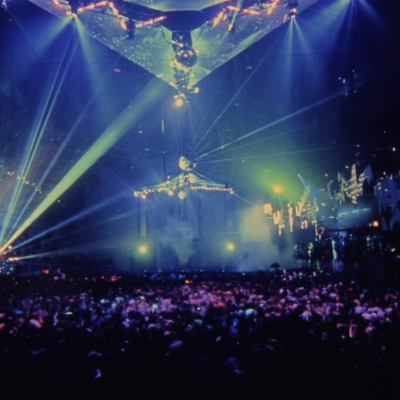
CLASSIC CLUBS: The Hordern Pavilion
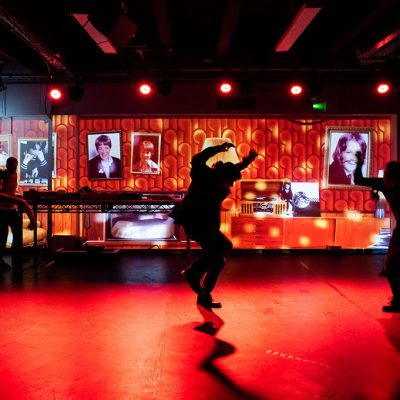
With a huge gay party scene to build on, Sydney held some of the greatest events of the acid house explosion.


Eddie Grant arrived in Britain in 1960 on a mission to show the country its musical future. He was taking bands into the studio and writing and producing hits with them when he was still getting pocket money from his parents. In The Equals he gave us Britain’s first multiracial pop band, challenging the dour monochrome of his adopted home with the defiant optimism of ‘Black Skin Blue Eyed Boys,’ and the timeless groove of ‘Funky Like A Train.’ A slew of ’60s and ’70s projects pushed soul, ska, reggae, soca and even rock into new shapes, giving black British dance music firm foundations. As a musical magpie, he combined styles from across the Caribbean, Africa, the UK and US, pioneering a cross-cultural approach that would underpin decades of future British sounds. Under his own name he’s a chart star with a barrel of international hits your mum knows: ‘Electric Avenue,’ ‘Living on the Frontline’, ‘Walking on Sunshine’. He’s also a relentlessly experimental producer, creating flagrantly unique tracks like ‘California Style’ and ‘Timewarp’, that are sampled, stolen and re-edited to this day. He launched his own labels Torpedo and Ice, and opened perhaps the first black-owned studio in Europe. At one stage, to capitalise on massive export success, he even bought his own pressing plant. Eddy Grant is an artist who mastered the industry rather than let it ever control him.
Interviewed by Bill, 16.10.02 in Stamford Hill, London
Describe what it was like for you arriving in Britain.
It was December 1960. I was 12, and when I landed it was cold and wet and I can still remember the exact smell and look of the place. The very first thing that grabbed me was the smell of coal burning. It was asphyxiating because I was used to wide open spaces. Everything was grey and black. England had two colours in its decorations: brown and cream, and they permeated everything. Cars were black or very dark colours. Men wore dark suits. Dustmen wore suits, so I thought, ‘This country’s gotta be happening! A guy’s a dustman and he’s wearing a suit!’ You never saw anyone in a suit in the West Indies unless someone was dead or very important.

My dad took us to Burleigh Road in Kentish Town and said ‘Okay, we’re going to our new home now.’ I could see this house with about 50 doors and I thought ‘Jesus, my old man has really arrived.’ But he said come this way, down to the basement and I found out what a basement was. It was cold, damp, and there was this lino on the floor, and he showed us into this room, which was gonna house the four of us, and my father and mother would sleep in the front room. That was a culture shock for me. I never conceived we’d be living underground.
Where did your parents come from?
Guyana. My mother’s from Plaisance and father’s from Berbice. My dad came over in 1957 and my mom a few months after that. Three of us three years after that. I’m the eldest. My father was a musician, primarily. He also mended bicycles and cars. Here, he worked at Blackman’s Motors in Kentish Town. He also had his own little garage that he would go to work in after work, and before playing gigs at night, so my father held three jobs.
What was his music?
Dad played the music of the time, which was Harry James, some jazz, Caribbean and all of that. Like all the musicians of that time, he played with different people. In Guyana he played primarily with a band called the Luckies [The Lucky Strike Orchestra]. When he came to London it was a similar situation. He’d play society parties, anywhere the band got booked, in clubs, pubs… There were pubs like the Tally Ho in Kentish Town that were very popular for music, trad jazz in particular. It was a very esoteric time, you had West Indian musicians playing with English musicians in all kinds of formats. Guys like Harold Beckett, Joe Harriott, Ivan Chinn. Iggy Quayle, the keyboard player, was a contemporary of my father and played in the same bands. Harry Beckett played with Herbie Goins and the Night Timers, but he was like a gun for hire. Herbie was around when the Equals, Jimmy James, Geno Washington, Georgie Fame, Zoot Money, The Gas, a whole circuit of bands. It was called the ‘Gunnell circuit’ because the Gunnell Agency controlled it, which was the Flamingo, the Manor House, Eel Pie Island, The Witch Doctor in Catford, they were the local gigs.

Did you learn music from your dad?
My dad was always interested in me learning to play. I can remember being four or five and taking my dad’s trumpet under the bed from the night before and making the most unbelievable racket, and he would come down and grab it off me. I learned the embouchure of the trumpet very early on by watching him. Once I came to England I didn’t touch the trumpet much more, though I did play bugle in the Boy’s Brigade. The drum was my instrument there. My dad tried to send me for piano lessons, the teacher was a woman called Mrs Philadelphia, Her first name was Prophet. She was a great teacher. My brother Derrick couldn’t absorb it as quickly as she would like so she would take a ruler or pencil and hit him across the knuckle. And I got totally pissed off because nobody hits my brother, so I started skiving off. My older uncle who had charge of us in the house found out, and he beat us so bad! We never went back to piano lessons. So that was the end of my musical education.
What did you listen to in Guyana?
Everything. Guyana is a totally multiracial society. In Guyana I’m hearing Indian music, African, western, American, Latin and Dutch on the radio at night, calypso from Trinidad. I heard everything that there was and listened to everything. I had a very eclectic base and my music shows in that.
When I came to England even more so. There was African, and early bluebeat, and British artists were copying Americans and doing their own version of it. Lonnie Donegan was a particular favourite of mine. I really liked trad jazz, I loved Kenny Ball & the Jazzmen, Acker Bilk, Monty Sunshine, Humphrey Lyttleton. Because I played trumpet as my first instrument, I was really into Freddie Hubbard, Clifford Brown, Miles Davis, Dizzy Gillespie.
So at the same time as listening to trad and modern jazz, I listened to pop, the Shadows, the Beatles, and then the Rolling Stones who I listened to a lot, because they were playing real hot rhythm and blues from the American standpoint. I soon realised they were playing Chuck Berry’s music so I made a beeline for him, although he was in prison at that time. When he came out I saw him with the Nashville Teens at the Finsbury Park Astoria [later the Rainbow]. That was the moment that changed my life. I suddenly saw my mission in my life. I saw something in Chuck Berry on stage and thought I had a chance as a musician.
Why did he have such an effect?
There were very few people that can play like him. It’s accessible and accessible to your spirit, and he’s very articulate. He writes little stories so it’s like calypso. Early on in my life, apart from my father, my first hero was Mighty Sparrow. When I heard Chuck Berry it was similar. Little stories being told. But I still spoke West Indian, so I would have to learn that vernacular. I had a West Indian soul and I would now have to find an English soul. Chuck Berry delivered the path.
What were your first impressions of England?
I saw it as opportunity, because my dad had worked really hard to bring us here, so I had to make the best use of it. I made English friends very quickly so I could get into their homes and learn how they speak. That was a conscious thing. I read a lot. I had to get my head into English racism. I had to get to understand why they were like they were. They reacted to us in a different way and I’d never met that way. I was planning to be a doctor, train here and go back to Guyana so I thought none of this would matter once I’d gone, anyway.

Where did you go to school?
I went to Acland Burghley, an incredible school. It produced a lot of very talented people, I played in the school jazz band with Derek Griffiths, a great actor and musician, Maurice Lavey, Danny Dukowski, Gus Ibegbuna. All the teachers were great role models and there were no black teachers there, either. It was 99.9% white pupils. I was in the vanguard of the black invasion of the school, so to speak. All the black kids did well there. My brother Rudy was a fantastic footballer, brilliant. He played with all the great players of the time, the Bowles and Bests and Marshes.

Were there any notable role models for you in Britain?
I have to call the name of [St Lucian-born pop singer and sound engineer] Emile Ford. When I came here I saw Emile and he was black and he was in a position where people looked to him as a star. [Actor/singer/songwriter] Kenny Lynch also was a star. In a funny kind of way they didn’t belong to the community because they’d been appropriated by the white society. But nevertheless they were black people and they represented a vanguard. So I knew it was do-able.
There was the injustice of race, though. England was quite inclement to its foreign children. I’ve seen great musicians give up because of their race, and great artists, too. Although I’ve done well I am the one out of hundreds and thousands that gave up on the way, like the one salmon who made it up the stream to mate.
They seemed to accept what was given to them. When the time came for me, which was with the Equals, I knew it wasn’t going to be like that for me. We were going to be the first multi-racial band of its kind and, as such I had to establish a whole new modus operandi.
Did you know the early black London DJs like Count Suckle and Al Needles?
Suckle played the Roaring Twenties with his sound system. I became very close with him many years later. Suckle moved on from just being just a DJ to owning the Q Club in Praed Street, where I played early in my career. It was the premier black club in London. That and the All-Star Club which was owned by Ken Edwards in Artillery Passage in Liverpool Street. They were the two main black clubs in London during the ‘60s.
I played all of them, every ballroom, every church hall, every barmitzvah in this country. All of them. The Equals were a very popular band. Money was good. And the food, too! We played youth clubs, we played Blytheway Mansions, we played York Court.
How did you get your first break?
This friend of mine Georgie took me to meet a rasta one night. At that time rastas were very serious men and you didn’t see them around London really. He was called Roddy and he said he knew Admiral Ken, a disc jockey who owned the All-Star Club. He was just about to go to Ethiopia but he took me to the All-Star the night Stevie Wonder was appearing. It was jam-packed, black with people. Afterwards he took me to meet Ken [Edwards] and asked him to give me an audition.
We came down and he loved us. There was us, the Rick’N’Beckers, and Heart & Soul. All black bands. Rick’N’Beckers played more ska-oriented soul, Heart & Soul were total soul, and we played anything from James Brown, Rufus Thomas, Sonny Boy Williamson, Rolling Stones, Chuck Berry, really eclectic. We had no bass guitar and no organ and no saxes and you couldn’t play a black club without at least an organ. But we went into the All-Star and mashed it up! Just pure energy. Our first gig supporting was Wilson Pickett and he came on and he was awesome. He had a pick-up band. Sometimes they’d use Herbie Goins. We gave those guys a good run for their money. One night when we played with Solomon Burke, the crowd didn’t want to let us off. Every major black artist that came to England we supported.

How did you meet the other guys in the Equals?
I had just made my first guitar in woodwork in school. I’d started to play a little. My father taught me some chords and some guys who lived in our house helped me. One day a guy called Andy Vassilliou invited me to come to his house for a jam session. Very good musician. Exceedingly good. We’re jamming in Mrs Hall’s room, who was John Hall’s mum, who became our drummer. A fantastic atmosphere. I said to John one night, this is all well and good, but it ain’t going nowhere. Do you want it to be a group? ‘Yeah, I’d like it to be a group’. Well let’s put it together, let’s look for a singer and guitarists. So there was a guy called Eddie Faisems, an Indian guy who could play the guitar better than me, the Gordon brothers, they were at Barnsbury School but had left to go to work. I was the only one still at school. Pat Lloyd came one night. Eddie left because he was into his girlfriend. And then we were five.
Was it a conscious choice not to have bass and organ?
I decided early on we were gonna be different. Being the musical head, I never encouraged having bass in the live line-up. We recorded with a bass guitar, Calvin Fuzzy Samuels became our regular bassist on record, and there’s only one song we recorded without it. Not having saxes or organ hastened our demise. Ken Edwards our great benefactor kept on at me ‘Yout! Why don’t you get a little organ or sax in the band an’ be like the ‘Beckers, bwoy’. We used to rehearse upstairs at his club and one day he’d locked us out because we wouldn’t get a ‘little organ or bass’! I could see through the keyhole other equipment that wasn’t ours, but we never did find out who replaced us.
How did you get discovered then?
Gene Latter, he was a popular singer in Europe, he made me angry when he said he could dance better than James Brown at a time when James Brown was my God. But I didn’t know he lived next door to me! We were rehearsing one night doing ‘I Won’t Be There’, which I’d just written. There’s this knock at the door and this guy says, ‘Who’s that song?’ I said ‘It’s mine.’ ‘You didn’t copy it from Rufus Thomas or Wilson Pickett or anybody?’ ‘No, it’s mine.’ He said, ‘How would you like to record it? I’d like to make a record of it. I know somebody who would take a listen.’ And he took us to Eddie Kassner at President [transatlantic music mogul who also managed The Kinks]. He took us into the basement at Kassner House, 25 Denmark St and set us up among the sheet music. Eddie came down, liked it, and by the time we left, Gene was our manager and Eddie Kassner was our record company.
What motivated you to write in the first place?
My good friend Gus. He said there was this guy Bob Dylan and he writes his own songs, I’m sure you can do that. You can play chess and you know science, I’m sure you could do it. Then a guy called Lee Shepherd who became our manager said to me, ‘You should really write songs, you have that kind of intellect.’ But I had no way of knowing how. I started humming things and eventually a couplet started to come and I’d write them down. Nothing significant happened until a girlfriend gave me a tape recorder. Then I started really seriously. I’d write ten songs in an evening.
I started writing songs with other people in mind. I remember writing ‘Hold Me Closer’, which started as the A-side of ‘Baby Come Back’ and ended up as the B-side, and offering it to all my friends at the time. I eventually gave it to Lincoln, who was always a good spar for me in the Equals. We became really good friends. ‘When’s your birthday, do you wanna a piece of my song?’ It wasn’t till later I realised what value a song could be.
The Equals were big in Germany before the UK.
Yeah. Equals used to do weekend gigs in Germany and we took over there in a really big way. ‘Baby Come Back’ was a hit 18 months before it was a hit in England. And remember, I was still at school. The other guys were content to get up and play all over the place but I could really only go out at weekends and when we went abroad my dad would come with me. We’d get off the boat at Bremerhaven, drive to Bremen, do a big club, do the clubs around north of Germany, Hamburg, Gütersloh, then we stretched out into Dortmund, the Ruhr, Stuttgart, Berlin.
Were you still at school when you had a hit?
We got a hit in Germany in 1967. I didn’t leave school until after ‘Baby Come Back’. When you talk about boy bands, the Equals would have to have been the first! There was just not anything like the Equals. You remember I talked about England being two colours brown and cream, the Equals were the first to dress brightly. We would be multi-coloured people in our multi-coloured clothes. We loved it. It was strong. From that we went wilder and wilder till eventually I wound up with the white hair.
How were you received in Germany playing as a multi-racial band?
Never had a problem. The Equals, because we were not girlish, we got big respect from guys, We could play Club 51, the rocker’s heaven, and we played places like the Shoreline Hotel [in Bognor Regis], the first youth hotel.
Was that like a YMCA?
No. It was a number of different caverns, which could all house different groups, one playing this bay, another playing that bay, and more women per square foot than you can imagine. You had kids taking pills, everybody was on pills [amphetamines]. Dozens of kids sleeping outside on makeshift beds. How that was allowed to carry on in that time, god only knows! Great environment.
Back in London did you get to play Flamingo?
Yeah, that was standard fayre. We played Tiles, where Jeff Dexter DJed. Twisted Wheel in Manchester, Top Hat in Newcastle. We played every gig in this country. Sherwood Rooms in Nottingham. We took over from Geno Washington because we had the added benefit of getting a hit record. I said to Geno, ‘It’s okay mashing it up in the clubs but you gotta have records.’ He was big, he was god. To upstage Geno, we had to be doing very well. I got the right education in the music business, and I took it very seriously. I learnt the studio inside out, I learnt all the instruments, I learnt to dance. I learnt about property though my father.
When did you sign with President?
It would have to be ’65. I made ‘Train to Rainbow City’ [by The Pyramids] in ’66.
You suffered a heart attack very young, didn’t you?
Twenty-three! The heart problem precipitated my departure. You don’t know who is who until something like that happens. I saw the light in so many regards. That was January 1st 1971. it knocked me out for a year and other people had to come into the band. I got the vision for the future.
So what happened to the Equals after that? What was your vision?
That wasn’t to do with music it was to do with people. The greatest thing in this world is love, it blinds you to everything. And the first love of my life was the Equals. I would’ve died for the Equals. I didn’t go out to clubs, I wasn’t a drinker, I wasn’t into drugs, I wasn’t into girls. I just wanted to play music and these guys were my instruments, they gave substance to everything I thought about. I could visualise incredible things for the band and for the music.
You had to leave the band but you continued writing and producing.
I thought the illness would kill me, so I had to do this and come out the band and hoped the guys would understand and allow me to do the thing I loved the most which was to make the records.
You built our own studio early on, didn’t you?
My manager Lee Shepherd was an ex-actor, RADA, and involved in property in a big way. He had a brochure from an estate agent on his desk. I noticed one that had a property in Clapton with a coach house on the corner. It was 25 grand which was a hell of a lot of money then. I went to look at it; it was a mess, falling apart, a dump. Lee said it was a bad buy but I bought it anyway. I bought it in 1973 – exactly at the time when there was a depression in the property market! It took 28 skips to clear the rubbish out. Eventually I got to the point where I could call it a studio. Bought some equipment from Dave Robinson [of Stiff Records] and some from Manfred [Mann], who had owned the Maximum Sound Studio in Old Kent Road.
So I built the first black-owned recording studio in Europe. It opened late 1974, early 1975. I got Frank Aggarat who became the first black engineer in this country, through giving up a very lucrative job as a technician to do this job and make the dream a reality. We really tried things. And because we were new and totally idiotic, we did things and they happened.
Did you use Coach House for everything?
I did, in the early stages. Anything that required more than eight tracks was done outside. Things like the Pioneers I would have started pre-production at Coach House and then gone over to Maximum Sound. Some of the Equals would have been done at Coach House and then gone on to Manfred’s studio. I’d know if I heard them because Coach House sounded really different to anywhere else. It helped me to establish myself through that sound, you know.
What was the inspiration for ‘Funky Like A Train’? It’s quite different to anything that the Equals had done till then.
Well you know the music can never be one way, because I was always looking for something else. So experiments continue and occasionally when you experiment you find a germ of an idea, a germ of a song, and that stands out from the rest. ‘Funky Like A Train’ just happened to jump out of the group of tracks because I had to approach it in a special way.
It’s mainly based around a clavinet, right? And Ron Telemacque on drums?
It’s the two of us on drums! Like James Brown. I think Lincoln played bass, Ron was on drums, I overdubbed drums, I overdubbed all the other things, the synths and so on. For me the most remarkable thing about it is the actual sound of the train and the synthesis of the voices to make it sound like a train. Even though I did it and I know how I did it, it can still fool me.
Yes, but why are trains funky? Where did the concept come from?
The whole idea is that the funk of a train is quite magical. It sounds like absolute nonsense but when you actually check it out it’s like, ‘Oh yeah I see what’s happening’. The lyrics came to me in a certain kind of way.
Did they think you were barmy when you brought them the song?
You don’t know how much shit I got with regard to the Born Ya and Mystic Syster albums. In the end the record company were asking me every other second, ‘Is that the synthesiser? Is that the synthesiser?’ It was early days for synthesisers and people could only see it making those warbly sounds that some bands had used it for.
How did you get into production?
I was always in the role of making music. When Eddie Kassner signed us he got a guy in called Tony Clark, a Decca producer, who didn’t like the music and wouldn’t stay. I remember going in there and having to sit with Adrian Ibbotson the engineer and he said ‘Okay, who’s producing the session?’ I’m looking at him and I don’t know what it means. I say, ‘You better ask Mr Kassner’. ‘Mr Kassner will only come in and check at the end.’ And so I became the producer of the Equals. After a while it became my band, if there was a piano part, I played it; if there was a bass part and Fuzzy wasn’t there, I played it. In the early years Mr Kassner took all the credit and later he gave me a half credit, but long-term he acknowledged I was the producer of those records.
Did you get producer royalties?
No, no, no, no! No. We didn’t have a proper hit until ‘Black Skin Blue Eyed Boys’. When I wrote it, I had to demo it myself. I put down all the tracks and I remember playing it to Mr Kassner. He listened to it and he said ‘What the fuck is that? A hit, my ass!’ I said ‘I wanna do it.’ ‘Not at my studio with my money.’ I went into ABC Studios in Portland Place and recorded it. When I came back to play it to him I said you’re not having your name on this right? ‘That’s right.’ I played it to him, he says, ‘Edward, my son, you’re making a great mistake.’ I got Lee Shepherd in to help promote it. It was one of the biggest records I’d ever had. It was released on November 17th. Hendrix was dead and immediately thereafter I nearly went.
Tell me about The Pyramids
When the Equals wasn’t happening, I used to go in the studio and experiment with ska. In my father’s house in Kentish Town was a guy I called Georgie but was actually called Roy Knight, who had just joined a group called the Bees, who were backing Prince Buster on a national tour. These were the guys who would become the Pyramids. I went out with them on a few gigs. I was about eight years younger than Roy; I’m a little kid hanging out. Buster wore this little pork pie hat and I got the job of holding Prince Buster’s hat before he went on stage. He’d do a song or two first and then he’d say, ‘Yout’!’ and I’d come on stage and give him his hat, he’d put it on and the whole place would go crazy.
I asked Roy if he would organise with the guys to come and do a session with me. We went to the studio on the basis that I make I will get some royalties whenever it sells. So this guy who’s taking them in the studio is really a schoolboy earning 2s 6d a week pocket money! Remember I told you I can write ten songs in a night very easily? Well, I was about to demonstrate it. We’re in the studio, an idea comes out. Off they go. Anything out of my head. Another song. There are other guys from the Equals there. My brother Patrick and I created a party atmosphere and I started to talk about the things that were happening in Jamaican music. I started talking about the black women in Skaville, bad people that lived in Phoenix City, even though I didn’t know where Phoenix City was. I’d never been to Jamaica. My only interface with Jamaican culture was hearing the sound system playing in the clubs or having parties next door.
We did maybe 15 or more songs. And they’re done, one take. This guy Jimmy Spencely, the second engineer, he came up at the end of the session and says ‘Love the session Eddy but what about the money? The studio costs, the tape. The money is ten pound a man.’ But I don’t have that kind of money. ‘Well, you better find it.’ Any half of them could have killed me. Mr Kassner came down, paid for the studio and the guys. Then when they’d gone, Kassner says ‘Play me the tape. You did all of these today? Jesus!’ So we signed a deal, and I was so glad to have got out of the shit that I didn’t care what happened.
We were in Germany a few weeks later and Eddie Kassner turned up. ‘Edward, something very serious has happened, you know those songs you did, I put them out and people can’t get enough of them.’ I called the band and said if you want you can become the Pyramids; change your name from the Bees. And so they were out there earning more money than we were. ‘Train to Rainbow City’ was the first British-produced ska record to chart. The next record I made with them was ‘A Wedding In Peyton Place’, which again used my voice. I did an album called the Pyramids with them singing. The original session all appeared on an album called Club Ska or something.
What about Symarip?
The guys in the Pyramids eventually ended up being called Symarip, which is Pyramids spelt backwards. ‘Skinhead Moonstomp’! I wasn’t involved in the track but I owned the song; they sold it to me. There are two songs in my entire life that I own but didn’t write, one is ‘Skinhead Moonstomp’ and another one called ‘Why Build A Mountain’.
You produced a couple of all-black rock bands. Sundae Times and Zapatta Schmidt
Sundae Times was Conrad Isidore, Wendell Richardson who went on to sing with Osibisa, Calvin Fuzzy Samuels, who played on all those Equals hits and then went on to play for Crosby Stills Nash & Young and everybody else. They were the greatest group of black rock musicians in the world. There was no band that could touch them. One night Stephen Stills saw the band and he couldn’t believe what he was hearing. So he nicked them. He broke up my band, a band I loved and recorded. They were my alter ego, we played funky soul music with the Equals, and hard rock with Sundae Times. I bought them equipment, I bought them a van, I roadied for them, even when the Equals were selling millions of records I was out on the road with them.
I produced them. I gave them pieces of my songs but I don’t think I wrote anything for them. The album Us Coloured Kids was recorded in about ’68 or ’69. When you listen to the playing, it’s awesome. Conrad Isidore is the baddest drummer I’ve ever heard, period. His brother Reg Isidore played with Robin Trower and his youngest brother Gus plays with Seal. Musical family.
The end of Sundae Times was that the two of them went off with Stephen Stills and played with all those rock’n’roll artists. And Wendell took all the equipment and the van and formed Osibisa. The music industry is so racist, though. Osibisa is the greatest afro-rock band in history, I was meant to be their first producer. Tony Visconti did it instead, and maybe Tony Visconti can produce David Bowie, but he can’t produce Osibisa. So all that great music came out sounding like a little tin cup rolling down a hillside. Kofi is my percussionist when I play live now.
What about Zapatta Schmidt?
I produced them. But they were a bona fide band. A great band too. Zapatta Schmidt and Sundae Times were the two great black rock bands There were not many at that time. When Stephen Stills broke up Sundae Times, I had no one to play with, so when I saw Zapatta Schmidt playing upstairs at Ronnie Scott’s, I thought, yes here’s another great bunch of musicians. So I made a record with them. They were Tony Zak-Edmonds keyboards, Ronnie Telemacque drums, he’s now playing with the Equals, Marcus James, who’s now married to Marcia Barratt of Boney M, then there was Vince Clark the singer and Joe Blanchard the guitarist. All black. They could rock the shit. I used them as my backing band after Vince left them, on my first gigs I did as a solo artist.
When was your first solo record?
My first solo record was made in 1972 as Eddy Grant. It came out on Torpedo first. That’s the album which nobody knows about, the Hello Africa album. It’s just called Eddy Grant. Then it came out on Ice in 1974 in the Caribbean.
I want to ask you about ‘Nobody’s Got Time.’ Why did you come back to it so often. You’ve managed to reinterpret it in so many different ways.
I did it on the very first album, Hello Africa, with a guitar synthesiser. I played that sound on that and on ‘Georgetown Girl’. That album was done in ’72. Then I did ‘Nobody’s Got Time’ again which came out on Ice, the version with the harmonica, part one is the vocal and part two is the harmonica. Part three is ‘Timewarp’. I’ve also done ‘Nobody’s Got Time’ with the Equals on Mystic Syster. They’re all different. That’s what remixing is really supposed to be about. If you’re going to revisit the song you must give it some degree of originality.
And ‘California Style’. Two different records in one tune, what was that about?
Well as I’ve grown and got better facilities, my work has taken on a different shape, but the central feature is that I’m a Caribbean person who has influences from the world, and that Caribbean-ness must stand firm in that firmament. If you listen to the lyrics of ‘California Style’ you’ll hear it talk about me basically. All the music of me. You’ll hear the way in which I’m prepared to stretch and groove and with very limited resources quite successfully. The music of ‘California Style’ and ‘Nobody’s Got Time’ and all the others is me being able to stretch the boundaries of a song, either sonically, rhythmically or lyrically.
What about the second half of it?
The jam? Since it came out there has not been a Trinidad party where that’s not been played. There has not been a successful record out of Trinidad that has not incorporated some part of that record. It’s like a well that people go to for inspiration. That song stands till today.
Were you aware your records were so popular in New York?
I had no idea. After having all the success in the Caribbean, Trinidad in particular, [Ensign Records founder, then at Phonogram] Nigel Grainge had arranged for me to go over to New York. I hadn’t been successful in the States since ‘Baby Come Back’. None of my music, as far as I knew, was meant to be here and yet people knew it. All the guys who were playing in the gay clubs, people like Larry Levan, Jellybean Benitez, all those boys were playing my music. I thought this was incredible, but it was not on a level that could take me into the charts; that didn’t happen until much later. Here I was the underground, so I came back to the UK with a renewed vigour. I’m getting through. It’s not massive, but I’m getting through. People like Arthur Baker were getting my records, my brother sent stuff over to him.
I met Sylvia and Joe [Robinson] at All-Platinum Records [they later launched Sugar Hill], and a bunch of other people. When I finally got through to Epic and Columbia there was this guy called Vernon Slaughter in black promotion and he championed me to that company. He told them, ‘If you wanna know what’s happening it’s this’, and he threw ‘Walking On Sunshine’ on to the table. Eventually they signed me. I went to LA and was a guest of my friend Mike Parrish who took me to meet Stevie Wonder. Stevie wanted to record ‘Walking On Sunshine’ with Aretha Franklin but it had fallen apart. Of course Arthur [Baker] did it, Bill Summer also did a version.
Tell me about ‘Timewarp’
I’d made Nobody’s Got Time again. It’s obviously a track I love. Something about that track fascinates me, and every time I make it I find something else and I add something else. This time I’m playing around and I’m starting to hear an instrumental. So I got the synthesiser and I started to play. I thought it was alright. Then everybody who heard it told me how brilliant this track is. Anyway, we put it out as the B-side of ‘Nobody’s Got Time’ and everybody flipped the record and all the gay clubs were playing it. All the Larry Levans were playing it. They were using it for catwalks and fashion shows. So I thought surely this has got a life of its own.
Not only had it refused to die, but I went to Xenon in New York one night after having been to the Paradise Garage and I heard a wall of sound playing ‘Timewarp’, ‘Nobody’s Got Time’ and ‘Walking On Sunshine’ and they were like absolutely new records. I couldn’t imagine that’s what I had made. Xenon really was like a wall of sound, so many different speakers, and it imbued these records with a whole new set of dynamics. It stunned the hell out of me and gave me a whole new focus. From then on I started to concentrate very heavily on the bottom end of my records. The synth bass, I must’ve been one of the very first people to use it, that bass that’s on ‘Timewarp’ it’s only now that people are using that sound on their records.
What about Nigeria? You spent some time out there, didn’t you?
Nigeria was like Trinidad for me. They both came at a very important part of my career and they afforded me the celebrity and money to be able to do other things that transported me to another level. I’d been successful in Nigeria with the Equals in the first configuration in the ’60s. I couldn’t believe that I would ever be more successful than the Equals were. It happened in Nigeria, so much so that I ended up recording in Yoruba, two albums for Nigeria specially which were immensely successful. Tunes I’d had originally done in English and lengthened. ‘Wipe Mon Fe E’ which is Say I Love You and that was 18 minutes long. One side of the album. I loved the record. It was a moment in time for me and Nigeria. We were selling so many records into Nigeria, I bought a pressing plant – the British Homophone pressing plant in New Cross. I was manufacturing so many records for myself and shipping out to these places that I thought it would make sense to own my own factory,
So did you meet Fela?
I did interface with most of the other artists at the time, like Sonny Okosun who really introduced me into Nigeria. But I didn’t come into contact with Fela at the time because he’d just been beaten by the army.
Did you tour in Africa?
No. Although The Equals went to Zambia at the end of it all. In ’71 and ’72.
When did you leave the UK?
November ’81. It was time. I’d promised myself when the time came I’d know. I’m not one for the cold weather. It was a particularly cold winter and I was driving my daughter down to school at Parliament Hill and my brother’s car, going down the hill, wouldn’t stop. It was going straight for the crossroads and I turned to jam on it onto the kerb. And I thought no, leave the country right away. It came to me like that. I told my wife I was going out there to find a house to fix it up and then left quicktime. Not many days after.
Mind you, when I left I lost all my baggage with all my songs for my next album. When I got there I didn’t have a studio, nothing. No clothes, no songs. A German record company were threatening to sue me over non-delivery of my album. I had to build a studio quickly. I got one in about six weeks, and the album was Killer On The Rampage which would spawn ‘Don’t Wanna Dance’, ‘Electric Avenue’, ‘War Party.’ That album was the quickest flash of recording. I went there in November 1981 and by the end of 1982 the album was out.
What motivates you as a songwriter?
To tell a story in a short time in a way that nobody else would, that is the ultimate for me. That’s why I like songs like ‘War Party’, ‘Gimme Hope Joanna’, ‘Living On The Frontline’. They would be called protest songs, but in a way that nobody else would protest. Always just to do something slightly different, because slightly can be a whole heap in musical terms. The difference between G and G sharp is only one little step but it’s a whole heap in terms of music.

© Bill Brewster & Frank Broughton
To celebrate the publication of Richard Norris’s excellent memoir, we’ve exhumed this brilliant 2010 interview from our capacious vault. In this wide-ranging interview, we cover lots of ground that Richard writes so well about in Strange Things Are Happening, from his teenage punk band, the Innocent Vicars, through to Jack The Tab with Genesis P. Orridge, The Grid and his solo project Time & Space Machine. A vivid account of clubland and beyond (the wizard’s sleeve).
What thing are you most proud of?
The thing that I’m most proud of is generally just the ability to keep making records really. Looking at it as a long haul rather than instant gratification is the thing that I’m proud of and I think the way I make records now has definitely got that in mind. I’m aware of current trends but I’m thinking a little bit like what they’ll sound like in twenty years’ time as much as two weeks’ time. In terms of music, probably ‘Floatation’, The Grid’s first single, I would’ve thought would be up there just because it was quite a timely record in that it was sort of the peak of Balearic Ibiza period but just managing to kind of marry John Barry with Café Del Mar was quite an achievement. More recently, I think one of my favourite things has been the mix of ‘Roscoe’ by Midlake which, in terms of the Wizard’s Sleeve, is probably the one that, if we were going to do it again, we wouldn’t change at all. [Laughs]
How do you make sure the machines that you use don’t force you to make music their way?
I think there’s two parts to that. When people come round to my studio they’re quite surprised because I haven’t got racks and racks of gear. I only use very very minimal bits of equipment so my first thing is therefore melody and ideas rather than, ‘How does this computer’s internal logic work or how do I turn the reverb off?’ Also, I’ve been working on making a record and I’m writing the whole thing on just the one sound, which is just a quite, cheap Fender Rhodes copy, which is quite neutral. With modern technology you’ve got unlimited sources of sounds that you know that every time you do put up a sound it can lead you in different areas so I’m trying to pare it down to this one noise at the moment.
On the other hand, I like the machines talking as well so it’s like a bit of both. The thing I like the most is the bit where you can hear that it’s humans and machines, so it might be a very stark and very motorik rhythm but it’ll have a very human melody. That’s probably my favourite thing about music really, like Neu! where it sounds very machine-like but it’s actually quite human as well.
Do you always know when you’ve made a hit?
I don’t think so. I always think I’ve made a hit [laughs]. But yeah, I am an eternal optimist. When we [The Grid] did ‘Swamp Thing’ which was such a big hit, the record company said, ‘Right, well the last one’s got to number three so the next one’s got to be number one’. So we were going in to make a record with the pressure that it had to be number one. And you can’t really write like that and I think that if you do write about music thinking that it’s going to be a hit, it’s never going to be because it’d be just too contrived.
Do you think that’s because of who you are because I’m sure that someone like Stock, Aitken and Waterman would just knock them out, because that’s what they did.
Oh yeah, I think so. For me personally, it’s more difficult to make pop music than it is to make leftfield music but that may be just me, I’m sure Stock, Aitken and Waterman would tell you the opposite or Elton John would say the opposite. But I don’t know, I think because of the changing nature of the music business and also how I think about music, I’m not that interested in having a hit, but then success and a hit doesn’t necessarily have to be the same thing. Our [Beyond The Wizard’s sleeve] mix of ‘Roscoe’ was a hit to me.
Well, hit as in a song that has legs rather than necessarily getting into the charts.
I think you know when to finish, definitely. That can be quite hard if you’re working on your own, as I was doing with The Time & Space Machine record. There’s a natural period when you’ve done it and sometimes – particularly with remixes – if you do something and the record company come back and say, ‘Ooh, can you just change one little thing?’ It’s quite hard because you’ve kind of done it and the arc of it has gone to beginning, middle and end and you’re like, ‘Well, I can’t really…’

Why do you think DJing leads so naturally into producing and remixing?
The bit where it’s great is when you are remixing and then can go and play it out. I remember playing things out where the new T Bar is downstairs, they’ve got a lovely Funktion 1 system and just playing a few things on that before people were in the room and just hearing this great sound and how it’s going to work on the dancefloor really did affect what I did with the records. So it’s kind of hand-in-hand.
I mean, I started off aged fourteen playing guitar and shouting in a kind of Buzzcocks type band and so the music bit came first before the DJing. I’ve never really put myself up technically as an amazing DJ. I know how to do it but I’d say I’m much more a musician than DJ. They go together because of the process. If you are out and playing all the time and listening to other things and being in that environment and then you can bring that into the studio. And that kind of energy that you get on a Saturday night if you can bring that into the studio on a Tuesday morning then that’s great!
You said you were in a band at fourteen, what was the band?
We were called the Innocent Vicars.
Where did you grow up?
In St Albans and we did a little single and got my dad to drive me up to London, and it was the first time I’d come up to London. I’d kind of read about Rough Trade in the back of NME but I’d never been to any of them… So we stopped off at Rough Trade and they took half of the records and paid us money out of the till straight away so we paid for the whole pressing really with one stop at Rough Trade. And it was quite intimidating that shop. But, you know, they were great.
Then we went from there to the BBC and took the records to John Peel and just went up to the desk and asked to see him and he came down, took it and played it the next day so [laughs] so from then on I was like, ‘Right, this is what I want to do’. I think part of that was it was quite an interesting Undertones-y kind of record, but also because there was a little period of time where if you were really young and were writing and putting out records, it was really really encouraged by the generation above. There was a St Albans label called Waldo’s and they had bands like The Tea Set, The Bears and The Bodies and that became Bam Caruso Records which is the psychedelic re-issue label which I worked for later on. I remember going around to see them and they were really welcoming. As a little kid you thought they’d tell you to eff off but there was a definite period – I don’t know if it was particularly PC to encourage the kids? It was very open. It was lucky we hit that thing, I hope it’s the same for anyone that’s fourteen and making music. I hope the avenues are open like that. Because that was it for me after that, I knew what I wanted to do.
What happened to the rest of the Innocent Vicars?
Bloody hell! I don’t know actually! I think the drummer Cali looks after Nick Drake’s estate. The rest of them, I’ve got no idea. I haven’t heard from them in a long time. I have tried to track them down on numerous occasions. But I also found out that there’s another band called the Innocent Vicars in America who did a funk album but I’ve never found it. I’m wondering if this record actually exists because why would there be two bands called the same name when it’s such a ridiculous name?!
How did you wind up at Bam Caruso? Was punk your formative influence?
Yeah, pretty much. Just the excitement of it. There’s two things really. One was the DIY bit of it. But the other thing was the romanticism. Malcolm McLaren is looked upon as a bit dubious really but I like how he always seems to have a story, he has a romantic vision for everything. I really like that. I was always much more a Pistols person than a Clash person because of that. I just like the ideas he was bringing to it. Putting odd things together that didn’t really work, as he did later on with lots of other projects. I like the idea of DIY and of something dramatic.
I got into Bam Caruso through Waldo’s, run by this guy Phil Smee and Cali (who was the drummer in Innocent Vicars). Phil’s done a lot of sleeves for Ace and Charly; he did a lot of Elvis Costello records, designed the first Motorhead logo. He’s an amazing record collector. I used to go in the school holidays and work for him. He’s got this big house, there’s probably more records than furniture. I don’t know how many thousands. We used to sit there all day just making up cassettes of disco. I remember acquiring someone’s mobile disco collection and just sitting there all day making disco cassette tapes. We’d invent genres like ‘cosmic cowboy’, which was psychedelia but it had to have a slightly trippy edge to it. Phil invented the word ‘freakbeat’ which is basically mod gone a bit wrong. It was the most idyllic apprenticeship for 19 year old trainspotters. It was perfect. It was psychedelic university. Probably the most formative influence of my career was Phil. He was a very, very generous sort of character. Just allowed me to do what I want. We had a magazine called Strange Things Are Happening, which I was really encouraged in.
So after you were in the Innocent Vicars, were starting to produce in your bedroom?
Mainly guitars and little amplifers and…
TEAC four tracks and things like that?
Yeah a bit but I don’t think I even got that far. I used to get old radiograms from jumble sales. I used to get those and take the speakers out and weld them together and do different things with them. I used to do tape experiments with two tape recorders, very primitive double tracking.
Was that inspired by Cabaret Voltaire?
Pretty much. There was a record on Waldo’s called ‘X. ENC.’ by Nigel Simpkins, which was the same sort of period as Cabs. In that they cut up very old records and certainly Cali and Phil when they made tapes they would put in spoken word bits, I got really interested in that from then. By the time My Life In The Bush Of Ghosts came out I was fairly aware of using spoken word and stuff like that but that then was a big step for me. Even today there’s a strangeness about it that’s really appealing and it’s got a darkness but it’s got a funk to it as well. If there is one record that is most influential, I would say it’s that. It’s a fairly obvious one for people coming from sampling and stuff like that. But it was Phil and Cali that inspired me more than Eno.

What was the link between that and Jack The Tab?
Well we were writing this magazine Strange Things – it was a slightly more cult and fan-based version of Mojo. There’d be comics and books but anything that was slightly towards ‘60s psychedelia. I went to interview Genesis P. Orridge in about summer of 1987, ’cos we found out he was a fan of Bam Caruso and psychedelic records. Previously I thought he was some kind of strange Alastair Crowley nutter. I didn’t really think of him as being someone who was into the sort of records that he was. So we went to interview him about it and he was fascinating. I wasn’t a big Throbbing Gristle fan – they had a slight love/hate relationship with the press. But he was a real enthusiast. He introduced me to things like Martin Denny and he was really into Tiny Tim and he was massively into psychedelia as well. In terms of things like exotica, it hadn’t really surfaced yet and he was massively into that. He had a great dark sense of humour that was obviously being lost on people. People thought he was a po-faced mad magician or something. So we went to interview him and he said, ‘Have you heard of acid house?’ and I was like “No! but it sounds great… psychedelic dance music. Brilliant! Let’s do it.” He hadn’t heard any records either, he had just heard the words “acid house” because I don’t think there were any records then? There probably were some records. X-Ray’s ‘Let’s Go’ was probably earlier but we hadn’t heard anything. We just thought, “That sounds amazing, let’s go into a studio next week.”
So we went into a studio in Chiswick – it was probably September ’87 when we went in, there just happened to be this guy, Richard Evans, who went onto become the main engineer at Peter Gabriel’s studio years later. There was an Akai S950 and an Atari computer. I bought a load of people from Bam Caruso and Genesis brought a few of his mates including [Soft Cell’s] Dave Ball which is the first time I met him. We just sat there with piles of records and loads of videos and tapes and stuff and just put it all into the computer. And we had a rule that we had to record and mix a track in an hour. This guy was so fast on the computer and there were 12 of us in three rooms, including children and a dog and stuff and people sort of splicing a bit of tape over here and finding a bit on the VHS and throwing it all in. And everything was first take. There were a couple of keyboard players and so we just bunged it all in. And ever since, I always thought everything takes too long in studio because I was used to making records in an hour, which is such a weird concept these days. But it was great! It was just an amazing thing. So we made this record which we thought was acid house and by the time we’d finished it we’d heard some acid house. So we put out this one single which incorporated elements of an Adonis track, ‘No Way Back’. That was the first one we’d heard and by then we’d started hearing them and then we started going to Shoom just a bit after that.
Who’s ‘we’?
Me and Genesis P. Orridge, we all used to go to Shoom. And the first person we met was Andy Weatherall, walking down the stairs. Who very proudly showed off his Psychic TV tattoo which I think he’s since had covered up. And ever since Gen thought he was the King of Acid House because he thought he invented it. I really think he thought, ‘These are my people and this is my time’ and in a way, in his mind, it was. But I don’t know if anyone else would’ve felt the same. I remember everything was very kind of loved up at the time and he sent in his picture for his Shoom membership card wearing a T-shirt with “Hate” written on it and Jenni Rampling wasn’t very impressed. Didn’t quite fit into the peace and love manifesto [laughs]. We used to go down there every week. Lots of people couldn’t get in and we’d make sure we’d go before 12 and we’d always bring something, like a T-shirt or a record or something and they’d go, ‘Ah great, come in!’ It sort of dovetailed into going out really.
There’s something that I quite like about British music is when you hear something second-hand and you make up your own idea of what it would be like. The same happened in psychedelia, hearing about San Francisco and all that. To get the records it took quite a while, there was probably a delay of about a year.
Well, they all sound like Lewis Carroll Does San Francisco…
Yeah I think that’s partly ‘cause there wasn’t a war going on that affected the British people in that they might get drafted. We were allowed to revert back to childhood. It was our idea of what psychedelic music with sampling would sound like. And the weird thing about it is that it sounds like Beyond The Wizard’s Sleeve. I’ve kind of gone full circle.
Obviously you saw the connection between psychedelia and acid house – it’s quite weird because it was a big break in dance music in this country because of all the old soul boys who had obviously been alienated by the psychedelic nature of it. But yet there were other people like Pete Tong who were quite straight in a lot of ways, embraced it. It was quite a strange time. Did the psychedelic aspect of it appeal to you?
Yeah, absolutely. Having worked at the psychedelic re-issue label and writing about that period, I was really disappointed that I’d missed it basically. So I thought, ‘Right, this is it, this is my time for something to go on.’ And it did feel really special. There was a self-consciousness about it, you knew there was something going on. Even though there weren’t that many people, not to start with anyway. The psychedelic thing, there are different strands that go together. I can definitely see it from Mancuso and his going to see Timothy Leary’s League of Spiritual Discovery talks and bringing that into The Loft. Because there’s definitely a psychedelic link there. Also there was a mix that we did of Findlay Brown’s ‘Losing The Will To Survive’ and Mancuso really liked it but he wouldn’t play it because the lyrics were negative. And I thought that was really interesting that there’s this thing that goes through all the records that he’s played. So there’s definitely a link there, although obviously I didn’t know it at the time.

Did it feel like it was going to be something massive when you were involved in it? Did you think it was going to explode or did it feel like this little secret thing that you liked?
The one thing that was really interesting about it was that it seemed to change very quickly. So from people going to this Gilles Peterson thing on a Sunday at Dingwalls where people were wearing very kind of Gaultier, uptight, black and white with very shiny shoes to completely the opposite: very loose, quite hippie. That was almost overnight; it was certainly no longer than two months. And because it was so quick, you didn’t have time to think of it as ‘your little thing’. But I do remember walking down the street in Euston Road at four in the morning in the early summer of ’88 and I was wearing a Shoom T shirt and someone over the road was shouting at me and they were wearing a similar T-shirt. There were like these lone beacons of acid house-ness and that felt like, ‘Oh right! There are more of us out there!’ I never wanted to keep it elitist even though at the time I was definitely quite snobby and wouldn’t go to the big raves because anything over 2,000 I thought was a bit too big – which was a shame because I’m sure I missed out on some great things. So I did have some elitism but mainly I wanted as many people as possible to get into it really.
I think it was so caught up in it, I didn’t really feel a need to keep it small. Even when the press got to it. Having read Sidney Cohen’s Folk Devils & Moral Panics: The Creation of Mods and Rockers and the way the press reacted to that and even that Marek Kohn’s Dope Girls about the 1910s to 1920s which is an amazing book about moral panic. It was the same thing – you could almost mirror acid house in what happened then. It didn’t really bother me, I thought it was quite funny. I think for a lot of people reading about it in The Sun was the first thing they’d heard about it. I loved how within days they had ‘Buy Our Smiley T-Shirts’ on the same page saying, ‘Drugs Are Really Bad’ and ’10 Bad Things About LSD’ by our doctor Vernon Coleman. They really went for it for a few days.
How did you get together with Dave Ball?
We did one track and we just got on really well…
Did he go to Shoom as well?
He was a big northern [soul] kind of guy and used to be able to the backflips and everything. Not sure whether he went to Shoom, he probably did. He’s always been a clubber really. We didn’t go that many places together actually, not until a bit later on. But I think he had his moments… and he still does. After Jack The Tab we were going to do an album as The Grid and The Grid was initially me and Genesis and…
Was The Grid named after the Lime track?
It wasn’t, but then we found the Lime track at almost exactly the same time and did a cover of it. We just had a list of names, including The Matrix, which was one of them and various other things. And Dave knew the Lime stuff and was very keen on that end of things. And stuff like Klein & MBO. Loved all that era. We were both massive Hi-NRG fans anyway. So it kind of fitted.
Genesis was going to be in The Grid and then we had some meetings with some record labels and Gen kind of didn’t want to do it because it was Warners and they’d had a deal with them before and it didn’t happen so we said, ‘Alright so we won’t do it’, and the guys from Warners said, ‘We want you to do it on your own’. So the plan was to do an album which would use house music or dance rhythms but as a kind travelogue. So you’d have an English one, an American one and a Latin one and do it with a load of different producers. But then Mark Kamins did something almost exactly the same and I was like, ‘DAMN! I really wanted to do that’, so that got scuppered. But I was signed to Warners (East West) on a solo deal and still was going to use loads of different producers but the first person I worked with was Dave and it worked so well we thought, ‘Sod it! We’ll just do it together’. So for the first album Dave wasn’t even signed, he was on the production end of it. But it changed from the second album.
So what was The Grid experience for you? It was sort of a changing era of music…
Part of it was great because it was coming from our slightly more ‘art school’ approach, slightly more experimental end of things. The bands that me and Dave really bonded on were basically the Hi-NRG, Suicide and Kraftwerk and a general art school mentality. But then that’s just one end of it. On the other end of it we had quite a lot of commercial pressure because we were signed to big labels. So there was always this kind of thing of ‘You’ve got to have a hit record’. We got signed and dropped from three major labels. It was quite schizophrenic really… our taste was quite broad. We loved pop music and we loved experimental music so it was trying to marry the two that sometimes worked really well and sometimes didn’t work at all. And a lot of the time we were putting those records out so we were making our mistakes in public. There is a great compilation album of The Grid to be had but there is also a not-so-great one as well!
The fact that that hasn’t come out is due to the three record label situation?
Yeah. We got dropped after we’d just done ‘Floatation’. We didn’t have a deal at all. The only reason we got a deal with Virgin was down to Boy George. We did a mix for him and he just completely championed us. No one was going to touch us because we’d just been dropped. It’s very rare to get dropped and picked up again. But he just really, really went with a real enthusiasm to Virgin and they picked us up for the second record and at the same time we got a new manager called David Enthoven. He hadn’t been doing anything for years – he’d been basically doing NA and AA and any kind of ‘A’ that you want. He had last been seen when he was managing Squeeze, being stretchered out of Madison Square Gardens for some kind of rock‘n’roll-related accident. In the ’70s he’d been this massive manager. He’s the ‘E’ out of EG Records, he managed Roxy and T-Rex. He was quite a player for the late ’60s through the ’70s but then had fallen into a bit of disrepair. But then we were signed to Virgin, he called me up and said, ‘I heard your first album and I cried’. A real posh, Chelsea, kind of slightly Austin Powers-esque type character. He said, ‘Yes, yes it reminds me of first Roxy Music, I have to manage you’. So I was like ‘Brilliant! Well, I’m not going to turn him down, he sounds amazing!’. So he started managing us. He was an amazing character and pulled in for the Four Five Six album, most of Roxy Music on it and Robert Fripp and loads of other people. Sun Ra did a bit on it, we got an insane list of people on the album, pretty much down to David. Who then went on to manage Robbie Williams and make stupid amounts of money! He met Robbie through us actually, through one of our guys. A fantastic character, worthwhile just for the stories.
Dave had quite a lot of success with Soft Cell so does he have an innate pop sensibility?
Absolutely. Certainly in terms of arrangement and simplicity and in terms of ‘hook’-iness. He’s very good at that. He’s a massive soul fan and also a massive Throbbing Gristle fan so quite wide Catholic taste. We are also drawn to dance music that’s based on a gay tradition. We’re drawn to ‘camp’, we’re drawn to artifice and to Hi-NRG; to Divine and Bobby O. Not in an ironic way. We absolutely love them. Some of those influences coming out and presenting them to the public can sometimes be misread as us ‘trying’ to get a hit. But actually we’re just trying to sound like an Italian disco record from 1982.
What’s the connector between The Grid, Beyond The Wizard’s Sleeve, Time And Space Machine and acid house?
I think mainly it’s the music of ‘sensation’. That’s the main thing. All studio-based rather than performance-led. For me, lyrics wouldn’t be the number one part of the song. It’s the melody and the sounds. Using the sounds as thematic hooks as well. It might just be an echo noise or a reverb or a little backwards sound. And then repeating that and making that the focus of the record rather than the singer or the performance of the song. It’s probably something that’s tied to the late 20th century and early 21st century. Recorded music is only something we’ve had for a short period of time. Recorded studio music is the link.
So live performance is not something that attracts or interests you?
It’s something I’d really like to do but we’ve never really found a really satisfying way of creating a great electronic sound live. I’m sure people can do it but it’s personally not something I’ve found.
Time and Space Machine is the first thing you’ve done on your own. You’ve always collaborated with people. What’s the difference?
It’s good because I don’t have to second-guess it. I can go up on my own path quite a lot more. It’s bad because you can lose perspective and you can go up alleyways that probably you shouldn’t. I’m really enjoying it. It’s probably the only record I’ve made where most of the decisions are mine. Not in a controlled way but in that it’s more ‘me’ than any record I’ve done before.
Where does the self-discipline come in when you’re on your own? Because the self-discipline comes from the collaboration usually doesn’t it?
I work in short bursts – I won’t work more than about six hours a day on the music because I think I get as much done as I would in twelve. Because you have to be on it and focus. I’m quite good at that, it’s never been a problem. Same for remixes as well. I kind of set a time and get that done. I think sometimes the opposite. Sometimes the collaborative ones can be a bit more unwieldy.
A bit more unfocussed… I suppose when you get two people trying say something….
Yeah, but also great as well. Certainly with Dave and with Erol, I’ve always found the things that we’d do on our own would be different. Some part of two people creating something else is really really useful.
What’s the difference between working with the two?
With Dave, it feels more like a duo, felt more like a band. Wizard doesn’t feel like a band. Wizard’s definitely more like a project than a band. But maybe that’s because of the way we approached it.
In what way?
In terms of we’d do gigs, it felt more like a band thing. With the Wizard it feels something we come together to do occasionally. Me and Dave have very different backgrounds but me and Erol, it does feel like two people coming from different places and the things that we get out of it are very much what we wouldn’t get on our own. Other thing with me and Dave, we’ve worked together a lot longer. I think with me and Dave we would just go and do something, we’d go and explore and just try stuff. With me and Erol, it’s a lot more considered, it’s a slightly different method of working. It’s quite difficult to describe.
Is that just to do with the different personalities involved?
Yeah, yeah I think so.
[bandcamp width=100% height=120 album=4088249139 size=large bgcol=ffffff linkcol=0687f5 tracklist=false artwork=small]
Which comes first, DJing or producing?
For me, definitely producing, making records comes first. But then again I go through periods where I get massively into DJing again. And it’d be down to one great gig, with one great sound system. And you’re like, “Right! I want to do that again and again”. In fact that happened last year, I just hadn’t played any warm, analogue, big room, electronic sets for ages and I just did one at Cargo and it just worked so well I was like, ‘I want to do this all the time…’ So I’d say production really. Going into somewhere with silence and then creating something.
How did you get into doing the Richard Noise writing for the NME in the late 1980s?
I was still working at Bam Caruso and I used to go out and take them our albums and the Strange Things magazine and James Brown was really interested and like, ‘Oh! You’ve done a magazine? Tell me all about it…’ Then I did the Jack The Tab album and I took that up to them. As I was taking the Bam Caruso records, I was saying to them – this was probably from September ’87 until the summer of ’88: ‘You’ve got to write about acid house, it’s really really important because this is our punk’. And I just remember people like Steven Wells saying, ‘Ah, nah that sounds rubbish, like bad Gary Numan’. There was no-one really championing it. And then Jack Barron started but it took a long time. It took almost nine months. It took until it was almost on the pages of The Sun before they did anything about it because it was quite strange because you’d have thought they’d be really on it.
So, why did you do the Paul Oakenfold book? It’s a pretty epic task writing one.
It started off as an acid house book…
So did you get commissioned or did you start something first?
I just met someone who was working at the publishers at a party and said, ‘Ah, I used to write’ and they said, ‘We’re looking for some more music books’. So I just gave them a few ideas. I was going to do a Scissor Sisters book at one point. They basically wanted to do books around acts really other than subject books as I initially came in saying I wanted to an acid house book. And that kind of mutated into the Oakenfold book. And it was their idea to hang it around Oakenfold. In hindsight I would’ve rather done the acid house book. Not knocking Oakenfold but it does set it in one particular time and space. I could’ve done a more general history, and it would still be about. Having said that, his career was quite useful, he’d done stuff at Profile and Def Jam and been in New York quite early on and the Ibiza bit and Goa. It had kind of wrote itself in the timeline of his career and so every pointer along the way I managed to get in a bit about the southern soul scene, pre-acid house, which hadn’t really been written about much. But I found him very generous really. He gave a lot of his time and was a really nice guy and I really enjoyed working with him.
What do you do when you’re not making music?
Look after my daughter quite a lot at the moment. There isn’t much time, I do make music almost every day. I listen to music is the answer to that! I have got interests outside – I just got a qualification as a psychotherapist actually so that’s what I do. I’m interested in the brain and how it works.
How does that impact upon the music and making music?
I don’t know yet. It’s just a new thing. I’ve just got my first qualification. I think it impacts a lot on the way I just experience the world.
What do you use when you DJ?
I usually use CD and vinyl. I’ve not gone Traktor or Ableton as yet. It took me quite a while to even just work out how to be great at CD DJing. And then Andy Carroll showed me one trick, and that was it, I worked out the bit I was going wrong. I just thought of it as a Technics deck so when you’re trying to spin back and cue up. Basically he said, ‘When you do that start on the vinyl button and when you try to do the other bit and you just want a slight jog, switch it to the CD button’. That’s all I needed…
Where’s your favourite club that you’ve played at recently?
At Istanbul the other month. It was a tiny club, probably 100-120 people. It was run by about 8 people and it was the first night and there hadn’t really been anything like that in Istanbul for ages and so it was just an amazing atmosphere, they were all really, really up for it. And about 5 minutes before, they’d just finished painting it. They were all really, really nervous but it went really, really well. That was great. It’s ongoing and it’s quite a big thing. There’s some great DJs, there’s a guy called Baris K in Istanbul. A real kind of crate-digger guy for Turkish stuff. So we hung out together, looking for Turkish music…
What’s the most superstar thing that’s happened to you?
They did a decibel counter for the Smash Hits Poll Winners party in about 1994 when we were playing, it – the event, not us – got the loudest screams in history or in Guinness Book of Records or something. Probably when Take That were playing rather than us. I remember we were introduced by Superman, or rather the bloke who played Superman on the telly, so that was quite good. We’ve been introduced by some quite strange people. We’ve been introduced by Angus Deayton on TOTP, which was quite weird…
What’s the one record that never leaves your record box?
I really like that Hardfloor version of ‘Yeke Yeke’ by Mory Kante. I play that quite a lot. In fact, that has left my record box, in which case probably ‘Dirty Talk’ by Klein and MBO.
What do you hope to be doing in ten years time?
Music. I just recently decided that. I just want to still be making music in some way. Whether I get paid or not, it doesn’t matter, I’ll still be making music.
Songwriter, producer and guitarist Pete Bellotte’s career was forged in the basement of the Munich hotel, the Arabella Sheraton, where Giorgio Moroder’s studio, Musicland was located. In a storied career as right-hand man to Moroder, as well as in his own right, Bellotte built up a catalogue of over 500 songs and two Grammy nominations (for Donna Summer’s Bad Girls album and single) after winding up in Germany as part of a touring R&B band, Linda Laine & The Sinners. His first hit was ‘Son Of My Father’, co-written and performed by Giorgio (it was a hit in Germany, before being swiftly recorded by Chicory Tip in the UK), but it was his work with Donna Summer that made his name. It was Bellotte’s passion for literature that provided the concept album ideas they utilised on Donna’s 1970s output, including I Remember Yesterday, inspired by Anthony Powell’s Dance To The Music Of Time series.
Both alongside Moroder and also independently, Bellotte built up a catalogue of over 500 songs, including writing for Tina Turner, The Three Degrees, Melba Moore, Roberta Kelly and Elton John (Pete also produced Elton’s 1979 LP, Victim Of Love). Here he reflects on his early days in Germany, the making of ‘I Feel Love’ and the influence on his career of Casablanca Records boss, Neil Bogart.
interviewed by Bill in London, 18.5.17
Is it true you bonded with Giorgio Moroder over facial hair?
It must have been ’74. I’ll always remember, I went to meet him and I had a huge, long moustache and I thought, because Germany was very conservative then, and I had very long hair, so I shaved off the moustache, just in case. Lo and behold he had the same moustache!
How did the meeting come about?
I’d moved from England to Munich and I met him through a mutual acquaintance: a photographer for Bravo magazine, Uli Weber. Bravo was the biggest German magazine for music, it sold over a million a week. And Uli told me that Giorgio was looking for someone to work with. I’d been a professional musician till then and wanted to move over to the other side. The very first day I started working for him he gave me his brief case and asked me to carry it and I said, I’ll do anything for you, but I’m not carrying your case. Maybe a stupid thing to do because I was desperate to get into the business. But he was okay. He took the case back and never asked me again.
I only worked for him for about a year or year and a half when Ariola Records in Munich offered me a job as an in-house producer, which was a great experience and while I was doing that I was still writing with Giorgio.

You wrote the lyrics to ‘Son of My Father’ which Giorgio sang in 1971, but which was a hit in the UK for Chicory Tip a year later.
I was actually at Ariola in my office when the phone rang and it was Elton John calling from London. He was one of my best friends and he said, ‘I’m in a record shop and I just bought this record and your name is on it!’ It was ‘Son Of My Father’. He said I’m so proud I’m telling everyone about it. Ironically, I was never proud of that song. After I’d finished working at Ariola, which was probably a year, Giorgio then asked me to go back with him as an equal partner.
How did so many international musicians wind up working in Munich?
There were quite a few backing singers, Americans, who were refugees of Hair the musical, which was touring everywhere. There were quite a few English musicians too. I think there were all there because, like Iceland and Holland, there wasn’t as much work. Munich was so busy and had so many studios so there was so much work going on for them. I guess it was the word on the wire. There were far more musicians in Munich than Berlin or Hamburg. When I originally went to Germany I was told to go to Hamburg because that’s the centre of the music industry, but when I got there, there wasn’t any work at all and they said, oh Munich’s the centre. So I went down to Munich and it was.
When was the first time you met Donna Summer?
I first met Donna in 1975 or ’74. She was a backing singer, singing with two Germans at the time. She sang backing vocals for me a few times. I’d written a song on my own, ‘Denver Dream’, and I paid her to come in and sing it as a demo. I sent it to a publisher friend of mine in France and within a couple of days he phoned me and said I’ve got a record company that wants to release it – but with the girl who’s singing it on the demo. Donna had been ripped off a few times but we knew each other quite well, she said I trust you, let’s do it. That’s when she changed her name from Donna Gaines to Donna Summer.
What was she like?
We weren’t like best friends, but we’d very often go out. We just got on really well, she was a lovely girl. In the whole time we worked together there was never the slightest bit of friction. And the reason we were so lucky is she wasn’t interested in the records at all. The productions didn’t interest her. She’d come in with the demos of the songs, lyrics all ready, keys not worked out yet, and she loved talking. So she’d come in the studio, usually at 4 o’clock in the afternoon and she would talk about the latest rumours and gossip. Then she’d look at her watch and say, ‘Oh I’ve gotta go,’ and she’d go in and sing it in one take – and be gone. The next time she heard any of these recordings was when it was physically a record.
The first time Donna came into writing was the Bad Girls album because she was with [future husband] Bruce Sudano by then and that was when Bogart had hired Rusk Sound Studios in Hollywood just to write in. It was so extravagant. We were writing in that studio, Giorgio and myself, and she was writing independently with her husband Bruce. And that’s where ‘Bad Girls’ and ‘Dim All The Lights’, they were her first writing efforts away from us.
Did you relocate to the States?
I would be there for months and months but I never lived there. ‘I Feel Love’ was produced in England. It was the Live & More album that took us over there in 1978. That was the first time we relocated. We only ever worked over there after that.


Tell me about ‘I Feel Love’.
I’ll tell you the whole story. After the Love To Love You album the next album we did was A Love Trilogy. I used to go into the English bookshop to buy books and I’d bought Mervyn Peake’s Gormenghast trilogy and the idea of a trilogy appealed to me, so I came up with the idea of one side with three songs and the fourth track would be the three songs going into the fourth. This was our first concept album. So the next one had to be a concept too. This was Four Seasons Of Love and that’s because I’d just read Lawrence Durrell’s Alexandria Quartet, and I thought it would be good to do one song for each season. By the next album I was reading Dance To The Music Of Time by Anthony Powell.
Which was the original title of the album, wasn’t it?
Yes. It became I Remember Yesterday. I came up with the idea of going from the past through various periods. So we started off with a dance band in ‘I Remember Yesterday’ and ‘Love’s Unkind’; then a take on The Shirelles ‘Back In Love Again’, a Supremes style funk thing ‘Black Lady’; an up-to-date disco track with ‘Make Me’. And then I said we’ve got to go into the future and have a futuristic song. That’s when we got Robby Wedel in.
He’s one of the characters I want to ask you about.
We’d used the Mini Moog quite a bit. Robby Wedel was the programmer for Eberhard Schöner, who was originally a classical violinist and later a very famous modernist classical composer.
He later worked with Sting, too, didn’t he?
He did, yeah. Brilliant man. He hired his Moog 3P out on a daily rate with Robby Wedel.
What did you get for your money?
There were three cabinets, each two and a half feet by two feet. And a fourth cabinet was the sequencer. The others were voltage control, oscillators etc. Everything to get the sounds in pitch as well. When we laid down the first track, Robby asked for something else to be put down with it but I don’t think we were paying much attention. So we got the first line down. So then Robby says, OK do you want to synch the next track? We didn’t know what that meant. So he says I’ve laid down a synch tone from this Moog so that anything we record on the next track is going to lock it into that. When we put in the next track it was absolutely spot on. It was a revelation for us. And the most astounding thing about Robby Wedel, who is the unsung hero of all of this is Robert Moog himself didn’t even know about this, had no idea that this synching was even possible. This all came from Robby Wedel. And it’s not known enough how important this man really was.
That’s basically inventing MIDI. Is it all synthesised?
The whole track is all Moog except there’s a bass drum from Keith Forsey, because we couldn’t get a big enough bass drum sound.
And how about recording the vocals?
All the track was finished and Donna was never interested in the lyrics because they were always done. But we had this deal that she was a co-writer on all the tracks, which everyone is nowadays but she was one of the first. It wasn’t a problem; we wanted harmony.
This was in Munich?
We were in Munich when we finished it. And Giorgio said, Donna wants to do the lyrics with you. I said fine. That night I went round to her house and it was 7.30. I knocked on the door and she opened it with a phone in her hand. She said, ‘I’m ever so sorry I’m just on the phone, go in the kitchen and make yourself a coffee.’ Half an hour went by and she came down and said, ‘I won’t be a sec.’ I had about four of these ‘I’ll just be a minute’. So she said, make a start.
Anyway, I finished off the lyric, because there obviously wasn’t a lot of lyric in there. Eventually at about 10.30 she came down and said, ‘Look I’m really, really sorry but I’ve been on the phone to my astrologer in New York. We were discussing my relationship.’ She was with a guy called Peter Nieuwdorfer and but she’d just met Bruce Sudano of the Brooklyn Dreams who she’d fallen for. She’s called the astrologer because she wanted to know Bruce’s star sign and they’d gone though all the charts and the woman had said, no you have to go with Bruce. She came down and said I’ve made my decision. Then she just came in, sang the song in one take.
Was it always meant to be in that style? It feels like an incantation more than a song.
Donna was very inventive with voices. We had to curtail it sometimes. She’d do all sorts of funny voices. But yes, this is the way she sang it straight off the bat and it sounded right. The honesty that has to be given to this song, is that it was part of an album, it was the last track on the album. It was just a track and neither Giorgio nor I thought it was a single.
It was released as a B-side originally wasn’t it?
Neil Bogart [of Casablanca Records] got hold of it, he said could you do three edits on it and he told us where they were. I’d be lying if I said I remember what they were but at the time they were really good and they made it flow much better. And out it came. It was a big hit in the UK but it wasn’t so big in the States. It established us in the clubs. But we definitely did not think at that moment, when it was released, that we’d done something special. It didn’t feel revolutionary. It didn’t seem anything. The only revolution was the synching.
Were there other electronic records you were inspired by? Like ‘Trans Europe Express’?
No not at all. It was just concocted in the studio and it happened very fast. The programmer Robby was so fast, he was brilliant.
The Moog was notoriously flaky wasn’t it? Had a tendency to go out of tune.
Yeah except this was more stable than the small one. He arrived there an hour early to warm it up. He was a programmer but a musical programmer so he had a pitch relationship so there was no way it was going to go out off tune with him. Even now, listening back on good speakers, the sound of that Moog is just unbelievable. Unsurpassable. We were lucky.
When did you have the sense that it was history making?
It took a few years to be quite honest. Records come and go but it stayed alive in the clubs. It got in films in the background. Then there was Marc Almond and Jimmy Somerville who covered it. Started to get a few covers. Then suddenly, every cover band was doing it.
How did ‘Macarthur Park’ come about?
We recorded her live album at the Universal Amphitheatre in 1978. Rod Stewart was supposed to be duetting with her but it didn’t happen. We did two nights there. She insisted on having her three sisters doing the backing vocals and when we came to mix they had to come off, that’s the only thing we doctored. When we finished it, Bogart wanted a hit single but this was all our old stuff with a few covers. We did a brainstorm down at Westlake Studios, loads of Casablanca people down there, Donna, myself, Giorgio, Greg Mathieson, we spent the whole day tossing and turning songs, trying to come up with something. Every time someone suggested something no one could agree on it.
At the end of the day I thought I’ll say it, so I suggested Macarthur Park, even though everyone always laughs at me when I say it’s one of my favourite songs. I knew it from Richard Harris’ album. He’s not the best singer in the world but I love his version. So I said it, it went silent and then Bogart asked to hear it. So we found a copy, sat and listened, and Donna said, ‘Yeah I’ve gotta do that’. So Greg Mathieson, the arranger, didn’t go to bed that night. We recorded it the next day with all the string arrangement, and within two days it was finished. It was the first time I’d ever seen Donna challenged with a song and she’s an amazing singer.
You always worked fast. The I Remember Yesterday album was done very quickly too, wasn’t it?
It was all done at Musicland in Munich. And everything happened so fast. We had an engineer Jürgen Koppers, who’s a brilliant engineer. He was so fast, the musicians were fast and we were too. That album evolved so fast, we never hung around.
A very efficient team.
I’ve never drunk or smoked in my life. I’ve never seen Giorgio drunk ever. He’d have a brandy maybe but that’s it. Koppers didn’t drink. We were a working team and we just got on with it. We’d start around 10 in the morning and we’d finish around 6 or 7 in the evening. Total efficiency. I would just wonder how people could take so long on an album! I guess we knew what we were doing to a degree. Obviously it helps having two producers to swap ideas with. And Giorgio and I never argued. We’ve always been friends. There was never any nastiness with musicians it was just everyone doing their job, enjoying it and having fun. It wasn’t the rock’n’roll drug world.
How well did you know Neil Bogart?
No one knew Neil Bogart. He was a fantastic music man. An incredibly flamboyant 100% music man. At one point we thought he was ripping us off and we had him audited, and he was totally honest, which surprised us. But he was a larger than life figure. A sort of Donald Trump of the music world.
But not as dim?
Oh no. But he was ruthless.
And extravagant.
This is typical Bogart. When ‘Love to Love You’ came out he wanted to launch it in New York. The reverse side of the cover is Donna in a negligee which always made us laugh because that’s not what she was about, and even she used to say that herself, she was a regular girl, not sexy. Bogart decided to have a replica for the party in icing on the top of the cake, of Donna in the negligee. But his favourite cake-maker was in San Francisco. Bogart was in LA, the party was in New York. He had the cake made in San Francisco, flown to LA in a first class seat of its own with a minder. Then someone from Casablanca flew it to NYC in another first class seat. It got to New York and on the runway an ambulance with flashing lights was waiting for the cake to take it to the venue. So that’s the kind of flamboyance of this man.
No expense spared.
We never ever had a budget the whole time we worked for him. We could do what we wanted. Fly on Concorde or whatever, you just did it. When the time came to be reimbursed for the flight tickets, you went to the office, there were no receipts, and you were just given the cash. It was extraordinary.
There were a lot of drugs, weren’t there.
It was a pretty coke-fuelled office. But he had ears, he really did. We had a couple of number ones in Holland before all of this, but without Bogart I don’t know if we’d ever have made it with Donna. He was totally instrumental in the whole thing.
It was his idea to make the three-minute original into a 17-minute epic
When ‘Love to Love You’ first came out it was in the UK with Dick Leahy and it didn’t do a thing, then Bogart picked it up at MIDEM and you know the story of the orgy? It’s a true story. [Bogart had been playing the song repeatedly at an orgy, and grew frustrated someone had to keep leaving the action every three minutes to put the needle back on the record.]
How did you discover disco? The first Donna album was not disco at all.
Because of the musicians we used. We used Sylvester Levay on piano, Keith Forsey on drums and on the bass was Gary Unwin. And they used to play the stuff they’d been listening to most recently. Keith had been listening to the Crusaders. And there’s a Crusaders track, ‘Sugar Cane’ and in the middle of it the drummer suddenly plays a four on the floor. That sounds like nothing now but back then it was revolutionary. Keith loved that. Also ‘Rock Your Boat’, with that tsss hi-hat sound. We called it pea-soup, because it made a psssp noise. So Keith was doing that hi-hat with the kick, Levay was playing a funky thing and Gary was playing something similar. So we used that. It didn’t sound like the Crusaders anymore. So four on the floor, and disco, as far as I’m concerned comes from ‘Rock Your Boat’ and The Crusaders.
Do you remember making that Norma Jordan album?
No. I’ve written 530 songs. I listened to it after you emailed and I remembered the song but not the session.
You were great friends with Elton John. How did you first meet him?
I met him in Hamburg at the Party Club, just around the corner from the Star Club. There were two resident bands there and every month there’d be a change. So for one month you’d be the band there. We’d played there once before. His band Bluesology came along. Elton had just left school and he was still in his school clothes. He was playing the organ at the back, he wasn’t singing, just accompanying a little. We became friends immediately. At the end of the first week, he got paid so we went up Karlstadt to buy clothes. It was the first time he’d got out of his school gear. We didn’t buy flamboyant clothes but they weren’t school uniform, so he was over the moon. We had a female singer at the time and he fell head over heels with her, he was besotted. That was before he found out what he wanted. So for many years we were close friends and I saw a lot of him.
What was it like working with him on his disco album, Victim of Love?
I didn’t work with him really. He just came and sang. It wasn’t my idea. I was at [Elton’s manager] John Reid’s house and he said we want to make a disco album; you write the songs and Elton will come in and sing them. I’d been in New York and there was this graffiti everywhere ‘Disco Sucks’ and I knew it was the end of disco at that point. I had the honour of using some great musicians, Elton came and sang it all but they didn’t do anything with the album. No publicity or anything. It was the wrong moment and I was the wrong guy. He shouldn’t have been disco-ing it, and I shouldn’t have been recording it.
© Bill Brewster & Frank Broughton
(Elton John green shield stamps story right at end of interview)
The unstoppable beat of Donna Summer’s ‘I Feel Love’ marks a turning point: when synthesised sound showed it could rattle the bones of a dancefloor. With this 1977 hit, electronic music displayed a power over humans that was strangely different to anything made from wood, brass and steel. The mind behind this landmark tune was Munich-based Italian composer Giorgio Moroder. Before this he’d been creating sugary German ‘Schlager’ pop, and afterwards he would work on a long line of major movie soundtracks. But as disco hit the mainstream, Moroder’s Moog experiments defined the sound for millions and set future dance music on its way. In this 2015 interview, he revealed a little-known fact – while all the other sounds were electronic, the synthesiser hadn’t yet developed a convincing enough thump to deliver a kick-drum, and so for all their robotic intensity, those kicks on ‘I Feel Love’ are actually from a real, breathing drummer.
interviewed by Bill onstage at Audi-OOOO-Rama 22.11.15 and by phone 18.5.17
Tell me about how you arrived in Munich.
Well, before Munich, I was working in Berlin until ’69 or ’70. I was lucky because I had an aunt in Berlin where I could stay. That’s where my European career started. I had my first German hit in 1967, about three months after I decided to become a composer, a song called ‘Ich Sprenge Alle Ketten’, sung by an Italian Lebanese guy, Ricky Shane. But Berlin at that time was really claustrophobic. There was the wall, so you couldn’t leave. So I decided to move to Munich. I got a deal with a record company. And that’s where I continued. It was much closer to Italy, so I could go home [to Italy] much more often.
How did you meet Donna Summer?
I moved to Munich and I thought, OK I have to find some musicians. At the time there were two or three musicals, like Hair, going on in Europe, so there were some great musicians in Berlin. There was Michael Thatcher, who was an English great keyboard player. There was Dave King, an American great bass player; Thor Baldursson from Iceland; a great drummer named Keith Forsey. And among other those ex-patriots, there was Donna Summer, who was playing with Hair, which had closed, so she got married. And she was basically living in Munich without major jobs because there were no jobs.
So Pete Bellotte, my co -producer, one day we needed a singer with no accent, no German accent, because we did some demos for an American group. And so she came to the studio and, you know, Donna, all happy and enthusiastic, and she sang beautifully. We noticed immediately that she had a great voice. So we told her, if we ever have a song or an idea, we’ll call you.
Two, three months later, we had our first song together, which did okay, called ‘The Hostage’. And then another one, which did not do too well. And I told Donna, if you have an idea about a sexy song, really sexy, come in the studio and we work.


So one day she came and said, ‘Love to love you, ooh, love to love you,’ which we thought could be great. At that time I had a relatively famous studio in Munich, the Musicland, where we had Rolling Stones, Led Zeppelin, Elton John, Queen, Freddie Mercury. And that particular day, one of the groups was not playing. So I sneaked in. It was in the Arabella Hochhaus, a big complex. And the studio was down in the basement. So we did a demo with the idea of making it as much erotic as we can. I gave it to my publisher and the publisher brought it to Cannes for Midem. We thought there’s no way that anybody would possibly be interested. But she called me in the evening and she said, everybody loves it. You can sign her wherever you want now. And so Neil Bogart of Casablanca signed us and released the single.
The first version was just three minutes
Yes. It did okay, but it wasn’t a smash hit. Then one night Neil called me and said, you know, last night I had a party [by all accounts it was an orgy] and a girl kept saying, ‘Could you play it again? Could you play it again?’ And he asked if I could do a long version of it? So I did a 17-minute version. I composed some new parts, so it’s not just repetitive, but it’s one song. It was one of the first extended playing tracks…
And that song really made Donna and myself. First it started in the discotheques in America. For a DJ, what’s the best thing to do? You put the record on, 17 minutes, and you go out and have a cigarette. So that’s mainly the reason why this became a hit because everybody loved to play it. And it was a number one song everywhere. And thank God the BBC blocked it at the beginning. Later on they played it, they had to play it. But the BBC blocking it, that was a lot of promotion for the song.
What were you listening to that inspired the sound? It feels a lot like a Love Unlimited Orchestra production. Were you listening to people like Barry White at the time?
Yeah, I always liked Barry. I loved the Philadelphia sound? The kind of strings they use. It’s inspired by some of the songs, not so much of Barry White, but the Philadelphia sounds.
In the New Musical Express in 1978 you said that one of the things that inspired the long version was ‘In a Gadda De Vida’ by Iron Butterfly. Is that true or did you just make that up?
No. When Neil asked me to do it, I did not know about ‘Inna Gada Da Vida’.
I guess it’s important to put it in context. There was quite a lot happening in German dance music around that time.
Yes. A good friend of mine, Michael Kunze, had a big hit with the group Silver Convention? ‘Fly Robin Fly’, which was a German group at number one in America, which is extraordinary. All those dance songs coming out of Munich, they were all played by the same guys. The strings were all German, the Munich Philharmonic, the brass was Munich guys. Then there was Frank Farian who was in Frankfurt and he’d just get the Munich guys to come and play for him. Keith Forsey was happy to go there because they had a lot of girls there! He told me he always enjoyed going to Frankfurt and working with Farian. Then Harold Faltermeyer came a little later. He played with several groups. And we all used similar sounds, the keyboards, and especially the strings.
Tell me about setting up your record label Oasis? Did you do that specifically to market your own productions?
As a young producer, you always try to get your own label, which means you’re a made man. At the end it doesn’t mean anything. But it helped at the beginning. So the first three productions I did were on Oasis. Donna summer; I did an album called Einzelgänger; and there was a group produced by Pete Bellotte called Schloss. So those were the three things we offered to Neil Bogart. But the label just didn’t work out. We had a problem with the name because there was a very small label in America called The Oasis. So I gave it up. Actually, it continued, but not under my direction. It continued with Casablanca.
And did you build a personal relationship with Neil Bogart?
Donna moved to America. I was there for a few months or so. Then I went back. I think the second album was recorded in Munich with Donna. But I didn’t meet Neil that often. Pete Bellotte and I, we just did the recordings the way we wanted. He didn’t interfere at all. We would go there, ‘OK, Neil, these are the 12 songs.’ And he was always happy.
How did you move from that Philadelphia sound to using more electronic instrumentation?
Well, I discovered the Moog modular in ’71. I loved the Walter Carlos album Switched On Bach, where he – or now she – played all the classical instruments like violins, oboes, flutes, with the synthesiser. I thought I have to get to know this instrument, where could I find one? There was a German classical composer, Eberhard Schöner, who had one in Munich. I went to see him and he had a beautiful room, all quadrophonic, and he played me a composition of his. It was a bassline, it was beautiful, but it didn’t end. It was so long. It was at least a minute of the same thing.
Anyway, I rented the Moog and I rented Robby Wedel, who was Schöner’s assistant and engineer. Robby was the engineer on ‘I Feel Love’. He was the only person at that time who knew how to get any sound out of the Moog. It was a nightmare. Cables here, cables there. And so I rented him and I rented the synthesiser. I’d say give me a bass sound or a string and after a few minutes he was able to get me something. I needed him because even if I’d owned one i wouldn’t have been able to get any sound out of it.
The idea behind ‘I Feel Love’ was to deliberately create a song that sounded like the future. Is that right?
Yeah. In 1977 I came up with the idea of doing an album with Donna with the sound of the ’50s, ’60s, ’70s. With a sound which you could possibly call the future. The only way to do it is to use the machines. I wanted to create all the sounds of an orchestra using the synthesiser. I had the Moog, the modular, plus another polyphonic synthesiser. I had the bassline, then we produced a white noise [click track], we cut it and we did the hi -hat, the snare, some other percussive stuff. Everything except the kick, which with the synthesiser I was not able to get to kick enough to make people dance. It had a beautiful low end, but not dumm dumm, dumm. So we used Keith Forsey, the drummer, who did quite a job. He was there just with the bass drum for seven minutes.
I never realised it was actually a live drummer.
It was a live drummer mixed with the really big low end of the synthesiser.
And what about the rest of the song?
When I started the song, I started with three notes. I told the rented engineer [Robby Wedel], give me two Cs, a G and a B flat. So he got me those four notes. And previously I recorded a click track from a Japanese drum machine. So by synchronizing the click, which was on tape, the computer would play the exact same time as the time of the click. I think we recorded 20 minutes of the click on to tape on a 24-track. And I told him put the four notes on one key so I could play [a sequence with one key]. It worked like a loop. If I pressed one key, say C, and it would play dung-dung-dung-dung [the ‘I Feel Love’ bassline]. So if I then wanted to go up to E flat, I’d hit one key and dung-dung-dung-dung and the whole chord would go up.
So really how a sequencer works.
Yes. OK, now let’s compose the song. Let’s do 16 bars, 16 bars of the same chord. Do you want to know all the details?
I’m listening intently here.
I started with major chords. But the bassline could work with major and minor chords. I remembered Richard Strauss with the beautiful song, ‘Also Sprach, Zarathustra’, where he has a minor which becomes major and it sounds so well. So I had the same. Bum, yum, yum. I did 16 bars with that and then I guess four bars with E flat. And so I built up the concept, the chords of a song, not knowing the melody.
It was really fun to work but the problem was the Moog would go out of tune every few minutes. It was a disaster. I’d have to do 20 or 30 seconds then stop. Go back, tune it and drop it in. It was quite a job. The other tracks were pretty easy. The hi-hat was just white noise and was constant and didn’t need tuning for a note.
It’s a difficult song to sing live, isn’t it?
Yes. It turned out at the end when it was mixed it was a little too numerical. And by singing, Donna and I came up with the melody. But it was quite difficult to keep time because if you sing it, you have to count [the bars]. And there are some sections where I still think now there are two bars too many. One day I asked Donna, how were you ever able to sing and count the bars? And she said that her husband, who was playing piano at the time, would count for her in the headphones. Otherwise, for whoever sings that song live, it’s really difficult.
When we started to mix it, the engineer, Jürgen Koppers, added a delay. Now, suddenly it became [the delay gives the bassline an echo, doubling it]. Which gave it a totally different feel. So that was really the moment where the song took over. Which is what gave it that particular feel, which I don’t think anyone had tried before.
Yeah, I guess it gives it the swing.
The swing. And then I made another major mistake. I had the original track on the left hand side bass on the left hand side. And on the right hand side I had the up [strokes] like dum dum dum dum dum and if you hear it it’s great but the first time I heard it in a discotheque I was on the right hand side of the of the stereo and I was not able to dance because all I heard is what the up instead of the down and since I’m not a great dancer I was not able to dance. So now when I when I play it as a DJ I put it I make it much more mono. I put them much more together so at least at least I can dance a little bit.
And when you finished the production and delivered it, did you know that it was revolutionary?
Not really. I remember at the very beginning Neil Bogart was interested but not as much as I would have liked. Then the song really started to play well in England. And I mixed it again slightly different. The moment where I really thought it could be something great is when Brian Eno told David Bowie in Berlin, ‘David, I found a record and I think this is the sound of the future.’ And coming from Brian Eno, that was like, ta-dang, I had my stamp of approval. That was the moment I thought, maybe he’s right.
Why do you think so many of the electronic pioneers came from Europe, especially Germany?I don’t really know. I know that I liked Switched on Bach. That’s why I got in. But Kraftwerk, I don’t know. There was Kraftwerk, there was Jean-Michel Jarre, Klaus Schulz, Tangerine Dream, a lot of Germans. A lot of electronics were done in Dusseldorf, Cologne, Berlin etc. I don’t know why. Maybe it’s in the German’s blood to have something more mechanical.
Maybe that’s why they make good cars!
There was a feeling in the post -war period in Germany of rejecting the R&B traditions of America. A lot of the Krautrock Groups, they were trying to create a new course for music in Germany.
I personally don’t go that deep. Let’s take Kraftwerk. They found this instrument. They said, ‘Wow, this is a great instrument. Why don’t we do something?’ There was no singer. They’re all just speaking. I don’t know how great they were as instrumentalists because what they play is very easy. So I think they just started. And Jean-Michel Jarre, he’s a good keyboard player and he had all those great sounds. I think there was just the possibility of doing something with a new instrument and that’s what they did.
When you were making songs like I Feel Love, did it feel inevitable that that was the direction popular music would go in?
Well, at the very beginning, I didn’t think that ‘I Feel Love’ would have that impact. But then, months later, you hear some basslines inspired by it. And I must say, it is quite difficult to have a electronic dance song where you don’t have some kind of, what’s the word… that feel.
The DNA of ‘I Feel Love’ is in so much music.
After your work with Donna Summer, you started to move into composing soundtracks. How did that come about?
Alan Parker, the producer, the director of Midnight Express, he liked ‘I Feel Love’. He called me and asked if I was interested in doing a score, and I was absolutely happy because I never did any. And to be honest I did not have a clue how to do it, but I said yes. The main thing he wanted is a song which has the driving feel of ‘I Feel Love’. He said, do whatever you want. There is a scene at the beginning where the kid runs away, and so that’s when I composed ‘The Chase’ and it worked very well. The guy is running and the music propels it. I think it was one of the first all synthesised scores.
Here’s my copy, Giorgio. £3 .49 from Our Price! Still got the price sticker on it.
That’s good.
I remember going to see the movie at the Empire in Leicester Square, which had a really great sound system. And you really felt the power of the music. The combination of the music and the visuals was quite stunning for the time.
It was so unusual, especially for Hollywood. And it was, I guess, for the Academy too, because they gave me my first Oscar.
How long did you work on it?
The main theme, ‘The Chase’ that was a job of like two days. And the rest I guess about three, four weeks. Alan Parker came to Musicland in Munich and we did a whole mix in a day or so. He was really concerned about the main theme. He said, this is all great but here, I hear an oboe. It was a Sunday, so I couldn’t find an oboe player. But in one of the synthesisers, there it was: the oboe. It only sounded a little bit like an oboe, but if you tell somebody, this is an oboe, then they believe it.
Obviously getting an Oscar for your first soundtrack meant you were offered many more. Which are you most proud of?
There are three. One is Flashdance, where I did the music and the songs. And American Gigolo. But then the soundtrack which had the most impact was Scarface. The movie did not do too well at the beginning. But then the video came out. And the video was a huge success.
But you know, I did not really want to do Flashdance when Jerry Bruckheimer first asked me, because nobody really knew what does ‘flashdance’ mean. Is it something slightly rude? I wanted to see a tape first. My girlfriend was in the living room watching the movie. And I came out and I see her crying. She said, oh, what a great movie. It’s so romantic.

You’ve recently become the world’s oldest DJ. How did that come about? I think you did actually DJ in the early ’70s didn’t you?
In the late ’60s I would have four, five, six songs on tape and I would take some 45 records and I would play them, but that wasn’t really DJing.
So tell me about your recent entry into the DJ market.
As so often in life it came as a little bit of coincidence. A good friend of mine, an Italian in Paris, who works for Louis Vuitton, he and Kim Jones, asked me if I could do a 12-, 15-minute DJ set for one of his shows. So I did that in Paris, and it was a nice hit, people applauded. But on the same day, they asked me if I wanted to do a DJ gig for Elton John’s AIDS benefit in Cannes. It was an hour DJing, and I wasn’t really prepared. I had a friend of mine who was helping me out, and it was a disaster. It was this beautiful L‘Hotel du Cap’, and they had dinner, and then I was trying to make them dance, and nobody would dance. It was very Hollywood, all drinking and talking about what’s your latest movie, and they couldn’t care less about me playing.
There were quite a lot of famous people there weren’t there to watch your disastrous debut performance.
A lot, but I guess they didn’t probably even notice me, so the damage in Hollywood was not that bad. But that evening I got another offer from the Red Bull Music Academy, to come to New York and teach for an hour Q&A. I said, I can’t charge you just to come there for an hour, couldn’t we do something else? So somebody came up with the idea of DJing. They organized it at Cielo, but after a week, they said, no, no, Cielo is too small. Let’s go to Brooklyn to Output. And it was a huge success. It was absolutely fantastic. And since then, I’m traveling the world. Amazing. Yeah. God. Thank you.
What do you think has been the most important piece of technology for you in your career?
Well, I would say two. One is when Roger Linn came from San Francisco to Los Angeles and said, Giorgio, I invented a drum machine. It’s called the Linn. And he showed me this beautiful looking machine. It was analogue, so you could do all the sounds. You could play it by hand. That was one. And I overused that sound for too many productions. Once you find a great snare, a great kick, you use it over and over.
It was very popular with Prince too. He used it all the way through the 80s.
Now, if I hear some stuff from ’85, ’86, for example, Take My Breath Away, it still has that sound, I think I should have used live drums.
And the second piece of technology?
Obviously the main instrument was the Moog, the synthesiser. That defined a lot, I started in ’71. I had a hit with a song called ‘Son of My Father’, where I was one of the first, apart from Emerson, Lake and Palmer, to use the Moog as a solo. And then Chicory Tip in England did a cover and it became number one. But my song came out in America and went to number top 40. So that was a little bit of a revenge.
Did you stay close with Donna?
We became very good friends. She is – or was – an incredibly talented singer and not only for R&B. By singing in churches in Boston she was able to improvise but also from singing in musicals she had great discipline too. In a musical you cannot improvise; everything is very strict. So when we told her, don’t do that here, do this, she was very co-operative.
She was very funny. She always had a joke ready. Then of course when she left Casablanca it started to go a little down. It was definitely the time when disco was dying and then unfortunately she went with Geffen and that didn’t work. Even if disco was still on I don’t think it would have worked that well. We were still friends, although for a long period I didn’t see her because I was spending time in Europe and she moved to New York then Nashville.
But in the last ten years I saw her quite often and in the last six I saw her even more because she rented the apartment in a high-rise in Los Angeles where I was staying. So I could just tap the pavement with the morse code – dum dum dum dum – and communicate with her. I was playing the piano one day, just improvising and ten minutes later she called me: ‘What is it, what did you play? Play it again!’ I said, ‘I’m sorry I was just fooling around.’
I’ve read that before the disco era, when you were making German ‘Schlager’ pop music, you were a very strategic composer, you would analyse the hits of the moment, and try to adapt successful ideas into new songs. Is that right?
You know what? I don’t think that’s that right, because if that was right, I would have produced better songs!
Ha-ha
I did some good songs, but I did so many bad ones. An album came out a few years ago with a compilation of my very first song up to almost the last one. And it’s so bad. I was into bubblegum. I loved it. So that’s what I did.
I had one song which is exactly more than 40 years old, and it’s on that album. Two years ago, the company who owns the Audi, Volkswagen, they asked me if I could re -record a song called… Do-be-do-be-do… Do-be-do-be-do… And I said, no way. But then they said we want it for the big commercial of the Super Bowl. And that old song, which I completely forgot, made me a ton of money. I cannot even tell you how much.
I love your soundtracks. Which modern film composers do you admire?
Well, I love John Williams. John Williams is incredible. But the other guy is Hans Zimmer. He has these huge sounds. For example, for one of the movies he did not too long ago, he created a new drum sound. He had about ten, 15 people all with different sounds and a microphone in the middle. So he is really looking for new sounds. I worked with him on the song for the Academy Award about three years ago, and he’s incredible. Incredible. Very talented.

How long did you used to spend in the studio?
At the very beginning in Munich, I would spend a lot of time, like 12 hours a day, at least, maybe starting midday and then working until midnight, 1, 2, 3. Then later on a little less, but eight or nine hours. And I remember in 1987, 1986 when I did Top Gun, I worked all year. I would start around 11, 12 o ‘clock until 7, 8; then I went home for dinner. I had my guys finishing at night and I came back in the morning.
What is the best moment of the day for you?
For me to work it’s during the day. Maybe starting early afternoon. Once you get into 10, 11 o ‘clock, I think you lose a little bit. But sometimes you have to. The difference between songs for groups and movies is with songs, if you’re a week late, usually you don’t have a problem, but with movies you have to deliver on time. So it’s much tougher and that’s why with Top Gun, I worked so hard.
What advice do you have for musicians who want to pursue film scoring?
I think it’s a great time now for musicians. When I started, there was obviously much, much less competition, but you needed a certain amount to record a song. Even if you had friends who start with you, without money it was difficult to do a record. I didn’t have the money but I was lucky to have the first song, somebody produced it and I was able to get in. Now it’s almost a dream, for $2,000 you have a digital studio, complete with the best microphone, the best sounds, it’s all one package, you can take it with you, go on a vacation and still work.
What do you think of sample culture? There are songs that have sampled you that sold a lot of records.
I’m not really following it that much. I don’t really care. If somebody likes it, it’s okay with me. It’s not like ten years ago they would just sample, sample and not pay. I think they pay now because everybody’s checking now. I love one of the samples which Kanye West used in one of the songs, ‘The Mercy’. He did a very nice little trick. He used partially the chords from Scarface, but a slightly different sequence. He changed the order but you know immediately, this is the piece. I’m not like Keith Richard who says, why don’t everybody compose their own song.
It’s a bit rich given how much music the Rolling Stones have stolen and put their names on really. To my mind, sampling is a continuation of what we’ve always done in pop music, which is steal other people’s ideas.
The difference is if you steal a recording or if you steal a melody. If you steal a recording, that’s a little tougher, right, physically? There are so many articles which say this song has the sound of Giorgio here. Sometime I really listen to those songs, I think, how did that reviewer ever know it was a sample? They have much better ear than me. The writer just thinks, OK, there’s a little bit of Moroder here. But usually I don’t hear it.
There’s probably a little bit of Moroder everywhere. Thank you.
© Bill Brewster & Frank Broughton
Now that the other Charles is finally King, the only Prince Charles you need to care about is Prince Charles Alexander, he of ’80s Boston electro-funkers the City Beat Band. America’s Prince Charles was an early electronic convert, adopting the Lyricon woodwind synth and a battery of drum machines across his productions. He went on to engineer and produce hip hop and RnB groups including Jodeci, Usher and Mary J Blige, ending up as a recording studio academic and historian. His book Hip Hop Production: Inside The Beats is an insider’s view of the techniques and technology hip hop has adopted over the years. From wannabe pimp, via bare-chested funk star, to Puff Daddy’s studio wizard, to a full-on professorship, Charles Alexander has lived several lives to the full.
interviewed by Bill Brewster, 11.5.20
Your book is a very different take on hip hop.
Everyone thinks hip hop is just this organic thing, you know. You hang out in the streets for a while and then you start rapping and that’s all you need to know. But at the same time, as an audio engineer and a producer of hip hop, I knew a whole lot of technological concepts that make rap records sound the way they do. I was really writing about the technology. It’s not just a history book. It’s also a how-to book: how to use sampling in your composition.
There have been so many different phases in hip hop. I mean, all the early records were backed by bands. There were no electronics.
Exactly. I had to go from the live bands to drum machines, to sequencers, to samplers, to the ADAT home recording, to the digital audio workstation, to Auto-Tune to Melodyne. I go through all of that like it was an effortless choreography, trying to explain each one of these things and the motivations behind them.
So you explain how each piece of kit evolved
Yes. Oftentimes the new pieces of gear were inspired by work that hip hop producers were doing in their compositions. They didn’t know the underlying math, but they were pushing the creativity into places where the manufacturers would respond to. I’ll give you an example. The whole idea of chopping a sample up by either the transient or by the bar beat position was not something that was in the original MPC. It was added because that’s what Pete Rock was doing. He was getting a sample and chopping it up into eighth notes or sixteenth notes. So then the guys that made the MPC said, ‘Oh, well, we can actually add that feature.’ They added it, boom.
Producers will always push technology
It’s what hip hop has been doing for decades. Everyone writes about hip hop as fashion, sociology, culture. But I don’t know that I’ve seen a book that writes about hip hop as technology.
I guess one of the reasons is that hip hop was originally focused on the DJs, but it’s become all about the MC.
Exactly. So I tried to pen the book for all those people who buy Ableton and Fruity Loops and Logic, I tried to create the book that said, ‘This is why you just bought that DAW, and this is what you can do with it.’
Your career is almost a living example of all that: the transition from live instruments to electronic production.
I was there at the transition from funk to hip hop. I actually saw music turn into hip hop.
Stone Killers stands out as one of the last great funk albums, because of exactly that.
Stone Killers is a bridge album. The first half of it is a live band and the second half of it is drum machines. If you look at that album, the first four songs, it’s all a live band, and final four songs … I forget if there’s eight or nine songs on that album. But half of it was done in Boston and half of it was done in New York. That recording began the journey of me going down the drum machine route and the synthesiser route, and then eventually the samplers.
The early ’80s saw so many innovations.
Everything was moving so fast. That evolution of moving from songs that had guitars and pianos and bass and drums to songs like ‘It’s Like That’ by Run-DMC that just had a drum machine and a bassline with maybe an orchestra hit. If you’re a musician who’s been learning minor chords and major chords and dominant chords all your life so that you can put out music, and all of a sudden you listen to a song that’s just going [beat noises] for three and a half minutes, it’s like, what the heck is going on? So the first thing I needed to do was explore the instruments, explore the tools I was hearing in the new music. Had I not picked up a Lyricon, I might not have known how to even make the transition.
For anyone unfamiliar with a Lyricon, it’s a kind of woodwind synthesiser. How did you discover it?
I was a jazz musician and it wasn’t like now when jazz musicians look like they’re afraid of anything new. In the ’70s, if you were a jazz musician, you were curious about everything. I saw Rahsaan Roland Kirk at Paul’s Mall in Boston. And Rahsaan plays a tenor on one hand, an alto on another hand, he’s playing two saxophone simultaneously, sometimes three. He’s got a whistle in his nose, tambourine on his feet. And in front of Rahsaan, when I saw him, this was probably maybe six months to a year before I put out my first album. In front of Rahsaan, there were two Lyricon 1s and I’m looking at them like, ‘Oh, snap, I want to hear him play that. What the heck is that?’I thought it was like a shiny clarinet. But then I saw these cables coming off of it. So I went and asked some people. ‘It’s a wind synthesiser.’

That’s all I needed to hear, because I had already gone through the clarinet. You know, B flat clarinet, alto, bass clarinet. Then I went through the saxophones, alto sax, soprano sax, tenor sax, bari sax. Then I went through the flutes, because one of the people I admired was Lenny Pickett from Tower of Power, who has now become the bandleader for the Saturday Night Live band for the last 25 years. So, the Lyricon was going to open a door for me. I just went out and bought one, a cheaper version called the Lyricon 2, which had two oscillators on it and you could move between sine tone, saw tone and square wave. I don’t even think it had a triangle wave. I didn’t even know what that stuff meant. It had an LFO on it. I didn’t know what an LFO was. The low frequency oscillator, you know?
Kind of.
I literally recorded ‘In the Streets’ on the first album, two weeks after I bought the Lyricon. There’s a song called ‘Move Your Feet (To the Beat)’ which is an instrumental version of ‘Rise’, and you hear all these crazy sounds, right? That’s just me in there just moving knobs, trying to see what the thing could do. This was 1979. The rest of that year I was recording and learning and really, really getting into what this tool could do.

I eventually got a controller and was controlling an OB-1 one synthesiser. And that’s about the time I started to make [second album] Stone Killers. When I was touring in England, that’s what I had behind me: the OB-1 on a big keyboard rack that you could actually see the panel of. And at the bottom, there was a Lyricon 2. So both of those Lyricons. I would have one going through distortion pedals, and one for bass sounds and one for guitar sounds. I could turn the distortion on or off. So I could do, like, parallel fifth type of things.
How was it playing live with them?
I would get so sweaty that I would touch the presets and the liquid from my hands would move over and put another preset on. And every once in a while I would get electric shocks going up and down my arm because literally, it was a conductive unit and I’m standing in the middle of this conductive circuit, and you could actually feel the electricity going up and down my arm every once in a while. I was like, ‘Oh man, I hope I don’t get electrocuted on stage one day.’
So, the Lyricon opens the door, but it wasn’t the end of the journey, because… drum machines. I made my first album, Gang War, in 1979. I finished Stone Killers in 1981. Between 1979 and 1981, the Linn LM-1 and the Roland TR-808 had come out. I’m starting to hear records like ‘Planet Rock’ by Arthur Baker, who’s also from Boston. He’s got more of a DJ sensibility, and the bottom of his records sounds different. The drums sound different. And so, that began a second journey of exploration for me. What drum machine am I listening to? I found out about the Linn LM-1, and Prince used it on ‘Doves Cry’. So, my curiosity was so piqued that I rented that stuff after I got to New York and I’m finishing the album, and I felt a little bit… I felt like I was doing something unkind to the City Beat Band.
Because you’re using drum machines to finish the album?
I left Boston. I went to New York to find out how can I grow the brand of Prince Charles and City Beat Band. While I’m there, I’m like, ‘Man, the sound of radio in New York just sounds totally different than Boston.’ I asked the guys in the studio, ‘What is this sound?’ And somebody showed me a drum machine. ‘You can rent it for blah, blah, blah.’ So I got my money together and I started working on some songs. ‘Jungle Stomp’, New York with drum machines. ‘Bush Beat’, in New York with drum machines. ‘Video Freak’, drum machines.
[Production and business partner] Tony Rose came up with the whole video freak thing because everybody was playing video games. I’m like, ‘That’s a dumb idea.’ He’s like, ‘No, trust me.’ It’s 1981. MTV started in 1980. So I’m looking at MTV, fiddling around with drum machines, being told by Tony that this video thing is the new phenomenon, identifying a huge gay audience in New York that was really into me, what I did with it was create a musical landscape. And all of that came into that song, ‘Video Freak (Defend It)’.
There was another version of it released earlier in Boston I believe, under a different artist name. Trigger Finger And The Space Cadets.
Oh my god. Bill, you are taking me back, man. Wow.
There were some colourful interviews when you guys came to the UK. Were you and Tony Rose really leaders of rival Boston street gangs?
The truth is, I was in a gang and Tony was in a gang, but we didn’t know each other. So he put in the rival thing just to…
…Spice it up.
Yeah. I didn’t really know him until we started collaborating on music. I lived about six or seven blocks from the Combat Zone, which is a real place in Boston that I wrote the third album about. The tricks would come into our little apartment complex area, park their cars, and have the prostitutes blow them, screw them or whatever. And for fun, the guys in my gang would go and rob them. I vividly remember crouching down with a machete in my hand, getting ready to go and rob this guy. And one of the other guys in the gang says to me, ‘What the fuck are you doing, man? You just got into this great school and you’re out here getting ready to fuck your life up. Man, what are you doing?’ And I put the machete down and walked away and left it. Left that part of the lifestyle.
Wow.
But there was another part that I couldn’t get away from, that I really loved, and that was the whole pimp and prostitute thing. Because once again … okay… trying to say that I was in the life is a weird thing to say if you didn’t understand the context, right?
Right…
Where I grew up, all of this stuff was normal: to rob people, to be in a gang, to pimp, to have prostitutes. All of this was normal stuff, even though my mom, single parent, was striving to be middle class. But I’m out in the streets trying to gang bang. I was probably about 16 years old when I had that revelation with the machete and put it down. But I was still interested in pimping. And by this time, I was getting known as a musician also. And so I’m kind of like, ‘Okay, I’ll use my music thing to become the pimp musician.’
I started hanging out with a bunch of pimps and they would take me around to their different houses and their different women, and the women had babies from tricks and all this kind of stuff. And the guy would have four different cars and minks and cocaine and heroin all over the place, and it was just this incredible lifestyle. His name was Jerry, and he was … I called him my uncle. He wasn’t my uncle. He was just a pimp that had become enamoured of me and was trying to school me into the life.
But he realised I wasn’t really cut out for it, so he was trying to do a Scared Straight thing on me. He turned to me and he said, ‘Every day of my life that I wake up, I’m looking at 20 years to life if I get caught.’ And I’m in college by then. So after hanging around them and really, really thinking about this life is not what it’s cracked up to be. It looks interesting because of where I come from, but it’s a death sentence if you really play it out.
So once I went through what I’ll call pimp school, I came out the other end and was like, ‘Okay, I have gifts, and I need to exploit those gifts in order to really do what I was put on earth to do.’ So, what you got from the music was part me, but then some of the darker parts were songs that were written about people around me, if that makes sense.

Yeah. I always felt Prince Charles was a character rather than a person.
Yeah. It wasn’t all me, because if it had been me, I probably wouldn’t have been alive for those interviews. I had those two moments where I was able to pull myself back, but I had friends who didn’t have the opportunities that I had. They had to continue and go and rob that guy, you know? They had to continue pimping until they got busted, and then drugs and jail and all that. And there was something in me was like, ‘Music can help me to not be a destroyed human being.’
Was this all happening in Roxbury?
Roxbury was the ghetto, the hood. Roxbury is where New Edition comes from. I lived in Dorchester, which was the secondary version of a hood. Roxbury was the absolute hardest, Dorchester was a little less hard than that, and Mattapan was a little less than that. Mattapan is where all the light-skinned girls with the long hair are. And Roxbury was where all the dark skin girls that could probably beat you up were. And where I lived was the south end. Roxbury is adjacent to downtown Boston, and the heart of downtown Boston is where the Sugar Shack was, where all the musicians came and where all the pimps hung out. By the age of 13 I was in the Sugar Shack all the time. I was coming home hanging out with the gang, and my life was being coloured by the Ohio players, Kool & The Gang on the music side, and by a bunch of knuckleheads running around, running from the police on the home front, and going to a school that John F. Kennedy went to, Boston Latin School.
A lot of different inputs! How did you get into making records?
In college, it dawned on me that I couldn’t keep running back and forth to play in Boston on the weekends and do college kind of part-time. I had to really dedicate myself to college if I wanted to finish it. My sophomore year I had to take off from playing in order to get my grades up. Then third year, I started going, ‘Okay, my grades are back up. I wonder if there’s anything I can do during the summer.’ So during one of those summers, I met Maurice Starr.
He’s a Boston legend isn’t he: one half of electro-futurists Jonzon Crew, and the creative force behind New Edition and the New Kids on the Block.
Maurice Starr is a frigging musical genius. He can sing incredibly, play guitar, bass, drums, trombone, flugelhorn, and trumpet. So when I met him, he and his brothers were like the Jackson 5, but everybody played instruments. He was like a bull, brash, talking shit type of personality. And I was taught that to be a pimp and a gangster you’re supposed to shut your mouth. Gangsters move in silence. And now I meet this guy who is a musician entertainer, and he talks so much shit it’s crazy. But he was getting investors, and he put out a record. So I’m looking at him like, ‘Okay, so that’s how entertainers do this.’ You got to have a little bit of balls about you. You can’t run and hide behind the dark corners. You’ve actually got to be out front and talking smack.’
So, Maurice put out a record called ‘Bout Time I Funk U’. And when I heard it, I was like, ‘Oh my God, this song is just like Parliament-Funkadelic. So I don’t have to go and meet George Clinton in order to do this funk thing. I can just hang out with Maurice. So I joined Maurice’s band. I wanted to put out a record, and I knew this radio DJ wanted Maurice to do two songs on him. So I said ‘Do two songs on him, do two songs on me, have him pay the studio upfront, I’ll pay the back half of the studio.’ My song was ‘In the Streets’ and the other one was called ‘Fresh Game’. I didn’t have any money to pay the studio at the back end, so I go to this local investor in music Roscoe Gorham. Because back then, we didn’t have DJs. If you had a club, you had bands, right?
But Roscoe didn’t want to invest. Because he probably didn’t like the record. He probably didn’t understand the record. But he put me on to this guy named Tony Rose, who had just left Atlantic Records. Well, Tony heard my stuff and he just loved it. So then we went into a deal and we split everything 50/50 across the board, kind of like a L.A. Reid and Babyface deal, 50/50 down. It felt a little bit weird to me: ‘Why am I giving him half of my music when I’m doing all the music?’ But even though I didn’t feel comfortable doing it, the results were great. Tony was able to make moves with my music that probably no other human being on the planet could have made. Over the course of the next couple of decades and after meeting Puffy and people like that, I realise how intertwined the creativity and the business aspects of music are.

The band seemed to have much more success in Europe than it did in the US.
That’s true, yeah, very little traction in the US. We tried, but we were trying at the same time that hip hop was exploding. My first record came out in ‘79, a couple of months before ‘Rapper’s Delight’. Then you had Run DMC blowing up and Whodini and The Real Roxanne, and all of this kind of new sample-based music aesthetic. By 1985 with ‘Walk This Way’ hip hop was no longer an underground phenomenon. It was now the major selling point of black music in America. So from ’79 to ’85, there was a lot of shifting ground going on in the music industry. And I was not part of that hip hop shift in America. In 1986, Cameo’s album Word Up came out, that’s the last funk album. That’s the last funk album a major label invested in.
The idea that somebody could actually play new music [on instruments] was starting to wear thin. Piano solos and sax solos went away. I mean, I grew up when Lionel Richie was playing alto sax in The Commodores, and then he stopped playing alto sax and started singing. When I grew up, Kool & The Gang had a bunch of horns. They didn’t have JT Taylor singing. When I grew up, Tower of Power was about horns. Lenny Williams wasn’t singing on ‘Squib Cakes’. Everything was instrumental. 1984 was the last instrumental hit. Axel Foley, the theme from Beverly Hills Cop. I teach this stuff now and I’ve been doing a lot of historical analysis of what the hell happened to me. And 1984 was the last big instrumental hit. Everything has been vocal-centric since then. And rap has definitely pushed the envelope of the vocal-centric composition.
How did you get over to the UK?
How we got to England was… we’re in New York with Stone Killers and Tony’s running around New York, and he meets Neil Cooper from Reachout International Records.
That was the cassette-only company.
Yeah. He inks a deal with Neil for the cassette rights, and the vinyl rights were still available. And Greyhound Records in England picked it up, picked up ‘In the Streets’. And as ‘In the Streets’ is getting some traction in England, there starts to be a bidding war on some small level for Stone Killers. Virgin eventually won the bidding war and bought the vinyl rights to Stone Killers and gave me a budget to do a third album.
’83 is when I got the deal with Virgin, and they tried to move me into America by going through John Luongo, who was a DJ who started a label, Pavillion. He was a good well-known DJ and Arthur Baker was a well-known DJ also. Tom Silverman is from Boston too. You know, Tommy Boy Records. All of these guys were in Boston and we were all hanging out together.
England took to me right away because of the name, to kind of make fun of Bonnie Prince Charles in England. You know? And it worked for me as a marketing tool. Having this black guy in leather and chains being paraded as the new coming of Prince Charles. And the funny thing is, when I was in Boston 20 years old, that was exactly why I chose the name Prince Charles. I thought that maybe somebody in England would pick up the records and do something goofy with it, like make me famous.
Well, it did a pretty decent job then. So how did your career go into working with R&B and hip hop bands?
Oh, man. I would go and tour in Europe, make some money, come home, and then after about three or four months, my money was depleted and I’d have to figure out what to do until my next tour. I’m in New York and everybody’s a star, so I took a couple of part-time jobs just to bring a couple of hundred dollars in, and then it dawned on me, what the fuck am I doing sitting here telemarketing? There must be a way for me to make fucking $10 an hour doing music.
So, instead of me trying to get my money up so I can go into the studio, imagine if I was an engineer and I’m sitting there working with other producers, learning engineering. I’m getting the best of both worlds. I won’t be behind the curve. I won’t be late on drum machines. I won’t be late on synthesisers. I won’t be late on samplers. I don’t think the sampler had even come out yet, but I won’t be late on the emerging technology. I’ll be up to speed with everything.
So, I committed to a place called the Center for Media Arts, and I went to Tony and said, ‘I think I’m going to have to leave the stage. I really, really want to learn this.’ And Tony looked at me like, ‘No, no, you’re Prince Charles.’ And I said, ‘Yeah, yeah, but I ain’t got no fucking money, man.’
So, I went through this eight month program, and I interned at a couple of studios I had produced at, and everybody was like, ‘Aren’t you the guy that had that shiny gold suit?’ I got a job at Sound Ideas studio in 1986. I worked with different people. I eventually ran into a guy named Kashif and another guy named Paul Laurence who were some pretty big R&B producers, and I was the assistant engineer on their gigs, and eventually, I became their engineer.
Was it hard to leave the stage behind?
While I was on tour, I was saying to myself, I’m just too bright for this running around the world, begging people to love me as a recording artist. Because that’s kind of how it feels when you’re on stage: ‘Hey, love me!’ So, I made a pact to myself that that was going to be my last tour and I was going to become a studio rat.
How did you get involved with Bad Boy?
After Paul and Kalif I left Sound Ideas, and I was in the world of freelance audio engineering. I bumped into this guy named Dr. Seuss: Chad Elliott. He was a junior partner with the Swing mob, DeVante Swing and Jodeci. I started working with Jodeci in 1990 on Diary of a Mad Band, and their A&R person was Puffy at Uptown Records. And when Jodeci went to Rochester around ’93, ’94, and they took the whole group with them, including Timbaland and Missy Elliott, and they left me in New York, Puffy approaches me and says, ‘Do you want to work with me?’ And that was the beginning of 10, 11 years of working with Notorious B.I.G., Craig Mack, 112, Black Rob, Mary J. Blige, Faith Evans, Total, G. Dep, the whole Bad Boy roster.

You didn’t miss being an artist?
Some of my motivation for my move from the stage into the studio rat thing was I didn’t feel respected as an artist. The conversations with my record company were conversations with Tony Rose. They weren’t being had with me. I felt that I’m too intelligent to not have that kind of audience with the record label. And once I started doing the audio engineering thing, I started making a hundred times the money I was making with Prince Charles and the City Beat Band.
And I didn’t have to be pigeonholed into just being a funk artist. I could work on a hip hop act. I could work on a pop act. I could work on work on R&B, on some French hip hop. I could do so many different things. I could do so many different things from the engineering and producer’s chair that I wasn’t able to do from the artist producer chair. And like I say, this was a pivotal time in music. In 1983, ’84, ’85, a musician didn’t become a rapper. No, you’re either a musician or a rapper. Even though I tried to rap. You know that I rapped on ‘Tight Jeans’ and ‘Don’t Fake the Funk’. But it was just rapping as exploration, like George Duke explores funk or Herbie Hancock explores turntablism. I was just exploring. I didn’t live and breathe for hip hop. That was never the thing. Even when I was associated with Puffy.
I hate to burst people’s bubbles that think, ‘Well, you’re an artist and you do or die for art.’ I’m like, fuck that shit, I do and die to keep food on the table for Prince Charles. There are a lot of great musicians that in their later life didn’t have medical insurance and couldn’t take care of themselves. I will not be embarrassed because I’ve taken care of myself by stepping off of the stage. The stage was an illusion. Reality was, this fucking bill is not being paid. You know? You’re getting ready to be homeless. I just couldn’t go through that, so I had to figure out a way to balance my art and my creativity and my technology, which started with the Lyricon and my sense of business acumen. And that seemed to make more sense to me being behind the scenes as a producer and an engineer.
© Bill Brewster & Frank Broughton
There’s no-one quite like François. He’s driven, a genius, encyclopaedic, undimmable. Since lockdown Mr Kevorkian has been tearing it up on YouTube with his ‘Stems’ project, using cutting-edge AI to shred classic songs into their component parts, then weaving them back together on a roomful of CDJs to creating astonishing 15-minute live remixes. With the robots firmly under his control he reshapes familiar classics like Kate Bush’s ‘Running Up That Hill’, into warped-out improvised dub masterpieces. He plays regularly in New York and round the world, has a monthly show on Worldwide FM and a big presence online. Yet incredibly, this 21st Century tech maverick is the same guy who ruled the dance charts back in 1982 as the dominant remixer of the disco era. As a DJ he learnt his trade in the first great wave of New York club jocks, alongside his great friend Larry Levan, absorbing the Loft ethos and the Garage energy. He played at The Loft, the Garage, Better Days, even Studio 54. The edits he made in the ’70s and ’80s are still played today, with many lodged in our culture as the definitive version. He was the first remixer to see an album of his mixes marketed with his name in the title, above the artists’. Through the ’80s he graduated to big-name production duties for the likes of U2, Diana Ross, Kraftwerk, Depeche Mode and many more. He created Axis Studios, one of New York dance music’s most important, and launched Wave Recordings, a label known for its experimental take on ’90s house. Then returned gloriously to DJing with his Body & Soul club and DJ collective, creating a loving melodic home for the Garage and Shelter heads, an important thread linking past and present. As an interviewee, he’s unmistakable: complete recall and stories told in paragraphs. This remarkable 1998 interview was conducted for the first edition of Last Night A DJ Saved My Life, when he provided a lot of historical help (and phone numbers), with some extra quotes folded in from a later interview about Body & Soul. It all started with François as a keen jazz drummer newly arrived from Paris, learning from Miles Davis’s sticksman while working nights bashing a kit in the middle of the dancefloor, trying to keep up with Walter Gibbons.
interviewed by Bill and Frank in New York, 6.10.98, and by Bill, 9.01.99.
How did a French jazz drummer end up as a New York disco DJ?
I was born in 1954 in Rodez in the South of France, very beautiful. I grew up in the suburbs of Paris. Then, instead of becoming a good college student, I decided to do music and join bands. Just get myself involved in situations. I was a drummer. I was into jazz funk; Herbie Hancock, Miles Davis, all the electric period of jazz. They were all being made here in New York, so I thought why wait for the records. I listened to Coltrane, Pharaoh Saunders, Santana, Jeff Beck. There’s not a chance in hell that if you stay in France you’re gonna get something like that going on. So in 1975 I came to New York, to play music. I decided I wanted to play in bands here and get more instruction.
How did that work out?
I became a student of Tony Williams. He was Miles Davis’ drummer, but at the time he had his own thing, Tony Williams’ Lifetime. I started playing with whatever little band I could get a gig with. Really, really rough. In the process of doing that I came across this club. For whatever reason I spoke to the owner. I wondered if he might need an assistant. He was not really interested in that, but he asked me what I was doing and he said, ‘Well, I could probably use a drummer.’ And he asked me to come and play in this club, where a DJ was playing. The DJ was Walter Gibbons. It was a big club, Galaxy 21, and my job was to sit on a little dancefloor with my drums playing along with the music the whole night.
Amazing!
There was a lot of learning. There were a lot of songs I knew, but a lot I didn’t. Through that I became involved in the whole early disco scene which was very underground at the time, very downtown, very black, Latino, and quite a bit gay, too. Those worlds weren’t ones I was very familiar with but it was a very friendly and very sweet scene overall. And I got to meet a lot of people, go to clubs, parties.

Describe Galaxy 21
It was on 23rd St, an old five-storey, big brownstone building between Seventh and Eighth Avenues, next to the Chelsea Hotel on the same block. Because it was an old brownstone, it had a long narrow vibe. When you came in, you had the bar, long and drawn out. In the middle there was a separation, and a sitting room, all the way out there was a dancefloor the length of the building, with the booth all the way in the back. It fitted about 400 or 500, with steps along the dancefloor, minimal lights. The light man was Kenny Carpenter. And the sound system was good for its time. Upstairs, there was more of a restaurant, a lounge, a big chill-out area above the dancefloor, with big pillows and no music where people would mellow out. Then offices, then right on the top, on the third floor it was divided into two sections, a bar area, and sitting area. In the front, a movie theatre, showing X-rated movies. On the outside of the offices was a cabaret where Juanita Fleming would perform. She had a full jazz band and sang standards. They could have over a thousand people in there.
How did that you go from drumming to DJing?
It seemed pretty obvious to me that however much skill and practice, how many hours per day I had to do to be a drummer, the DJ’s job was very basic in comparison. Quite simple and straightforward. I liked the music they were playing in those clubs, so I figured, well, instead of struggling so hard to make money as a drummer, why don’t I do what these guys do and get some DJ gigs. So I started listening to the radio non-stop, 24-hours a day until I knew every possible song on WBLS. And going to other clubs and checking out what people were playing. By that time Galaxy 21 had closed and I was working as busboy at another club called Experiment 4, doing all kinds of things, running errands. But I was already starting to make audition tapes to give to club managers.


So you started buying records by then, too?
Yeah, I only had 30 or 40 but I had enough to make a really good tape. I didn’t have access to a mixer, but I could make tapes on a reel-to-reel, in mono on each track and mix them perfectly from track to track. Eventually, the main DJ that was playing where I was working, his name was Jellybean, he called in sick one day and I was the only person they knew who could possibly do the music. So of course I did it and everybody was happy and from then on, I got more gigs.
Like this place in 45th St. It was called the JJ Knickerbocker, a drag-queen place where they had DJ contests the first Thursday of every month. You’d play for an hour, then they’d judge who was the best DJ. A lot of people would go there. I won a few times and one time there were these promoters from the downtown scene who saw me and had me play for them.
During this time I was taking care of someone’s house and they had a reel-to-reel tape deck. I started teaching myself how to edit, using scissors and Scotch tape. No fancy editing. I started making acetates, dub plates of my own edits. The first one I made was called ‘Happy Song’, a drum thing. It was just a copy of what Walter Gibbons used to DJ live. I made all these little dubplates which were concentrated energy at the time.
You’re making them as tools for DJing?
Yes. It was difficult for a DJ to do all these fancy moves all night. My dubplates were really a kind of greatest hits formula. I would come to the audition for the DJ contest, and I would put them on. It was a shot of adrenaline. And when these guys from Chase Gallery saw this, they were like, ‘Oh we have to have this guy’.
They had a couple of parties at the Buttermilk Bottom, which were very successful. Eventually, in the summer of 1977, the year New York had the big blackout, they rented out the Flamingo. Because when Fire Island starts on Memorial Day the whole white gay population migrates, and the Flamingo used to close for the summer. These guys rented it from [owner] Michael Fesco, and so we had this incredible club, one of the premier gay clubs in the city, along with 12 West, which was an all-black crowd, and I was the DJ there. Downstairs from us was Nicky Siano’s Gallery.
In the same building?
Almost. Round the corner, 20 feet away. I think you could actually hear the bass from our party in the Gallery. Nicky would sometimes get upset because we were getting big crowds. So that was my introduction into that scene, I had never been to the Loft, I had never been to Reade Street, and when I started playing there I was immediately propelled into this whole thing.
At the end of the summer when the people came back, the party had become quite something, and they had big crowds, so they tried to move somewhere else – to a ballroom in midtown Manhattan on West 43rd St. They got involved with some shady types, because they needed a lot of money to make this huge ballroom into a club. I played three parties there and it just didn’t happen. Forget it. I returned the favour to Jellybean and got him a job back, because he wanted to play a Saturday gig and I didn’t want to play there any more. Times were quite hard actually, and I’d had to get what you’d call a ‘straight’ job, so I decided to audition for a big disco just opening called New York New York. And I got the job doing the main Saturday night party.
That was one of the Studio 54 rivals, wasn’t it?
It was made by the same people that did [Studio 54 precursor] Le Jardin: John Addison. It was not really per se a rival when they built it, but it became so because they were obviously vying for the same crowd. Studio 54 was nice, but it was really for the uptown, glitzy crowd. You’d go there once in a while. You cannot say anything but that Studio had the biggest venue, the best lights, the best sound. It was quite superior in some respects to New York New York, just because it was so vast, and so spectacular and theatrical. Then from Saturday nights, I ended up doing sometimes five or six nights a week. The problem was that it was more in the straight, Saturday Night Fever circuit. But I was happy just being able to play records and make money at it. Then while all this was happening, we all discovered the Garage. In 1977 they had the construction parties.
This was before they’d opened it properly.
Yeah. That was in the back, in the coat check. They had set up the sound system, they were still building the dancefloor. The guy that hired me at New York New York was called Joseph Bonfiglio; he’s really a very important figure in that whole Francis Grasso, early period. He was the DJ who quit one night at the Continental Baths in the middle of the night and the light man got to play records. The light man was Larry Levan.
Joseph had been working for John Addison since Le Jardin. He was very up on the whole scene, and he was very good friends with Larry, and he introduced me. I started going out to the Garage quite a lot, and this is also when the record pool was started: For The Record. When you were a member you were automatically given free admission to the Garage. There were all these other little clubs going down. A whole scene that was buzzing like mad. I was so new to all of this. I was literally propelled onto the scene overnight.
In the meantime, Walter Gibbons had moved to Seattle to do a club called Sanctuary, by the same owners as Galaxy 21, a guy called George Freeman. Anyway, Walter returned a year later and was converted to Christianity. However it happened, I don’t know, but Walter was just playing little parties on the side, and there were 20 people coming and it was really sad. From the Walter Gibbons I had known, who was the most flamboyant DJ I had ever seen. Walter was so fierce, nobody even understood how fierce he was. Nobody saw what he was physically doing with records. He was just outrageous.

What set him apart?
He had an amazing instinct for drum breaks, creating drama with little bits of records, just like a hip hop DJ. He was incredibly fast at cutting up records. So smooth and seamless that you couldn’t even tell that he was mixing. You thought the version he played was actually on the record, but in fact he was taking little ten-second pieces on the vinyl, two turntables. You know the whole thing: his selection, his mixing technique, his pace, sense of drama, sense of excitement. And he was featuring all these big drum breaks that nobody else was really using. He was really into drums.
Once Walter turned into the whole religion thing, he stopped playing a whole section of music and only concentrated on songs with a message. There’s nothing wrong with that, but it really limited the audience. He was really into this whole clean lifestyle thing. Unfortunately, it mainly fell on deaf ears. In fact, it didn’t fall on very many ears at all, because there weren’t many people going to his parties. You can’t say anything bad about Walter, because he followed his vision. It’s just his vision was more difficult. People didn’t have the interest to understand it. At the same time the Garage started to become an incredible force.
I was really not into the 12 West thing, that whole bare-chest and torso white male, tambourine poppers culture. It’s just not for me. It’s not funky. It’s a different scene. I’m not into cruising guys, so I’d go just for the music and the atmosphere and, you know, the atmosphere’s very nice, but the kind of music they were playing – all this la la la and these strings. I could only tolerate it for a little while. I was always at the Garage or the Loft. I had discovered David Mancuso.
When was the first time you were at the Loft?
Either late ’77 or early ’78. The first time I went it was on Prince Street. I never went to the Broadway one. I didn’t know any of the crowd that hung there, like Steve D’Acquisto, Michael Cappello, those early DJs. I had never met Nicky [Siano], I never went to Gallery, because when Gallery was open I was playing upstairs. I really don’t consider myself one of those early guys in that sense. I really only started going to a club in February ’76. I had seen a couple of DJs beat-mixing in ’75. I came after the big bang had already occurred in New York. But there were still not many people who were into it. There were only 200 or 300 people who were seriously into being DJs. There were not many stores; there was just Downstairs Records.
What about Colony?
Ronald Coles was working at Colony. He had been a promotion man for Atlantic. There was a vast selection of 7-inches, you could find a lot of catalogue stuff, but it was not a very good store. Except at the back when Ronald was working. It didn’t have the atmosphere of Downstairs Records, where you’d walk in and there would be all the imports. Everything laid out. Then in the back you’d have 25,000 45s to choose from. Downstairs was really the best. Walter had a job at Downstairs; Yvonne Turner, David Rodriguez. That’s how I met David. I got to meet David Rodriguez after he was a DJ, I never really saw him play, though we became quite good friends.
What was your impression of the Loft the first time you went?
It was so magical, so incredible. The Garage was impressive because of its size and the system and because Larry was so fierce. At the Garage you felt that the sound system was so powerful that it smothered people, except when they had huge peaks, which were much bigger peaks than at any other clubs. But the Loft had a more delicate quality about it. The Loft was not the kind of place where you’d go to find a date or something – you would feel so awkward. If you went to the Loft you felt, I better not bother this person because he’s having a good time, or he’s busy dancing. You’d just be there to feel part of the group, to be there with people. Everybody was so into the music and they’d be calling the names of the records; screaming. At the Loft you could hear people’s voices at any time because the music was much lower. And there was more of an interaction between the people and the music. It was not at the level where it was a tidal wave just sweeping the dancefloor. It was something more deep and spiritual, touching you in other ways. Not just through the body, but the mind, too. And he was playing stuff that nobody else played.
Such as?
David always had records that he was the only one playing. A bit later down the line he was always championing Eddy Grant. David was playing Eddy Grant for years before other people caught on, including Larry. ‘Living On The Frontline’, ‘Walking On Sunshine’, ‘Nobody’s Got Time’, those were David records that you only heard at the Loft. Until a year or two later, when we were like, ‘This stuff is incredible’. ‘Nobody’s Got Time’ and ‘Timewarp’ became huge Garage records, but I don’t think ‘Living On The Frontline’ ever did. ‘Macho City’ you had to hear at the Loft to understand. That was later.
There was a real evolution to the way David played. In the earlier part I remember David playing things were a lot more mainstream, or experimental, or rock. When I first went I remember hearing songs that were fairly current and well-known, like the Bee Gees, for example, as well as things that were entirely his own. In the later part I think he defined the style as being the more spacey, trippy, movie kind of records. A Russian guy, Boris Midney, would give him tapes before anyone else. He made that USA European Connection. So David had these things very early on.
I remember hearing the Bee Gees’ ‘More Than A Woman’ where it had a special meaning. It was not the same record that was being played on dancefloors uptown. You played ‘More Than A Woman’ at the Loft, it was being heard along with Barrabas’ ‘Woman’. All these things were about songs having a message. The lyrics speaking to the audience. Establishing a storyline with the songs or the titles. And he would play all the big records, like ‘Love Is The Message’, but he played it in his own way, which was from beginning to end. Not mix. I saw him when he was still mixing. It was really funny, he had little speakers – he didn’t use the headphones – and from the turntables, you could heard him cueing up, ktcheh, ktcheh. He would never really mix on beat; he had no interest in it whatsoever.
The Loft was a place unto itself, you really had the sense immediately, that this was a place so special. If you weren’t a friend of somebody, there was no way they were going to let you in. There was a living room, you had furniture there, people all over the place just being real mellow and relaxed. In some ways the Garage was more a really gay club. They had these policies about Friday membership [mixed] and Saturday membership [gay]. It was a big operation. At the Loft you never knew who was going to be at the door, who was the cashier. It did encourage a different interaction between people. People who used the backroom, sort of David’s office, DJs would hang out while he was playing. We’d just be sprawling out, 11 o’clock in the morning, playing crazy song after crazy song. The Loft had this scene that was real peaceful, real beautiful. The Garage was more heavy duty.
More business oriented?
No, just more… When Larry was playing a record you just had to pay attention, because it was just so strong. It was intense. You’d just be hypnotised by that dancefloor, the way it was moving. At the Loft, we were letting it all down, being more mellow. Really digging into a trippy vibe. When you did get to see Larry, especially in the early days, his music was so mad. So intense. He obviously studied from David and Nicky, so he had his pile of Nicky records, he had his pile of David records. He took from them all these good ideas, and I think really the Garage was just an over-sized version of the Loft. He basically copied the Loft’s sound system and made it much bigger, much more powerful. He understood everything about what these places did, but very quickly took it beyond all that into his own domain. I think what Larry did was nothing short of absolutely astounding.
How did he compare to Walter Gibbons?
You could say that Walter was just an outstanding a talent as Larry was, but at the end of the day if somebody has an audience of thousands and somebody has an audience of twenty, there’s a difference. Larry started to influence people. The Garage became so strong that it became a focal point, and everything started revolving around it. It created gravity, became a planet and it had other planets gravitating around.
There’s nothing else that will remotely compare to what the Garage was. Being that it was a downtown, black, Latin gay club, a lot of people never even knew it existed. After Saturday Night Fever and the disco backlash: ‘Well let’s forget about disco, now it’s punk; let’s go to our little nyahh nyahh nyahh guitars and suburban white dreams’. But the Garage was forging ahead with a cultural evolution that was so ahead of its time that those people didn’t get it. Most people that went there sort of got it, but I remember some people hating the Garage and thinking it was really a bad club.
Why do you think they thought that?
Because it was too much. It was an assault on their senses. It was a kind of tribalistic ritual, that I don’t think they could relate to. They’d never been prepared. If they’d been watching Bob Newhart or Johnny Carson or whatever else they’d been spoon-fed, as Americans, it did not prepare them for that experience. For you to enjoy these clubs, you have let yourself go a basic level where you can be free. And not cling on to any preconceived notions. You just have to accept it and see how beautiful the dance is. A lot of people are not ready to do that. They go to a club to be seen, show off their clothes, find a date, get drunk. I can remember some people saying that they thought the Garage really sucked. I think there was a very famous review in New York magazine that said how bad that club was. It was so far ahead of its time.
Anyway, these parties defined a whole sound. I’m not saying they were the only parties. Better Days was also important. Six days a week, Tee Scott playing. The crowd there was incredibly intense. It was very black, very gay. Sometimes I think Better Days was almost better than the Garage because it was closer and small and more intimate. The energy level when people were dancing was just so amazing. A lot of the Better Days people would go to the Garage, of course. I was fortunate enough to be invited as a guest DJ at the Garage, the Loft and Better Days fairly often. Tee Scott would be in the studio a lot and would call me at the last minute. Sometimes I’d be playing at Better Days once or twice a week because Tee couldn’t do it. I didn’t play at the Garage all that many times, maybe ten, and the Loft about the same. To me it was really incredible, because there were not that many people that did that. Ever. I think at the Loft you had Freddy Taylor, Steve D’Acquisto once in a while, that’s it. At the Garage, Larry Paterson played a couple of times, Tee Scott played a couple of times. I’m talking early days ’81, ’82. After that, I quit DJing so I was not so interested.
What was Tee Scott’s style?
He was less experimental than Larry, because Larry would have that David thing where he would try things that were awkward, spacey or out there. Tee was more focused on real soulful grooves that would work the dancefloor to an absolute frenzy. I remember one day, I think I was playing at Better Days and Tee Scott and Larry Paterson came and at the end of the party, it always ended at 3 o’clock on the dot. I was playing Olatunji ‘Jingo-Bah’ and I went directly into [Kraftwerk] ‘Numbers’ after that. I think to them, that was unheard of. They had never seen that kind of juxtaposition. Tee was not into those experimental downtown things as much as Larry or David. Tee was more into playing a very solid, steady no-nonsense. And very beautiful. But Larry would always try and play all these European records. God knows where they came from, these Italian records.
Tee was a little more conservative in that scene, but he was more into squeezing the last drop out of a record and make it into a hit, whereas other people might have thought it was just an ordinary record. It might not a very strong record to begin with but just the way he would work it, cut it, and make his crowd like it, it would become a hit. We all shared the common baggage at the time, but there were specific nuances that everyone had. When Tee Scott played at the Garage everyone would get their fill of that powerful Tee Scott groove. When Larry Paterson was playing he tended more towards gospel with an eclectic selection. A very message oriented set.
And Mancuso discovered the most records?
No offence to David, but there was a whole crew of people like Steve D’Acquisto and others, who were really record pickers for David. I could see when I went to the Loft that they were showing him, you know, ‘Play this. Here’s a new record. This is good.’ And after David trusted you, if you brought him a record he would not even listen to it, he would just put it on. So if you were gonna bring a record to David, you got so scared. Because if you brought a bad record to the Loft, he would play it. And you would be so embarrassed because everybody knew that it was your record. So nobody would ever dream of bringing a bad record to the Loft.
In all fairness, I have to say David DePino told Larry a lot of times, or Judy Weinstein, told Larry what to play. Because they were sometimes more up on records than he was. Certainly Judy Weinstein having the pool was uniquely placed to get access to music before anybody else got it, including Larry. She would hear about things before they were even made.
Tell me how you got into production with Musique?
I didn’t have access to two turntables and a mixer. I had access to one turntable and a tape machine. Because of my musical background, I was always into experimenting, doing a lot of my drum recording with microphones, tapes delays and special effects, flanging, phasers etc.
This is at home?
Yeah. Using people’s gear when I could. I would bring my crazy Scotch taped edits reel to this mastering place called Sunshine Sound, which was in the same building as Strictly [Rhythm] was in years later. Sunshine was where all the DJs would go to get their acetates cut. Bring a tape in mono, and Frank Tremarco, the owner, would make an acetate for $10. This was in 1976.
And were these acetates of people’s own edits?
Yeah. But he would sell the best ones. Like there there was one called Hollywood Medley that was very famous at the time; it was like a cut-up of that year’s greatest hits. Like Stars On 45. So he would have those, for example, or he’d have some edits that DJs had done, and he would sell them to other DJs. The point is DJs wanted them. Sometimes he would have things under the table, maybe unreleased versions etc. But I was never privy to that.
For whatever reason, he caught on to me. From the first time I brought in that ‘Happy Song’ he was like, ‘Wow! This is cool’. I started doing more and he approached me and asked me whether we could make a deal. ‘I want to have your stuff; I want to make it available to other DJs, but I’ll pay you, every time I sell an acetate’. Of course this was not very legal, but it was on such small scale, it was more to disseminate and propagate the music. So there were certain edits I did which became very popular.
Such as?
‘Happy Song’, which is now a bootleg. I did some of ‘What You Wanna Do’ by T Connection; I did some of ‘Erucu’ which is an early Walter track, an instrumental. It was on the Mahogany soundtrack, but there’s this longer version on an album of Motown instrumentals. It’s credited to Jermaine Jackson. It’s a real incredible track. After that, Frank started getting more friendly and he asked me, ‘You know, there’s this record that’s really good that a lot of DJs are asking me about. Why don’t you take the record and make an edit of it.’ That was ‘Bra’ [by Cymande]. So I did a very early edit of ‘Bra’ which was very basic. Repeated the break three times. That was it. I did an edit of ‘Magic Bird Of Fire’ [Salsoul Orchestra]. All these little things were helping me to understand the component parts of the music. I started doing quite elaborate medleys where I would overlay things on top of each other. Almost like pre-sampling.
I was DJing at New York New York non-stop at that stage, and I got to meet these people from Prelude because we were doing the rounds of record labels. I was with another DJ Rene Hewitt, and Prelude had just moved into this office and Marv Schlachter and Stan Hoffman wanted to play us a couple of tapes. They played us a couple of songs and asked Rene for his comments; then they asked me for my comments. ‘Thank you very much. Okay, Rene, you can leave, but could you stay?’ And on the spot, they offered me a position doing A&R. I sat there not even knowing what A&R was. I said I’d better think about it.
I started the following week and they put me in the studio to do this record they needed remixing. It was busting out in the New York marketplace: Push Push ‘In The Bush’ [by Musique]. It was my first experience in a proper recording studio, so I would do a listening session and take a tape home of the individual tracks on the multi-track. I would listen to each track and make a song map, so by the time I came back to the studio I would know exactly what was on each track. I’d make note of which vocal parts were really good, which drum breaks I could use, guitar parts and so on. When I went back in the studio I was with this engineer, Bob Blank, who was quite a talent. Immediately, I was into editing.
Didn’t he work with Arthur Russell?
Yes but that was on the side. Bob Blank did half of the Salsoul records made in New York. Many were made in Philadelphia, but he was involved in many of the New York ones. He worked on the Patrick Adams records, he was a major major engineer. We did a whole pass with different sections and cut it together to make it work. And the record just blew out. I mean, it exploded. Anywhere you would go in the summer of ’78, they were playing that fucking record. I brought it to the Garage and Larry loved it. He would not stop playing it. It went gold. It sold hundreds of thousands of copies and still sells today. The original version was out, people were like, ‘Oh, that’s nice’. But when the remix came out it was so DJ-friendly.
So my first record becomes a huge hit and they put me in the studio night and day. It would not end. I got to pick whatever I wanted. I ended up doing a lot of records for Prelude. Two or three records a week on average. It became like an assembly line. We’d sometimes meet the producers and I would have to start traveling to them to tell them how to make it right, or what Prelude wanted. Whether it was Moses Dillard or Jessie Boyce [Saturday Night Band and Gloria Johnson producers] or Rodney Brown and his partner Mainline productions [Sharon Redd, Bobby Thurston]. I got to meet all these different people. I worked in all these different studios. I went to France and started signing records of my own.
Things I have to take credit for would be like ‘Disco Circus’ by Martin Circus. It was only a license but for some reason people seem to remember it on Prelude. And I signed this other thing that Tee Scott and Larry used to play forever, called ‘Body Music’ by the Strikers. You could not get that record. There were only 100 copies made, on the blue label: Cesaree Records up in Harlem somewhere. So for six months that record was getting played at Better Days and the Garage and nobody knew nothing. You could not get a copy. I finally made a connection and I brought it to Marvin. By that time I was really close to Larry so I asked him to come in the studio with and we did the mix together.
I found this other import at Downstairs on Elite Records, ‘Double Journey’ by Powerline, It actually didn’t do too well, only sold about 5-10,000 copies. It was a record that a lot of people at the Garage or the Loft would play consistently. The day I bought Powerline, I remember it so clearly, because it was the first time I was playing at the Garage and I was at Downstairs picking new records. There was only one copy of Powerline and Tee Scott and me were at the counter (and Funk Masters ‘Love Money’ had just come out that day). So I said to Tee, ‘Listen Tee, lemme have this record. I think I can work with it.’ And Tee said said, ‘No problem, have it’. Powerline became a classic in its own right.
Any other notable ones?
I found this other record that Larry was playing on a French 45 called ‘Shake It Up (Do The Boogaloo)’ by Rod. It was a nice earthy, African pop-French thing. I subsequently remixed it and went to France to do a whole album with them. Mostly, when it came those big artist like Sharon Redd, D Train, they found them. Sharon I had nothing to do with. France Jolie was packaged in Canada by Tony Green. I did a couple of the mixes later down the line.
Not only did I work at Blank Tapes, but I also worked at Sigma a lot. Sigma New York. Sometimes Sigma Philly. And I met all these different people; and because I was so interested I learned very quickly. A couple of years down the line, Bob Blank would set me up in the studio with the tapes so he could go get some rest on the couch. He would leave me on my own to do the mix, which I hated. I ended up engineering entire records by myself.
How did you come to do things like Sharon Redd’s ‘Can You Handle It?’, because that was pretty different for the time?
There was no point in redoing the original, I wanted to go somewhere else. It was a beautiful, moody song with these strings that were fabulous. We went back in and recorded some extra vocals. Then I wanted to double the guitar solo, the George Benson thing. Then she did all this talking and extra ad libs. I felt it was appropriate to do a remix like that since the vocal version was great as it was. But, honestly, there wasn’t much thought put into it. It was never like, well here I am standing at the crossroads of history. No! Just go in the studio and do it.
At that time I also got to play in this club AM-PM which was a very very crappy dirty illegal after-hours which went from three in the morning until ten or eleven. John Belushi would be there all the time, Billy Idol would be lying on the floor half-drunk. He was just a barfly. He had ‘Dancing With Myself’ out, but it was only an underground hit. At AM-PM I had to play ska, punk, reggae, disco, electro, whatever. I had to play everything. They wanted to hear the Go-Gos mixed with Bob Marley and James Brown. It opened me up to a whole bunch of other records that had a different attitude. ‘Turn To Red’? by Killing Joke. ‘Shack Up’ by A Certain Ratio. British bands that had a certain punky sound, but were really just recycled disco.
The British were obviously much more aware of that dub reggae thing, because there were all these reggae engineers working there. Some of them would do a B-side version with the heavy effects. I became aware of Jah Wobble, Public Image. Suddenly, I had all these points of reference that gave me ideas to go into the studio and do things that were a lot more experimental.
You’ve said Funk Masters’ Love Money was a very influential record for you.
I think I was the first person to play Funk Masters at the Garage. Because, as I was saying, I picked that up the week I was playing – and I’m talking about the original, not the remix. It had so much more bass than any other record around. When the remix came out after we’d been playing the original for a while, it was really was mind-blowing. It opened me up to this whole reggae, dub thing. That was the first record I heard that was dubby but not a reggae record. When I heard a dance music thing with all those big reverbs, those stops, those crazy effects where a piano comes in, cut off and decay. To me that was a revelation. Oh, you can do that? I immediately started searching out those sounds, records that had that in it. Then going in the studio and playing with tape delays and all kinds of crazy regeneration effects. You can hear the result of that – and some heavy-duty editing – on D Train ‘You’re The One For Me (Reprise), the short one that was only on the album. It’s an instrumental with dubbed-out vocals. To me that version was the real shit. Because people already knew the original version, when I played the dub it was insane. People would go mad at the energy of it. It created something on the dancefloor that you couldn’t just get with a beautiful Quincy Jones-style production. It was about breaking it up and making it go wild. There was that element of wildness that I think I really think I picked up from Larry. Cautiously | wanted to put that into the records.
A lot of the mixes being done were just regarded as disco mixes, like Tee Scott or Larry or Jim Burgess. I started going outside of the mainstream. I’d rather work on an Arthur Russell track than some commercial thing. By that time – ’82 – I’d started taking a lot of freelance things, although sometimes I couldn’t get credit for it, because Prelude were starting to get increasingly unhappy with the fact that I was doing these outside records. I did Yazoo’s ‘Situation’, which was a mega-hit here. Went gold. I did ‘I Wanna Go Bang’ [by Dinosaur Jr] that became a sort of Loft anthem for that year. So some of them I had to do anonymously. I helped Larry do the edit on ‘Is It All Over My Face?’ [by Loose Joints], but I had to do it without a credit.
Any others?
I forget if I got credit on ‘Play At Your Own Risk’ [by Planet Patrol] on Tommy Boy, but I was part of that. There’s a couple I did for Polygram. By that time, I think I’d become a consummate remixer, where I could actually go in the studio and do things by myself.
Did the outside remixes come as a result of your name credits on Prelude releases?
You’ve gotta understand: that year when I did Yazoo and ‘I Wanna Go Bang’ I had the most number ones on the dance chart. Between D Train, Dinosaur L, Strikers, Sharon Redd, Yazoo, whatever it was. I had so many more number ones than anyone else on the Billboard Dance Chart. Everybody in the world was trying to get me. I would get calls from London. Prelude got kind of pissed off when one day CBS, our UK licensee, came up with an album that says ‘François K’s Best Mixes’.
That’s an important moment: as a remixer you were credited above the artists. The label had noticed that it was your mixes that were the attractive element.
Honestly, I don’t think it would’ve made any difference to how big a hit D Train would’ve had. Maybe I helped some. Maybe in the clubs, some of the versions I did. But overall, I would say I was instrumental in defining… or clarifying a lot of things. Like, say, that special dub I did of D-Train ‘Keep On’. That was very much a defining thing where a lot of people copied that stripped-down style.
Less is more!
It’s like, however much Gilles Peterson is into the original Dinosaur L album today I think that album’s a fucking mess. No offence to Arthur [Russell], but Arthur is a mess. Arthur’s music is that rich, luxurious unbelievably complex and ever-evolving and changing mess and chaos that is music and music that is life. My view of what I had to do with those tapes is organise it and focus it. Give it an appeal where at least people would listen to it and get into the marvellous and incredible things he had in there. He really did have some amazing things, but I don’t think he knew how to present it. People can call him a visionary all they want, and I will not deny that Arthur was an absolute visionary, but I don’t think he really knew how to sort out what he had created. It was too much. Certainly as a mixer, I feel that when I did ‘I Wanna Go Bang’ I really focused that record. I stripped it down. I spent hours and hours going over each track until I found the elements that were really strong. And the less things that were around them, the better they sounded. When you hear those [original] album versions It’s like being in swamp you can’t get out of.
Anyway, the point is that I’m not really sure how much I can say was my creation. And how much I was just lucky to be there. Maybe if I wasn’t there somebody else would have done it.
The dub reggae influence had an obvious impact on you. Was it the same with Larry?
I mean, some, but I don’t think he was listening to all that much. I don’t ever remember Larry playing heavy dub tracks in those early days. He would play the Delfonics, he would play Isaac Hayes, downtempo, moody, really experimental R&B ballads. Psychedelic records, but I don’t remember Larry getting so heavy into dub until later. When I was playing at the Garage I would bring heavy Jamaican records; experimental reggae things. We all shared. It permeated. We started mixing tastes a lot of times. He was into that powerful thing; I was into the dub thing.
What about the Sly and Robbie stuff?
That was later. Once Larry got to do all these records for Chris Blackwell at Island and got to work with those Compass Point people, with Sly & Robbi, and working with Steven Stanley, who became his favourite engineer, of course he was into it. That dub phase really started happening when he worked on the Peech Boys. Before that, though, he was more into heavy beats. He was into creating his own sound, which was quite chunky. Larry didn’t do so much effects, he was more into the hard rhythm tracks that were so powerful they would overwhelm you. Hearing Instant Funk ‘I Got My Mind Up’ – schtlackkkk! – It was like getting hit by a tornado. There’s just no other way to describe it.
Do you think Boris Midney’s productions had an effect because they were really dubby?
Yeah, they did, but it was more about arrangement and sonic precision. His studio was like having a giant headphone on top of your head. You felt that you were right in the middle of the bass drum. His music was kind of like that. He had these beautiful classic arrangements, but very trippy melodies.
How did he get that kick drum sound, because it was so huge?
He would just record it himself. He was a master engineer, he had his own techniques just like Giorgio Moroder had his. It was live. I know the kit he had in there was a metal drum kit, small drum booth. His sound was all dead drums, no ambience, nothing.
How do you think house changed things?
Machines. That was the end of live playing. The most significant thing to me about house: you didn’t have live musicians any more. You had people programming boxes. So it had a sound of its own. When it came out it was so special, so raw. Primitive, yet very compelling. It was the start of that refining process where, instead of music having all these flourishes, you just had raw, to-the-bone, simplistic, dancefloor-only oriented music.
The people that made house music weren’t interested in anything other than having the maximum amount of impact on the dancefloor. So when those first tracks came out there was an enormous explosion. Of course, there are a number of tracks that do stand out today as being exceptional music. But no matter how much of it has aged very gracefully – Mr. Fingers, Jungle Wonz, Virgo – some other things sound disgracefully bad. Because they were just a product of their time. They were over-utilising those gated reverb snare drums and those mechanical kicks, without really having any inspiration to it. Just gimmicks.
I think house also marked the dusk of those great, fabulous, legendary studio musicians, like MFSB in Philadelphia, that were playing day in, day out in the studio and had years of playing together, and refined their groove to the point where they became so absolutely incredible. You don’t have that any more. You don’t have those teams of musicians that are used to playing together on sessions for months and months. And they do produce masterpieces which I think will far outlast that mechanical thing. Some mechanical things are good, there’s no question in my mind, the positive thing about house was that you could music on a budget. It enabled a lot of people who were not fortunate enough to have access to a studio to go in and make music.
But why did Nuyorican Soul hire Vince Montana to do the vibes solo when they did a remake of ‘Runaway’? It’s because they cannot duplicate what Vince Montana does. You have to hire Vince Montana. If you want someone to play like George Benson, well maybe you need to hire George Benson. What was really important when Nu Yorican Soul came out was that it did indicate there’s a respect for those kinds of mega talents. for people whose energy and talents have defined a whole movement. For me, if I could, I’d love to get Herbie Hancock to play on one of my songs.
How did house alter your approach to studio work?
It didn’t really, because I quit DJing in 1983. When house arrived I was producing rock bands like Midnight Oil or working with Mick Jagger. Doing things that had a lot more to do with pop and R&B than hardcore dance music. What did I do’86, ’87? I mixed ‘Solid’ which was Ashford and Simpson’s biggest hit ever. I was working on Kraftwerk’s new album. I had graduated from being a dance remixer to being an at-large kind of guy. I was very aware of [Steve Silk Hurley’s] ‘Jack Your Body’ and [Marshall Jefferson’s] ‘House Music Anthem’. I was still going out a lot. I went skating every week in Central Park, where they had the sound systems. I was going to the Garage still. But as far as being in the studio, I can’t say that I really wanted to copy Chicago house. I was excited to work on a Mick Jagger record because Herbie Hancock and Jeff Beck and Sly & Robbie were playing on it. That, to me, was a lot more meaningful. Working with Kraftwerk for a year was very satisfying. That’s where my head was at. Quite honestly, as much as I thought it was like a real mind-blowing thing when I first heard [Mr Fingers] ‘Mystery of Love’, it didn’t have an immediate impact on what my productions were like.
Retrospectively, I think the more significant thing than house was Detroit. Because what was really interesting about Detroit was that they really vibed on all these Kraftwerk and Depeche Mode, early electronic records. And they made it into a sound that was more abstract. Maybe I shouldn’t say it’s more important. Historically, you might say it has more far reaching implications.
Was that because they isolated and less driven by the dancefloor?
Yeah, it’s possible. I’m not denying that I play less Detroit records than I play early house. There’s always a couple of old house records in my crates. I don’t have that many Detroit. But I think that over the course of time, I think it perhaps had a more profound influence on some of the European things. It might be that house is much more successful, because it’s spawned all these genres. Also in Europe it’s done incredibly well on a pop level.
When you eventually started doing house, it was still different, but very you.
What happened was I started DJing again in early ’90. I decided become a DJ again, so I would call people and say, ‘Hey, can I come and DJ at your party?’ I started trying to get DJ gigs because I just missed it so much. From there it became a lot more apparent that because I was spending so much time in the clubs it was changing the sound I had when I was in the studio. Quite honestly though, in the early ’90s, I didn’t get much work at all, mixing or anything. I was working with Loleatta Holloway a lot, trying to get an album’s worth of material. We had a studio, and I was investing a fair amount of my time doing music. I was not very successful in placing many of my songs with people. We did a song with Select Records, ‘Strong Enough’.
How did your label Wave come about?
After I left Prelude people were always telling me, ‘Why don’t you do your own label?’ But I had the studio which at its peak was a major facility with 20 employees. An operation like that just doesn’t take care of itself. Once it became apparent that having a studio was not my goal as an end result, I was refocusing into the DJ thing again, and going back into that underground vibe. So I started making music again that fitted more in that groove. What I was really into in the early ’90s was the more experimental end of things: Deee-Lite, LFO, A Guy Called Gerald.
But the truth is most of what I was doing was not getting signed. A&R departments are literally handcuffed by the risk-taking factors of their jobs. People are looking for the short-term solutions. They need to sign the Salt Girls or Pepper Girls or Pizza Girls: something that can cash in a little flavour of the underground, the house sound of the moment, but really it’s about moving a lot units of a disposable thing.
I never felt like that about music. I always felt that music was really deep inside me. It was a very magical thing; it was a very mystical thing. And it’s not something you fuck with. Since nobody wanted to release what I liked, I figured I might as well just put it out myself. So I thought it was the right time to start a label. We really haven’t had a lot of releases, but we seem to have had a good reaction so far. The first EP I did, most of the tracks are rejects of remixes I did for other people. I called Warp Records because I wanted to do a mix for LFO, so they sent me the pieces and I did a mix which I thought was a take on ‘Baby Wants To Ride’. They hated it. I was really mortified. And the fucking single sold nothing. But then I re-did it, put it out on my EP as ‘Mindspeak’ and guess what? People loved it. Now it’s blossomed into a full blown label. My primary commitment. We’re signing a lot more acts as we speak.
With the fragmentation of dance music in the ‘90s, where do you think that has left DJing as an artform? Is it too easy now?
Well, it’s a different vibe. There’s an analogy that I don’t mind using because it’s very accurate. It used to be that we had landscapes, with little hills and gentle valleys, and they’ve just taken a bulldozer and made everything flat. I don’t want to take anything away from people building great hypnotic tracks that are based on repetition, and I’m not denying that mixing tools are great: records that can only be listened to in clubs. But music used to be something you could listen to at home, something you could listen to in more than one situation.
I pride myself on being the only person that has worked with most of the major electronic music figures: Depeche Mode, Erasure, Kraftwerk, Eurythmics, Jean-Michel Jarre. I feel that most people have completely misunderstood these people’s music and they’re taking the easy path to making records. They’re not really trying to get in touch with the magical aspect of making music. Because of the machines, and the ability to produce music at home that sounds very professional, they’ve removed the composer, the arranger, the bands, all of that. Sometimes you have geniuses who are able to do it in their bedroom, but most of the time, I think, most times we are left with a culture of mediocrity. One that does not value the story, or the trip that music used to take you through. Perhaps it has to do with drugs, but being that I’m completely not into the drug thing. I’m very very much a proponent of electronic music.
Are these thoughts some of the reasons you started your club night Body & Soul (in 1996)?
Body & Soul is not about playing relentless house music all night long. The reason I got into this Body & Soul thing is because I wanted to expose people to a variety of music, some of which you would call house, some of which not. And make them peacefully co-exist, and bring a crowd that appreciate that variety. On the music part, my idea for it was that I really didn’t want to be just playing by myself. I wanted to maybe explore the possibility of exploring more of a team effort. A true joint effort, where you could be drawing on the talents of various DJs to present an afternoon’s worth of music that was really special and different. I just decided to call the two people I felt were the most talented people I could think of for doing that in a team context.

That’s Danny Krivit and Joe Claussell?
Yeah. It’s not about, this guy plays for an hour, that guy plays for an hour. We are actually playing together as a team, at the same time. So we can very easily be in each other’s way, but so far it hasn’t been like that. My basic idea about this was that I wanted to give people a sort of continuation of a certain feeling that I’ve always enjoyed as a party-goer: a no attitude, kind of living room vibe. Put couches around the dancefloor, where you could lounge and talk with your friend, or dance. It’s really not anything that we’ve invented. That was really the concept behind the Loft and a few other downtown places.
And it’s working.
These parties we’re having right now are amongst the very few parties that I go to where the crowd goes nuts. They’re screaming and hollering, singing and stomping, they don’t wanna leave the club. Every week now it’s become this habit where we put the lights on and everybody keeps dancing. We turn the music off and they sing their own songs! And we have to put more music on.
Where does it sit in the New York club tradition?
The Garage was a copy of the Loft, but much more amplified. Larry decided to take the concept of the Loft and blow it up many times: in the size of the room, in the size of the sound system. There was a little bit of the Gallery and a little bit of the Loft in the Garage. The same thing for Body & Soul, whether consciously or not, there’s still a little bit of the Loft in there certainly, because there’s phases to the party where it’s very moody and spaced out for a number of hours. It doesn’t get frantic till much later on. Then, when we get to the bit in Body & Soul which is more intense you can’t really think that there isn’t some link to the Garage, but I don’t think it’s something we’ve done voluntarily. You look at Joe Clausell, Danny Krivit and François K, those are the kind of musical backgrounds we have.
I’m not trying to say we are the only ones keeping that alive, but I do think it’s important to keep that music alive and vibrant and heard and exposed today because, to me, it was the roots and foundations of everything else that’s going on today. It’s not about doing a memorabilia trip. We’re not the New Orleans Jazz Preservation Society. It’s a continuation of New York history
Which other DJs do you think uphold this eclectic attitude?
Recently I saw Jeff Mills play in Europe. I was completely blown away. I think he’s a fantastic DJ. The way he’s using all these different records and layering on top of each other. And Andy Weatherall, who puts his heart and soul into it. You could really see that guy is feeling his music. And that’s something that projects to the crowd. It’s not abstract. I am absolutely awestruck by Gilles Peterson. Whenever I see Gilles play it’s just like back to the drawing board, reduced to taking notes. This is what it’s all about. There’s a whole element that’s lost out there of how grand a party can be. What drama and what can really happen when somebody plays music that is not just a succession of beats, or a collection of this week’s new releases, but is actually an inspired reading. It’s a message, it’s a telling.
The greatest DJs have an emotional approach, don’t they. They create drama.
You can create drama on the dancefloor by just stopping the music. Using these sound effects on the vocals to feel like you’re really touching people on a direct level. That to me, is the most significant thing about the old days: that there was a message in the music. The music was touching people on an individual level. People were there, thinking that the DJ was playing that record just for them. Sometimes the DJ would be using the song – and Larry was so incredible at that – you’d feel that that song was directed at you. Like he was telling you something with the lyrics. If you asked me cold what the main difference is between today and the golden era of disco. The main difference? You wanna know? They had peaks. There were moments of excitement on the dancefloor where the entire room would be going out of their heads screaming, hollering, jumping up and down, because the record was bringing them to such a peak. But the peak was only possible because there were mellow parts to the song.
I specifically remember an incident at the Garage when Larry decided to play a movie at the end of the night He played ‘Altered States’. What’re you gonnna do? There’s 2,500 people there and you suddenly play ‘Altered States’. That’s the kind of freedom that I think people need to know exists. People can say what they want about Junior Vasquez, but I think Junior Vasquez has a terrific sense of drama. When you go and hear Junior play, he will entertain you. He will challenge you. You might not like it. But he’ll create those dark atmospheres. He will stop the music and make something really grand happen.
We had Nicky Siano play at Body & Soul and he wanted a milk crate so he could stand up and start acting the records out. He was on a stage! He was feeling every word of the songs, and the crowd would respond to it.
It’s interesting that, some of these places like the Loft and the Garage, or some of the people, Like David Mancuso and Walter Gibbons, are becoming icons. And people who never even knew them or saw them, are suddenly admiring them. Obviously there is a significance to all this. It’s taken a very long time for some of this to surface, but you can see how strong, dense and rich it was because it’s finally getting understood.
There’s a whole generation of producers who grew up going to the Garage. So many people acknowledge that the Garage was the thing that turned them on. Where is that Garage today? At least in New York? Where is it in London? I am not the kind of person who will accept hearing one thing all night long. It just does not agree with me. I feel an important part of what those early DJs were doing is mixing a lot of things that were not made to be together. That was the magic of what they were doing. They were able to pick all these quirky little pop records. All these funny B-side instrumentals. All those early electronic experiments. And all those rock records that really didn’t even know they were funky. The DJs put these things together and made it into something that was like creating a new world.
© Bill Brewster & Frank Broughton
This rollicking memoir takes you through unmarked doors vibrating with bass to celebrate a life lived to the full in dance music. For Paulette The Club is many things. It’s her escape from a too-young marriage. It’s Manchester’s Number One where she’s an extrovert dancer freaking out to Prince. It’s the Haçienda, where she’s resident DJ in a cast iron bikini at the stereotype-busting Flesh. It’s youth TV where she’s a shaven-headed face to reckon with. Later it’s the music biz club where she’s doing label press and A&R with Gilles P and Talking Loud, Black Market, Azuli, Defected. The Club is The Zap, Queer Nation, Venus, Vague, as she clocks up motorway miles guesting at the best queer nights in the land. And when she becomes Ministry of Sound’s special envoy, a globetrotting DJ with just one name, for Paulette The Club is the whole wide world.
But the title is also about The Club that keeps a tough guard on its velvet rope. This is a book about insiders and outsiders in an industry as riddled with inequalities as any other, but that until recently believed its own hype. For most of its history dance music thought of itself – if it thought much at all – as a diverse and inclusive rainbow nation. ‘Hand in hand… we’ll make it to the promised land.’ Paulette’s book questions this, loving the moments when she finds that it’s true, and calling it out with footnotes and statistics when it most patently isn’t. Who gets into the club, how long they stay there, how much they get paid and how well they are remembered – it’s not always fair and it’s often not even clear. Sex, race and gender are the filters she applies, and while her arguments hit home she avoids drowning you in academic abstractions.
With nine lives lived in Manchester, Ibiza, Paris and London, Paulette has plenty of tales to tell. She regales taking ‘lines of cocaine off the highly mirrored wedge heel of a now collectible Prada shoe that was passed under a toilet door.’ Or playing overtime because the DJ following her at the Terrace in Space is too spannered to see. Or grabbing her identical twin Paula to stand in for her because her head’s in bits from an ill-timed pill – then enduring the DJ frustration at hearing the crowd ebb away as her sister plays the same record three times in a row.
And she’s great on the grinding prep work of a committed DJ. The endless processing of music and the hours of listening to duff tunes in search of gold. She details the bad diet, grim rooms, cancelled flights and poorly arranged itineraries of the pro, with great images like ‘a travel iron with half the carpet melted onto it.’ The recent paralysis of lockdown is especially vivid. It was so destructive to freelancers in general, but especially to DJs, who saw their livelihoods cease overnight. Beset by covid-sponsored anxiety, Paulette suffers her own literal paralysis, then pulls out of it with strength of will and the support of a new community online.
Most of all, this is a survival manual – mentorship on the page. Paulette is a role model laid bare, offering an honest recounting of her career, full of wisdom, guidance and occasional rage, with tips and watch-outs for DJs of any sex or gender. She gives encouragement to be proudly difficult: in a great note of defiance she declares that she no longer tries to fit in, ‘with people or in places where I no longer fit.’
Her formative experiences chime with other foundational female voices in DJing’s history, most of whom say they weren’t aware of barriers to entry because they made their own way in a role that hadn’t yet gathered many rules. ‘In the beginning, “DJ” wasn’t a career ambition or goal for anyone (men included) so we women never saw our gender, race or sexuality as compromising it any further.’
Instead, she says she was largely self-propelled: ‘We did it for love. We did it for the party,’ she says. ‘We founded a new culture, a new way of life, then shared our love, vision, desire and the obsession that drives us generously with the world. With no one like us who we could model ourselves on, we became the influencers and influences of the future.’
In the back end of the book she rejoices in the latest incarnation of this club she’s helped build. Which like all the best spots is filling up with new faces, voices and energy. Paulette celebrates her new sisters with big-ups and shout-outs, paying it forward to the inheritors of the decks. ‘I love it. We all love it. I totally buzz off what I do. I am grateful every day that I can do what I do as a full-time job. There is nothing that matches that feeling of connection between myself and a crowd that’s as passionate, obsessive and excited about music as I am.’
Full disclosure here: Bill and I figure in the book somewhat – as ‘gatekeepers’ of the history, though, as we told her, we could never think of ourselves that way. If anything, we felt like chancers who’d struck lucky, surprised no-one more qualified had beaten us to it. We felt honoured to tell the story, detectives pressing record and putting the protagonists’ voices directly on the page. But of course, gatekeepers we were. Paulette’s book reminds us that with all the best intentions we made conscious and unconscious choices about who got our airtime.
We owe her a big hug of thanks for this; she was one of the people we turned to in 2021 to understand our own book better. In 23 years its place in the world had evolved. And if the meaning of a text changes with its reader, Paulette was one of the readers for whom it was now different. She helped us go deeper into the struggles women DJs have faced, detailing the wage inequality and barriers to recognition they still encounter. She was a big part of us refitting Last Night a DJ Saved My Life with the self-knowledge it needed to sit comfortably on the shelves again.
Her own volume enlarges on those same themes brilliantly. In graceful readable style it’s an account of the sexism, racism and ageism in thirty years of dance music, as well as the career moves, milestones and missteps of a black woman DJ not afraid to make her point. As history gets more granular it gets more true. And an eyewitness report from the global DJ booth like this is peak personal truth. It sits well with recent memoirs from Harold Heath and Emma Warren – soul-baring accounts of this living culture we’ve all been part of. Thankfully, with dance music narratives less of a rarity, the players no longer need gatekeepers to tell their stories.
Even fuller disclosure: let me also fess up that I may have helped set this book back as much as a decade by giving Paulette writerly ‘advice’ back when I was younger and way more stupid. Thankfully, my unhelpful help – about upping the drama and layering on the sensational – is now redundant. The intervening years have let her write a much better book than I think either of us imagined back then.
For one, she’s come to it stronger and more focused, fierce grey beehive to the fore. The last decade has been one of growth, setback and rebirth for her, as she’ll tell you elegantly on the page. And the terrible clarifying events of George Floyd’s murder, the Black Lives Matter movement and the #MeToo awakening have created a context into which it falls perfectly. This book is angrier, clearer, more timely. It has more of a mission, and it’s also more loving, more grateful, more evocative and personal. 2023 is different too. The narrative is richer, the machinery of culture more widely understood, the battles for visibility and recognition no longer so far behind the scenes.
‘My hope is that this book embarrasses the DJ boys’ club into throwing its doors wide open to admit, acknowledge, appreciate, embrace… the significant contribution made by women, people of colour and other marginalised communities who created this scene and continue to make it so varied and rich… We have more than earned our membership but we won’t beg for the space at the table.’
Though she’s a softie at heart, our Paulette doesn’t let anyone off the hook. In Welcome to the Club she cuts to the quick with her incisive Manc sarcasm, then, as you’re licking your wounds, there’s inclusive Manc love, wrapping you up in a cotton shawl with a mug of cocoa. With this heartfelt book, she’s joined another Club – that of the published author. And along the way she’s helped some of its earlier members better understand the privileges that offers. Thanks for both Miss P.
Frank Broughton
© Bill Brewster & Frank Broughton
While entering his sixth decade as a professional, Steve Fabus is still working as hard now as he did when he started as a young man in 1973. Starting in his hometown of Chicago, and later in San Francisco, he forged a reputation as one of the most skilful and soulful DJs of the disco era, playing in The I-Beam, Trocadero Transfer and EndUp. After a sojourn in New York, he returned to San Fran in the late 1980s and these days is co-host of the long-running Go! BANG party, alongside Sergio Fedasz. Steve draws on a rich history of the art of DJing, from Ron Hardy and Lou DiVito in Chicago to Bobby Viteritti and Vincent Carleo in San Francisco.
interviewed by Bill, 21.10.2021
I remember you telling me about going to Den One in Chicago. Can you tell me a bit about that?
I did go yeah. This is really early. This is in ’74. I actually worked in a porn theatre next to the club, the Bijou Theater. I was a film student. I wanted to be a movie director at that time, and I went to Columbia College in Chicago, an arts school that had a great film department. And one of the reasons I worked at the Bijou Theater besides the fact that, well, I enjoyed some of the porn, but more importantly, really, actually at that time, the film students would come in after the theatre was closed and we would screen our own movies there, after we closed the theatre. I was a projectionist at the theatre. But anyway, another night, we would just go next door to the club. It was called Our Den at first and then Den One and I remember Ron being very young. I don’t think he was even of age. It was I think 21 in those days. They lowered it in Chicago to 18 legal age to get in a bar for a while, but at that particular time, it was 21. But he was in there anyway, I think, at 19 or 20 years old. Yeah, he was playing the music of the time and there was another DJ there, Artie Feldman. He was very good also. It was a at that time very mixed club, black and white, and it was fun. I just went in there as after hours, after we closed the theatre down to just go in there and hang out for a while and dance.
Do you remember the kinds of records they would have been playing at the time?
Well, yeah. I mean, okay, ‘Soul Makossa’ (of course), War’s ‘City Country City’, Creative Source’s ‘Who Is He And What Is He To You’, ‘Love Train’ ‘I Like What I Like’ by Everyday People.
That was a Canadian record, wasn’t it?
Yeah, the one that starts with all the percussion and builds up. Just an incredible song. Harold Melvin & The Bluenotes’ ‘The Love I Lost’, ‘Stoned Out Of My Mind’ by The Chi-Lites, ‘Love’s Theme’, ‘Girl You Need A Change of Mind’ by Eddie Kendricks.
What year did you first start coming to San Francisco?
The first time I came to San Francisco was in ’71. I just wanted to go to California and see what was going on over there, for all kinds of reasons. Part of it at that time was I was just there for a visit, and I would go back to Chicago to keep going to school. Basically I was living in Chicago and just coming to California and discovering a lot of things about it. Actually, I first went to LA. We got friends together and got what they used to call a drive-away car. It was a service where we could get somebody’s car. There would be companies that would provide this service so people could get their cars delivered to them across country.
At the time just anybody that wanted to, so long as they had a clean driving record, could drive the car across the country for free. They’d even pay for the gas. So, we got into one of those cars the first time and drove it across the country, and first to L.A. I was with friends. Actually, I was with a boyfriend at the time, going to California for the first time. We stopped in LA, and that was fabulous. I loved LA. We went to the beaches and Sunset Strip and all of that, the gay area in West Hollywood, also another gay district called called Silver Lake.. But the real destination was San Francisco, basically. We hitchhiked up the coast and my boyfriend had been in San Francisco before, and he just told me that, ‘Well, wait till you get to San Francisco. Your mind’s going to be blown’.
And what did you think when you got there?
Well, yeah, my mind was blown by it. It wasn’t like any other American city. It just seemed very different architecturally, and a city on hills, and all this incredible old Victorian architecture. At the time, a lot of it was painted bright colours because of the hippie thing. And of course, Haight-Ashbury was going on. It’s still going on, even though there were some problems by that point with crime and all that. There was a very well-established gay neighbourhood around the Polk Street area, and it was at that time the very beginnings of what would become the Castro. Of course there was North Beach that was the neighbourhood that the beatniks were always congregated in. So, it was very interesting to be in the city. It was a feeling like, well, this is a city of nonconformists. I mean, after being in bohemian districts in Chicago, which is like Old Town, but also in New York, the Greenwich Village and all that, San Francisco seemed to be a city where almost a huge part of the city was all bohemian. I saw people that basically, they were dressed in all different fashions. More like just kind of countercultural. It felt very like this is the capital of the counterculture in America.
Anyway, I loved it. My boyfriend was right. I was like, ‘Yeah, this is quite a magical place’. But at that particular time, I wasn’t ready to move there yet. I had things going on in Chicago. I mean, Chicago was a pretty incredible place as well. I had a lot of fun in Chicago. There was a great community there. But there was eventually a calling out to San Francisco where no matter where people lived, they could be in New York, you know? An incredible city like New York, but yet there was this calling for a great number of people to leave and go to San Francisco. It was just physically so attractive and unique, and there was this whole spirit of openness. It was a very sexually free city. I mean, you could find that in New York and Chicago too, and LA, but in San Francisco it was turned up even more. We used to laugh, if you couldn’t get laid in San Francisco, then you might as well give up. It was a very free place. It was the capital of the porn industry and there were all kinds of bars and sex clubs that catered to more of a kinky sexual taste, shall I say. I guess kind of like Berlin is or whatever, but San Francisco was that way back then. It had a draw, and a lot of people were called to it.
But it must’ve been a particularly draw if you were gay?
Yeah. There was a feeling, that was in the back of our minds that we could build our own world there and build a community, starting with this village in Castro, and before that, the Polk area. We could build this whole magical place where we also had political power, with power in numbers. So, not only was it probably the number one party city for gay people at that time, and not just gay people, but everybody with the hippies and everything else. It was a place with numbers of people coming in and with numbers of people living there. Percentage-wise, we could obtain some political power. And that’s what did happen.
When did you actually make the permanent move to San Francisco?
Late ’74, early ’75, yeah.
And in ’75, what in terms of bars and clubs were happening in San Francisco? Because that disco scene must have been emerging by that stage, right?
Yeah. There was the place called the Mind Shaft. Not mineshaft, but Mind Shaft. That was actually a very cool club. It was more in the Castro District. There was The Stud, of course. The Stud started as a biker bar way back, like in late ’60s, and then it turned into a place where most of the Haight-Ashbury people would go. This is South of Market District, which is more downtown, and in the industrial area just south of Market Street. This became like this legendary place. Janice Joplin went there. The Cockettes would hang out there. Etta James performed there. When I went into The Stud, I realised this symbolised San Francisco in many ways, because they used to call them head bars, which were bars that were for the counterculture, for the hippies. There was nothing quite like that anywhere else. I mean, there were some bars in New York like that. There were a couple bars in Chicago that were like that, but they were kind of smaller. This was a bigger and just more quintessential, symbolic part of what the counterculture was in San Francisco. So this felt like, well, God, there’s nothing like The Stud.
And when you say head bar, was it somewhere where people were kind of smoking weed and stuff like that?
Yeah, they smoked weed. They’d even smoke weed in the bar sometimes, but definitely outside the bar. And they were on other drugs as well. I mean, a lot of people were on acid or mushrooms or whatever. And also, it was like a lot of long-hairs. Basically hippies, and then as time went on, just more countercultural type people. You know, punks started going there. But also, interestingly enough to that whole period, they played a lot of rock music in the club. But they did have nights where they played disco as well.
Presumably it was gay-friendly as well.
I mean, basically it was a gay bar. It was gay hippie, and yeah, that’s one of the reasons that I found San Francisco interesting. Being that this was the capital of hippiedom, I found a lot of the people, the movers and some of the luminaries of the whole scene were gay. This bar was a gay bar with gay hippies, the ultimate gay hippie bar. And of course, with it being San Francisco, outside of the Stud, the City Disco opened which was in North Beach. At first, it was called Cabaret After Dark, which then became the City Disco. That opened a little later. You’re talking about ’75. There was The Shed, which was an after hours club in the Castro as well. That was fun. David Bowie went to that club when he was in town. There was The EndUp, of course. How could I forget that? I’m forgetting one of the more obvious ones. But yeah, The EndUp actually started in ’73, and that was a major place to go.
Who would’ve been the resident DJs there when it opened?
Peter Struve was one of the first DJs there, and Tom Junell, but Peter Struve was the main early DJ at The EndUp in ’75 and ’76.

When you moved there, did you move with the intention of becoming a DJ, or did you just end up being one? What was your ambition when you moved there?
Well, I was inspired by going to the Chicago clubs. I mean, I really got into it. Well, there was Den One, but of course there was Dugan’s Bistro, which was the big club downtown. I really liked going there, and I got very inspired by what they were doing there. And there was another club, PQ’s, which was kind of almost like The Stud of Chicago. That was funkier. Also kind of reminded me of The Anvil in New York, so just a smaller club which is a little more like a hole in the wall spot, which was really hot. And The Bistro was big, a big room. So at those two clubs, actually, I was the most inspired by what was going on.
Were they racially mixed, similar to Den One, or was it more white or black?
PQ’s was more mixed. The Bistro was mostly white, but it was definitely some … There were, I don’t know, I guess like 10% black, another 15%, 20% Latin. So I would say about 70% white, basically.
Do you remember who the DJs were at Dugan’s Bistro and PQ’s?
Ron Beltman was the first DJ and then Lou DiVito came in after that. So, this is going back to ’73. Chicago had a big room disco in ’73. So it was right up with New York having that kind of place. So, I got to hear all that music that people would hear at The Loft or The Sanctuary or The Gallery, whatever, over at these clubs in Chicago.
Did you know about The Loft and The Gallery when you were in Chicago?
I actually didn’t know right away, no. What I did know is I was hearing this great music in Chicago, and then later on I would find out from people that went to New York, ‘Oh yeah, well, this is going on at David Mancuso’s party,’ or, ‘This is going on at The Gallery’. Chicago has to be right up with New York. I mean, it’s like Second City or whatever, so I was able to hear all that music there. I did go to New York with friends and again, we’d get a one of those drive-away cars or rental cars and just drove to New York from Chicago. It was like a 12-hour drive, so it’s not that bad to drive there. So, I went to some of the first clubs in the Village, the original Limelight which was actually in the Village as a smaller bar.
We stayed in the Broadway Central Hotel, which was a cheap hotel, but drag queens and musicians and artists would stay there. So that was fun. But yeah, I was just happy that we had our own clubs in Chicago that I could basically hear all this music. And that’s where I was first inspired to even be a DJ. I just thought, ‘Well, God, this is really an incredible new thing that’s going on, and I’m enjoying it so much, I want to be on the dancefloor for hours.’ Chicago has a late night drinking license for clubs, like New York, so it was open till five in the morning and people could drink till five in the morning, so I could hear what that was all about, hearing a DJ play for long hours into the morning. So I did some house parties in Chicago. I still have an invitation for one of the first parties I did in my flat in Chicago, and anyway, it’s pretty hilarious. It was an acid punch party, which a lot of people were doing at that time. So, I would mix some rock, but with some of the new music that was coming out with Eddie Kendricks and ‘Soul Makossa’, and all that kind of stuff, mixing that up with a reel-to-reel tape recorder and one turntable. I would also do some after hour parties for this theatre troupe. It was an underground theatre troupe in Chicago that had their shows at Kingston Mines Theater, and then I would come in and I would play. I would DJ for them after hours. But I carried that over when I moved to San Francisco, because I continued to do house parties in San Francisco after I moved there.

How did you move from that to becoming a ‘professional’?
I met a lot of people very quickly. I was trying the whole thing out where I wanted to give a good party, just have fun. But I would invite some very important people to the party like Harvey Milk. I lived a block away from his camera store in the Castro, so I invited him. I invited Sylvester. I invited The Cockettes. They were my friends anyway. I first met Sylvester through The Cockettes, because he was a Cockette. And at first, he had a rock band, Sylvester & The Hot Band, and that’s what he was doing then. He was just hanging out, and Harvey Milk came over to the party, The Cockettes, and a bunch of people in the neighbourhood, my friends. It was just great. I was hanging out with Harvey and we shared a joint. It was that kind of thing.
Then I met Rod Roderick. I think I might have mentioned this before somewhere, I think to you, but he was kind of like a cross between a gay Hugh Hefner and David Mancuso, because he was giving his own loft parties in San Francisco. He was obviously tied in to the whole scene. He also happened to be from Chicago, but he went to New York all the time, so he had that connection. He did it in his own house, which was a whole Victorian building on McAllister Street, and it was like three floors. He owned the building so we could do whatever we wanted to. We called it The Mansion, and he gave some legendary parties there, and continued to do that for years. And he also did some parties in warehouses South of Market District, SoMa District. And sometimes, he would team up with some other people and they’d do parties together. But this is like the underground of the time. This is before the big room clubs opened in San Francisco. He did the parties before that, so he kind of guided the city along with how to do a party.
Was he key to your progression?
Well, he reached out to me. Most of the bathhouses had DJs in San Francisco, and for a while, they served as after hours parties, because this is before the Trocadero opened. People would go there just to hang out and party and of course, the option was you could do other things as well. I learned a lot playing at the bathhouses, because it didn’t have a dance floor. So, I could work on my craft and experiment a lot more, so I kind of found my sound that way, which was already inside of me. A lot of it came from inspiration from what I heard in Chicago and New York, but also, kind of this mix of what I was hearing in San Francisco.
Anyway, it gave me time to really work on being a DJ. And so, I had a lot of fun with that. One of the guys that owned I-Beam, or was going to open The I-Beam, came up to me also in the baths. This came later, but said that he liked my sound. He was from New York and his name was Bob Wharton. The other owner was Sanford Kellman who was from Detroit. But they liked my sound because it had that combination of East Coast and Chicago with the West Coast. So, they wanted that at The I-Beam, so that’s eventually how I got to play at The I-Beam.
Did you play at The I-Beam from when it opened?
Not right from when it opened. They did bring a DJ in from LA, Paul Dougan, for a while. But then after about six months or so, they decided on bringing me in with Tim Rivers and Michael Garrett. So, we were the three resident DJs at The I-Beam. And we played disco, of course and at that time was seven nights a week. So, between the three of us, we all played different nights. But we had our regular nights to play. I played Sunday after Michael Garrett played, and I would play some Thursdays. Timmy Rivers played Saturday at the time and Thursday. I played Friday sometimes with Michael Garrett. The I-Beam opened before the Trocadero opened. It was a great club and at that time, it was mostly ’70s music, more on the soulful side.

What was the club capacity at The I-Beam?
It seemed like capacity was probably about 600- 700 people. The Trocadero was a little larger. So, I think there could be up to … I mean, throughout the whole night at The Trocadero, probably at times when it was really packed, 1,000 people could go through it throughout the night.
How did that compare with City Disco?
City Disco was a little smaller than The Trocadero. City Disco had another level, though. It was like a cabaret downstairs, so you would have people like … I mean, Sylvester performed there, but you’d also have these female impersonators like Charles Pierce and cabaret acts going on downstairs. Piano bar kind of stuff. But that usually, unless it was Sylvester, didn’t have much to do with what was going on upstairs. City Disco, Cabaret After Dark actually was the first name of that venue. It was in the North Beach area of the city, which also had a history of being a gay district, but at the time, there was still another couple gay bars in that area. But Cabaret After Dark was this huge, big disco which started out all gay. With the City Disco, though, it was more of a mixed club, and that was great. They liked to think of themselves as the Studio 54 of San Francisco. So, a very mixed crowd. Lots of gay people, but lots of everything.

Was there quite a fierce rivalry between The I-Beam, The EndUp, the City Disco, The Troc? How did that all work?
There was a little bit of rivalry. In a sense, the fact that The I-Beam could never get its after hours permit. The I-Beam was ironically on Haight Street, which was the crazy Haight-Ashbury neighbourhood, but at the time … I mean, there were people that lived in the neighbourhood that never liked the fact that their neighbourhood was invaded by hippies and it just went basically in their minds berserk, like things getting out of control. The few conservative people that lived in the neighbourhood. But they had a certain amount of power when they would complain about sound. They’d make a lot of sound complaints. So, when The I-Beam tried to get its after hours permit, it was always shot down because these people would come to the meetings in City Hall where we were debating pros and cons of granting after hours license.
What were the after hours options? Were there illegal after hours happening?
Well, the Trocadero opened about five or six months after The I-Beam opened. At first, I mean, Trocadero opened without alcohol and it didn’t really plan to have alcohol. Of course, a lot of the clubs in New York didn’t have alcohol, and that was one of the reasons that they became so successful and more free and more of a party space, because they didn’t have to deal with agencies that control … you know, Alcoholic Beverage Commission in New York, and in San Francisco the same thing. But at the very beginning, Trocadero couldn’t get its after hours license either. Trocadero was South of Market, which is more of a industrial neighbourhood, near a freeway, so it was like a noisy, industrial area, not really residential. So, they granted the after hours license to Trocadero pretty quickly. So then in that sense, it wasn’t really competitive with The I-Beam. A lot of people would go to The I-Beam earlier and then they would to The Trocadero afterwards.
From a DJ point of view, when you finished work at The I-Beam, would you go and hang out? Were you friends with other DJs? Would you go to another club and hang out with your friends?
Yeah. I went to The Trocadero, it was a pretty tight community. Of course there were rivalries, and there were some people dissing the different musical styles of some DJs because…
That’s what DJs do. DJs love bitching.
I guess so, but I never did. At The Trocadero, the DJs had all that time, all night, so they could go into different kinds of music. The I-Beam, I guess it was closer to what would be like Paradise Garage. But we wouldn’t play more of the nuanced Euro, they called it Eurobeat at the time or that kind of prettier music, like Alec Costandinos and stuff like that. That would be more like The Trocadero sound. And then they would get to hear morning music also. Bobby [Viteritti] played till oftentimes eight or nine in the morning.

But I kind of worked around that, too, when Bobby brought me in to be basically his warmup DJ, and that was fine with me, because I was already playing The I-Beam. I didn’t feel like, oh well, I’m just his warmup DJ. I just felt like, oh, this is good. I can play at Trocadero with Bobby, and they brought me in because I did play a different sound than he played. They didn’t want somebody going in there that was going to be trying to copy him. He liked the fact that I played more of a Garage sound, and he wanted me to do that. Then he played his thing, and he really became The Trocadero. I mean, Bobby Viteritti is The Trocadero.
But that’s when also in 1980, The EndUp wanted me to come in to do their morning party. It hadn’t been going on that long, like, I don’t know, a year or so. They wanted me to come in because I was playing I-Beam and now Trocadero, so I could come in and do the morning party. So I went to The EndUp at six in the morning to do that, and played every Sunday morning from six am till one in the afternoon. The place would be packed. People would come in from The Trocadero and other places, their houses or wherever they were. They would come in to dance. They’d fill the place up. By seven in the morning, it was filled up, and I could take them from sleaze all the way up to some of the, at the time, the early ’80s records like D-Train and stuff like that. I’d play more of a funky, soulful Garage-y kind of sound, and then I would also play some Hi-NRG. I’d mix it up with all those hours as time went on, and even more people are coming in, so it worked out really well.
What would you class as your sort of classic sleaze records from that period?
I still played stuff from the disco era, but I’d play Steve Arrington, D-Train, ‘Be Mine Tonight’ by the Jammers. I also brought in the classic deep disco stuff, like ‘Can’t Fake the Feeling’, ‘Down To Love Town’, ‘Put Your Body In It’, ‘Feed The Flame’, ‘If My Friends Could See Me’, all that time. Gino Soccio’s big records like ‘Try It Out’, which was a perfect EndUp record in the morning for me. You know, ‘P.A.R.T.Y.’ by Denise LaSalle. I did a remix of that later on with Paul Goodyear, but that was huge. P-A-R-T-Y, party.
Who do you think were the most influential DJs of the era? Was it Bobby?
There were people that idolised Bobby, and there were people that were into really what I was doing, and also a DJ like Vincent Carleo, who was a New York transplant, and one of my mentors. Vincent played at Flamingo and came out to San Francisco to stay. He worked a lot of the underground loft parties that Rod Roderick gave. He was also the first DJ to open The Trocadero. He played on opening night. And Timmy Rivers, he was one of my mentors, and he was a beloved DJ. He was kind of like that Larry Levan or Frankie Knuckles at the time of San Francisco.
When you were playing at all of these things, did it feel like you were kind of part of a secret society?
Yeah, we did. We did feel that it was very special, we had a very special thing going on in San Francisco. And I know people in New York felt the same way, and Chicago to a certain extent. But yeah, in San Francisco, it was kind of a unique feeling with our scene. But beyond that, just the fact that we were building a very special place for ourselves.
Also, I suppose you were kind of building an idealised version of a gay society as well.
We were, yeah. And many times, we would laugh and say, ‘This is too good to be true. I mean, is this really happening?’ We actually have this incredible place with this culture and not only the culture, but where we have power here, political power in numbers.
Speaking of that, what did the city feel like when Harvey Milk was assassinated?
Oh, it was just horrible. I mean, right away, it was like for people that remembered when JFK was assassinated, it felt like that. It was just so sorrowful. Everything closed. What would happen is if something extreme happened in the news. People would just call each other up and what would always happen is people would just go into the street. And so, people went into the street after Harvey was killed, and they just went to the Castro and blocked traffic, and they went into the street just to hug and to, as a catharsis, try to comfort each other, but also kind of strategise what our response would be. They’d just sit in the street, block traffic on the main street. Eventually we just marched with candles. But yeah, it was devastating. It was devastating. The mayor was killed as well, of course.
When was the first time you heard about people getting sick? I know that Patrick Cowley was one of the earliest people to die.
Yeah, he was. I first met Patrick Cowley in a very kind of different way. I had a boyfriend at that time, and he and my boyfriend had gone off and had a little thing. So at first, I was like, okay, who is this guy? I mean, this is really early period, but we were all kind of hippie, so it didn’t matter. It was like, okay, whatever. Share and share alike. But then I started getting to know him, and it turned out we had a really good relationship, and I ended up doing parties for him at The EndUp.
I mean, at first it was like we heard about this gay cancer, and it just seemed like, ‘Oh, well, it happened to some people in New York, and some people in LA,’ Actually, there was some cases in San Francisco, but we wanted to think, ‘This is not going to be a big deal’. We were always used to just getting penicillin shots for our STDs. Sometimes the VD clinic would be quite busy sometimes, you know, take a number in San Francisco, if you can imagine. But we always thought there would be a way to deal with whatever kind of sexually transmitted disease we would get, because that’s how we always dealt with it. There were no worries.
So, we were holding onto that for a while. But then I forget exactly when, but it was not too long after that, they put up photographs of people that had KS lesions on their body. And they put the photos up on this drug store, which was called Star Pharmacy. They put them up on the windows, so people walking down Castro would see it, and people would huddle around these pictures. I think by them doing that, and I’m glad they did do that, it changed people’s feelings about it. Visually, it just looked so horrible, and I think that was a big part of it, but also it was like, this is a cancer. And if people got these lesions inside their body, like in their lungs or something, they would die. It just was horrible.
People started being fearful at that point. I mean, some people still went out to the bars, and even to the dance clubs, but by ’83, people were really getting scared. I mean, I was at The EndUp in the morning, and it didn’t affect numbers of people there too much at about that point. Maybe slightly, but that’s when I moved to New York as well. I felt it was good for my own wellbeing to move there, plus I’d always wanted to live in New York. And so I just felt … I went through a little struggle with it for a while, because I didn’t want to feel like I’m abandoning San Francisco. Also, it was true that in New York, there’s so much more going on that I could probably be a little more distracted from having to deal with having this going on all around me all the time. Interestingly enough, in New York, the clubs were still pretty packed for the most part going through the ’80s. There was the whole downtown scene, which wasn’t just in gay clubs. So, it was good for me to be there for many reasons.
Do you remember a guy called David Diebold?
Yeah, I remember. I mean, I actually was like a consultant with him on some records, it was ’White Rabbit’, I think I remember him doing. I sat in with him while he was in the studio doing that. He would come into the record store where I worked at CD & Record Rack in the Castro. It was 18th and Sanchez. It was one of the major DJ record stores.
Is that the one that Jerry Bonham owned?
Jerry Bonham worked there and Neil Lewis, and I was there as well. I came in there in ’98 when I moved back to San Francisco.
Was David primarily a DJ, or what was he?
He wasn’t a DJ. He just produced records. You know, he helped other people with some other songs that I can’t really remember exactly which ones they were now, but yeah. He was basically producing his own music. I don’t think any of them got to be really big hits, but they were out there.
Have you ever seen his book Tribal Rites?
I have a copy of it right here.
I found it when I was living in New York about 28 years ago. It’s a really hard book to find now, isn’t it?
Yeah, it is.
Did that make much noise when it came out?
Yeah, it did. It did. I mean, it was I think the first major book to chronicle the San Francisco scene. It’s kind of interesting, because it looks like it’s put together in an amateurish way, but it doesn’t matter because there was a lot of information in it, and he got to spotlight most of the main people involved in the scene and talk about the clubs. It has that now-famous picture of all the DJs at the Fantasy Record party that was celebrating the release of ‘Earth Can Be Just Like Heaven’ by Two Tons O’ Fun. So, almost all the DJs in San Francisco at that time are in that picture. Not all the DJs were in the BADDA record pool, the Bay Area Disco DJ Association, but a lot of them are. I’m in the picture right in the middle, wearing a leather jacket, next to Martha Wash. And then Bobby’s way on the side, and the Howard Merritt’s up there, and Sylvester’s in the picture, and Jeanie Tracy, John Hedges, Michael Garrett.

When did you return to San Francisco?
I loved playing in New York, but I did return to San Francisco in 1988, when they were reopening Dreamland as a Sunday party, a tea dance. They asked me if I wanted to come back to San Francisco to reopen the club, and they were going to call the party Reclamation. It had a lot of symbolism. At that particular time, people were still dying a lot. I mean, that was one of the peaks of the whole epidemic. But at that particular time, there was kind of a shift in people’s attitudes, and it was like, ‘Well, if we’re all going to die, we might as well die having fun’. People wanted to go be with each other on the dancefloor again. So, yeah, we reopened that club and it was a big success.
That was also the place where Sylvester came in, was wheeled into the club unexpectedly, actually. I was playing, and there was a second tier above the dancefloor. The DJ booth was in the corner of the room, and Sylvester was wheeled into the second tier overlooking the DJ booth, overlooking the dancefloor. It was a surprise. I was warned by one of the promoters, came into the DJ booth and said, ‘This is going to happen’. So, he came in and they shone a light on him, and he was waving to the crowd, and I stopped the music, and they were just applauding and stamping on the floor. I decided, okay, I’m going to play all Sylvester now, of course. I played almost all the full length of his songs for about an hour. And then, before my last record, my promoter friend came in and said, ‘Well, Sylvester, it’s time. He wants to leave now and just say goodbye’. So, I just ended the record cold, and there was this thunderous stomping on the floor and applause. People were sobbing. I was sobbing. I’m almost sobbing again telling you the story. And he had the light on him, and he just said goodbye and waved, and they wheeled him away.
So that club would open at six pm and go till four am in the morning. Sylvester came in around 10 at night, and by 11, after he left, they just kept stamping on the floor and applauding, and I just let that go on. I made the decision right then, I can’t play anymore. I can’t play anything else. Out of respect to Sylvester. I mean, we just can’t continue with a party after that for this night, and everybody kind of understood that. And people slowly walked off the floor and filed home, out the door, and that was it. That was that night. So, I’ll always remember that night.
Wow, that’s incredible. OK, so final question. I want to ask you about Go BANG!. Tell me how that started, and how you built that up.
Sergio Fedasz had already started Go BANG!, and he did a one-off at this hole in the wall, underground kind of place called 222 Hyde, but moved it right away to the Deco Lounge, which was a gay club in the downtown Tenderloin district. Ken Vulsion, one of the co-founders of Honey Soundsystem, was a friend of Sergio’s, and he recommended to Sergio that I become his partner doing the club. So, Sergio came to one of the Honey parties I was playing – this is back in 2008 – it was basically warming up to me, and came into the booth there and asked me if I wanted to do a guest appearance, and I said, ‘Sure’.
So I did that, and yeah, I had a lot of fun with it. A lot of people showed up, and Sergio at that time just said, ‘Will you be my partner doing the club?’ I got a really good vibe from Sergio right away, and I just felt like I liked what he had started with the club, and I just thought, with me there, we could make this fly, and he felt the same thing. So, it started that way and we became partners, and the club got bigger and bigger and bigger right away.

It’s pretty incredible for someone like you that’s been around so long to still be doing a club that successful, that’s underground.
Well, you know, I don’t know what else I want to do. I mean, this is what I really love doing, so if I can keep doing it, I’m just going to keep doing it. That’s just been my whole attitude. To me it’s like, alright, if I’m going to be doing it, I’ve got to do it like I’ve always done it. You know? I love the fact that I can play mostly disco at Go BANG!, but outside of Go BANG!, I play new music. I play house, because I’ve always … I never really stopped playing from the disco era. I just went into the house era, and all the way to present time. I have a real love of house as well, and to me, it’s just a transition from disco. So, it’s all music to me. Other clubs and events, I actually play mostly house. Yeah. But I’m so happy that I can continue to play disco at Go BANG!, and we have crowds for both. Because Sergio and I, one of the parties that we do where we play house, he plays house as well, is at DAD BANG!. DAD BANG! is funny. I mean, it’s kind of a funny title, but people love it. It’s a collaboration between one of the new parties of this crew that calls themselves Dads & Disco, so they call themselves DAD. It brings in a whole other crowd. At that party, it’s not just disco. They say Dudes and Disco, but it’s multi-format. They just play whatever they want.
© Bill Brewster & Frank Broughton
John Hedges, who was known colloquially as Johnny Disco, was one of the pioneers on the gay scene in San Francisco. He started out playing at the Mind Shaft during the pre-12-inch days, spinning 45s on a rudimentary setup (before discovering mixing at NYC’s 12 West). He went on to play at City Disco and Oil Can Harry’s, at the same time as working as disco consultant for local label, Fantasy Records. Sadly, John died in June 2022.
Tell me how you came to move from Cleveland to San Francisco?
Cleveland was very backwards then and being gay was not a good place to be. We’d heard that San Francisco was the place to be. So we packed up the car and drove all the way across the country to San Francisco. And from the day we got to San Francisco, we stayed for 25 years. I’m in Palm Springs, California now.
When did you move to California?
I believe 1971.
Did you have an occupation when you moved there?
No.
How did you come to work into the music business?
We were all looking for jobs and the local nightclub down the street from where I lived had jobs going. I went in there and I don’t know how it started but i met the manager and said I can play music because I had a bunch of records and so he hired me. It was called the Mind Shaft and it was on Market Street. I worked there for many years. That started me into the music business as a DJ. Then I moved on to some super clubs, which connected me up to meet some people from Fantasy Records, Sylvester’s managers.
Can you tell me a little more about the Mind Shaft, like what it looked like, what music you played etc?
It was a medium-sized club, but in the main dancing area the middle of the club was a raised gazebo and that was the dancefloor and I had all the lighting and all that stuff. The music I played back then was pretty much Motown stuff or anything danceable. We were hungry for that. Near the end of my time at the Mind Shaft that’s when the record companies started noticing that the clubs were selling records so they started making 12-inch records. I remember getting, I think the first one was ‘Fly Robin Fly’ by Silver Convention.
If you were getting 12-inch singles there, you must’ve been there until 1975 or 76?
I would say that, yeah.
Were you mixing at the Mind Shaft?
Not beat mixing because it was mostly 45s, you know, but they’d have Part 1 and Part 2 of course and we’d mix those. But that came a little later.
When was the first time you saw someone mixing?
At a big nightclub called 12 West.
Jim Burgess played there, right?
Yes, he was the first DJ that really turned my head around. I was playing at Oil Can Harry’s at the time. The really neat thing was he played one song that went to the other beat-matched. I didn’t know what the hell was going on! But the crowd was going nuts and the energy level kept going up and up. I brought that back to San Francisco, turned it onto a lot of people and got vari-speed turntables installed and it took off from there.
Do you remember what year that would’ve been?
Oil Can Harry’s was 77 I think.
And that’s when you took the trip to New York?
Yes around that time.
How did you come to move to City Disco?
I went from the Mind Shaft to the City Disco, which used to be called Cabaret (After Dark). Think that was in 1976. I worked there for many years. That was a super, huge disco. Two floors and the dance area upstairs, huge lights and sound. The DJ booth was built to look like a big jukebox and we were inside the jukebox, the top part of it. It was such a big disco it got a lot of newspaper press, which is how Fantasy found me.
Is it true that City Disco was almost like an entertainment complex with restaurant?
It didn’t have a restaurant but it had a downstairs with a cabaret showroom and they had all kinds of acts there. Smaller shows, probably 100 seater.
Who were your peers in the City?
Jon Randazzo, Tim Rivers, Michael Garrett.
Bobby Viteritti?
He was very influential, but he worked at Trocadero Transfer.

What was the difference between City Disco and the Troc?
The Troc was a huge big disco with a floating dancefloor and as the crowd grew the dancefloor expanded. It would go all night until 6am in the morning. People wouldn’t get there until 11pm and party till the sun came up. City Disco closed at 2 o’clock when the liquor stopped.
Did t feel like a political time in San Francisco for the gay community?
It felt extremely political, yes. It was the days of Harvey Milk running for supervisor and he won and things started changing. He’d always come to the discos and hustle for votes. We were very political to get our rights. We sure did.
How did that express itself?
There were some demonstrations with anything negative like Anita Bryant [singer and anti-gay activist]. Literally people would start marching in the streets and scream, ‘Out of the bars, into to the street!’ I remember that distinctly. People would come out of the bars and start marching down Market Street, the main street in town to City Hall, trying to get some action going – which they usually did. I had to do this on the mic many times especially when I worked in the Castro. And we did get out of the bar and into the street. It was amazing the pool of talent that came out of San Francisco in these wild, crazy, liberating days of gay pride. I think that because of disco we gained power because we would group together and talk about politics. I think disco was a major, major part of gay liberation; getting it out to the media and showing our power.
You were one of the Billboard DJs of the year right?
I won Billboard Best DJ for 1976.
How did one win Disco DJ of the Year?
Billboard magazine would have reporters in major cities and I was one of them for San Francisco which put me on the national map. I’m not sure how they did the voting, I don’t know how. That’s a good question I don’t know how that happened. They just said you’ve been voted best DJ you have to come to New York, which I did. And I won, so that was nice. It really got me credibilityy.
Did it change your career?
Yeah and it just helped get me into the studio at Fantasy Records.
How did you first come across Fantasy?
I was working at the City, and the local paper had recently done a story on disco and I was featured in the article with an interview, Harvey Fuqua and Nancy Pitts from Honey Records, distributed by Fantasy, they came into the City Disco and they invited me down to Fantasy to see if I could be a consultant on mixing. I did and I got to work on many more projects.
How did that work?
I worked right alongside Harvey in the studio. Harvey was really laidback, a nice guy. I think he was from Motown days. He knew how to get performers to do what he wanted to do and he came out with some good records including a big hit with ‘Mighty Real’ by Sylvester which went pop and he was happy for that.

Did you meet Sylvester and get to know him?
Yes I did. As a matter of fact, we were neighbours. Working with him he was genuinely a nice guy and I initially met him before I worked with him. I was working for Fantasy on other artists, not producing yet, but mixing. It was my job to make anything they’d produced into something more danceable.
Sylvester was someone who’d hang out at the studio?
No. I just knew him socially.
Did he come to discos and dance?
All the time in San Fran, yeah.
Presumably he was a pretty notable in the city?
Very famous in the city. He was funny, a very unique character, flamboyant. And he loved shopping, that’s why he was happy. He was being successful in the music business. He would spend money like crazy. He collected diamonds. He brought in a bag of diamonds into the studio, can you believe it?! He died penniless. He spent all his money on clothes, costumes and diamonds.
Assuming you knew Patrick Cowley because he worked at the City Disco right?
Ooh yeah, he was the sound and lighting man at the cabaret downstairs. He was a really nice, gentle man. We would hang out and talk about music.
Who inspired you back then?
I was inspired by a lot of people in this business but one especially was Harvey Fuqua. He was Sylvester’s original producer. He’s the one who taught me how to work the controls in the studio, along with the engineers. The other person was Patrick Cowley. Unbelievable. He’d come into the studio with his little boxes, tape boxes, echo chambers, and made all these fabulous sound FX that made him so famous, even today.
Did you work with him in the studio?
The favourite things I produced were always by Sylvester because he would come in to the studio, help us on the controls, explain what he was doing and he was a pretty big star by then, so we were overwhelmed, but we learned a lot. His original producer Harvey Fuqua, who was the person who got me into the studio with Fantasy also told me how to do this and that’s where I learned that I could do it too. On the All I Need album by Sylvester he’d come into do tracks. In fact, I think he was on every record I was involved in until he died. He’s very famous now, though, I can always tell when it’s his birthday or the anniversary of his death because I always get calls from journalists. We weren’t hanging out buddies, but we loved music and he loved that electronic sound which was the San Francisco sound.
When you were moving away, is it true that Honey Sound System discovered some unreleased Patrick Cowley music on your quarter inch tapes. Is that true?
Yes it’s true. When I took over Megatone Records I moved it… I had a huge three storey house and the lower level we converted it into Megatone Records. I was getting ready to move to Palm Springs in 2008 I put out the word to local DJs that if they wanted to get anything they could get whatever they wanted but they’d have to haul it down because it was three storeys down. So they came and took just about everything and when they were going through everything in the boxes, they found Patrick Cowley tapes. They were never released. And they said they might be able to put some sounds to it to finish it in their little studios and put it out which they did.
That’s amazing!
Yeah the lost tapes! Lost in my basement!
Did you have any idea?
No I had no idea. I sold Megatone before I moved and if I’d known I would’ve done the same thing , taken them back in the studio and released them on Megatone.
Do you remember working with Fever?
Fever was the first production I ever did with Marty Blecman and Fantasy on our own where Fantasy actually signed us to a contract to produce this group out of Cleveland, Ohio. It was a non-stop vinyl album, three songs on each side, all segued together. It became a Billboard number one hit. Fever got us into a place where everybody was coming after us to produce for them. It was the first album we ever did at Fantasy. We did a 12-inch, Fever ‘Beat Of The Night’, and the flip side was ‘Pump It Up’. That’s where we learned how to work in the studio. Fantasy had the latest stuff you know and we learned how to operate it all and the computer stuff. That’s really where I learned how to produce. It was a great learning experience.
How important was disco in the story of gay liberation?
Discos were the hangouts for gays, almost like a church thing. It rallied all the gays and anything that was happening in politics, you could get the news from the discos. Everybody would hang out and share the news. It pulled us together.
And how did Aids affect disco and the dance scene in San Francisco?
Tragically of course. It came on so fast that just about every day there was someone you knew who was dying. People walked down the street looking very sick. It was a very very sad, awful time but people rallied to help. It’s interesting that in the gay bars it was usually men and not very many lesbians but as it turned out when the Aids thing hit us, the lesbians came out and really helped the gay men when they were sick.
Did that bring the two communities together?
Yes big time. They helped nurse men or helped them when they were going broke. They’d feed them and house them, help with medical stuff and the lawyers. San Francisco was right on top of everything to help everybody.
Judy Weinstein more or less invented the workings of dance music as we know them. She’s a powerhouse of the New York dance industry, a fixture behind the scenes since the days of disco. With her party girl persona hiding a fearless approach to business, and an ease for making canny connections, she created a role for herself as the mother superior of the developing scene. She helped David Mancuso run his Loft and start his groundbreaking record pool. She followed that by starting her own pool, For The Record, which became her unassailable powerbase as it forged links between labels, clubs and DJs. She was effectively the artist liaison for Paradise Garage, and more or less manager for the largely unmanageable Larry Levan, a role she formalised later for Frankie Knuckles, David Morales and Satoshi Tomiie within her famous production and management company Def Mix. Through it all, her aim has been to fight for respect (and proper remuneration) for the DJ, gaining recognition for dance music within the wider industry. Today’s monster superjocks are reaping the rewards of things Judy Weinstein fought for.
Interviewed by Bill, 15.1.07
What has given you the greatest satisfaction?
The boys [Frankie Knuckles and David Morales] winning their Grammys. It was sort of the highlight of their careers, and of my efforts. Helping to get them there. That was such a great moment with Frankie and David winning the first two.
When did you start Def Mix?
1987.
And was it set up specifically to manage DJs?
No, David was working for me at the time and he had been taking off a lot of time to do some editing and learning his skills and I had to fire him because he was missing so much work, and then I managed him. It turned out the productions he was doing – or the editing or the mixing – were like re-producing from scratch. So we talked about starting a production company and I would be the business person and he would be the DJ. He came up with the name Def Mix; it was something he was using on his mixes. That was the beginning. Then Frankie, who was an old friend of mine for many years, was in town playing at a club called the World and I introduced him to David and then he joined us. He brought us Satoshi and then life goes on. You know, we all stuck together.

How has that changed over the years?
They’re more individuals now, they pretty much all work on their own. Satoshi made the biggest change, because he was the keyboard player. As the keyboardist, he was pretty much the sound of Def Mix for so long, but he felt stifled by it, I think, and so broke out of the mould first. He wanted to do his own music. At first I was resistant, because they were losing their keyboard player, but it worked out to everyone’s advantage, because it changed everything about Satoshi’s career, And Frankie went on to work with other keyboard players.
How has travelling affected the way the music has developed?
I think it gives them a better view of what’s happening around the world and that influences what they’re playing and making. But it’s all one world, which is interesting.

Do you think the world has got smaller?
Very. The internet has a lot to do with that. Myspace is a big influence on all them. David was travelling through Europe and he was on Myspace and noticed that Junior Jack of Kid Crème was online. And so he said hello and suddenly they invited him to dinner at their house in Belgium.
Who or what has been the biggest influence on your career?
David Mancuso, I guess, moulded me a lot. He was so special as far as influencing my taste in music and opening my mind to something new. Some of the guys out there are blinded sometimes and think there’s only one format of music but I’ve been blessed enough to have the owner of Ministry of Sound turn me onto opera on a dare. I listen to everything. Music is music.
Why do you think David had such a profound influence on so many people?
The man, the place, the drugs… everything. It was the early ’70s, you had Marvin Gaye’s ‘What’s Going On’, the Vietnam war, a lot of things going on in America. It was a runaway home, in a sense, and you were a captive. Just the whole experience of going to the Loft, it was all about the music, the speakers, the people you were with and you ran out the next day and bought the records you heard. It was fun. It was a fun time in the business. It wasn’t a business yet. The only clubs that were open were Régine’s, just fancy schmancy bars and DJs playing top 40 music.

Do you think that’s why it has retained its purity in people’s memories?
Absolutely. But it’s also remembering certain times in your life.
You’ve kept a lot of friends from that period, haven’t you?
Well the ones that are alive yes. During the ’80s, I lost 30 DJs to HIV which was a horrible time. So those that have survived, yes. They’ve grown up, and had children…
What does Ibiza mean to you?
Back in 1978, Richard Long, who installed the sound system in Studio 54 and the Paradise Garage, installed the system in a new Studio 54 in Barcelona and he needed someone to programme the music and the DJs and he hired me to do that. It was my first trip to Europe so I looked through the pamphlets and figured I’d better go somewhere else as well. And I ended up picking out Ibiza. So my first trip to Europe I ended up in Ibiza, not knowing anything about the island except that it was some of party society place. I lasted about 48 hours, I walked into the old town, it was raining, it was full of Germans, nobody would talk to me… so I went back to Barcelona. Then I came back to New York. Thirty years later suddenly [leading promoter] Danny Whittle is giving us some wonderful opportunities to be resident on Saturday nights in Ibiza. So returning there was actually a great moment to me. Here I am now, and we’ve got the Saturday nights, which, to me are the best nights to have. So it’s a special and magical place and I’ll always be appreciative of Danny’s attentions.
How’s that going for you?
It’s been great and every year it gets even better. I don’t know how long it will last, but to have a home every Saturday night from June until Sept to have an apartment in the old town, overlooking the sea, how lucky can I be?

Do you go there for the whole summer?
I did in the beginning, but I never got any work done. Nobody gets any work done in Ibiza; it’s a lie if they tell you they do. You get there, you set up a computer, I have a desk, I have all my papers and I’m ready… then all of a sudden it’s siesta time. Then the next day the morning doesn’t even matter any more; it’s siesta Day. You just can’t work there. So now I go for the opening and the middle of the season and then the closing.
What’s going on in New York at the moment?
Well, New York’s going through a very interesting transition at the moment. All the huge superclubs are almost all gone. There are too many problems with the drugs, and the police. We have this huge influx of small clubs that are very trendy. I think the ropes are bigger than the clubs themselves! But it’s a very interesting scene. The thing is though none of the music is very interesting or relevant in these clubs. A lot of them play classic oldies for people like Paris Hilton.
Do you think that will change for the better?
I don’t know. Sooner or later everything changes and cones back around. I’m waiting for vocals to show up again.
What gives you the biggest thrill now?
Fitting into something I wore ten years ago! I don’t know…. I still get a thrill seeing a song that the guys produced working on the dancefloor and five thousand people on the dancefloor putting their hands in the air.
After over 30 years of going to clubs does it still excite you when you go into clubs now?No, not as much as it did. It excites me more when it is one of my guys. When you go to clubs in Italy or Belgrade, especially the new areas where music is happening and the scene is happening, it’s thrilling when I watch it on Youtube and see Satoshi. That’s thrilling! I don’t have to walk into a club anymore!
How has the internet change things?
Oh it’s changed things for everybody. Sometimes you don’t even think before you send which could be a problem. You buy your music online, you watch a party online, you can do so many things online. It’s very gratifying, but it’s also very dangerous I think.
What do you think makes a good DJ?
Passion for what they do. I think anybody can put two records together. I can but I’m not good at it. But if you can make one long song out of a night, you’re the man. Or woman. That’s what my guys do, they make a journey, which a lot of DJs don’t…
Do you think that music matters as much to young people now?
No. Well, you know half and half because I have a nephew who’s 19 and whenever I go to his Myspace or website he’s always using quotes from songs and stuff so I can’t say that it doesn’t still matter. But when you get older you expect young people to feel the way you do and they have their own feelings.
Music is now everywhere, in shops and bars etc, and yet it has been diminished somehow.
Well, I think music itself has been diminished. When I hear progressive house, it just seems to be hundreds of bars of nothing. But you know kids really like it, so maybe they’re hearing something that I’m not.
Do you still feel comfortable going into clubs?
If it’s the right one yes. We were at Frankie’s birthday the other day and there were 16 year-olds and 60 year-olds and I wanted to dance. But then if it’s Pacha and there’s an 80-year-old guy with a 16-year-old model, no, I don’t wanna dance. I like having a dance in my own room when I’m getting ready. I’ve been listening to hip hop lately. I’m into the crunk music, is that what it’s called? The boys are hearing it, shaking their heads and walking away.
© Bill Brewster & Frank Broughton
