











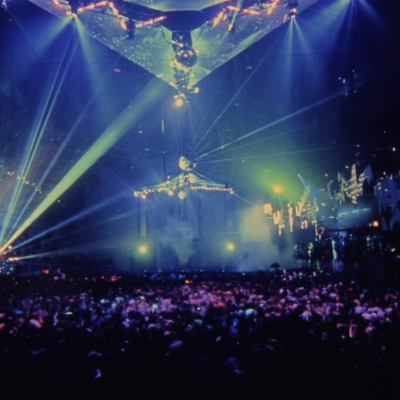
CLASSIC CLUBS: The Hordern Pavilion
With a huge gay party scene to build on, Sydney held some of the greatest events of the acid house explosion.


Colin Curtis has been through more scenes than Richard Burton. He made his name as one of the most forward-thinking DJs on the nascent northern soul scene in the early 1970s, before leading northern towards new releases alongside fellow Blackpool Mecca renegade, Ian Levine. Subsequently, he’s promoted and played modern soul, jazz-funk, jazz, electro and early house and techno, building a number of amazing residencies along the way (Berlin, in Manchester, is still talked about in hushed tones in the north-west). We chatted to Colin about his career, the numerous clubs he’s played at and how house music rapidly transformed from a largely Black phenomenon to white.
Interviewed by Bill in Tunstall on 06.09.2003
Where were you born and when?
I was born in 1952 in Madeley in Cheshire, near Crewe. I was brought up in a working class family, council estate, but eventually went to grammar school. I found myself at school being affected by pirate radio… Radio Caroline etc. I used to have an old Bush radio with Copenhagen etc written on it and I used to stick the pirate frequencies over them so I knew where to tune to. Remember the old football league ladders you used to get? I used to reverse them and put tunes on the back and run charts. So I became very interested in collecting and chasing these records down in the ’60s.
Which kinds of records would these have been?
Records I can remember on the radio would have been Dave Baby Cortez he did a radio show on Caroline, Mike Raven did a show, Soul Serenade. Cortez would open up with ‘Rinky Dink’, during the show and he’d play artists like Robert Parker or James Carr and I was like… where did these sounds come from?!
Was it possible to find a record like James Carr then?
Well, you’d have to order it. At that time you were just chasing UK labels. Then you discovered there were places like FR Moore mail order. They would advertise in Blues & Soul. They used to list Billboard releases, which is where this northern soul mania came from, chasing them down etc. Then the impact of these American records with the big hole in the middle, which opened up a fantastic array of choice, which came between 1969 and the early ’70s when I started discovering clubs.
What was the first club you went to?
Probably the first with any influence on me was the Golden Torch. That had been run previously bringing over live acts, similar to the [Twisted] Wheel, they’d bring over Oscar Tony Jr., Junior Walker, people who weren’t really getting any coverage at all except through specialist magazines and a bit on the radio. We lived in a pub at the time and I think I’d been grounded, but someone offered me the chance to go along to the Torch, a midweek night. I’d been collecting records and I’d already started a mobile disco. I’d be 13 or 14. The ego side of my personality enjoyed entertaining people. I was very aware of ’60s chart music very aware of black music and I was playing youth clubs and trying to drop as many soul records as I could. I was grounded and I escaped over the back wall, walked down the railway line all the way to Tunstall, which was about three miles from where we lived in Kidsgrove, and I just couldn’t believe this place. I walked in and they were playing records I didn’t know; records that were hitting me straight away, Bobby Wells’ ‘Let’s Cop A Groove’, Chubby Checker ‘At The Discotheque’… You know, just like a huge vortex had opened in a few hours. I’d gone away from there with my head so full that I’d walked down exactly the same route the following night only to find the club was closed. It hadn’t occurred to me that it wouldn’t be open every night.
What was the club itself like?
It was magical. You turned into the street and you heard the bumping beat coming through the wall. How the neighbours coped with that I really don’t know. And it’d got the fairly classic façade with the name over the top, four sets of double doors, so you went in and you got inside and everything was black and dark. There was a stage, there were some pictures of soul stars that had been drawn on the walls, and a balcony. It was probably 4 or 500 capacity.
Had it been converted from a cinema?
Yes, but there was no sign of that apart from the fact the toilets were either side… Eventually the club became the cult that it did with the all-nighters.
So when did the Golden Torch open?
Originally it was open for groups in the early ’60s. The Wheel was probably the first club that was paying more attention to the black side of music, but the Torch didn’t follow too far behind. You’d get Chicken Shack, you’d get the Small Faces, but then you would get Oscar Tony Jr. But then the local kids in Stoke-on-Trent would go to these events and not know who they were gonna get, so it was just fantastic to see their faces. I was working at the local Mecca at the time, the local Crystal Ballroom. I’d been taken on there so I had to change my name to Colin Curtis, my real name’s Colin Dimond. People say it’s a great DJ name, and it probably was, but it stunk of pop and I didn’t want that image. But I needed some sort of anonymity, because I would’ve been expelled from school, it’s as simple as that. It was a way of getting out the mobile culture of weddings and eventually I took over the soul nights which were on Sundays and Thursdays. On a Sunday night we’d have nearly 1,000 people in there just playing soul. It was phenomenal. This was in Newcastle-under-Lyme. We’d get two quid a week.
What year would this have been?
1969 to ’71. The Torch all-nighters had started and they’d finished with the interest in drugs with the police and local papers. The problem, retrospectively, was only 20% compared with the actual drug problem that happened in dance clubs in the ’90s, but it was big news for the papers at the time. It was closed down fairly rapidly in 1973 and I’d gone back to the local Mecca.
When you’d played at the Mecca did you go and play at the Torch after that?
No, no. Towards the end of the Torch, Tony Jebb, Ian Levine and people like that started the night at Blackpool Mecca. That was a regular Saturday night finishing at two o’clock. So at two o’clock they would come down to the Torch all-nighter. They’d start arriving at three or four, and the one thing that made the all-nighter so buzzy and so effective, almost every hour there was a different set of people arriving from somewhere else. All of a sudden, these people who had previously been dotted about in small clubs, were all coming together on one occasion. It made an atmosphere that, at the time, was unparalleled. People with this amount of knowledge all congregating; the chemistry just happened.
Was it then that you thought: this is a scene?
Oh, it was a total scene. The Friday nights at the Torch had started to attract people from Wolverhampton, Manchester, around Cheshire, based around what was happening musically there, but the all-nighters cemented it. People did not travel to clubs elsewhere, DJs were not booked for other clubs. A scene was now developing which had its epicentre in the all-nighters, but then clubs in Wolverhampton, like the Catacombs, had come to the fore. The Wheel had obviously finished but its impact was felt and then the Blackpool Mecca thing was happening. Blackpool Mecca had been closed for whatever reasons at the time.
This is when Levine and Jebb moved to the Torch, right?
Yeah, but the irony there was that Keith Minshull, who was one of the most influential DJs in Stoke-on-Trent at that time. Not a classic DJ. Very rarely said anything at all, just bang the old dance tunes on and away he went. He and myself left the Torch because of the politics and the police and everything and we started playing at the Top Rank in Hanley, as well as the local Mecca, which was called Tiffanys. It was a wet Thursday night, I think, when this guy Tom West came to talk to us, who died in the last few years and we got to know him over the next few weeks and one day he said he was going back to Blackpool and he said, ‘How do you guys fancy opening up the soul night again?’ And that’s what happened. We went up there, had a few words with Bill Pye, the area manager, and he was keen to get it going again. After six months, it ended up being me and Levine.
So when did it start again, and did you play right from it reopening?
Yeah. It started back up in ’74 and Levine came in late ’74 or the year after.
What was your impression of Tony Jebb and Ian Levine when you were going to the all-nighters at the Torch?
I’d been to Blackpool Mecca as a punter on the old bus from Stoke every month. I’d seen Tony Jebb and experienced the Mecca from the first period, the 1971 and’ 72 era and really enjoyed it. The personality who shone through on the decks was Tony Jebb. He was a good looking lad, his presentation was excellent, he looked the part and he played the right records. The one thing that made him different was that he did focus on the dancefloor and he did talk on the microphone, which wasn’t a huge thing on the soul scene, it’s what DJs did on mobiles. I clicked with this guy, his presentation. Ian Levine was a lot more excitable, excitable on the microphone and trying to play as many tunes as he could. Also very good at breaking at records, though at the time it wasn’t appreciated when the dancefloor was full, then empty, then full. And they had a good back-up because there was a resident downstairs called Billy The Kid. Very much part of the balance that made it what it was.
Did you go to places like the Wheel?
I went to the Wheel a total of four times. I went to the first Wheel.
What was it like?
Fear is the best word I can use to describe it. All these guys who were dark, huge, leather coats… You could see it was an insular culture. Something was happening, something was definitely happening. They were playing your Roscoe Robinsons and all that early ’60s stuff, like ‘The Fife Piper’ by the Dynatones. These records in this setting, the Wheel was one of these catacomb-y clubs; again, it just touched me. I only went once as a punter, but I went back a few times as DJ when it had changed hands a few times. I’d seen enough of these places… I’d been to the Catacombs in Wolverhampton…
Oh, really. What was that like?
Very dark. Small, compact, packed, lots of little alcoves, same sort of thing.
Where was it located, wasn’t it upstairs?
Exactly. We always used to say you could tell whether people had been or hadn’t been… [mock voice] ‘Well, we went down the stairs…’ Well, you’d been in the fucking Co-op then, because the club was upstairs! You went upstairs and there were lots of people shuffling around, very tight atmosphere, low roof, the DJ you couldn’t find… Graham Ward, Alan S, Blue Max. Wolverhampton, Stoke, Manchester, but every club with its own identity. All the DJs had their own identity. Years later this helped me because I took a piece of everything and used that, so I became able to play in all these different areas and be accepted. Whereas a lot of the DJs didn’t, they’d go and play their set no matter where they were. People didn’t take that on board.

So what kind of records were you playing at the Mecca? Because that must have been at the start of the ‘modern’ period.
That’s right, but when it opened it was still on the back end of the Torch. Records that were getting played were still things like Sequins’ ‘A Case Of Love’, Dramatics’ ‘Inky Dinky Wang Dang Doo’, Frankie Beverley & The Butlers’ ‘If That’s What You Wanted’, it was still very much a northern soul thing, and the ’60s records that dominated. Ian Levine, who was now at Blackpool, he had the most phenomenal record collection. There wasn’t anything like it in the UK. His father owned property and a casino in Blackpool, a Jewish family, relationship with his father was poor and this guy had built up his record collection on the basis of holidays to Miami. Where a normal person would go and do a few record shops, this guy was going into warehouses. In the foyer of his parents’ home, there would be 20 to 30 piles of records – 7-inch singles – this high [motions to chest height] each time he came back. A couple of piles of albums this high, but back then albums were just not touched. Back in the day nobody even considered them.
So Levine was going over regularly then?
Three or four times a year. He’d come back and we’d spend up to a week going through these records. Playing them religiously. Making piles of records for different scenarios. And then when he started going over there, he started sending me tapes from radio shows. It was at this time probably around 1975, that he’s sending me tapes back with the Carstairs and Universal Mind, The Tymes’ ‘Trustmaker’, and the whole thing was starting to change. America and the Billboard chart had been dominated by ballads, soul ballads, for so long, Millie Jackson was huge. All of a sudden late 1974 through to ’76, uptempo records became popular again, using these great sounds and vocals. We’d gone through so many records and Levine’s collection was unprecedented, so we had the best choice, and it was getting more and more difficult. More people were going over to America to find records. The quality of records we’d been playing was coming to an end. People will probably dispute that now, because people have gone back to re-address records missed at that time as 2nd, 3rd or 4th division. To me, they’ll always be 2nd, 3rd or 4th division. So to us, the new records that were coming out of the States at that time, it would have been criminal to ignore them. As time went on, 12-inches started appearing, and so we’d got crossover-y records like Pat Lundy’s ‘Party Music’, we’d got the start of Crown Heights Affair when they signed to De-Lite. This was causing a furore on the scene. And this developed in Blackpool but we retained the crowd.
The furore must’ve been coming from elsewhere, surely?
Without a doubt. As time had gone on at Blackpool, the Wigan Casino had appeared and that was also an all-nighter. We were back to the situation between Blackpool and the Torch. And the all-nighter offered the drug scene another option. This inevitable success story – and it was a success story – but the music was jukebox lowest common denominator bom-bom-bom records. There was no feel, there was no contrast, there was no black and white. Again, that statement will be disputed, but from where I was sitting the way Wigan Casino developed, I wasn’t interested in going. I played there once, I think, but I didn’t pursue it further. For me it was going backwards. When they introduced the oldie room Mr M’s, I actually said that on the night: it was the beginning of the end. Nobody’s right, nobody’s wrong, it’s just the way things were.
So you were playing other clubs as well the Mecca? Were you playing these new records and, if so, what was the reaction?
The major venue that became a catalyst for this was the Manchester Ritz for the all-dayers, where you literally would have almost a shift change on the dancefloor as each DJ played. One DJ would play northern and you’d have a full floor for northern. Then either myself or Levine would come on and introduce these other records. We’d be playing a little bit of the back end of northern, but mainly driving forward with new stuff. Current new 7-inches and whatever 12s were around, like Crown Heights Affair or Tavares…
Was it true that people chanting ‘get off’ and walking round with Levine Must go banners?
There were pockets of people who started a Levine Must Go campaign, T-shirts etc. It was just part of it, it wasn’t venomous, it really wasn’t. Maybe they thought it was, but for us the publicity was fantastic. Levine was the type of personality they could attack. I wasn’t the type of person they could attack. Levine was the perfect target, a big balloon who you can fire arrows at. I love this guy to bits, but he’s a self-publicist and he puts himself up there and people will shoot. For me, it was great fun. We didn’t play funk, but we used to play things like ‘Jammin’’ by Bob Marley at the Mecca or ‘Cocaine In My Brain’ by Dillinger, just an odd crazy record. People’d hurl abuse at that, but you’d just point at the dancefloor.
How long did the all-dayers go on for?
They dragged on in some form or other till 1977 or ’78. Even beyond that under a different guise, when I hooked up with John Grant but then it was starting to turn to the Black scene. Then that was knocked on the head because James Anderton, the Chief of Police was not into Black kids congregating.
How did that change musically?
The Mecca had run its course. It was the end of an era, that was what was happening. Where do you go from here? So, I’d been to Birmingham and Wolverhampton looking at clubs and thinking, well, I dunno… Kev Edwards who worked behind counter at Spin Inn in Manchester, he phoned me and said, ‘I’m going to Angels in Burnley tonight can I have a word with you’. Angels was more of a Mecca spin-off and Richard Searling used to play there on a Wednesday, so it was a good chill-out place. He said, ‘I want you want to meet this guy in Manchester, I want you to meet him and do something here’. About a month later, I drove into Manchester
What year?
1978. Drove into Manchester to meet this guy called John Grant in a pub. In walked this guy with what looked like a Brillo pad on his head – his hair – glasses, looked like me dad. He’s got speakers under each arm. Huge bloke. So he built this mobile disco while we drank our Cokes and then proceeded to play the night… He played similar to what we played at Blackpool but with a black feel. He had a mixed crowd, but it was busy. I spoke to him and we agreed to go and have a look at a few venues. We looked at a club called Fagin’s on Oxford Road. Fagin’s had been a rock club, loads of bands had played there and it had mainly been frequented by rockers. It was an absolute dump. I took one look at it and said, ‘No way’. He said, ‘Look we’ll chuck £5 or £600 at it. I know this guy who’s good with timber. I can put the sound in.’
Very reluctantly I agreed to get involved. We went to see the owners and said we’d rent it. They put bar staff in and took the bar. We got a couple of bouncers and ran the door. Four weeks after we opened there was 800 or 900 people there. We called it Rafters. These are Rafters charts [shows me loads of charts from time…]. These records that were being played and this all came from the thought process. John Grant turned out to be the image that I’d seen that first night. He was an organised bloke. He had no particular flair. He was competent on the microphone. He was a nice bloke who people got to know and people liked. He used to organise coaches and everything. I was a twat. I used to turn up, I was the star, pay attention now I’m on and then I’d go to sleep under the decks and don’t bother me until I’m ready to play again.
You used to sleep under the decks?!
Yeah, well I’ve never been into drugs. You can see the state of me after 50 years without drugs?! My mind has never been able to accept the control. It’s just a psychological thing. What happened to me in life has been self inflicted I’m afraid and nothing to do with drugs. Kev Edwards, coupled with John Grant and myself, these lists we did became potent weapons because when kids had been to the club they’d take one of these away and they’d be in Spin Inn on a Monday morning…
How long did it run for?
We picked up some of the following from an old club in Fennel Street which Mike Shaft had done. I eventually hooked up with John Grant and Mike Shaft, but Rafters itself ran till about 1983. We did Rafters on Fridays and Saturdays. Fridays were more commercial, not pop, but more commercial. And on Sundays we used to do a club called Smarties which was right next to Spin Inn. Small club, packed every Sunday, 250 people, most of the records that became jazz funk were in there. The one thing that interested me was that we had already started to go into this more jazzy kind of stuff like Jeff Lorber.

So when that ended is that when you got involved with Berlin?
Yeah. The whole jazz funk thing almost disappeared off the face of the earth. John Grant and myself found ourselves going round clubs during the previously successful years and playing to no people.
What were the successful years then?
1979 to ’83 or ’84. There’d been a constant all-dayers circuit then too.
And the weekenders?
No, weekenders didn’t exist then. We attempted a weekender at Primrose Valley on the Yorkshire coast, and we sold 30 tickets. That’s why the Ibiza thing, when I thought back to Primrose Valley, I thought, no, it’s not going to happen.
What all-dayers were you doing?
Blackburn, Stafford, Birmingham, the Locarno. At Birmingham Locarno, the all-dayers were different again, because what had happened is when we’d gone into Manchester and Levine had gone to London to do Heaven, which he regrets entirely now, which is sad. But we went to Manchester, initially with the Ritz, then Rafters, very white still, people coming from Scotland, and even London, but there was a kind of fear of black people by some white guys and the people who’d remained faithful to northern were also dropping away, so what we were left with what became the Black scene in Manchester and Birmingham in Nottingham, where I played at Rock City with Jonathan Woodliffe. We’d had previous success in Nottingham at the Palais. I came on in a coffin at one of those all-dayers!
What other DJs were playing at the Birmingham Locarno?
Well the jazz room, I got crazily into jazz, got heavily into be bop, I went seriously down the jazz route. I was spending fortunes on records. We booked Paul Murphy, Baz Fe Jazz, one of my original punters, Dave Tilshaw and Williams from the Rum Runner club. In the main room, there’d be myself, Tim Westwood, Paul Trouble Anderson, great guy… I remember at the time I’d just started playing ‘Set It Off’ by the Harlequin 4s, records like that, which everyone said weren’t gonna work. Two months into the scene it really started changing. Then Paul’d come up and play the go go stuff from Washington. So you’ve got Westwood, Paul, the beginning of scratching…
So Westwood was playing electro and hip hop at that time?
Yeah. Pete Tong came up because he’d heard about the gig and he said, ‘Oh it’s too heavy for me!’
What year would this have been? 1985?
Yeah.
So tell me about about Berlin.
Well, something was going wrong in my life, physically, but I didn’t know what it was. I was struggling to cope, having blackouts while driving cars. It was a difficult time in my relationship personally. Getting to gigs was getting increasingly difficult. I wanted to do something that was just Colin Curtis, just me. So I had this night at Berlins with a local lad called Hewan Clarke warming up for me. Nice guy, big lad, over 6’.
First DJ at the Hacienda, wasn’t he?
Yeah. Nicest bloke you could meet. I remember playing a gig in Motherwell, we hired a mini bus to go up there, and we walked into the foyer, and this guy ran up to Hewan and said, ‘Colin! I havnae seen yer fer years!’ That was people’s perceptions of me. Hewan Clarke warmed up for me at Berlin. He collected records and there was a fabulous place, Yanks Records – originally Global Records where Richard Searling started off – run by an American guy called Ed Balbier. It was just a huge warehouse and Hewan had built up his collection here by paying a quid each for these records. He had great feeling and great taste. I used to get there and play from around 10-ish to three, just three or four crates of records and me. Although it was only a small club, 200 people would pack the place, but it was fantastic because for me it allowed me to let this audience loose on this idea.
What did it look like?
It was on a corner, you went in on the top floor and there was a pay desk then you went downstairs. The dancefloor was like something out of a Dennis Wheatley film. Basement, low roof. I used to play a track by the Valentine Brothers called ‘Just Let Me Be Close To You’, off the album that produced ‘Money’s Too Tight’. I remember Mick Hucknall used to ask for ‘Money’s Too Tight’ and we’d picked up sealed copies of this album in Yanks so I was ready for him. He asked and I gave him a copy of the album. If it had been in London it would’ve been more talked about and probably got bigger. You had black guys, Rastas, famous people, such a mixture. Gilles Peterson’s friend Andrew was there religiously every week, Dean Johnson, Barry Malleedy and they’d bring their own mates. I got to meet this Brazilian guy who was at college in Manchester and sometimes these guys would just come in and jazz dance to me, or I’d play to them. Fantastic freestyle jazz dancing. That was about 1986 and it was about that time that I became seriously ill and I got taken out of the loop from about ’86 – ’89. I did come back at the Playpen in Manchester during that period, but I wasn’t functioning properly. I was playing all the early house stuff from Chicago.
When did you first come across that stuff?
I started pushing it heavily in 1986 and ’87. For me this was like being born again. Hearing all these records was just phenomenal. I’d buy a lot from Spin Inn, Selectadisc in Nottingham, wherever I could get my hands on them.
What sort of records were you picking up on then?
We were playing Chip E, Farley Jackmaster, all the Trax stuff, Robert Owens. I’d been playing in clubs like Legend which has been used to hearing electro and dropping these real raw tracks and getting a reaction. Legend had been a real big club for Greg Wilson. He took the electro thing to a new level there. We were playing house before the Hacienda, a long time before the Hacienda. Hewan had gone in there and the original set-up was that they wanted an alternative thing. I remember Paul Mason coming there, who’d been at Rock City, he had a conversation with him [Hewan] and said, ‘No disrespect but I don’t want you and John [Grant] here’. He tried to do something different. At the Playpen, Mike Shaft had been playing the more traditional stuff, and I’d be doing house.
What was the racial composition of the crowds? Berlin? Playpen? A lot of people I’ve spoken to all say it was black kids originally, who were into it.
It was. Originally. There was a set of girls, the something dancers, soon as I hit the deck, they’d come out, six or seven girls. The black guys were well into that Chicago sound.
Were there any negative vibes between Black and white kids?
There was a perceived vibe, but there really wasn’t. Playpen was 50/50, mini-skirted girls with big hair. It was a period that had got all the tunes, but I wasn’t playing that often really. I was playing the house stuff at Birmingham and at Rock City we had a fabulous time with it. That was the period for Rock City. We’d come off the back off the jazz funk thing and we’d got 1,500 people in Rock City on a Friday.
Was that just you and Jonathan playing there?
Yeah. Then we did all-dayers off the back of that. Rock City. Early all-dayers with jazz funk and a touch of northern were done at the Palais. Later, it was Rock City. Good black crowds coming in from Bristol, Northampton, Birmingham. It was a different feeling from Manchester.
What music would’ve been played at those all-dayers?
Bambaataa, Run DMC, Whispers, Salsoul: ‘If You’re Looking For Fun’ [by Weeks & Co], all the Randy Muller stuff, jazz in the downstairs room, stuff like Keni Burke. Snowboy and Paul Murphy used to come up for that. Upstairs we were banging away: Teena Marie, Joyce Sims.
What were you playing when you were moving into the electronic sounds? Electro, house etc.
It went nuts, that stuff, particularly in Birmingham. ‘And Beat Goes On’ by Orbit, stuff like that. The whole dancefloor became like a sea, sad cliché, but it was like one nation under a groove. In Birmingham and Nottingham they were well into that. It became an identity for Black kids, across the Midlands. A similar identity to what Greg Wilson produced when he introduced the electro stuff. Warp 9, Orbit, they became huge. Massive records: Hanson & Davis’ ‘Tonight’, Serious Intention’s ‘You Don’t Know’.
Did it happen quite quickly or gradually?
It was a bit like the Ritz in Manchester. There was a small growth in the corner of Black kids and it eventually took over. It was like that at Rafters, it eventually became a Black club. Derby at the Blue Note on Sunday, and in Birmingham, it was mainly Black from the start. The main difference between in the Black and white thing is the white guys liked to drink and the Black guys weren’t particularly into that. The dancing became the predominant feature. You’d get these breakdance groups. It was happening across the Midlands instead of Manchester.
How long did it last, because it got decimated by the outbreak of house didn’t it?
Yeah. 1988 or ’89. There were two weekenders in Berwick, I did the 2nd. There was a mixed crowd, but the biggest thing was the reintroduction of ’70s music, with the Leroy Hutsons, Vandrosses, Ronn Matlocks. The soul scene jumped on to that big style. The modern scene that had been hovering hooked on to that sound, the Curtom sound. The dance thing wasn’t that strong on the weekender scene.
Who were the big figures on the modern scene?
It kicked off through Richard Searling, myself, I knew the records from the first time, playing Arnold Blair ‘I’m Gonna Get Next To You’, I had two copies of that, Flowers’ ‘For Real’, forgotten album tracks, so you were revisiting a great period of music. It attracted the white soul fans.
What was the theme running through those tunes, was it tempo, feel, what?
It was that midtempo, song, semi-underground feel. And on the sidelines you had this collecting scene growing out of trying to find these records. Richard pioneered that sound on his radio show. He started at the Halfway House and then we got together at a club called the Trafalgar.
Where was the Trafalgar?
Just off the turn-off, Jct. 30, for Preston. Richard eventually went back to Manchester and teamed up with Dean Johnson at Parkers and again that brought the ball back and that was much more a 50/50 thing.
What age were the Black kids going to that?
Parker era was an older age group. They’d lost their identity prior to that. In fact, the whole Black scene I’ve described to you that was one heaving unit, had disappeared like the dinosaurs. It just wasn’t happening anywhere. All the niche clubs like the Blue Note in Derby, it had just disappeared. 1,500 people, all gone. At Rock City we couldn’t get 200 people.
What year was this?
Towards the end of the 80s, as the house scene had got an identity.
Where did those Black kids go? Drum and bass?
I think they just went to normal clubs. If you think about Manchester when I first went in there in the late ’70s, there was the Reno, a huge Black club on Moss Side. Black people didn’t integrate in normal Saturday night clubs.
Was that a racist door policy, though?
Yeah, absolutely.
What do you think about what happened with house? It was such a behemoth, it consumed everything to start with, didn’t it?
Yeah, it did. Soul music itself got completely lost again, with no identity. For me it was exciting. I’m very much a spectator at this stage. My games business had taken off in the early ’90s. It was a more vague period for me. I’d go to the Hacienda. I knew Graeme Park very well, we used to book him at Rock City and give him £30. One thing that sticks in my mind with Graeme is he’d come on with two boxes and there’d be no LPs in there. The culture of our DJing, there’d be albums, 122, 7s, everything. That was it. That was the start of the mixing.
Starting there in 1963, Roger Eagle helmed Manchester’s Twisted Wheel to legend status, his upfront mix of rhythm and blues, rock’n’roll, blues, jazz, ska and soul inspiring a generation of Northern music lovers and laying the foundations for what would become Northern soul. In the Wheel’s interconnected cellars he entranced dancers with a diet of imported American records that couldn’t be heard anywhere else, earning £3 a night for seven hours of music. He left for rival club The Blue Note when the Wheel’s owners the Abadi Brothers refused to up this to a fiver. A few months later he opened his own place, the Staxx Club, in a Fountain Street venue that the notorious Jimmy Savile had recently been running as the Three Coins. In later years he was the lifeforce behind Liverpool’s post-punk epicentre Eric’s, where his future-facing jukebox connected a generation of Scouse music-makers. Tall, grumpy and singleminded, Roger was an educator, taste-maker and evangelist for the music he loved. He was very ill for the interview which is why it’s only short; he died the following year.
Interviewed by Bill in Wales, 10.9.98
When did the Twisted Wheel open?
The night I started there: November 24th 1963.
How did you get the job?
I was sitting in the place a week before it opened and I’d just imported a load of Chuck Berry and Bo Diddley albums on Chess and Checker and the guy asked me if I knew anything about rhythm and blues and I said, ‘Yeah.’ So he said, ‘do you wanna DJ here at the all-nighters that are starting?’ And I DJed at every all-nighter for the first three years.
When did you start collecting
1954, rock’n’roll and jazz.
How did you get into DJing?
Basically when I started DJing I didn’t know what I was doing, but I just fell into it. I was just happy playing the music that I loved. I used to take a Grundig tape recorder out to parties and play stuff in the ’50s, but that wasn’t really DJing. I’ve always been a DJ in my bones. My influences were Alan Freed and Gus Goodwin. Gus Goodwin was on Radio Luxemburg in the ‘50s. He was a real wild guy, he used to spin around in his seat, shouting and yelling. His theme tune was ‘Basin Street Blues’ by Louis Armstrong, which features that great drum break by Gene Krupa. Then after that there was Guy Stevens at the Scene Club in London. He used to send me up records.


Did The Wheel start as an all-nighter straightaway?
Yeah.
How did that come about?
Don’t ask me. It’s probably because it was the popular thing to do. It was absolutely rammed right from the word go. Couldn’t get in.
Describe to me what it looked like?
On Brazenose Street off Albert Square. It held 500 or 600. You went downstairs and there were lots of small rooms with a big room for the stage. I was right at the back in a small room where the DJ unit which was sealed by bicycle wheels welded together. There was a coffee bar in between that and the main room.
How did it work. Did you warm up for the band?
No, just me playing and the bands were on. I played seven hours and the band did an hour somewhere in between. Little Walter, T Bone Walker, Screamin’ Jay Hawkins, Jimmy Powell and the Dimensions, Stevie Winwood’s band. Loads of American R&B. John Mayall, Spencer Davis Group.
What were you playing when it opened?
Rhythm & blues, which came before soul. Soul hadn’t been heard of then. The first soul album I heard was ‘The King of Rock’N’Soul’ by Solomon Burke. That was when the music started to change; it got a lot smoother, a lot more danceable.
How did the music develop, because the Motown stuff played later is more pacy than the R&B.
When I started DJing I could play what I wanted, but after three years I had to keep to same tempo, which is what Northern soul is. I started Northern soul, but I actually find the music very limiting, because in the early days I’d play a Charlie Mingus record, then I’d play a Blue Beat disc followed by a Booker T tune, then a Muddy Waters or Bo Diddley record. Gradually, there was this blanding out to one sort of sound.
Did you feel you were getting dictated to by the crowd?
Yeah, because the crowd was mostly into pills by then.
When did that start?
In the beginning everyone came because they loved the music. They came to see the blues singers and they came to hear the records, and for the social aspect. But after two or three years it became pills.
Was that why you left?
Yeah.
Did you carry on DJing?
I’ve always DJed, but I went into promoting and I owned clubs, like Erics. I still DJ today when I’m well enough. I also call myself Jukebox Johnson.
What stuff do you play nowadays?
My taste is the good stuff. Whether it’s blues or soul, jazz, funk, soul. You should come and see me. You’ll get a much broader view from me. I’m not doing the other DJs down; they’ve done well, they’ve made their money. But they’re very narrow, that’s what upsets me. But they don’t listen. They’re all locked into a Pavlovian warp where people react only to a certain kind rhythm and I think it’s depriving people of music.

© Bill Brewster & Frank Broughton


Compiler, archivist, producer and label boss Ian Dewhirst is one of the finest DJs in the pantheon of northern soul, thanks to a lifetime of discerning collecting. He got his break in his teens when he realised the bulk-buy American 45s he’d been sifting through from a Bradford market stall contained some of the scene’s rarest and most sought-out tunes. Ian went on to play regularly in the key clubs of the northern circuit through the ’70s, including the legendary Wigan Casino and carved out a much-loved residency at Cleethorpes, where he’d get the Victorian pier quaking to the stomp of 500 dancers while the rain fell horizontally over the North Sea. He spun his DJing into a picaresque ride through the music business, where among many, many other escapades, he put Shalamar together, inspired Soft Cell’s ‘Tainted Love’, got on it with George Clinton, made the first British house record (Midnight Sunrise’s ‘On The House’) and launched the hugely inspirational Mastercuts compilation series. In more recent years Ian was behind the compilation labels Harmless and Suss’d, with series including Disco Discharge and Backbeats as well as a long-running Trax, Salsoul and Philadelphia International reissue programme. This is an edited merger of two separate interviews.
Interviewed by Bill in London, 14.9.98 and 2.4.99
What are your memories of Wigan Casino?
One of the best things was the anticipation, because you always knew what to expect; you always knew you’d meet pals from all over the place, everyone was going to be pouring in to Wigan. And Wigan, in those days, was a pretty depressing place to be going to. Miles and miles of terraced housing. A lot of the fun was the people you were with, because nine times out of ten, there’d be two or three speed-heads in the car, who were vibing everything up. We’d pull up, and there’d always be a mass of coaches and cars and this build-up of atmosphere. I was the music person, so as soon as I got in I’d be looking in boxes of records and talking to DJs.
Eventually we got sophisticated and used to get down about 3.30 or four. So you’d spend three or four hours at the [Blackpool] Mecca, and then it’d be about 45 minutes to Wigan. The great thing about Wigan was, as you drew up, you’d always see all these people milling about in the car park getting up to whatever they got up to. There was this tangible excitement in the air, because you knew you were going to be walking into a cauldron of activity and energy.

Describe going in.
The entrance to the Casino was really tatty. Zero money spent on maintenance. It was almost a dump. If it was a really busy night, there would be steam coming out of the entrance. I’ve seen that happen to cellar clubs a lot, but for a building that big! There was a lot of energy being expended there. As soon as you walked in, this whole thing hits you. You’re aware there’s a really fast record playing, clouds of condensation hit you in the face, you hear the handclaps. It’s almost like a drug. At its height, it was a real buzz. You know some clubs get it right. The right club at the right time with the right DJ; all the ingredients are right. And that’s how it was with Wigan.
You had to have membership to get in. It was that sense of community as well. You were part of this select, pretty exciting scene. There were all these kids, dressing really differently, and getting in a car and driving hundreds of miles. And you had the nutters of course, who were ‘chemically motivated’.
You told me about people breaking into chemist shops for amphetamines? Did that happen often?
It happened every week! Somewhere along the line, some of the bad lads must’ve reconnoitred all the different ways into Wigan and looked at the chemist shops that didn’t look like they had the greatest security. There’d be bunches from all around the country, and whichever way they came in you could almost bet your life that a chemist en-route would be broken into and done.
There’d be a contingent from where I came from, Mirfield. There was a mob from Huddersfield. I used to knock about with these people who introduced me to the Torch, from Cleckheaton and Heckmondwike. Their idea of a good weekend was, nine times of out of ten to get some gear. I used to hear about people getting busted. It used to be a contributory factor into why those places always got closed down.
This was on the periphery of my thing. I always kept one step removed from it. I never did anything then, believe it or not. I was Mr. Straight in those days. My induction into all of that came when I took a line off George Clinton [during the recording of ‘Flashlight’].
A lot of the records that took off had drug references in them. That was another peculiar side to the northern soul scene. Records like ‘Blowing My Mind To Pieces’, ‘Cracking Up’, ‘Ten Miles High.’ The Invitations’ ‘Skiing In The Snow’ goes, ‘Gotta get my gear out, ready for winter’s near’. I’d be going to these places with Rod and Sid and Smithy and Scotty, and that’s all they’d talk about. They’d be as high as kites. Those were the parts of the records they’d sing: ‘Gotta get my gear out!’ It was all part of the journey there. It was the song itself that was getting me off, but they were getting off to something else. It’s like that with acid house I suppose, when you had records like ‘I’m Rushing’ by Bump.

When did you start collecting records?
I was born in 1955 in Brighton, moved to Mirfield, between Dewsbury and Huddersfield. I started collecting records when I was 11, first record I ever bought was Felice Taylor ‘I Feel Love Coming On’, a Barry White production. I got into soul when I got my first transistor radio and I used to listen to Luxembourg: Tony Prince, Mike Raven, and then it was Dave Simons’ R&B show on Radio 1, Saturday afternoons five o’clock. I started hearing things on the radio that you wouldn’t hear under any other circumstances, and it was the Motown thing that got me.
When I was 15 I got a job at a clothes shop in Bradford and there was a market stall called Bostock’s, where they’d do 20 records for a quid, American imports with no centres in. Every Saturday for about a year I used to go to Bostock’s in my lunch hour and come back with a bag of 40 records, and my entertainment for that night was sitting down and playing the A and B-sides of these records and having my parents moan at me about saving money.
On my 15th birthday I found this DJ who wanted to get rid of his records, about 500 of them. There were things in there like ‘He’s Got The Whole World In His Hands’ by the Isley Brothers, James Carr ‘Freedom Train’, ‘Free For All’ Philip Mitchell, ‘Slippin’ Around’ by Bart Freeman on red Atlantic. I paid £25 for the collection, at the time it was a lot of money and my dad always reminds me that I never paid him back! Together with the stuff I was buying in Bradford market, I probably had about 1,000-1,500 records just before I was sixteen.
How did you hear about the northern scene?
I went to a pub in Cleckheaton that had a Motown night and I saw these mods in blazers with this symbol – The Torch – so I said to them, ‘What’s this?’ And they were like, ‘It’s a soul club, mate. They have an all-nighter every Saturday.’ I said ‘Well, I’m into that stuff, too.’ But he says, ‘No, you won’t know this stuff. This is northern soul. But there’s a place in Leeds on a Friday night and we go down there. It’s called the Central.’ So I went down with them, and it was like everything I’d been looking for.
All of a sudden, this sort of underground, secret world. I didn’t know 95% of the records, but they all sounded fantastic. It had this elite feeling to it; there were some nice looking, well-dressed girls, and the guys looked pretty smooth. The DJ had played a couple of records I had in my collection and, though I knew what they were, I didn’t realise the significance of them. The DJ was Tony Banks. Third week I went, he played Earl Wright ‘Thumb A Ride’, so I went up to him and said, ‘I’ve got this at home.’ And Tony says, ‘No, mate, you haven’t got this. There’s only one of these in the country and Tony Jebb’s got that.’ (He was playing one of those emi-disc copies). So the next week, I brought it with me and it caused this massive flutter because at that point there was only one known copy in the UK. All these guys were offering me money and swaps for it, but I wasn’t really into letting anything go.

I had a few others similar that I didn’t think anyone knew about, so I started bringing those down. A lot of stuff that came from Bradford market: ‘You Hit Me’ Alice Clark, The Shalamars, the Triumphs, The United Four ‘She’s Putting You On’, The Younghearts. I had lots of things that were northern, but I didn’t realise they were. Like lots of early Wheel or early Torch sounds, but there was a lot that actually weren’t known.
Banksy starting borrowing my records and within a few weeks they started becoming popular. Every week before I left he’d say, ‘Are you going to bring your records down next week?’ One week I was going to go on holiday the following week and Banksy said, ‘Can you leave your records with me?’ I didn’t really like the sound of that, but I agreed if he’d let me do the warm-up DJing when I got back. Came back and started playing between nine and ten o’clock on a Friday when there was hardly anybody in, then he’d come on at ten o’clock and go all the way through to two. That’s the point when I really started collecting. I started going to the Torch. It was just at the point when everything was just starting to get good.

When was the first time you went?
I went with the mob from Huddersfield when I was 18. It was towards the end of the Torch, maybe about ’73.
Describe it.
Just like nothing else I’d ever seen. You’ve got to imagine a kid from Mirfield, never been further than 20 miles outside of Dewsbury and Huddersfield, to be getting in a car with all of these hardened soul boys, going down, stopping at Knutsford services. There was an air of expectation going in there. It was like a dream. Like suddenly knowing you’re home. The first DJ I saw was Martyn Ellis, who was really good on the mic, he actually used to get people going. And this wonderful ‘feeling of togetherness,’ [he means drugs]. All these other enthusiasts, misfits, nutters that had travelled from all over the place. It was just like a really little, elite, very tight scene.
It was like being part of a movement. But it was even more underground. They seemed to carry themselves with air of superiority to the average beer-swilling guys. There was very much a feeling of elitism. The women looked better than your average girl. The northern scene at that particular time had up-to-the-minute fashions. Customised trousers nine times out of ten. The women would be dressed that little bit better and slinkier than the others. There was certain prestige to being on the scene at that time, especially during the Torch more so than the Wigan era.


Can you remember what it looked like.
Well, you’re pushing there. I only went twice. I can describe the atmosphere: electric! I can remember some of the records; I remember hearing The Tempos ‘Countdown’, ‘Crying Over You’ Duke Browner, ‘Just Ask Me’ Lennis Guess, ‘Catwalk’ by Gerry and Paul. The first time I went to the Mecca the thing that stood out for me there was ‘Nothing But Love’ by the Tartans. I ended up buying an emi-disc of it.
I was restricted to when I could go because of school and exams. It used to be a pain in the arse, explaining to my parents that I was going to this all-nighter. Then I got a motor and that started making things easier. I then became one of the few with a car. There wasn’t too much happening on the east-side of the country at that time, it was mostly Stoke, Manchester. I remember going to the Heavy Steam Machine at Hanley. I think at this point the Torch had shut and the Mecca was the place where you’d go every Saturday. There was Va Va’s in Bolton with [Richard] Searling. But that always had a weird vibe to it.
What about the use of microphones in northern clubs, because according to Rob Bellars the Twisted Wheel never used the mic. Were they talking at the Torch?
Yeah, Martyn Ellis was the king of the microphone. Most northern DJs can’t use the microphone. I can remember all sorts of funny incidents with Ian Levine on the mic. He was hopeless. Martyn Ellis, though, put some real presentation to it, I think, because he was an old mobile DJ. He was untouchable.
Did he talk between every record?
No. It had to be fairly fast and pacey, too. I don’t understand why people did it, when you wanna keep people dancing. It seems illogical now! At the time, I think it came from the showman DJ. The Stringfellow type.

When did you start playing at Wigan?
Within four weeks of it opening. We all went to the opening night. By this point we all had records. I used to fancy myself as a footballer, I wasn’t any good, but I came home from a match having scored three goals and a friend started calling me ‘Frank’ after Frank Worthington. I remember Russ had this record called ‘Cool Off’ by the Detroit Executives, fucking brilliant record, and Levine had been hammering it for about six weeks and it turned into the number one record at the Mecca. Russ had just got a load of records sent by his so-called ‘uncle’ in Miami [most likely record dealer Simon Soussan]. And in amongst them, there’s this ‘Cool Off’ that I particularly wanted and I always remember saying to Russ, ‘Ah man, I could really use that,’ and he said, ‘I don’t think it’s that good.’ I ended up getting it for some easy swap. Up till then the only place you could hear it was at the Mecca. As soon as I got it I was smashing it at Cleethorpes, Samantha’s [Sheffield], the Central [Leeds] and it became a huge record.
I used to DJ with a guy called Twink, so it was Frank & Twink, and we were the residents at the Central, we used to hang around together and we’d go to the Mecca every Saturday, then on to Wigan. And Russ just said, ‘Well, do you guys wanna do a spot.’ So we did a spot and bang, that was it.
What was it like playing at Wigan?
The first gig that we got at Wigan, that was quite a big step. I’d done all the smaller gigs. At this point I was starting to get some great records together. The problem at Wigan was that you had two or three thousand kids there and you had to keep that energy level. There was no such thing as blowing a spot at Wigan. You couldn’t afford to. If you can imagine the collective downer if two records on a row bombed out, the atmosphere would palpably slump, and I’ve seen it slump for certain people. And all of sudden it’s a drag.
So Wigan was less adventurous in terms of breaking records. I always like DJs who had exclusives that were great records, but didn’t try and break new material to the detriment of the atmosphere. That’s quite a balancing act, especially with two thousand people. It’s one thing that I’ve been very conscious of ever since: programming is dead important. There are two decks on a stage and you. It’s not that different from playing a concert. These aren’t normal people. They’ve worked their balls off all week. And they’ve come here to have a great Saturday night. All night. It really makes you keep your programming together.
And Wigan was stomper-friendly. It was not the environment to be playing nice sweet Philly things. I had a foot in both camps. Do you remember ‘Afternoon Of The Rhino’ [by Mike Post]? That’s a real crowd-peaking record. Every one of those you played, you had to have a killer mid-tempo tune to keep them on the floor. So pacing was really all-important.
What was the feeling like when you played a record at Wigan and it took the roof off?
Incredibly fulfilling. Especially if it was something that you wanted to see break, and maybe it’s taken a bit of time. There were some really weird records. I didn’t find this, but I was instrumental in Tobi Legend’s ‘Time will Pass You By’. I found the Gerri Grainger, ‘I Go To Pieces’. It wasn’t my type of record at all. I played it because the girls seemed to like it. ‘I’m On My Way’ Dean Parrish, was another.
Did I tell you about Kegsy, the guy who discovered that? Kegsy’s this guy from Bradford. Completely off his nut. He’d be walking around bombed all weekend. You’d arrive at Bolton or Wigan at three in the morning, and Kegsy would generally be hanging about outside. And you’d be, ‘Hiya Kegsy. Alright?’ ‘Well, yeah, I set off from Bradford last night with 12p and a Mars Bar and now I’ve got £23 in my pocket and a bunch of records!’ That was the joke with this guy, he’d always end up with money and records.
Anyway, he came to the Central one Friday night with the Tobi Legend which was on Laurie. And Laurie was a bit of a crappy label. But Kegsy could be quite powerful. And he came up, all sweaty and hardly able to speak, saying, ‘Play this, it’s fucking brilliant’ I put it on in the cans and all I can hear this horrible guitar at the start. I honestly thought he’d gone mad. ‘All you’ve gotta do is play it,’ he says. Anyway, he’s been at Va Va’s sticking it in Searling’s face, then at the Mecca he’s doing the same to Levine! Then he’s at Wigan, on the stage, and the funny thing about this guy, he had a tooth missing and looked a bit of thug, but he’s got the record in Russ Winstanley’s face. And Russ would cave in to pressure and also he’d give things a try, he had a nice democratic attitude about records. So Russ played it, and the rest is history! The poor guy’s plugging it for 36 hours before anyone plays it.
What’s your best memory of playing at an all-nighter?
Playing Wigan was great. Playing Sheffield Samantha’s was great. But for me, probably because I was headlining, it would have been Cleethorpes’ Pier. It was such a unique venue. You always got a bit more leeway with a residency. You could steer the crowd from week to week. If you got a great record, it would take you four to six weeks to break it, because you’d be the only one with it. That’s another big difference between the house scene and the northern scene, records are freely available to everyone now. With this stuff you’d find one record and that would be it.
The best thing about DJing was seeing your vision confirmed. It must’ve been the same for a musician. If a musician writes a song, and eventually gets accepted, it must be a gas playing it. It’s the same with finding an unknown record. You listen to it at home and wonder whether it will work. It’s like seeing a baby suddenly mature. Suddenly it’s a hot one. And seeing an unknown record go from zero value to being valuable. It was almost like a stock market.
I found two records in one day in Los Angeles once: Judy Street, ‘What’ on Strider, HB Barnum’s label, and I finally uncovered ‘Let’s Do The Duck’ by Richard Temple, which turned out to be called ‘The Duck’ by Willie Hutch on Dunhill.

Who was playing it as a cover-up?
Simon Soussan [notorious northern soul character] found it. It was incredibly rare. One side called ‘The Duck’ and the other ‘Love Runs Out’, both really good. James Carmichael production.
What about Ian Levine? He discovered a lot of great records.
If you were a serious collector, the only place you could conceive of going was Blackpool Mecca. Levine was there, and Levine was the arbiter of taste. He always had the most breathtaking array of records. You might not know them all, but you’d know they’d all be good. And he would take chances. You’d never have heard ‘Seven Day Lover’ by James Fountain at Wigan. I have to give him respect, even though he’s pretty obnoxious to be around a lot of the time, and he always was.
He was the guy who brought back ‘There’s A Ghost In my House’ by R Dean Taylor. It was a VIP single. Levine comes back from the States and of course I’m on the phone on the Saturday afternoon. And he says, ‘I’ve got the greatest northern soul record ever.’ But he used to say this all the time. It’s on VIP, it’s written by Holland Dozier and Holland and it’s by a well-known singer. It’s ‘There’s A Ghost In My House’ by R Dean Taylor. So I’m like ‘Fuck off!’ It must be around, it can’t be that rare. That night he played it about six times and by the third time everybody realised that, yes, it is the greatest record ever.
Overnight it’s the most wanted record in the country. The buzz spread. He’s done it again, he’s found a killer. So the next day everybody’s onto their contacts in the States, saying come on you must be able to find this; it’s easy: R Dean Taylor. We all went for it and everybody came up with a blank. We just couldn’t believe that it was that rare. This went on for about six weeks and the thirst for this record was huge, the pressure for everybody to get this record was ridiculous.
Then the weirdest thing happened. Someone was coming back from Wigan Casino and went into a motorway service station and was bending down to get a Sunday paper and there was a rack of those old Music For Pleasure budget LP racks. And there was an R Dean Taylor compilation called ‘Indiana Wants Me’. Track three, side two, there it was: ‘There’s A Ghost In My House’. So it’s in every record shop in the country and we all fucking missed it! Of course, the game was up, within about a week I’d found about 50 copies and I was knocking them out at a fiver each!
As well as finding rarities he started playing new releases. He got a lot of stick for playing ‘modern’ records, didn’t he?
What happened was Levine would go to Miami to stay with his parents once or twice a year. They had a casino in Blackpool and a house in Miami. So Levine from a young age was in every warehouse in Florida and, of course, discovering incredible stuff and bringing it back. Now, there was a point after one trip when he came back with Gil Scott-Heron ‘In The Bottle’, a terrible record called ‘Shake And Bump’ by Snoop Dee, and ‘Cochise’ by Paul Humphrey. Now ‘Cochise’ was an immediate monster. Nobody knew it at the time, but it was a new release. But it might as well have been brand new northern. And so this modern influence drifted in. Previously when that had happened it was records like Millie Jackson ‘My Man Is A Sweet Man’, which by accident was a stomper. It was about that time that he brought in ‘Music Maker’ King Sporty, ‘Seven Day Lover’ James Fountain, ‘I Can See Him Loving You’ The Anderson Brothers, ‘It Really Hurts Me Girl’ The Carstairs – my favourite record of all time.
And Levine, gradually, was bringing in more and more modern ones in. Then what happened was he stopped going to Miami and when he was sixteen he went to New York, still looking for northern records, but by this time he was hanging out in a lot of the big underground gay clubs. I think the one he went to at the time was the Anvil. He started bringing back this stuff. If you look at the early disco stuff, like ‘Free Man’ by Southshore Commission (a big Mecca record), was the same pace as northern, but just a more modern recording. ‘Super Ship’ George Benson: one of the biggest northern records, even though it was a new release.
If I hadn’t been down to the Mecca on a week that Levine got back from the States, I’d ring round on the Sunday and ask what he brought back. ‘The fucking biggest record of the night was “Super Ship” by George Benson.’ ‘What label’s that on?’ ‘A label called CTI. It’s a new release in the States.’ Then I’d get the record, put it on, and yeah it all made sense.
The scene hadn’t yet split, but what you were getting if you went to the Mecca you’d have Levine leaning much more and more on to the newer stuff. But then you’d have Colin Curtis who was into one-offs like Eula Cooper ‘Let Our Love Grow Higher’, ‘No One Else Can Take Your Place’ The Inspirations. And Curtis used to like stompers, but also quite like some of the new stuff and Levine would bring doubles back for him and Colin.
You used to get a real balance of these new records which were essentially early disco, and that kind of dovetailed with the northern stuff. Russ [Winstanley] banned new records. I can remember Levine getting his first spot at Wigan and he put on ‘Shake And Bump’ by Snoop Dee, which isn’t my favourite record anyway, cos it was quite funky and it didn’t really dovetail with what you’d call northern soul, but Russ made a thing of saying ‘I don’t want Snoopy Dee and I don’t want ‘Ladies Choice’ by Boby Franklin’. There were some records that were more funky than others and Levine could get away with them at Blackpool, but Russ wasn’t having them at Wigan. Then Cleethorpes was a melting pot for it all.

Why was Cleethorpes different?
It was almost the naiveté of the people who ran it, Mary and Colin Chapman. What they did was get that venue, which has to be one of the greatest venues ever, as far as mystique goes. I used to get to Cleethorpes Pier about four in the morning and by that point all you’d hear was this stomp-stomp-stomp from about a mile and a half away and it’d be the dancing. It was surreal; there’s this place jutting out into the sea and it’s four in the morning and all you can hear is stomp! Multiplied times a thousand.
There was no precedent for doing an all-nighter anywhere east in the country. So there was a good contingent from Yorkshire and Humberside. What was brilliant about Cleethorpes was that it offered an alternative. Credit where credit’s due, they didn’t go for that headhunting of top names, I was the nearest to a top name and Kev [Roberts] did a few. They let the local lads coming through have a chance like Rick Scott from Scunthorpe. I can’t imagine how many people in that area they turned on to it, you’re a prime example. I took it really seriously; I did seven till eight and generally I’d do a spot between three or four. The point when I did Cleethorpes was when I was riding high. I had a box full of records that were guaranteed floor-fillers. I had the Four Perfections ‘I’m Not Strong Enough’, ‘I Can’t Change’ Lorraine Chandler.
And then I was at an all-dayer at the Heavy Steam Machine at Hanley about four in the afternoon. This guy Dave from London, he worked at HMV in Berwick Street. I hadn’t seen him for about a year and I knew he always had odd records, so I said, ‘Can I have a quick look through your box?’ Flicking all the way through and the last two records are the Carstairs ‘It Really Hurts Me Girl’ and Dena Barnes ‘If You Ever Walk Out Of My Life’. The two biggest records in the country and he’s got them at the back of his box in paper sleeves. I asked him much he wanted for them and he said fifteen quid a piece. I had about 20 quid so I bought the Carstairs. So for the next two years, only me and Levine had it. Suddenly my gig rate shot up because I was the only one outside Blackpool who had that record.
The Carstairs used to be on that label Okeh. Then they turn up on a subsidiary of De-Lite, the Kool and the Gang label, and you put the needle on the record… Jesus Christ, man, if you want everything on one record, then this record’s got it. The most passionate vocal on it, scintillating beat, brilliant strings, produced by George Kerr, the fucking archdeacon of northern soul! Everything compressed into this one record. I spent almost a week looking at the label.
Northern soul was the first time people travelled around the country to different clubs. As a DJ you must have been covering some miles.
Friday night I was doing three gigs: Leeds Central 10-12, then I’d go over to Huddersfield do the Starlight from half 12 till half one, then I used drive over the Pennines to Sheffield, get to Samantha’s about half two and stay till eight in the morning. It was a good kick-off to the weekend.
Quite often, I’d then drive off down to Kings Lynn in Norfolk, to Soul Bowl. John Anderson was the guy who used to get records in. He’d go to the States every four weeks. His list always had interesting stuff on it, but once he got on the northern thing, he’d go over and find stuff. The main thing was trying to pin him down the day he got back from the States, because whoever got there first, got the first pick. So once out of every four or six weeks, I’d leave Sheffield after Samantha’s, drive all the way to Kings Lynn for about ten in the morning, get all the records bought, finally crash out for a couple of hours in the car in the afternoon and quite often I’d try and dovetail that with doing a gig on the east coast, especially if I was doing a gig in Cleethorpes as well. Quite often they’d have gigs in Louth; occasionally I’d do Burton-on-Trent.
At that point I was doing both Wigan and Cleethorpes, and Russ got funny about Cleethorpes so he said it’s either one or the other. But Cleethorpes, at that point, had a different vibe about it to Wigan and so I thought Cleethorpes I’d been with literally from the word go and Wigan can be a bit wanky if they’ve got the wrong guys on, so I stuck with Cleethorpes.
I was doing Cleethorpes every week, but I was getting disillusioned with what I was having to pay for rare records. The top DJs would be Levine, Curtis, Searling, Soul Sam, me, Russ, there’d be about ten of us. And if we wanted a record, whoever sold us it knew we’d only have to play it three weeks and it would be worth ten times what we paid for it. So, by that point I was being asked to pay a lot of money for unknowns. I was getting in bidding wars with people.

Who were the best dancers you remember?
The legendary dancer from the Torch was a guy called Frankie Booper. Every scene has a king, and Frankie Booper was the number one dancer. Everyone would get out of his way, and he knew it. He was one of those guys who had a strong physique, and he would run up to the wall and do backflips off it. He’d do things of such astounding athleticism. Frankie was the king at the Torch. I did notice in the Wigan period, you’d always get the ones doing aeroplane spins. They twirl round faster than the eye can see. I saw a guy at Cleethorpes die doing an aeroplane spin. He got locked into doing one, couldn’t stop doing them. When he came to a stand-still, blood was coming from his eyes, his nose, his mouth. He blew up. It was upsetting because it was right in front of the DJ stand.
Wow! Pretty intense, then!
You didn’t want to see any diminution of atmosphere on the dancefloor. The trick was to keep the same level of intensity, even if you varied the tempos. You could fill the floor with a slow record, almost as easily as a fast record. Did you ever hear the James Fountain record? ‘Seven Day Lover’? They didn’t play this at Wigan, because they never had a copy. I think they booked Levine at Wigan because he had a copy.
So clubs would book specific DJs just to hear a particular record?
Oh yeah. You knew who had which records and what exclusives. If you wanted ‘The Laws of Love’ by the Volcanoes, another early Trammps record, or Mel Britt ‘She’ll Come Running Back’, you had to book Richard Searling because he was the only guy that had them. That’s why we used to go to the Mecca every week, because, between them, Curtis and Levine probably had three or four dozen records that only they had.
The quality of an all-nighter was generally dictated by the quality of DJ. One of the problems of Wigan was that you had Richard Searling, who was what you’d call a good taste DJ, and then you had Russ Winstanley, who really would play some pap. It was one of the things used to wind me up about him. Here he is, he’s got this great club. It’s packed to capacity with kids. And we’ve got all of this incredible music at our disposal, so why is he playing ‘Good Little You’ by Joey Dee & the Starliters? Some white records are just right. It’s a difficult line.
Do you remember any records that crossed over as a result of Wigan?
‘There’s a Ghost In My House’ R Dean Taylor, ‘You Sexy Sugar Plum’ Rodger Collins. That started off on a list. You couldn’t get it because it was in San Francisco. There’s a record called ‘The Flasher’ by Lloyd Michael and Mistura that became a novelty pop hit.
What about ‘The Night’ by Frankie Valli? Was that a big Wigan record?
Mammoth. It didn’t do shit when it came out. Some of those records burned out quite quickly.
Why was that? Because they were pop?
Yeah, we’d drop them a long, long, long time before they were in the charts.
So does no-one ever play ‘There’s A Ghost In My House’ now then?
No. It’s a shame, it’s a good record.
Ian Levine is all remorseful about playing it now!
What’s he talking about! It’s Holland Dozier Holland.
Tell me the Tainted Love story.
Marc Almond used to be cloakroom boy in the [Leeds] Warehouse. We booked [soul band] Q Tips to play on the Tuesday and Wednesday night. I thought, Great, I’ll pull some soul stuff out. I brought the more accessible northern stuff out, so I could play it as people came in. I put ‘Tainted Love’ on and this guy who I’d conspicuously avoided for nine months – he was always getting in fights with women or something – he came rushing up in the middle of Gloria Jones. ‘What’s this record? I’ve got to know what this record is!’ ‘It’s Gloria Jones “Tainted Love”’ ‘I’ve got to have a tape of it!’. He’d done an EP called ‘Mutant Moments’ which was doodly electronic stuff that I couldn’t play. He’d done something on a Some Bizarre compilation and ‘Memorabilia’.
Great record!
Yeah, right! I think it’s a lot to do with Daniel Miller’s production. Anyway, the upshot of it was he ended up coming round my house. I remember it because he’s allergic to dogs. I put Gloria Jones and a load of other stuff. Probably even Judy Street, though I can’t be certain of that. I’ll show you one record I put on the same tape [goes looking for the record].
Did people overdo the drugs?
Some people did, some people didn’t. I was always acutely aware of there being drugs around at the all-nighters, mainly because on the way back from all-nighters I was always starving hungry. Coming back from Wigan we’d pull into Charnock Richard services, nearest to Wigan. That would be the first port of call on the way back over the M62, and again another place for seeing all your mates. You’d see a lot of people with green faces, and that washed out pallor, skeletal features. I used to meet girls at these things, and I’d spend all day Sunday with them. And they’d be just talking complete shit, while I’d be trying to get them in bed. After 24 hours you suddenly begin to think that these guys are on a completely different planet to me.
Actually, I’ve got a funny story for you. I had the car and I used to drive all of the lads everywhere. There must’ve been some particularly good drugs that week, because they were all on cloud nine, talking complete gibberish. I’m driving and flagging badly, and none of the conversation is making any sense to me at all. One in the front’s jabbering away talking about the birds, another guy’s talking about a record, another one’s talking to his knee. I’m on the M61 that leads to M62 and beginning to drop. So I said, ‘I’m going to have to pull over for a kip’. So I pulled over to the hard shoulder. I put my head back and fell asleep and went straight into this dream. And in the dream, I’m in the same car with the same guys, and the car goes out of control. So I woke up. I shouted, ‘Look out!’ And the guy in the front goes, ‘Look out!’ Suddenly everyone was screaming. And after about 20 seconds I said, ‘Er, we’re not moving.’
How would you sum up northern soul’s legacy?
The period you came up was actually it’s biggest. When I stepped off to go to America I felt it was at the height, and when I came back it just wasn’t the same. It’s almost like we found the great records in that 1972 to 1976 period. If ever there was a period to celebrate northern soul it was that.
We’re talking about northern soul, but that ethos has pretty much continued. That exclusivity is still going on. Those drum and bass guys have to have everything on acetate now. When the whole rave thing went ballistic, to me, it felt like northern soul 20 years on. Lots of people getting off their heads, dancing to fast music and this love attitude. This is this generation’s version of northern soul.
What was so revolutionary about northern soul was there was no antecedent for it. It was something that naturally came up. You talk to people that insist that the northern soul thing happened because of merchant seaman going over to the States and bringing back records and the DJs would be the first guys on the docks waiting for the ships to come in.
The northern soul thing to me was almost like an Eighth Wonder of the World. You’re looking at the depressed north of England where there wasn’t a great deal there apart from steelworks and coal mines. So you had people doing this boring repetitive work during the week; and hard work, too. And when they went out on a weekend, they really wanted to go out. Just going out to twelve o’clock in the local pub just wasn’t going to be good enough.
© Bill Brewster and Frank Broughton
Richard James Burgess has been at the vanguard of electronic music for most of his musical life. As a founding member of jazz-rock band Landscape, he was instrumental in pushing the group towards electronic instrumentation, as on 1979’s self-titled set and the 1981 LP, From The Tea-Rooms Of Mars… To The Hell-Holes Of Uranus. As a drummer, he was involved in the development of what eventually became the Simmons SDS-V (most notably used by Cameo on ‘Word Up!’) and after switching to studio production, was the first person to employ the Simmons on a track: Spandau Ballet’s ‘Chant No. 1’. He subsequently worked with everyone from Colonel Abrams to Hot Gossip.
How did you first discover electronic music?
I spent my school years in Christchurch in New Zealand, although I was born in England. I studied electronics as a teenager, and I bought a reel to reel tape recorder. I also bought an EMS Synthi A, the briefcase model, and I was always messing around with that. It was hard to keep in tune and I did eventually get a keyboard, but I was primarily interested in making sounds with it. I was a drummer, so, I was primarily trying to make drum and percussion sounds.
I wasn’t so aware of other electronic musicians, although I knew a bit about the German school. I was aware of Wendy Carlos but the idea of taking classical music and doing it on synthesisers never fascinated me. Having said that I admire what she did. It was Tonto’s Expanding Headband that stood me on my head with the work they did with Stevie Wonder.
Around this time I was working with a group called Accord – Chris Heaton’s band (the keyboard player in Landscape). Accord was an improvised, avant garde group with electronics, electric percussion, treated piano, clarinets, and synthesiser. Roger Cawkwell played a Synthi A and I played electric percussion, Chris was on piano and his brother, Roger played clarinets. I was studying jazz drums with Tony Oxley, who was an amazing straight ahead jazz drummer but he was deeply into the avant garde with Derek Bailey and the like. The idea of creating sounds out of an extended sonic and time palette was what really sucked me into electronic music. Gradually Landscape started to morph into that sonic area as well. We treated our acoustic instruments electronically. I was triggering electronics live from my drum set and everything opened up before us.
I used to set up our live sound at gigs because I always had a studio at home; i had a Revox A77 very early on. It occurred to me while I was setting up the sounds for the band that everything sounded great until I pushed up the drum mics. Once I did that everything else bled into the drum mics and the overall sound would dissipate. I started wondering why drums weren’t electronic. I started researching what was out there and I wrote an article for Sound International about this and as you know, when you’re writing: you think everything through so you can express yourself clearly and the idea unfurled before me on the page. That’s what started me working on an idea for what eventually turned into electronic drums and became the SDS-V. I went to all the drum companies and couldn’t get anybody interested. I worked a lot on it myself and eventually met Dave Simmons and we worked on making it happen. I never thought about manufacturing and all that, I just wanted one for myself.
How did you know Rusty Egan?
When I first came to England from New Zealand, I played in an Irish group called the Bernie Egan Trio. When I needed to leave the group because my studio work had built up so much they didn’t have a drummer so I taught their 14 year old son to play drums and replace me. That was Rusty. We became lifelong friends. When he started the Blitz he invited me down. I went, and Rusty had assembled this amazing smorgasbord of electronic and electronic-associated music including our first instrumental album that we cut for RCA that had the track ‘Japan’ on it. That was the last recording of that phase of Landscape where we were purely instrumental and the drums on ‘Japan’ were mostly acoustic with triggered electronics and a Moog drum . After that we used the prototype SDS-V, added vocals and went all in on electronic instruments or heavily treated ones.
What Rusty was doing at the Blitz made us feel like we weren’t out on a limb anymore. We were suddenly part of a scene that we hadn’t even realised was brewing. That was exhilarating. ‘European Man’ was the first track from The Tea-Rooms of Mars album and that got a ton of play at the Blitz. It didn’t do so well commercially because we were too early with that sound. Rusty had an encyclopedic knowledge of all the electronic records. He spent his time picking up 12-inches and 7-inches. I was much more focused on making music but I was inspired by what he was playing for sure.

Few people realise that the original use of EDM comes from a Landscape release. It’s now obviously a ubiquitous phrase. What inspired it?
It was apparent to me that what was happening at the Blitz was a phenomenon. Obviously, everyone looked extraordinary, but the music…. I’d never heard music like that before. I’d been to Studio 54 and other great clubs around the UK and Europe but it was clear that what Rusty was doing was different. I lived in Camberwell and at the time [fellow Landscape member] John L. Walters lived around the corner, and we got together every day to write music. I said to him, ‘This is a movement. We need a name for it.’ We were tossing ideas around and somewhere in all of that there were three names that emerged.: Futurist, New Romantic and EDM. The New Romantic it wasn’t a perfect fit for us. We had decided to dress better on stage some time before this but we were older than the Blitz crowd. We were a part of it musically although our music was further on the electronic end. As we talked about it, EDM popped up. We gave ‘European Man’ the catalogue number EDM1 and on the back cover we wrote: Electronic Dance Music… EDM, Computer Programmed to Perfection.
You were also the man who termed the phrase New Romantic. How did that come about?
I felt strongly that every musical movement needed a name. It was clear that the Blitz was a new fashion and musical phenomenon. I’d seen Spandau Ballet early on and became friends with them. Punk was four years old in the UK and this needed a name. New Romantic came about as an expression of the look of the fashion rather than the sound of the music.
How do you feel about acts like Shock now? They seemed to get overlooked at the time, but ‘RERB’ has been a club staple for decades now.
It took about ten mins to write and produce that track. That’s the marvel of the MC- 8 once you got past the learning curve. RCA heard ‘Angel Face’ and we needed a B-side for the single super quickly. Rusty came over to my place, we talked it through, I programmed the drum part, threw in a 16th note digga-digga-digga and made it a 12-bar blues, because that was easy. The whole track was programmed on the MC-8 and then we took it to Mayfair Studios where I played those repeat echo piano hits live, and that was that. I think Shock was badly overlooked by the record label. They were an important group. I produced the Smithsonian Anthology of Hip-Hop and Rap and there’s a hip hop track that says “we tick and we tock” and I wondered whether they got it from seeing Shock do their performances at the Ritz in NYC. Everyone who was anyone in NYC was there at some point that week. Shock had a wide influence, much greater than they’re credited for.
Tik & Tok get overlooked, too, I think because they were seen as the funny robotic dancers.
You’re right, they were amazing. I had never seen anyone do the robot as well as they did. ‘Dynamo Beat’ was a brutal piece to program. I did a flamenco thing. I’m not a guitar player but I can play enough to figure it out. I wrote the part out on manuscript and programmed it into the MC-8. The MC-8 was the first machine that allowed you to copy, paste, and transpose whole sections – something we take for granted today but never possible before the MC-8. The first bar was hard to program but arranging the piece was quick. I loved that track, but it got neglected by the label I don’t think they understood what we were doing. It was so fringe at the time, the gatekeepers’ and the public en masse were not ready for it. Artists who came two or three years down the line, benefitted. Shock was stupendous live, amazing, edgy progressive, musical theatre.

When you were moving into electronic music and starting to do the Tea Rooms album, did it feel like you were on a sort of mission?
You had to be. When Landscape started to become successful, I stopped reading our reviews because the British music press would go on tirades that were creatively destructive. I had our assistant collect our reviews and put them in a book so I could look at them later. I still haven’t read most of them although some of that material is in the Landscape A Go-Go box set. Human League and Heaven 17 were in Sheffield, so we didn’t have a lot of contact with them. We were somewhat isolated, which prevented outside influence creeping in but required a strong sense of mission to stay the course. Almost everything we were working with was unfamiliar. It was incredibly exciting.
The Simmons drum you developed was that the same one that Cameo used? I saw them a few times and they had these hexagonal drums.
Yes, the hexagonal drum pads. I was driving to St Albans one day to work with Dave on the drums and was pondering what shape they should be? The original pad was triangular. Dave made a kit he called the Mount Rushmore. I used that on the ‘Einstein A Go Go’ video. I knew they shouldn’t be round because there was no sonic reason for that. I thought of the shape of the honeycomb and it was that shape that caught on and became the brand logo of Simmons. I used a production model on Spandau Ballet’s ‘Chant No 1’ [which Richard produced] and that was the first time it was ever played by an actual drummer on a record. The SDS-V drums on the Tea-Rooms… album were all programmed on the MC-8. It could be thought of as the first fully programmable drum machine.

I remember you appearing on Tomorrow’s World, what were you demonstrating?
There were three Tomorrow’s Worlds that we did. One was featuring the electronics that we were all using at that time. On the other two – MC-8 MicroComposer and the Fairlight CMI – John and I were there, doing the programming, and talking through the script with the presenters who were on camera. The Fairlight CMI was the first commercial digital sampler, and it was so revolutionary that I flew out to Australia to meet with the designers. Of the first three machines to reach the UK, Peter Gabriel had one, I had one, and Syco Systems, the distributors, had the other. John and I used ours on Kate Bush’s Never Forever album, which, I believe, is the first instance of a digital sample being used on a record.
We put together a piece for Landscape, for the Tea-Rooms… album using the Fairlight because it arrived while we were finishing it up. That record took us a year to put together and we wound up not using the Fairlight piece, which was quite industrial and angular because it didn’t really fit the album. I am still looking for it in my archive. I certainly have it on an eight-inch floppy disk somewhere! For the other appearance on Tomorrow’s World, they asked us to programme a Bach or Mozart piece. It took us most of the day. The MC-8 was a laborious machine to use.
In what way?
The MC-8 looked like an adding machine. It had only a numeric keyboard for data entry and the display was a red LED display like digital clocks of that era – and the display just showed the numbers that you entered. Every note the machine played had to be defined by three different numbers, pitch, length, and duration. You could choose your own time base – we used 24 because it was divisible by 2, 3, 4, and 6 giving us quarter notes, eighth notes, sixteenths, eighth note triplets, and sixteenth note triplets. Pretty much everything you need. But imagine going through a piece and having to type three numbers in for every single note. It was an amazing innovation – what we would later call a disruptive technology because it was the beginning of random access. It was the start of a new era of making records. We could cut and paste, move things around, and modify, which mitigated the slow data entry process to some extent but the machine was not what you would call user friendly.
By way of comparison, around this time, the first digital multitrack machines came out. The first digital multitrack I worked on was a 3M 32 track that came out around 1978. It cost more than a £100,000 as I remember. It was great, it was quiet – no tape hiss and a very wide dynamic range compared to analog tape. I immediately preferred the sound of digital audio over analogue, but there wasn’t a big creative advantage of working on digital tape. It was quieter, the transient response was much better, you could bounce tracks with no loss of quality, and what you heard playing back off tape sounded much more like what went in, but there wasn’t much more creative flexibility than with analogue tape. Random access is really the thing that changed the way we all worked and that we take for granted today.
Some people think analogue sounds much better than digital, but what they mean is that they like the way analogue changes the sound. Analogue tape doesn’t accurately reproduce acoustic sounds, especially those with big transients. Digital captures what you recorded more accurately. When I was working on an Adam Ant album at ABBA’s Polar studios in Stockholm in 1983, I was playing drums and producing, using two 3M digital 32-track machines. I walked in from the live room after playing my drum part and I wasn’t aware that the assistant had hit play – you don’t hear that analogue hiss when you roll digital tape. When the sound came out of the speakers it nearly knocked me off my feet. It was the first time that drums sounded the same to me coming back off tape as they had when I was playing them in the studio. When you are playing drums, they sound hard, with a sharp transient. When you play them back off analogue tape that big transient tends to get softened, like that characteristic disco drum sound? Nevertheless, the recording process with digital tape was much the same as with analogue tape. The MC-8’s copy, paste and transpose capability made it truly a composition tool. We could throw an idea in there and manipulate it as we went – a way of working we take for granted these days but completely revolutionary at that time.
What was it like working with the Fairlight?
We worked with the Fairlight Series 1. It was revolutionary but, being first generation, it was a limited machine. The sample length was only a few seconds, with a sample rate of 24K which meant the frequency response only went up to 12Khz (if I recall correctly). It was an ornery machine [chuckles] I remember the first day we got it we had it up on the table in my home studio in Camberwell, and I remember thinking that it cost more than my house (at that time). We read in the manual (no YouTube in those days): ‘Initialize Fairlight.’ John and I were wracking out brains trying to figure out what “Initialize Fairlight” could possibly mean. I realised that the Australians were in the office by this time, so I called them, they laughed and said, ‘It means, turn it on.’ It had a key for the on/off switch, so if you left it in the studio nobody could mess with it. It was a mind-blowing machine for the time. It was command line operation, no GUI – again – not user friendly at all. If you got a letter or a space wrong or if you forgot a specific command, nothing would happen. We were diving into the manual frequently. But it was another life-changing machine because you could record anything into it and play it back in real time, change the pitch, play chords – things that had never been possible previously. However, it did not accurately reproduce an acoustic sound, but it did reproduce real world sounds with a very appealing quality. The Fairlight vocal samples were used for many years after much higher quality options were available.
JJ Jeczalik (Art Of Noise) was one of our roadies at that time and was introduced to the Fairlight with us and then went to work for Trevor Horn after I had worked on the Buggles Age of Plastic album. JJ learned to programme it and that’s how ‘Owner Of A Lonely Heart‘ and the Art Of Noise project came about.
How did MIDI change how you made records?
It really did change things. Once we started programming things into the MC-8 and driving various synths with it we realised that a universal communications bus [a synching method that allowed different synthesisers to talk to each other] would really expand the tone palette. We discussed it with Roland, and they had a universal communications bus on the Jupiter 8, it was on a 16-pin connector. But it wasn’t universal. Various companies came up with different communications buses that weren’t compatible with the others so until MIDI we were limited to synths that used the same voltage-per-octave protocol. We couldn’t use some synthesisers for this reason. Fortunately, Oberheim, Moog, Roland, and other companies, all used one volt per octave. It was a complete shock when Dave Smith and Ikutaro Kakehashi released MIDI with no license fee. If they’d made a thousandth of a penny for every device that has subsequently used it that would have added up to a lot of money.
Is it comparable with Betamax and VHS where one system would have eventually won out?
In the sense that you can’t play VHS on a Beta machine, yes. Two or more incompatible formats like that usually hurts the whole market. Standards are a good thing even though manufacturers tend to try to create walled gardens. Having said that, very few people were trying to connect multiple synthesisers at that time so if the Yamaha DX7 had come out without MIDI, it still would have been hugely successful because it sounded like no other synth. Likewise, the Korg M1, Roland D50, and the Juno 6. Once again, it was machines like the MC-8 that really exposed the problem. Before that if you wanted two different synths on a part you would just manually overdub them. When we started programming parts that seemed like a clunky way to do things and you couldn’t hear the result until the various parts were on tape. On the downside, MIDI enabled what I used to call MIDI hell where people would gang up multiple synths (because they could) and create some sort of non-descript string, brass, bell, Fender Rhodes type of pad sound that had zero character.
There’s something beautiful about the earlier periods of synthesis where the sounds were distinctly synthetic. We never tried to make anything sound like an acoustic instrument. We were interested in extending the tone palette and the function of the sound in the track. But that wasn’t how some musicians looked at it and especially with sampling. Even when we did a horn section on tracks like ‘Shake the West Awake’ on The Tea-Rooms… album, we didn’t programme them out of necessity (because we had a horn section in Landscape), rather we were trying to use the MC-8 and the synths to do things we couldn’t or wouldn’t do as players. We were extending not only the tone palette but also going beyond what a human musician could play. I programmed drum fills that were so fast that they were unplayable.
The MIDI device I used on a lot of productions was the Linn 9000. It had such a classic sound and I love the feel that it generates – the timing feels really locked into the groove to me and that was true of all of Roger Linn’s devices. At one point, I moved to the Atari 1040 ST running SMPTE track because using a VDU was lot easier than squinting at that little LCD screen on the Linn. I could access all my MIDI preset changes on the computer screen, which was life-changing, but I still laid my drums from the Linn 9000 because it had a very stable clock and a better feel than drums coming off the Atari. The gradations on the shuffle function were very cool. Even a tiny amount of swing stops that rhythmic stiffness.
The 9000s had their issues, but persevering with them was worth it. I saw Roger Linn at the Grammys a few years ago and I said, ‘I still have a Linn 9000, Roger’. He looked at me with the most serious look and said, ‘I’m really sorry’ [laughs]. But that machine was another significant step forward in music tech and the basic design still underpins the Akai MPC series machines.
I always tried to make my hi-hat parts sound natural with a real feel. I spent a lot of time working on those parts on both the MC-8 and the Linn, so that the 16th notes wouldn’t be all the same volume and tonal quality. But, on many records at that time, Madonna for example, they would just hold down the repeat button, press the pad and all the eighths or sixteenths would all be the same volume and tone. It became a sound and style of its own. When more artists started using synths, we had a term in Landscape: “Page 1 Sounds and Page 1 Programming” meaning that they were using presets and doing the most basic programming. Some producers would get the synths early and use the basic presets before anyone else got them on record. You could hear immediately that they were using Sound 1, Bank 1 on machines like the Jupiter 8. For us that was unthinkable. We almost never used unedited preset sounds. But there are no rules and that’s a good thing.
You said in another interview you’d been interested in experiments at Stanford and IRCAM and I was wondering what experiments they were?
John Chowning was working on computer-generated sounds and music at Stanford. I used to read Computer Music Journal and I was completely fascinated by what was happening with the first digitisation and digital emulation of acoustic instruments. At the same time, I had been in touch with Andy Moorer, also of Stanford, but who was working at IRCAM in Paris during that period. These conversations and research were all about the digitisation and digital creation of musical sounds (as opposed to the analogue additive synthesis that we and everyone else was working with at the time). I went to a John Chowning concert, at St. Johns in Westminster. They set up a 360° quad system and a sound that started out as a trumpet, way off to the right and appearing to be outside the church, that moved across the church, through your head and then gradually mutated into a violin and disappeared out the other side of the church. These were computer generated sounds. That was intriguing and right on the technological cutting edge at that time. When you work with additive synthesisers you quickly realise that you need a lot of oscillators and wave-shapers to get close to the detail of some analogue sounds. Oscillators, Filters and ADSR/VCAs were expensive in that time of discrete electronics before all the circuitry moved to ICs (integrated circuits) or micro-chips as we referred to them in ‘European Man’. We were right on the cusp of that revolution, and it was very exciting. It was Chowning’s research into FM (frequency modulated) synthesis that led to the revolutionary Yamaha DX7 in 1983. The DX7 quickly became a definitive part of the sound of eighties music.
Once we got into synthesis it became clear that we could create acoustic instrument-like sounds. There were two ways to approach this, one was recreating an acoustic sound that was imperceptible from the acoustic instrument, the other was to create sounds that functioned like acoustic instruments but had different timbres. The latter was my approach with the SDS-V drum synthesiser. I knew that relatively inexpensive digital samples were around the corner, but I also knew that the possibility of making digital samples responsive to a player’s touch was probably not within a year or two. It was not difficult to get very sensitive volume control, but acoustic instruments don’t just change in volume when you play them harder or softer or in a different place, other qualities change as well. I was more interested in the instantaneous control of the sound by the player than I was by the the sound being the same as a real drum. I also didn’t want it to sound exactly like a real drum, that seemed pointless to me. I wanted something that was like a drum on steroids out of the box without needing tons of processing. That was why I pursued the additive analogue synthesis approach with the SDSV and not a digital one.
Some acoustic sounds are easier to synthesize than others, for instance: xylophone, marimba, steel drums. The synth sounds on ‘Popcorn,’ are easy. Sounds with complex harmonics either need many oscillators or high bandwidth digital samplers. It was only a matter of time before digital was perfected (based on Moore’s Law) and that’s why I was following CMJ, Stanford, and IRCAM. When the Fairlight came out it was like a bolt out of the blue. No-one was discussing the possibility of a portable commercial digital sampling device. The Fairlight CMI Series I, was not a desktop or laptop device it was a mini computer. It could barely fit in the trunk of my car and all the boards needed reseating every time the machine was moved. Stanford and IRCAM had much more powerful IBM mainframe computers and I’d imagined we were ten years from a device like the Fairlight, this is why I flew out to Australia to see it because it was so surprising and exciting.
I want to ask you about ‘Trapped’ by Colonel Abrams, which you produced. Larry Levan had these different versions that he played. Do you remember anything about this?
Colonel was signed to Arthur Baker’s label, Streetwise, before I met him. I believe that what Larry played for you might have been an early demo. I might have a cassette of it. Colonel didn’t have a deal and his manager wanted me to make a demo. I did it at Right Track Studios in NYC. I’d just moved to New York and all I had with me was a Linn drum, a Juno 106 and a DX7. It wasn’t my set up by any means, I had a home studio full of incredible equipment in London, but I used what I had in NYC. Interestingly, there’s a part I left off my mix which is that de-de-da flute thing. I recorded it but I felt that it interfered with the groove but when Timmy Regisford did his remix, he left it in. I learned from that to erase anything I don’t like. I tried every drum pattern I could come up with to make the groove not four to the bar kickdrum. I wanted it to be a funk track. In the end, I realised it came alive as a four to the bar, so I went with it. We recorded that track as a 12-inch version, and I had to cut it down to make the 7-inch/radio version. Cutting tape was always a bit fraught, you never knew whether the edit would work or not until you’d done it and then it was difficult to undo or fix an edit that didn’t work. I will say that that was a fun record to make.
You know, that quote in your book [Last Night A DJ Saved My Life] about disco never going away is so true. Spandau Ballet’s ‘To Cut a Long Story Short’ was a four to the bar groove. That feel is a long running continuum. Gene Krupa used a heavy four to the bar on the kick drum – we don’t hear it very well on those records because they just couldn’t record kick drums so well in those days because they overloaded the equipment. Your book is so brilliant, and you nailed the fact that the DJs are the progenitors of these scenes. I developed much respect for DJs when I wrote the first Art of Record Production book. As I examined the reasons DJs become successful producers i realised they’re perfectly positioned because they are testing tracks on live audiences every night. I think a significant reason why I had success as a producer was because I played in top 40 bands as a kid, and playing all hits all the time imbues you with the sound and feeling of hit records. DJs get instant feedback from the dancefloor about a track. Eventually the qualities of a hit become intuitive – you know instantly whether something’s gonna work or not.
I don’t think sampling is significantly different to the Stones ripping off blues licks, really though, is it?
Yeah, I agree with you, the law is out of step. Eric Clapton allegedly buried himself in John Mayall’s amazing blues collection when he lived with John and you’re right, where’s the difference between that and what happened in hip hop the way Kool Herc and Flash did it with sampling later. The reuse of recorded music is fundamental to hip-hop but made very difficult because of antiquated licensing systems. I tried to license a remix from Steinski for the Smithsonian Anthology of Hip-Hop and Rap. With all those samples and the way they have to be licensed, I could not get the licenses. That is problematic in my view and does not respect the history and methodologies of hip-hop, which is especially egregious when you consider how much money the major labels make from hip-hop these days.
Is it true you got Gil Evans to play on a Hot Gossip record?
It is true.
How the hell did it happen?
John L. Walters and I were commissioned to produce Hot Gossip. I think it was 1981. I worked nearly every day that year including Christmas Day. My production career was taking off like a rocket, and I wanted to take advantage of what was happening. Shock’s managers also managed Hot Gossip, they asked me to do it. We cleared our plan with Arlene Phillips, flew out to LA (where she was working on a movie) and used Harvey Mason on drums along with an incredible array of some of the top musicians in the world. We talked about the idea of getting Gil Evans in and when we got back to the UK it turned out he was in London doing a show. We were at the Manor Studios in Oxford finishing up recording. We called him and David Sanborn who was also there. We sent them a limo. David did eight solos. The first was incredible and the other seven just as good. Gil came up with him. and kept saying I’m not a pianist. He squatted down on the shag pile carpet underneath the grand piano in the Manor, smoked a pipe of hash and then got on the piano and nailed it.
Sadly, the album was never released. When we were done, Arlene decided she didn’t like it. They re-did it with Heaven 17. They probably wanted a purely electronic record like the Shock tracks. We gave them a much more sophisticated record. One of the bugbears of being a producer is that you get stereotyped. I try to never repeat myself. Probably not the best commercial strategy but much more satisfying creatively. Our record did leak out and picked up some rave reviews. It was a lost opportunity for Hot Gossip.
© Bill Brewster & Frank Broughton
You can buy the new, definitive Landscape compilation, LANDSCAPE-A-GO-GO (The Story Of Landscape 1977 – 1983) here –>
‘Forget about the myopic parochialism and performative nostalgia of Britpop, with which Blair and others are far more regularly and erroneously associated,’ he writes with timely precision, ‘the 1997 election was won by house music..’ While Steve Lamacq and others rewrite history, Gillett takes the era head on and offers a persuasive alternative view of not just ’90s, but a broad sweep of dance music history.
Lost in the glaze of flickering lights, dancing has often been delicately freighted between thoughtless hedonism and acts of resistance, but has probably more than any other human activity been frequently misunderstood and misinterpreted. Emma Warren’s recent book, Dance Your Way Home, was a clarion call for the act of dance-for-all, from Cecil Sharp House to Chicago footworkers and, in many ways, Ed Gillett’s Party Lines feels like a handy companion to Emma’s, with the duo’s aligned take on the both the politics and physiology of dancing. As he comments in our interview, ‘There’s something really powerful about moving in rhythm with other people.’
Over the years, there have been numerous attacks on the very notion of dancing together, whether via law and order, populist governments (who let’s face it, don’t like young people gathering in any form at all) or religious leaders, who clearly (often erroneously) see dancing as perilously close to that other forbidden activity, sex. Taking this power as a starting point, Gillett digs deep into the psychology of why; especially where it rubs up against figures of authority, whether that’s the biggest mass arrest in British history at a rave in Yorkshire or raiding one of London’s key gay entertainment hubs, the Market Tavern in Vauxhall, where Lily Savage was in residence (‘Well, well, looks like we’ve got help with the washing up,’ she acidly commented as they turned up in rubber gloves).
Gillett looks at how the music industry has sucked up, co-opted and frequently de-fanged areas of the dancefloor and partying, where capitalism has extinguished radical action. The initial impetus for Party Lines came from early essays he wrote for the Quietus on party organisations like the privileged house quartet Housekeeping, and their jarring relationship between their night-time hobby and contradictory daytime work as property developers (with aristocratic leanings, natch). He’s similarly merciless with companies like Boiler Room and Broadwick Live (while also acknowledging their importance in the industry’s culture).
There’s an impressive amount of original research in the book, the product perhaps of Gillett’s former employment, firstly, at campaigning organisation Liberty and then later, working as chief archivist on Jeremy Dellar’s Everybody In The Place documentary (Party Lines stands on the shoulders of Dellar’s work, but also, especially, Matthew Collin’s Altered State.) It’s particularly fierce on matters of marginalisation and demonstrates not just how far we’ve come but how we have so much further to travel. It’s a book brimming with ideas and indignation, but it’s written with such verve and zip he carries you along, panting in its slipstream. Sometimes it seems low on solutions, but it’s an incredibly worthy addition to the canon, as well as a manual for irreverent, insurrectionary party-throwing.
What was the initial impetus to writing the book? What got you started?
I guess the three things that I’ve always been most interested in throughout my life have been music and culture, politics and activism and grassroots social movements and physical space. And so, finding a niche to write about all those things, the politics of urban space and the way that dance music connects into, felt like an area that I could explore.
I worked on a film called Everybody in the Place, which was directed by Jeremy Deller. I got brought in to do the archive research, so to bring a sort of journalist-y dance music fan angle to it and track down old footage from the New Dance Show in Detroit of a bunch of Detroit techno dancers going wild to Kraftwerk in 1989, or old camcorder rave footage and work out who owned it and get it all licensed. And through that, I ended up helping out to develop the storyline. Obviously the way the film’s structured is it’s sort of a presentation of archive material, so the archive became really important to structuring the film’s narrative.
I’d known the basic history of dance music, but I wouldn’t say that it was an area that I was particularly expert in. My interests were all really about how it functioned in the present. Working on that film made me realise that a lot of these threads connect all the way back through into the past. I’d read books like Energy Flash and Altered State and Class of ’88 by Wayne Anthony, so I was familiar with the history, but I hadn’t really joined the dots until I worked on that film: oh, okay, it’s all part of the same continuum.
Then I wrote a piece in 2020 which looked at the role of a quartet called Housekeeping and two of them are corporate property developers. One ended up building this luxury apartment block in Aldgate, which got criticised very heavily for installing an entirely separate entrance for the council tenants that they were obliged to include in the developments. At night, they moonlighted as DJs and ran their own club nights. So anyway, I wrote a piece about them and the way that wealth and class quietly distorts the function and form of dance music. And that was really widely read. I got an email from an agent saying, “Have you ever thought about writing a book?“ I’m not the most self-confident of people. I hadn’t necessarily assumed that my writing would ever graduate into something more substantial until someone, my agent Charlie, voiced that idea and suggested that he had confidence in it. And that was a bit of a light bulb moment for me, where suddenly all of these things had been percolating for the previous few years coalesced into an idea for a book.
I’m wondering how you square the history of dance music in this country, which has always been both quite political, in a community or cooperative sense, but it’s also always been very entrepreneurial?
It’s an interesting thing, isn’t it? A lot of dance music throughout its history has not been overtly or deliberately political. Like, it’s not been about writing a manifesto and then starting a club as part of a coherent political ideology. But I interviewed Joey Wieczorek who ran Labyrinth, and he was describing being picked up by the police, and the first question he got asked was, “Is this political?“ And he’s like, “I just want to go and get off my face, and you think I’m Jeremy Corbyn. What’s going on?“ What’s interesting about dance music is that it exerts a political force without it necessarily being consciously political in any way. Like, assembling a group of people without state permission to make loads of noise and get off your face is inherently a political act. It’s an act of act of communion, it’s an act of ritual that lends itself very, very easily to more overt forms of politics, but doesn’t necessarily need that in order to exert a political pull.
Governments generally fear people gathering together in large numbers, and especially if they’re working class.
That’s one of the things I wanted to do with the book was make sure that they didn’t treat dance music as unique in that sense, right? The way that the government responds to dance music was not really rooted in some particular specific fear of dance music as opposed to a fear of growing trade unionism. The policing at Orgreave was the same as the policing at Castlemorton and all these other places. The concept that I go back to throughout the book is the enemy within, which referred specifically to militant unions and labour led councils, but actually was kind of a proxy for, I think, all of the degeneracy that Thatcher and her acolytes saw in Britain. Whether that’s ravers or travellers or homosexuals or people of colour or whoever, they’re all part of that same kind of othering.
So dance music is inherently political. It can’t not be political, because it always automatically represents some sort of threat to the status quo. That doesn’t necessarily mean that everyone is chatting about Marx in the smoking area or using the club as a tool of revolution. You know, the free party scene in the early ’90s. By rejecting the profit motive, that was an inherent part of the political function of those parties, even though it was about nothing to do with any kind of political movement beyond simply just not charging.
Dance music getting co-opted for political campaigns by political parties or the Socialist Workers Party turning up during the anti Criminal Justice Act campaign, deadens it, actually. Dance music is at its most politically potent when it doesn’t need to rely on the traditional signifiers of party politics. It’s a politics of being and experiencing, and that’s still really powerful, but it often eludes or escapes traditional definitions or structures around political activity.
What do you think of the political stance of the Night Time Industries Association?
Obviously my interest and the bit that I find inspiring is very much the left wing side of it. The NTIA is very much an industry body for the moneymaking arm of dance music and nightlife, and that’s how they’ve secured political buy-in. The whole concept of the nighttime economy is a really interesting one, I feel, because it reflects a growing political engagement with dance music, from Sadiq Khan or Amy Lamé or Sacha Lord or whoever. But there’s sort of a trade-off there in that it’s all about what economic benefits is it generating? How can it be used as a tool of place-based branding to help secure investment? And that’s part of what dance music does and has always done. Whether that’s superclubs in the ’90s or clubs like Shoom becoming iconic.
Is that a good thing or a bad thing?
Well, I think it’s a double-edged sword. You undoubtedly have seen things like when Fabric closed, and real political pressure was brought to bear on keeping it open. That’s undoubtedly a good thing for nightlife, that a big flagship club was not allowed to be closed by the police and Islington Council. At the same time, I think there’s a risk in allowing the safeguarding of nightlife and dance music culture to be entrusted to industry lobby groups and centrist Labour politicians and large entertainment conglomerates, that their interests won’t necessarily always represent the interests of everyone within the culture, and certainly people at the bottom of the food chain who potentially need protection.
I think in certain cases, they can pull in the same direction. There’s a bit in the book about Sacha Lord, and I think he’s a really, really good example of some of these conflicts. Like, he’s done a huge amount of good with the dance music industry in lots of ways, but where his interests conflict with those of other people’s, you can begin to see some of those tensions play out. During COVID, he was really instrumental in pushing the government to expand COVID relief funds to cover dance music. So initially, relief for venues during COVID only applied to venues where there was live music played, and he lobbied successfully for it to be expanded to clubs as well. He was then able to get a massive stack of cash from The Warehouse Project, which he owns, but smaller clubs were able to get access to those funds as well. So, you have interest at the top of the industry and grassroots interests being kind of symbiotic.
But if you look at something like exclusivity clauses, for example, I know a lot of smaller promoters in Manchester are really frustrated by bigger promoters in the city, using really restrictive exclusivity clauses to prevent acts that play at The Warehouse Project from playing anywhere in Manchester, often for like huge chunks of the year.
So, I asked Sacha about this, and his response was, “I came up running a stall selling leather jackets, and if someone opened a stall selling leather jackets directly across from me, I’d be really annoyed. Like, obviously go and sell them around the corner, but not right next to me.“ So he was essentially protecting his patch, which is perfectly legitimate for him to do as a businessman, but given that he’s also the political figure responsible for nightlife in Manchester, taking that kind of approach to it suggests that he’s looking at it through the lens of his perspective on the industry, rather than necessarily acknowledging some of the complexities that might be viewed very differently from people at the other end of the food chain.
But it’s not a black and white thing. Even the operators right at the top of the industry, the Broadwick Lives of the world, their cultural and financial benefits to dance music becoming more professionalised, more corporatised. More people are able to earn a living from it. The market certainly for live dance music events continues to grow. But there is a double-edged sword in that power and money and agency do seem to be concentrated in an increasingly small coterie of people rather than as it was maybe potentially in the ’90s being a network of loads of much smaller bedroom operators. That’s partly just a function of the way that the economy as a whole has changed in those 30 years, partly a function of dance music becoming more popular, so there being more room for big operators at the top who then cannibalise the market.
There are clearly nuanced, quite tricky questions about, okay, this is making loads of money and you’re generating this top tier of DJ superstars. but how’s that feeding back into the rest of the culture? We had some of those arguments in the ’90s around superclubs. The dance music industry in the UK seems to operate along largely the same principles as the superclubs did in the ’90s. Big global media brands working in dance music and then expanding, possibly even more corporatised now than it was in the ’90s, and they’re backed by venture capital and global hedge funds. James Barton, who ran Cream, now runs this global entertainment company that’s backed by this massive California hedge fund.
But at the same time, our rhetoric around what the music does hasn’t acknowledged that. People who go to a venue like Printworks may well think of it as kind of an underground club, because it plays ostensibly underground music. There’s been kind of a disconnect. In the ’90s, superclubs played big, brash, cheesy, poppy, trancey music, and underground clubs played weird industrial techno.

I think that was a function of the opening of Fabric, because Fabric was the first really good, big, credible club that actually booked weird DJs. They were booking really unusual DJs and filling it because people had respect and confidence in their programming.
I mention it briefly in the book, that period where Home opened in Leicester Square after Darren Hughes left split with James Barton and Cream. It crashed and burned, and it was very much the kind of ’90s superclub model. Big, glitzy, progressive house and trance, superstar DJ headliners. And Fabric opened at the same time and was much more leftfield, much more pared down, and Fabric took over the city. That feels like a paradigm shift. Fabric’s the last of the ’90s superclubs and also the first of that new idiom of clubs, like that I guess to a certain extent got picked up by Berghain in Berlin and then brought back to the UK in terms of that post-industrial monochrome techno vibe. But they function exactly like superclubs did. It’s just the music on offer is less obviously commercial.
I mean, I find it interesting that our rhetoric and our analysis has not kept pace with that. We think of superclubs as something that existed in the ’90s, and we don’t really always dig into the financial or political or social meaning of what these big clubs are now and how they interact with underground music. So, that was one of the things that I was interested in, that double-edged sword of the world of the nighttime economy and industry lobby groups and huge clubs with global profiles, and analysing not just what they sound like and what gets played at them, but how they function economically, how that knits into the rest of the history and what it might mean for the future as well.
Boiler Room comes up a lot in the book, too.
I wrote a piece about Red Bull Music Academy when it closed, highlighting both the space that it created for this beautiful culture that otherwise wouldn’t have existed, but then the risks inherent in outsourcing that to a profit-making entity that isn’t actually really rooted in the grassroots culture that it’s supporting. So when Red Bull pulled out, that whole thing just died a death. So I wrote this article about RBMA and I got a DM on Instagram from Blaise Bellville [Boiler Room founder] saying, “This is stuff that I’ve been thinking about with Boiler Room. Would you like to go for a coffee?“ So I went for a coffee with him, and my pitch to him was give Boiler Room away, turn it into a cooperative. Make it cooperatively and collectively owned by the DJs that you work with. Like, just enable people to sign up as members for like a fiver, and then they run the business, share the profits. And by that point, obviously Boiler Room had loads of venture capital invested in it, so it wasn’t possible to just pay off all those investors, but that was my slightly utopian pitch.
I’ve met Blaise a couple of times, and I don’t doubt that his interest in and love for dance music is entirely genuine. But organisations like Boiler Room exist within a capitalist structure and they operate along capitalist lines, and there’s always, I think, going to be a tension between that and the collective emancipatory power of dance music. Like, how do you properly account for the value generated for Boiler Room and its investors by a grassroots queer DJ playing one of their shows? I’m not sure that in any of the capitalist structures of dance music, that cultural and capital that’s generated is ever really distributed equally or fairly. I think Boiler Room are a particularly stark example of that, both because of Blaise’s background as an individual and its atomised existence. It only exists digitally. It doesn’t really have a place to call home, so it’s more immediately obvious when it’s kind of globbing onto some other scene somewhere else in the world, and I think because it has over the years made a number of like very visible missteps in how it’s approached that question. At the same time, it’s been hugely important for breaking new artists. You only have to look at the career of someone like Sherelle right? Her first big moment was on a Boiler Room stream.
Undoubtedly, that’s a good thing for UK dance music, that Boiler Room moment and everything that spun off from it that happened. So, I do focus on Boiler Room quite a lot in the book. I’m not trying to single them out as the only people operating in UK dance music in ethically conflicted or complicated way, but I do think they’re a really excellent case study of how a genuine love for music and a maybe slightly naive understanding of the way in which capital and capitalism can infect culture. It’s a really interesting case study of the way that those two forces can lead people astray.
What do you think it is that enables music, and specifically dance music, to break down religious, racial, sexual boundaries, and is it only ever doomed to be temporary?
That’s a really interesting one. I don’t know if you’ve read Emma Warren’s book, Dance Your Way Home. I think she and I share a certain amount of skepticism over the critical role of drug-taking in creating that sense of commonality. Obviously drugs are incredibly important in terms of creating the context in which people have that communal, collective experience. But I don’t think that it’s the key to unlocking everything. There’s a really good bit in Emma’s book where she says, “People who assume that the drugs are the key to understanding everything clearly haven’t experienced that feeling of dancing with people and the connectivity that it can bring up.“ I’m paraphrasing it, but I think there’s something psychologically, physiologically really, really powerful about moving in rhythm with other people, of sharing, for want of a less wooey, hippie term, a vibration of some kind. I think there’s something very difficult to define, but intuitive if you’ve ever experienced it, where just dancing together, moving to sound together, sharing in that kind of rhythmic experience aligns you with people in the same way that lying next to someone and your heartbeats aligning. There’s something in that that’s just very deep-rooted in how we function as animals.
I think there’s also a social element in terms of dance music being something that exists on the fringes of society in one way or another. Even if you’re going to a mainstream club, you’re generally going late at night or to an area with the city that you wouldn’t otherwise go to. There’s some sense of sharing an unusual social space that I think is – particularly if you’re going to, say, an illegal rave – you’re sharing in a conspiracy with people. You are stepping out of yourself and into another version of yourself along with loads of other people. That’s particularly true when you look at marginalised identities in that context, right? Stepping out of a world in which you are denigrated or dismissed or marginalised and into a space where your identity and experience is foregrounded and centered and valued and celebrated.
But also the grammar of performance in a club. You’re not just part of an audience. I think that dance music, so much of the energy of a dancefloor depends on the crowd rather than the DJ. I think that the performer/audience distinction is a more permeable barrier in dance music than in other forms of culture. The audience are part of the performance in a way that you don’t always get in other forms of culture. So I think that heightens dance music’s particular strength in forming that kind of communal identity.
In terms of whether it could be temporary, I think yes and no. The experience of the dancefloor is always temporary, and that’s kind of the beautiful thing about it, right? It is ephemeral. It is time-based in the same way that music is. I think trying to create a vision of dance music that is immovable and immutable also leeches out what’s vital and exciting about it. But that sort of communal world building, that sense of a space that is ours, that feeling can persist and it can act as a catalyst for world building that can be more permanent.
One of the groups of people I talk about in the book are the Exodus Collective in Luton, who started off throwing free parties in the late ’80s, closely affiliated to communal squats in the town. They ended up building a community centre in the early 2000s, became this entire self-sustaining community where the rave was one part of a much wider holistic system of social capacity building and communal bonds of solidarity. When there was rioting on a nearby estate, the riots only calmed down when Exodus started throwing a party on a Saturday night. On the weekends where Exodus threw their raves, crime levels in the local area dropped precipitously. But they were targeted quite aggressively by the police, to the extent that the local council, rather as you would expect in siding with the police, voted to investigate their own local police force, because they valued what Exodus were doing and saw something really dodgy in the police’s approach to them.
Or you look at a collective like Dialled In, which is a festival in London that focuses on British music of South Asian origin and heritage. When I interviewed them, they spoke about they’d had their own kind of hypie Boiler Room moments. They’d been press darlings for a year, but because of the way that hype cycles work, that had maybe started to fade a little bit, and their position was very much like, “We’re not interested in industry gatekeepers or success on those terms. What we’re interested in is using the music as an entry point to build a community”. So they would run workshops, and they’ve got a whole programme of educational stuff and skill sharing. Just that kind of stuff with a much broader emphasis on creating a whole ecosystem around a party rather than just viewing dance music as something that only goes to the boundaries of the dancefloor and no further. I think that’s where some really interesting stuff’s happening and where you can take that energy and vitality and optimism that occurs when everyone’s dancing together and begin transferring that to the real world, for want of a better word, in a way that feels really organic, exciting and really inspiring.
What’s your view on potential Arts Council funding of dance music?
So you get this kind of reification of rave as something that happened between 1987 and 1994 where everyone drove Vauxhall Astras to a club in a warehouse just outside the M25, because that’s the thing that is immediately identifiable that can be moulded into a shape that meets these expectations and criteria and can be absorbed into the structures that places like the Arts Council work within. I think the other thing is that dance music has always been kind of fun and exciting in a way that there is demand for it, that people will always want to go out and lose themselves a bit and go dancing in a way that there is not perhaps an enduring, permanently reinventing demand for ballet amongst young people.
But also, is that not just completely class bias, the amount of funding that ballet or opera get, when they are really minority interests in the UK?
Oh, absolutely. But that’s reflective of kind of class prejudice across society. It’s obviously very, very, lopsided, but also dance music has continued to be vital and exciting without a reliance on those sources of funding. And just as with the nighttime economy, I suspect that were that funding ever to be made more available, it would come with strings attached, which would leach out some of that vitality and urgency in the culture as well. But I do think that things are shifting slightly. I do think that things have slightly improved, but also, I’m not sure it’s a hugely profitable use of anyone’s time to be angry at society for being that it is. I think it’s important to acknowledge it and map those historical trends and threads, but then also to use that as motivation to go off and imagine other ways of doing things.
I’m not even completely convinced that Arts Council funding would necessarily be a good thing.
Yeah. But you look at Berlin, where they’ve identified clubbing as not just a tourism driver, but also a cultural good in itself. It would be wonderful if there was a mindset shift in the British state and the way that it operates. But also we can poke people and hope that they get better, but I’m not overly optimistic about the chances of that happening anytime soon, and I think it’s possibly better to use it as a cautionary tale and think about other ways to achieve the same goals than waiting for those gatekeepers to give dance music a cultural and economic legitimacy that it has survived for decades without.
You can buy Ed’s book here –>
In September 2023 we were proud to show Legacy In The Dust – The Four Aces Story, with an introduction by director Winstan Whitter. On the night, Newton Dunbar, founder of The Four Aces, now in his 90s, also came down and said a few words. In his struggle to keep the club open in the face of constant police surveillance and aggression, Newton was arrested 14 times. The film details the club’s immense cultural legacy and its role in shaping music and Black Britishness over three decades.
New York had the Apollo, London had the Four Aces. Prince Buster, the Upsetters, Ann Peebles, Percy Sledge, Ben E. King, Desmond Dekker, Jimmy Cliff, Roy Shirley, Alton Ellis, the Ronettes, Jimmy Ruffin, Billy Ocean: just some of the soul and reggae artists who came to Hackney to play Newton Dunbar’s Four Aces Club in the ’60s and ’70s. At a time when black British culture was largely out of view, this local nightspot became a truly international stage.
In the ’80s, in the face of near-constant police surveillance and oppression, The Four Aces was a safe space for London’s sound systems, and Count Shelly, Fat Man, Jah Shaka and Sir Coxsone regularly shook its foundations. It drew its audience from all over London, and reggae-loving stars including Bob Dylan, Mick Jagger and Bob Marley all dropped by. John Lydon, Chrissie Hynde, The Clash and The Slits were regulars.

It was at The Four Aces that the sweet vocal style of reggae known as lovers’ rock was born. An enterprising young DJ, Lloyd Coxsone, who’d been dropping a few soul tracks into his sets, saw that the eager schoolgirls singing over dubplates at his weekly talent contest could easily be turned into little pop stars. He roped in producer Dennis Bovell to make it happen. Fifteen-year-old Louisa Mark’s ‘Caught You In A Lie’ on Safari was the first – a hit in 1975 – and scores more followed, epitomised by Janet Kay’s 1979 hit ‘Silly Games’. Lovers’ rock, with one foot on a Caribbean speaker stack and the other in a Hackney school disco, was an important milestone in the forging of black British identity.
As if all this wasn’t enough to put The Four Aces on the cultural map, as acid house dawned and repurposed the sound system formula, the club gave its space to the long-running Labrynth, drawing thousands to hardcore raves. Run by Joe Wieczorek, with residents Adrian Age, Vinyl Matt, Kenny Ken and Billy ‘Daniel’ Bunter, it was an important laboratory for the evolution of house into hardcore and jungle, and was where The Prodigy played their very first live show. While the M25 raves were creating mayhem in the home counties, from 1990-97 Hackney had its own home-grown version week in, week out.


The Four Aces was on Dalston Lane, a little East of Dalston Junction station: between where Sainsbury’s and the CLR James Library are today. The vast space was originally the North London Colosseum and Amphitheatre, home to a Victorian circus, and boasted a rich interior of carvings and plasterwork. Now, inevitably, the spot is given over to luxury high-rises, but in the soil under those hipster hutches there’s enough musical history to fill volumes.
In Director Winstan Whitter’s 2008 film Legacy in the Dust – The Story of the Four Aces, the club’s evolution is described lovingly by its artists, DJs and punters. Whitter has a personal connection – his dad was chef and bartender at the club. The film has great live footage, photos, memorabilia and music, but the most evocative thing is its brilliant interviews. Speaking from the heart, a motley cast of characters, some famous, many not, tell you emotionally, and often hilariously, how important The Four Aces was in their lives, giving testimony to the power of a nightclub to create community.
As well as these heartwarming voices, the film powerfully explains London’s role in shaping the world’s black music. showing how reggae evolved as much in the UK as in Jamaica, and how the political implications of the sound system – freedom from authority to play whatever you want – was as much an ingredient of acid house as it was of reggae, dub and lovers rock.
© Bill Brewster & Frank Broughton
We’re excited to announce a very rare screening of Legacy In The Dust – The Four Aces Story, with an introduction by director Winstan Whitter, on Friday 8 Sep, at 8pm, at Everyman King’s Cross, followed by dancing at Supermax next door. Tickets are extremely limited, grab yours here.

Fifty years ago this August, Clive Campbell DJed at a party for his sister Cindy to raise a little money for some fly back-to-school clothes. They booked the recreation centre in their apartment block at 1520 Sedgwick Avenue, drew some flyers and got to work decorating the place. Clive was big and tall, even then, so he’d earned the name Hercules on the basketball court. ‘Herc’ for short. His party instincts owed a lot to the sound systems he’d overheard as a kid in Jamaica before the family moved to New York. And his DJing style was something else. Fired up by the teenage energy in front of him, and a wild dancer himself, he started playing not whole records but just the bits he liked the best, the sections with the most energy – the drum breaks. This style evolved into a part of his set he called ‘The Merry Go Round’. In this way, as DJ Kool Herc, he gave the world the eureka breakthrough that created everything that followed. Herc invented hip hop.
In 1998, Herc gave us this interview for Last Night a DJ Saved My Life. After two weeks tramping around The Bronx, collecting pager numbers on scraps of paper, we gradually closed in and finally got a number that might be Herc’s sister. In those pre-internet days, most hip hop people we spoke to didn’t know if he was in New York, or even if he was still alive.
It came good, and finally there was Herc by a payphone with his friend Rodney C (of Funky Four Plus One More). We walked to a beat-up black Lincoln Town Car of mid-’80s vintage and Herc squeezed his giant 6’9″ frame behind the wheel, dropped Rodney in Harlem and we continued over to The Bronx. What followed was a truly cinematic interview, as we drove around the hallowed sites of hip hop’s earliest days, with Herc leading me round the clubs of his youth, mostly now car parks or shops. One, memorably, was now a mattress factory.
You may have read an edited version of this before, but for hip hop’s 50th birthday we’re publishing it in full for the first time.
interviewed by Frank in The Bronx, 30.9.98
…All hooked up. All hooked up.
What year did you come to New York?
I came here in ’67.
So you were how old when you came here?
Thirteen.

So you remember your time in Jamaica?
Oh yeah, Very well. I remember Jamaican independence. Yep. I remember independence. I remember when the Queen Mother came. I remember when Emperor Haile Salassie came there.
How was that?
Lovely, lovely. All the Rastas came out of the hills. They never seen so much Rastas in all their fuckin’ life in Jamaica. Camped out, ran on the tarmac. Meet the plane. When Selassie came to the plane window he turned back in and started cryin’. He didn’t know people was worshipping him like that.
How did he deal with it?
He tried his best. He didn’t speak too much English either. And I remember when President Kennedy got shot.
How was that in Jamaica?
It was real fucked up. It was real fucked up, you know, a leader, like, of the United States, in my lifetime. You figured the United states is like a utopia, nothing goes wrong there. I was a kid, I didn’t know any better. But my mom’s you know, working as a nurse and stuff. And you see the movies, you know. You see television…
She worked over here before you all came over?
Yeah she worked as a nurse, yeah. And Kennedy got killed man! That to me just took the life out of the whole fucking world. Shit started to go downhill from there.
That was before you were here
Yeah, but still. I remember seeing the whole procession. I seen the whole shit on TV. I had a television so I was a king. My whole yard was full of people. Only a few people had television.
Where did you live in Jamaica?
I was young, my first neighbourhood I live in is Trenchtown. Bob Marley used to live there. He used to live on First Avenue, or First Street. I lived on Second Street around by a theatre called the Ambassador Theatre. Right there man. Right now they say grass grows in the streets there.
Do you go back there?
I haven’t been back in years. My father died and it took something out of me, by Jamaica, by going back there.
He was still in Jamaica?
No he came here but he was going back and forth. He caught a seizure in the water. People went down there see him and didn’t rescue him out of the water. And let him go back in. And the wave brought him back in, but the body stayed in.
What did he used to do?
Top notch mechanic. Jamaica. Used to work in this Newport West, fixed the high lifts, the fork lifts. When he came here he started to work at Clarks equipment company, out in Queens.


So do you remember the sound systems in Jamaica?
Yeah. There was a dancehall near where I lived, up in Franklyn town. We used to be playing at marbles and riding our skateboards, used to see the guys bringing the big boxes inside of the handcarts. And before that a guy used to put up watercolour signs on lightposts, let people know there’s going to be a dance coming. And the day before, you’d see a big handcart, a hand man come with a truck. Big boxes. A dancehall, you all could tell a dancehall, a spot where a dance keep at. Matter of fact I lived in a dancehall one time. The whole yard would be concrete, and there’d be a high fence. So you can’t see in.
Which were the sounds that played where you were?
I didn’t know the name of the sound system. I wasn’t too much into it. But this guy named Big George, King George used to bring his set there.
Do you remember any of the parties in particular?
I couldn’t get in. Couldn’t get in. I was ten, eleven years old.
They don’t let kids in?
Nah nah. It’s a liquor thing. And guys burning weed there and shit. If I was 17, 18, yeah, I would have been definitely up in it.
So what are the kids doing? hanging out outside?
Hanging out. We on our skateboards, skating round, you know, and you saw the little gangster kids, and they knew who from the gangs, or the bad bwoys. [whispers] ‘Yeah that’s such and such, man.’ ‘Awww’. And they see all the big reputation people come through. We’re little kids, but their reputation, them precedes them. So our dance would bring them out. And we sit on the side and watch, ‘Oh shit that’s such and such’. Little did I know that would be a big influence on me. As far as my pops wanted me to be a mechanic. I turned out to be a mechanic in what I do.
Did you ever think, when you heard the sounds, that you’d end up doing that?
No. But when I got here I see a lot of abandoned cars and TVs. And I take out the speakers and make my own little boxes for my room. Yeah, you know and it just started to progress from there.
So you were making your own equipment.
Yeah, my own little boxes. I start to get involved more with a working lifestyle. At the time people couldn’t understand what I was saying ’cos I had a heavy Jamaican accent. I was on the ‘Yeh man, Yeh man.’ And they was a place called Murphy Projects, like a recreation room where they used to give parties once a month. Right by the Cross Bronx Expressway. About a block off third Avenue.
They were the parties you just used to go to?
Yeah, go to see how the kids dance, See how they talked.
What were they like?
They were playing contemporary stuff. Kool and The Gang, Isley Brothers stuff.
So what sort of year is that?
That was like say, we talking about say ’69. 1969.

When did you start to get involved in it?
I started to get involved in it right after my house got burnt down. And I was going to parties back then, see. A place called the Tunnel, A place called The Puzzle. Right on 161st St, right where I’ma pass by right now, this was the first disco I used to party at, called The Puzzle. Used to have me, guys like Phase II, Stay High, Sweet Duke, Lionel 163, all the early graffiti writers used to come through here. This is where we used to meet up and party at. Then years later, down the block from it, this club right here, called Disco Fever. Disco Fever used to be right here on 167th. But before Disco Fever, right up near the train station up there, used to be this place called the Puzzle. That was the first Bronx disco.
So we’re on Cromwell and 167th, so just up there near the train station.
Just up the block used to be River Avenue. This is Jerome. Over there is River Avenue and 167th.
So back then you still weren’t playing?
I was dancin’, I was partying. I was partying. Right around ’70…
That was when B-boying was starting!
Yeah, people was dancing, but they wasn’t calling it B-boying. That was just the break, and people would go off. My term’s came in after I started to play, and I called them B-boys. Guys used to just breakdance, used to break it down. Right then, slang was in, and we shortened words down. Instead of disrespect, you know, you dissed me. That’s where that come from.
So who are the DJs that played these clubs?
There’s a guy I used to go to, ’cos now, now I’m in high school. The guy who used to play here I don’t know though. You never used to see him, they was in a room.
That was in the Puzzle, you never saw the DJ?
No, never saw them. But the guys in the Tunnel, I knew him, this guy named John Brown. He used to go to my school – Alfred E Smith. This blue gate coming now, it’s a store now, ain’t no club no more.
That was where it was? 41E. Now it’s a shoe store. And what about at Disco Fever?
Right there. June Bug and a guy named Sweet G.
What happened to those guys?
Jun Bug got killed. He was murdered. After that, a guy named Starchild, had the contract of playing up in there. I played up there once, for June Bug’s birthday.
When did you start playing. What made you start playing records?
John Brown, guy used to play at The Tunnel. They used to play music and I’m dancing with this girl trying to get my shit off, and they used to fuck up. And the whole party… they knew when they used to fuck up and be like, ‘Y’ahhh, what the fuck is that…? Why you took it off there? The shit was about to explode. I was about to bust a nut.’ You know. And the girl be like, ‘Damn, what the fuck is wrong?’ And I’m hearing this. I’m griping too. ‘Cos he’s fucking my groove up.
’Cos you know the tune so well.
Yeah, yeah, you know. So that stayed in my head. you know, I’m a dance person. I like to party. I used to come home and my whole clothes was soaking wet. At least. I had to tell my mother… ‘Where you going with my towel’ And I be ‘Ma, It gets like that up in there!’ Sweat Box. Down.
That was what the atmosphere was like, Everyone just getting down?
Partying partying. Rocking.
What sort of age?
18, No teenyboppers. 18 You gotta wait your turn to start partying and shit. The little recreation room parties, that’s where you might get a little taster for it when you’re 15, 14 and shit, there you’d sneak up in there.
So Disco Fever was the one you went to most?
No, naw. The Puzzle. The Puzzle and The Tunnel. The Disco Fever popped up ’79, ’78. that’s when Disco fever popped up.
The Puzzle and The Tunnel, what year was that?
The Puzzle and The Tunnel, that was back say, ’69 ’70. My stink started to kick up in ’71.
What were the clubs like inside?
Huge. Probably gonna hold a good four or 500 people.
Decorations?
Not too much. Not too much disco lights. All they had was a strobe light, and the little exit lights where you come in from the door. It’s dark! Not too dark. It’s light but it was a low-key light.
When did you start playing?
When I started playing is say 1970, late ’70, early ’71. That’s when the gangs rolled in, the gangs popped up and them. Start fucking people up, going to parties, start robbin’ them, fuckin’ with their girls and shit.
That wasn’t happening before then?
No.
How come that started happening?
Gangs man, they need a place to belong. See what I’m sayin’. Punks get into gangs to be a part of something. you know. Some people just ain’t shit without being in a crowd. Some guys in the gang are serious about their shit. This is the place called The Executive Playhouse. Years later I played here.

This empty lot?
This empty lot. As I was saying: [a pronouncement] After I who have entered through this door and certain places such as the Executive Playhouse should be known as a car park… So it is, baby! After I who have entered through this door, DJ Kool Herc, no-one else shall enter, certain places like the Hevalo, should remain a car lot, so it is baby! That’s how it is! This is Jerome Avenue. Right here off the Cross Bronx Expressway at Mount Eden, this was the Executive Playhouse. This was the spot that gave me a lot of playing time when I first started playing a room.
This is where you first played?
No. This ain’t where I first played.
Where was that?
Over on Sedgwick Avenue.
You remember how it happened?
Yeah. Oh yeah. My sister wanted, my sister had a Youth Corps job and she was going back to school and she wanted her some clothes money, she wanted to invest some of her money on more money so she gave a party. And she asked me to play the music. And I was there into my graffiti work, and that’s where I graduated from the walls to the turntables. I used that curiosity of who I am on the flyer. There was a lot of curious people come to see who was doing it, ‘Oh this is what he does.’ I liked that. So right there, I’m the one who kinda resurrected the party movement back again.
And you’d been buying records anyway?
Yeah, I had records. I had records.

And how was the night, Do you remember.
Lovely! Lovely. Charged 25¢ for girls, 50¢ for fellas, 50¢ for sodas, 75¢ for franks, and beer, beer was a dollar.
And what did she buy with it?
She bought clothes. She went back to school fly.
So you got a taste of it.
Oh yeah.
You loved it.
Oh yeah. This is me at the helm now. I had the attitude of the dancefloor behind the turntables. Come up from the peoples’ choice.
Because you’re a dancer
Exactly. You know.
And how did it progress?
Every time I used to hang out. We made some money. When I used to hang out in different places, now they know who I am. Now they see me. ‘Yo man, Herc, wassup?, when is the next party? The other shit was the shit. Yo, I had me a good time, when is the next one?’ So I wait till I seen them build up [demand for the parties], and it built up and then drop it.
Where were you doing parties?
Recreation room. back in the recreation room. Till I got too big. Then, up the block.
Where was the recreation room?
1520 Sedgwick Avenue. It was for people in the building, downstairs, for anybody having a birthday party, wedding reception, tenant meeting and all that. You could rent it out for $25.
How long did you do those parties.
Off and on. It wasn’t an everyday thing, It wasn’t an every weekend thing, They wasn’t having it. Once a month or once every two months.
And what are you doing the rest of the time?
Going to school.
1970 you were in high-school?
Coming into high-school.
So you’re real young to be DJing
Oh yeah, oh yeah.
So how were you playing back then. You said you were pissed off with the way other DJs were playing the records?
I would give people what I know what people wanted to hear. I’d give it to ’em. And I was getting more music that was creative and sounded similar to the ones they liked. And that stream right there and introducing them to new music. At the same time giving up some slow music. A lot of guys like to get their shit on. I’m a guy that plays slow music. I don’t give a fuck how hard the party’s rockin’, I’ll slow it down. I have my shit in stages. I play music in stages. No format shit.

What were your big records back then?
My big record back then, and nobody had it then, was James Brown, ‘Give It Up Turn It Loose’. And a couple of records I used to play from the other clubs and as it went on I got [Babe Ruth’s] The Mexican, I got [Incredible Bongo Band] ‘Bongo Rock’, you name them, ‘It’s Just Begun’ [by Jimmy castor Bunch]. They used to rock that inside them at the Tunnel and The Puzzle. Everybody knew about it because they killed it. So if I start playing shit like that, I’m the one who played it first. If you’re playing for 50 people, yeah, but if you’re playing for 200 people, they gonna say you played it first. But I give props, no matter where I hear a record from, and I like it I know somebody played it I give them credit for it. I let them take it from me.
But after the recreation room, I gave a block party, and we couldn’t come back. So I found a place over here called the Twilight Zone. This was my first place of mass production. Giving parties. Away from the recreation room, was right here between, on Jerome Avenue, between Tremont and Burnside. The Twilight Zone.
And what was that like?
Lovely. I used to show fights up in there. I had a super 8 projector, and I’d show fights and little movies. And up the block was a place called Soulsville, but they changed the name to The Hevalo. And that was an established club. That club gave me my first break of playing week after week. ’Cos this place [Twilight Zone] I only could rent it once in a while. When I first gave the party here, everybody left from up there ’cos they used to chase me away from giving flyers out in front of their club. I’d tell ’em, ‘One day I’ma rock this club motherfucker. Watch!’

Just right here. Upstairs, right here. That was the Twilight Zone [address: 2000-something Jerome Ave] This church right there? This was a Latin club called the Hippocampo. that was a big Latin club, now it’s a church.
This whole street must have been rocking!
This block, this, Jerome Avenue. This is Herc Avenue really. I dominated this. ’Cos when I gave a party it was raining like hell, and when I look out from the window up top, all I saw was umbrellas. Nobody went to the club up there. They were like ‘Where everybody at?’ They’d say ‘They’re down the block.’ I go up to give out the flyers he’s chasing me from the door, Herc, that’s him. It’d be nice to take a look up in there. I don’t want to get a ticket though.
[We park and go up some rickety stairs, with metal plates holding the beat-up wood together, and it’s a factory where some Spanish-speaking guys are putting new covers on stained old mattresses. Mattresses old and ‘new’ are stacked to the ceiling.]
…the Zodiac

This place became the Zodiac?
Right, yeah.
[Herc asks permission from the owner]
Who the boss? Hi, how you doing sir. I used to play upstairs many years ago as a club, and I just want to show this reporter what it looked like upstairs. I know it don’t look the same, but he just want to see it.
[The lady talks in Spanish… Bossman shakes his head. She translates: ‘He says it’s a store upstairs.’]
We just want to look.
[more Spanish] For what?
It’s nostalgia. He just wants to see it.
I used to be the DJ many years ago.
[She translates and it’s OK]
Thank you.
Some ghosts in here then?
Some ghosts gonna be up here right.
[Smoochy Puerto Rican music plays]
[to mattress-worker] Many years ago I used to play music in here. Habla Ingles? [he’s a little nostalgic] This was a club, man!
Where was the booth?
You can’t see it, it was in the back. This was the dancefloor.
And now every mattress in New York is here.
This was it.
What kind of things happened here then?
[Herc almost falls through the crumbling stairs.]
People came here to have fun. There was no fights, there was no shoot-outs.
[We walk across the street and up a block and a half to the site of the Hevalo]
This, this was the Hevalo. Now it’s a car park.
What year did you start playing here?
The good old year here was ’75, ’76.
When did you start?
’74, ’75. I was still doing my shit down here, and then late ’74, late ’74 and ’75 I started playing between here [Hevalo] and the Executive Playhouse. Matter of fact, this whole area used to be Irish, before it was called the Executive Playhouse this was called the Green Mill.
Shamrocks all over.
Yeah, the four-leaved thing, the clover. And there used to be crazy fights and everything here. Some brothers got it, big black guys, they called themselves the Eighth Executive, so they called it the Executive Playhouse.
That was a gang?
No, some black guys. I got off the train with my girlfriend to see a sign ‘Under New Management’ I said, shit, let’s find what’s going on. So I went in I said ‘I’m a DJ and I want to play up in here.’ They got a guy called Bert. This guy had some monster stuff. That’s when I first seen my equipment, my future equipment. I said this is what I want. He had good equipment but he had no skills. I had skills but I had no equipment. So something happened one time that he wasn’t there no more and they called me.
He would bring his equipment to the club, they didn’t have a sound system?
No.
Is that how all the clubs worked?
They used to have bands. So when I started and when he started, that’s when, you know, the elimination of bands. Why give a band $600 if I could give a guy $150 and everybody’s pleased. You would have to pay seven guys and seven guys might want $100 a head or $75 a head.
And how much they gonna drink…
All of that. So they called me and I was just building my equipment but they didn’t know I had a reputation. I got experience for playing for kids, now I’m playing for adults. So the shit I’m playing for the kids I can’t play for the adults.
It was really different?
Oh yeah.
What would you play for the kids?
Most of the James Brown, Jimmy Castor, they would [up-rocks in the street], you’re not gonna have 35, 40 year old people doing that. Whole different rotation. So I’m playing for them and rockin’ their ass. Some bands still used to come up in there now, and I’d play intermission, in the break. But when they didn’t have a band I still used to play. It was the whole thing for adults, So I never used to be here on a regular thing, but this place burnt down and I started giving parties back over here, at The Twilight Zone. And every time I would play out somewhere and come back from one of my parties I would come back with a piece of the guy’s equipment. That I bought. Every time I took off from work on a weekend and do a party, I come back and the next week with a piece of equipment. And they knew it was top notch shit, and they were like ‘How the fuck you get money to buy that?’ and I was like there’s more to me than what you see.

And where were you working?
I used to give parties different places. Do my own shit. I come back with a piece of equipment. I’m building my shit there. I’m rolling with the big Mac. The big Mac, that cost like say $1600. A Macintosh, a 2300 Mac, the biggest there is, the top of the line. The guy had top-of-the-line stuff. he had GLI, and the new company came out, he had the disco fours, and he had not one Macintosh 2300, he had two of them. And he had two Voice of the Theaters.
So who’s this guy you’re buying it off?
He used to call himself the Amazing Bert.
So he’s just getting rid of all this?
This system sound like a band. People used to come just to hear the sound, they didn’t give a fuck what he was playing. What was coming through. It was crisp, you was hearing it. You could be on the Cross Bronx and be hearing this shit. Yunno. But see he was a student from the Bahamas, so he had grant money, he was at Fordham University. So he was getting grant money to buy all this new shit. I’m getting mine some fucking ground zero. I didn’t have no grant money. I had to earn mines. And still I haven’t completed it. I just didn’t complete it. I had two of the fours, two of the other Voice of The Theaters, and I had one Mac and I didn’t like the Thorens turntable, the Thorens was still top of the line.
The Technics wasn’t out yet?
The Technics was just coming out. My model, the 1100A just came in, to show Thorens that we on the block too. So between Technic and Thoren, they was fighting for the money market. So I went Technic. I went 1100A. That turntable is cut out. Because people couldn’t buy it. It wasn’t that it was no good; but it wasn’t moving off the shelf. Too expensive! So they pulled it off and put something more durable, and inexpensive with the 1200 shit. I don’t fuck with the 1200s. I wouldn’t. I still got mines, and I wish they would bring them back.
What’s the difference.
They got a higher pitch. The pitch from the table is not slant, it’s high. So for me spinning back is more easier for me. And weight. Right there, as I say I bought equipment and so one day I said I’m gonna work for three weeks without any pay, the equivalent to rent this spot. So I did that, this is my first time to bring my crowd there.
This is Executive Playhouse?
Yeah. So I put my suit on, ‘Ooh where you going?’ You watch. I’m at the door, my people paying. My man Coke La Rock, Timmy Tim, they were playing with me at the time, so they’re playing. So they’re like, they see me handling the door.
With a tux on?
No, just a suit. An AJ Lester suit. That was the place to go shopping. You know and they like, ‘Oh, we never seen this side of you.’ OK… Packed it! Packed it!
What was the date?
I think I have a flyer somewhere. I think it was the summer. I packed it. I was the second person to pack it like that.
Who was the first?
Some other people gave it. But mine hit the Richter scale.
So you’d been doing parties all over the place, and this was the first time you felt you had it.
Oh yes. We running this. We running this fucking Bronx. You couldn’t throw a party on my night. I had guys had to change their dates if they found out I’m giving a party on the same night.
What year is this?
I’m at the height right now, ’75, ’76. You can’t fuck with us. You just got to deal with us. Know what I’m saying. Then those guys now, remember those eight guys. They’re supposed to be a team. Those eight executives, each and every one of them propositioned me independently. Why y’all doing this? Instead of just come to me and let’s talk a deal. Everybody wanted a piece of me. You know I could get this. This is just me and my father. So they said who teach you so well? You’re a shrewd businessman.
I want to talk more about your style about how you came about with breakbeats. When did you change it so you were just playing the breaks?
I wasn’t just still playing the breaks. The breaks was always a part of my format. Always gonna be there. Different people come there and dance to different types of music. I’m catering to each and every little volume of people there. Well the break thing happened, I was seeing everybody on the sidelines waiting for particular breaks in the records
People used to do that?
Yeah. People used to wait. I’m observing them. I wasn’t just a turntablist. I’m watching the crowd. If there’s a argument escalating into a fight, and who’s up in my place. Somebody could come up in there that could tense up the whole place. I gotta know, I gotta see if things running smooth. I was smoking cigarettes back then. I said let me put a couple of these records together, that got breaks in them. I did it. boom bom bom bom. I didn’t have one of them but I try to make it sound like a record. Place went berserk. Loved it.
What were the records?
‘Funky Music is the Thing’, by, I forgot the band, part of James Brown’s ‘Clap Your Hands Stomp Your Feet’, part of the break from ‘Drummer’s Beat’. No not ‘Drummers Beat’, The Isley brothers’ ‘Get Into Something’ and ‘Bra’ by Cymande. Took off! Then they got the guys that just wanna sit back, they might be doing their little drugs and shit, they don’t want too much screaming music in their ears. Play some mellow shit for them. Do what you gotta do. Play it cool.
So how would your set be. You’d play regular records and then a section of breaks?
Yeah. Yeah. Oh yeah. I’d get everything. There’s some records everybody’s gonna get with. And there’s some records people ain’t gonna get with. So I’d get the crowd going with that. Then I’d just go into cool out music. Break music, slow dance then go right back to what everybody wanted to hear. So everybody OK cool. The contemporary stuff. Shit that’s on the radio. Shit they go to work with and listen to or round the block you’re listening to.
When did people start calling it breakbeats?
They started to do that in the ’80s. That’s when they do that.
Was anybody else doing anything similar?
No. There was guys were trying to battle me but I wasn’t fucking with them. There was a guy called Smoky. He was coming up, he was on Webster Avenue, had a group called the Masterplan Bunch. Flash was in the cuts. He was making noise and shit. And I had no competition.
But what about inspiration?
From watching the crowd. Remember, that’s where I come from. I come from the dancehall, I can’t let them down. I can’t fool around and play no wack shit. I’m watching them: the more they’re having fun, the more I get busy.
Who tried to copy you?
Tried to copy me?
Well, tried to use your idea?
I never know. I never went to their parties. I’m doing my shit, I ain’t got time to go. Saturday, I’m not in your party; I’m in my shit. I ain’t got time to check other people out. I didn’t hear no name to go check out. What would I do, if they’re trying to impress by playing my shit. That’s not too impressive. You know.
Tell me about your system.
I called my system the Herculords. People thought I was calling my crew the Herculords. the Herculords is not my crew, it’s the name of my sound system. The second sound system I was building I called it ‘Not Responsible’. Every time you play that set somewhere, some shit always jump off, some dispute, some shit, so I call it ‘Not Responsible’. That’s it, yunno. We just used to crank it, let people know Yo! if you wanna come fuck with us, this is what you have to deal with.
I remember one time Flash came to our party and shit, at the Executive Playhouse, I just got the Mac then, and he came and I said ‘Yeah I want you to feel the high, I want you to listen to the high, I want you to check out the midrange, I want the bass to walk the place.’ And I think I said ‘Flash can you deal with it?’ He ran out the spot. He said that was the only time I embarrassed him and shit. He used to have a sound system called the Gladiators. And Kid Creole, I’ll never forget, he said, ‘Yeah, it’s a known fact: the Herculords might cause a disaster, but there only could be one Grandmaster.’ A-ight motherfucker! It was cool, stood alongside them. Where the fuck we all at with that? So we just left it like that, man. We never battled.
Did you rhyme over the records?
No, I just was saying a few little words. If the party rockin I’d say, ‘Yeah, Right about now I’m rocking with the rockers, I’m jammin with the jammers. Young ladies, don’t hurt nobody. So remember it ain’t no fun unless we all get some. Rock on y’all. Rock rock and don’t stop.’ And when Bongo Rock used to come, we’d say ‘And you rock, and don’t stop. And rock. And don’t stop.’ And that’s the only part I used to say. So along the way, as the years go by, little short sayings became right into a full verse.
But you just kept it that way.
yeah. we never was…
Cos that’s very like the Jamaican way of toasting.
Exactly.
Is that in your mind when you were doing that?
Exactly. I say:
‘Yo you never heard it like this before. And you’re back for more. And more, and more, and this year rock this y’all. Her-Herc.’
Or this:
“Yes yes y’all. I see you comin’ down to check I, Her-Herc.’
Or if I’m playing something I’d say:
‘Yes this is through the inspiration of I, Her-Herc y’all. Check this out.’ And just go into the music, yunno. Took it nice through those raps to cover my mix, so it come on nice and smooth, ’cos I didn’t have the luxury of a headphone. I mixed over the music.
Did you ever play reggae?
A few, a few. I never played too much reggae. I never had the audience for it and people wasn’t feelin’ reggae at the time.
Is that how you started?
I played a few but it wasn’t catching
At the beginning?
At the beginning. And I introduced similar music in a funky way, so I find out: ‘Oh this is what y’all like in your music.’ So this is your funky music to me. And it’s similar for what I was trying to do for reggae music. Apply it. So a lot of my music is about bass.
So you’re thinking I want to make it like a sound system in Kingston.
Yeah. But I’m in Rome, I got to do what the Romans do. I’m here. I got to get with the groove that’s here. Who knows man, later on it took off.
You grew up in Jamaica. How much of an inspiration was that to the way you played and the way you made the music?
An inspiration to me, my father knew good music. He loved music and he taught me what was good music. [in his dad’s JA accent] ‘That’s a good bounce. That’s a good bounce.’ So I know what a good bounce is.
He didn’t play an instrument?
He was a Nat King Cole Man, Johnny Ace, all the classical old R&B blues singers. Louis Armstrong all those people. That’s… Sarah Vaughan, Ella Fitzgerald. That’s his type of music and I knew what good music was. he trained my ears to it.
Do you have any tapes?
No What I’m trying to do is put together some music. Of what I used to do back in the days. We working on that. Kurtis Blow trying to fuck me around with Rhino records.
One thing you said you had some flyers.
Those flyers. We don’t put them out, we got to get something for that.
If I was livin’ like that, I wouldn’t be talking to you. I’d be fucked up. A lot of people would like to see me fucked up in the game. But I’m forever standing, man. I’m still fucking standing. Like my man Sir Elton [sings] ‘I’m still standing, after all these years. feeling like a true survivor, feelin like a little kid…’ Yeah, I’m still standing man. And motherfuckers would like to see me all destitute. Say, ‘Yeah he fucked up the opportunity, look at him now.’
Now’s a good time. People are back interested in the old school.
And I have all my shit. If they set me down with a good deal they got some good shit comin’. ’Cos I could put my shit out in volumes. Yo man. A lot of money could be made out of it. It could be beats made for up-coming artists, ’cos that’s all Puffy do.
Karaoke!
That’s all he do. He just does shit over. That’s my shit. It wouldn’t be nothing new, ‘Oh Herc is makin it’, cos that’s what the bastard’s doing out there. I got all my music. I got every single fuckin one. And they in mint condition. You ain’t gotta worry about no cshh cshh, like fry eggs or fry bacons or shit.
What about the outside parties that you used to do. How often was that?
That was not too often, because I didn’t get paid for it, and if I blew an amp or something, niggas… people wouldn’t end up givin’ me the money for it. So I never took a chance at doing that. Cos you always got to turn up the volume a little more, just to try to figure the music ain’t comin through.
You played a few though.
Oh yeah, oh yes.
How was it?
It was lovely. I played in Taft yard, and I took an aerial shot of that. It made the paper. Nelson George came up and did a story on me. His first fuckin’ assignment.
For the Village Voice?
Not for the Village Voice, for the Amsterdam News. That’s right. He forgot years later who the hell I am. I showed him, ‘Oh shit, yeah.’
Where was the party?
At Taft yard, Taft High School at 178th and Sheridan Avenue.
So when you started playing breaks, which year is this?
1975, ’76.
And that was in the Hevalo?
Yeah. It weas earlier than that too, because I had funky music before I even came up into the Hevalo. It was earlier than that. I used to play it but I never really put a lot of emphasis into it.
Can you remember the very first time you did it.
I told em ‘I’ma put some things together and I want y’all to check it out.’ And I’ma call it the Merry Go Round. See I got to hop on once I hear it. I’m not comin back. I’m gonna go forward. And so I did it, and they loved it.
Where did you take it from there?
I made it more part of the format. It was a part of the format now. People come in to hear that.
And you start looking for records just for the break?
It wasn’t just for the breaks. I have a lot of music from either Bam’s collection that I like, that I bought, but I never chased the beat like that. I’m not a beat chaser. I’m a good music chaser, and if a break so happens, comes along in it, it’s all well and good. But I’m not trying to go out there ’cos if I do a party man, I can’t play beats for people. And that’s what fucks up a lot of DJs, they can’t step out of that age frame, to play for people. they can’t, cos their shits full of fucking beats.
When you’re playing the break, you’re playing the whole break and then you’d play it again… or…?
Two of them, two of them.
But how long would you play each one?
Not too long. ’Bout four times.
And how much time would you give each one?
I’m not givin’ it too much time for the floor to be bored with it. ’Cos I got to move on. You can’t do nothin that they gonna be bored man. ‘Oh man, why don’t you let it go.’
And which breaks from which songs went down the best?
All of them, man. All of them. I don’t play wack shit. It don’t stay in the crate. All of them never get played in one night.
[we nearly run down a kid chasing a ball into the street.]
My father always tell me… [to the kid] You gonna get your ass fucked up over a ball! My father always tell me, ‘There’s always a kid chasing the bouncing ball.’
You got kids?
Yeah. Always tell me, there’s always a kid chasin’ a bouncing ball.
What was your favourite ever party?
My favourite party was my first boat ride. I played for my high school, Taft, in ’74, and the boat ride left from Battery Park, up to Rye Playland. And then, yo, at the time, ‘Rock the Boat’ [Hues Corporation] had just come out, this record, and it was, I had a favourite record I wanted to take with me and I left it at home. And that was ‘Skin Tight [Ohio Players]. And the boat got ready to dock and the water got kind of rough. And then the boat is rocking like this and I said Oh shit, I said Coke [La Rock, one of Herc’s MCs], pass me, watch this Coke. I put on ‘Rock The Boat.’ [sings] ‘If you’d like to know it, you got the notion, Rock the boat, don’t stop…’ and everybody starts running from side to side to rock this fuckin boat. The captain, the teachers said ‘Yo!, take it off. Take that goddam record off!’ And that shit made the school newspaper: ‘And as the boat was rockin, the DJ Kool Herc played “Rock The Boat”.’
Bam told a story about a battle in 1977 at the PAL…
Oh, at the PAL. They didn’t show up. Oh Oh Bam was there?
Yeah. He played first
Yeah.
And someone from your crew told him he’d better turn it down.
Yeah, Clark Kent threw a little spark in there. He have a young kid, no higher than this right here, and he’s on one of the powerfullest sets in the fuckin Bronx. You think he’s not gonna be cocky about it. He said, ‘Bambaataa!’ and I just had the echo chamber. ‘Bambaataa-Bambaataa-Bambaataa, turn your set down-down-down. Herc is getting’ ready to come on. If you don’t-don’t-don’t, we will drown you out-out-out.’ I say ‘Oh come on Kent, damn!’
And he kept on playing?
Naw, couldn’t, we had too much shit for him.
You just overpowered him?
Yeah.
Were the gangs ever a problem?
You know what, the gang never bothered us, because, my father always compliment me about the company I keep. We pick each other. You couldn’t just come around me just to say… No, he compliment me always, ‘Herc I like the way you choose your friends and how you and your friends choose each other.’
But didn’t they try to take over the clubs?
Yeah, ’cos some guys… People know us, that was in gangs, and know that we have respect. And if we… each and every one of us was approached to be a division leader, we turned it down. ’Cos we on the west side, who on the west side say ‘My man Mark, Kool Herc, Coke, Ron.’ And they know that, yo, we ain’t no punks. Niggas know that we ain’t no fuckin punks. So to get people to come on board they’d have to recruit us. And if they recruit us they know that they have everybody. We wasn’t with that. We don’t need that to get respect. People wasn’t fucking with us, why go out of our way to fuck with them.
You never got into making records. How come?
I just… I ain’t too far from it. I just, at the time, people got older, having responsibility, and then narcotics came in, I started medicating myself. My father died, that put me in a slump. I got stabbed up, ’77. Drew me back into a little shell.
How come you got stabbed?
That’s a misunderstanding shit. Kids come up in there, drunk.
You were playing at the time?
I was getting ready to play. I just changed my clothes, walked in the door, and walked into a discrepancy and I got stabbed.
You ever played downtown?
No, Never did. Downtown was bourgois to me. My shit was like elementary. You had to go through me and go on. It stayed up here. Not only that, downtown you couldn’t wear no sneakers. You can’t wear what you want to wear down there. Up here you could do your thing. Wear your sneakers, wear your jeans. Downtown you had to be dressed different, yunno. Different style.
And when you started DJing, did you carry on B-boying, going dancing?
If they’re there. If they’re there. I give it to em. If they there I’m always gonna look out for them.
No but yourself.
No, I danced behind the turntable. I got my little moves behind the turntable. ’Cos I got to be into it. I got to be feeling. I’m into it. If I’m playing, I’m into it, and if the ground is sturdy, I could really you know get busy, ‘cos as I’m throwin’ it on and I’m dancing, I know I’m making other people dance. But if I’m just there as a job unh-huh. Come on then! Feel it man!
What’s the best thing you got out of it all?
Out of playing music?
Yeah.
Until this day, hearing the oohs and the ahhs. Hearin the OOOhs and the Ahhs. People having fun, the mere fact that people enjoying themself, man, knowing that. Knowing the fact some motherfucker could spoil it, too.
Me and my friend used to play chess… on the turntables. Cos sometimes egotism was to take both of us at the same time. You want to play and I want to play. So how we gonna straighten this out? OK cool, no problem, we had a game. This turntable’s mine, that turntable’s yours. Match me. And the first person who play a record that the crowd say Ahh and walk off…
Who was this?
Me and Coke, my partner, Coke La Rock. That’s how we used to do it. And if you had two or three records to make a point or to bridge a gap, I would tell him. ‘I’ma go into this record and go to this record, and come outta that record.’ ‘Alright, cool.’ But the minute the crowd go huh, and then he’d take over and play. It was never a power struggle about who play for the night. If he feel like playin’ he play. Sometimes he don’t feel like playin’. Sometimes I feel like going into a James Brown attitude, I play James Brown all night long. It never bothered me. They used to say, ‘Herc, I don’t like James Brown, but when you put your shit together, about James Brown… love it.’ James brown’s my man. I’m a spin-off of James Brown. As a dancer, and as a musician. Hip hop music is a spinoff of James Brown, cos I kept James Brown alive in the neighbourhood. I kept this shit alive.
One big last question for you. What do you think is the power of the DJ?
The power? Of the DJ? It’s to motivate the crowd man. It’s to have the insight to motivate the crowd. To have the crowd at your fingertips. To control the crowd. That’s the best fuckin’ power man.
That’s it man.
Thank you.
© Bill Brewster & Frank Broughton
Courtesy of gay parents, Kath McDermott has been surrounded by queer culture her whole life. And her brushes with alternative lifestyles started when she’d scarcely learn to walk, attending festivals when they were still full of hippies and society dropouts looking for a different way of living. Now in her 50s, Kath still venerates those who reject the mainstream. In acid house, she saw the same potential as those early festivals, but this time via dancefloor unity, joy, redemption – and house music. And today with more than 30 years as a DJ, with residencies at The Haçienda and, these days, at Mancunian behemoth Homoelectric under her belt, she’s still searching for the perfect beat (and dancefloor). Dancing is political, see?
Interviewed by Bill, 5.10.21, pics: Rachel Adams, Tom Quaye
Do you remember the first club that you went to?
Well, I was going to clubs quite a lot when I was very young. Both my parents were gay, so I was going to gay clubs quite early on, and I was going to festivals all the time when I was a kid. So, I was around music and communal spaces. But I think the first club that I went to was called The Third Side club which was an alternative indie club. I lived in Dorset for a few years when I was a teenager, and I started going there when I was about 14, and it was amazing. It was a very democratic club. It was really young. A lot of underage teenagers went – when it was my 16th, I had to say was my 19th)
What was your early musical passion as a teenager?
I was a big Smiths fan. So, I moved from Manchester to Dorset and took The Smiths with me when I was about 14. I was just obsessed with the Smiths. I was really into The Cure, Siouxsie, Cult, stuff like that. I was rejecting culture, really, and I wanted to be with the misfits on the edge of things, which is kind of where I liked to be generally rather than mainstream culture, which I find a bit uninspiring. So I gravitated more to that kind of music. I was really into stuff like The Cramps: punk, goth, really into music but a very happy girl having a good time. I also loved pop music as well. Previous to that, I was a big Wham!-head when they very first appeared – and also I was listening to a lot of reggae and stuff too.
What kind of festivals were you going to?
I was going to the Albion festivals, which were in East Anglia, and they were quite important actually, sort of counter-cultural hippie festivals from the ’70s to the early ’80s. That’s where the peace convoy started, and places like the Elephant Fayre in Cornwall as well. They were very hippie, less about the music really, and more about alternative lifestyles. Friends of the Earth started there. It was a great environment for me to be in as a kid. I was given 50p. in the morning and they’d say, ’We’ll see you here when it gets dark’. So, I’d go and get free dahl from the Hare Krishna temple, and then go and spend my money on Adam & The Ants badges and stuff like that. It was great. There was loads of street musicians and quite a lot of folk. But I was just off having adventures, really. To a certain extent, as long as there was music, I didn’t really mind what it was.
How did you discover dance music?
I remember getting given a box of sevens off my mum’s girlfriend in the early ’80s; that was brilliant. It was like Manchester lesbian history in a box. There was loads of Motown and soul in there, stacks of it. Then I had a cousin, Tim, who lived in Hackney, and him and his now husband Ray, they just used to feed us amazing music. They used to have Kiss when it was a pirate, and tape it for us. So, I had all these amazing tapes with streetsoul and disco on it and stuff like that. I loved it. I was always ferreting around in second-hand record shops, I’d find things like Sleeping Bag compilations. I was really into buying compilations, so I’d go down all these different rabbit holes of different scenes.

So presumably, you were a bit of a record collector?
I’ve always had records. I’ve always enjoyed handling records. So even when I was very little, I had a free 7-inch that came with some cereals, and I can remember putting it on the Dansette next to the washing machine and thinking, ’Yeah, this is me.’ Then I worked in Vinyl Exchange for 15 years, and by the end of that I was sort of done with record shops a bit, to be honest.
But when I first started DJing, I didn’t have a lot of money so I’d go in King Bee, and loads of what I was playing was out of the bargain bins there. And I think that’s an inspiring and interesting place to find stuff, really, because you’re doing the leg work. It’s not what somebody’s deemed as precious. It’s what you found that you think is an interesting track to play.
How did you start DJing?
I was going out with my girlfriend who lived in Liverpool. I was back in Manchester now, and I was 18 or 19. She was a part of the Liverpool Uni Gay Society, and they wanted to put on a World AIDS Day benefit, and they just wanted to raise money for ACT UP and stuff, but no DJ would do it for free. Me and Lynn said, ’Oh, we’ll do it.’ Because we had loads of records. So, we DJed at this party. We didn’t have a fucking clue what we were doing, but it went right off. There was tons of young, queer ravers that had nowhere to go in Liverpool that came down and loved it. So we started a monthly night off the back of that called Loose, which was really great. It was pretty mental. I was just slabbing on loads of Italo stuff, rave music and whatever. Although we didn’t know what we were doing, we were really passionate about it, which is what counts, and it got quite successful.

When Flesh started, I lived in Hulme – like everybody at that point. It was an inner city estate that was just left derelict; a failed housing project. As a result, you could live there for free and everybody did. As a result, a whole generation of people, including me, could just do whatever they wanted. There were poets, artists, musicians, DJs, whatever. That’s where Manchester’s cultural regeneration came from, really. I mean, if you think about it now in Manchester, it’s kind of like the London of the north and rents are just crazy, and every club’s been squeezed out of the city centre. But then, property was worthless, pretty much. So you could have clubs here and there right in the middle of town, because no one lived there. And now, everything interesting in Manchester is actually in Salford, because that has happened to a lesser extent there. Hulme being so close to town also meant that everybody could live there, be incredibly creative and just walk into town. And everyone had a club night. There was just tons going on.
I lived there, and there was a massive queer community there as well. Lucy Scher lived across the road from me and she started up Flesh with Paul Cons, and they were interested in grabbing all the punters they could, because the first night wasn’t that busy, and it’s a big venue, The Haç. So, they used to run buses from Liverpool, Leeds, Bradford and all over the place, to go to Flesh. They wanted to grab the Liverpool crowd, so they said, ‘Come and DJ as the Loose DJs, and bring your crowd with you,’ so we did. They liked what we did, and I ended up being a resident after that. Lucy was really key in all of this, because she was all about putting women right at the front of that club. So for every flyer that had a guy on, there’d be a flyer that had a woman on. Lesbian representation was incredibly important to her, and that allowed DJs like me and Paulette to come through, because she was really serious about it.

Yeah, I get that. Almost all of the women DJs that I knew about in the late ’80s and early ’90s, even if they were straight, played at gay clubs. Is there any reason for it?
I think, in part, going back to that same point, it is because of female club promoters. So if you’re a promoter who’s putting on a women’s night, you’re going to be a woman, generally speaking, and you’re going to want to represent. And I think that’s where it comes from. I think in straight clubs, maybe there’s more male promoters, so it’s less high up on their agenda. So I think the more female promoters that you have, the better. Because just as a woman, having that experience, it’s more likely to be a safer space. There’s more likely to be women DJs. They’re thinking about stuff. They’re thinking about the toilets. They’re thinking about accessibility. Is it safe outside?
We do at night up here called Suffragette City, which is all women DJs. We do an annual fundraiser, and we were just talking about venues for next year, and we had a meeting last night and I was like, ‘Well, we can’t do it there. It’s not safe enough. It’s a dodgy area.’ I’m thinking about that in a way that maybe male club promoters aren’t. It just means that whole experience is going to be a little bit different. But I would put it down to the promoters, primarily.
Who were the DJs that inspired you when you were first starting?
Well, I absolutely loved Frankie Knuckles. Frankie Knuckles was just really, really important to me massively. I’d heard him at The Haç, and he’s just a very special individual, and I loved his productions. He was really key. When I’d been DJing for a few years, I heard – DJed alongside, in fact – Paul ‘Trouble’ Anderson. I became completely obsessed with him. I just thought he was amazing. I’d never seen anyone DJ like that. He was just one of those completely natural DJs. I had to work really hard, sort of learn how to DJ, and you kind of knew that he’d always just done what he did in a very natural way. I thought it was astonishing. He’d have a spliff hanging out of his mouth, and then he’d cue the record up. Normally, you put the record on, adjust the tempo, then cue it up and start it. He wasn’t doing that. He was absolutely stoned out of his mind and he was just putting on the track, getting it the same tempo, and then just going from there and he was doing that with really elaborate garage records with strings, pianos, vocals and really complex arrangements. He was just amazing and blew my mind.
Were there any women DJs that you knew about?
There were women DJs, but most of the ones I knew were people that had come through with me. Actually, I’ve forgotten one, the real key person for me was Tim Lennox. He was massively important to practically every gay DJ in Manchester, really.

I used to go to The Number One, so I know about Tim. I thought that was better than The Haçienda.
Tim was amazing. He was absolutely amazing. The Number One was an incredibly special experience, wasn’t it? So egalitarian, so truly mixed, and so underground. The fact that it was right next to Bootle Street Police Station, James Anderton’s nest of hate, which was literally two doors down. We were there under the ground, absolutely having it without their knowledge. It was just absolutely beautiful. What Tim did was fantastic. He played a great mix of music as well. He’d play hip-hop and disco, and loads of piano stuff as well. But he was really the key figure that I was seeing every week, thinking, ‘God, this is unbelievable’. So I’d go to The Haçienda on a Friday and loved Mike Pickering and I loved Nude. And then I’d go to The Number One on a Saturday for Tim.
What was it like playing at Flesh and at The Haçienda? It was culturally important. There are lots of people in Manchester who say, ‘Well, it wasn’t as good as this. It wasn’t as good as that’, which is probably true as well. But it must have been amazing playing there.
It was amazing because I was a punter, so I never took it for granted. I mean, I was really, really nervous. The first time we did it, we played in the Gay Traitor, which was one kind of crazy. It was just mental down there. It was just wall-to-wall chaos when it was Flesh. It was kind of different at Flesh than on a normal night at The Haç. People would just be dancing on every surface. It’d be drenched with condensation. The banquette behind me was just rammed with people dancing, and then the seat gave way and they all crashed through it, as did all my records mid-set, with a rum and Coke in there for good measure. Clubs like that, if you fuck up, they love it. Because if the music goes off, they’re just buzzed when it comes on, you know? So yeah, I’d say it was intimidating and enthralling in equal measure.
I think the thing that people forget as well about The Haç is that the lights were very good in there. It would be more like they’d do these incredible colour washes. So if you were playing something with a massive piano, or say ‘The Pressure’ by Sounds of Blackness, or something like that, a big moment, they would just drench the whole club in orange or yellow or whatever and then it would change from there. So it was quite theatrical lighting which created a drama, which worked really well.

If your first ever gig was basically DJing at a party, how did you learn to DJ? You obviously learned on the job, right?
I genuinely didn’t know what I was doing. And I used to be quite ashamed about that as well. But I think what I learned was about the music rather than any technique. So by the time I’d been playing at Flesh for a short while, I got the basics. No one’s ever recorded me in a club. I refuse to do it because I’m quite a perfectionist about it, so nothing would ever be as good as I would want it to be. But I’ve been quite lucky in that I’ve never had to promote myself. I only choose to do the parties that I want to do, and I’ve always had a day job.
Are there differences playing for straight and gay crowds that you’ve noticed over the years?
I think there’s a sort of looseness with gay crowds. I think they’re a bit more inclined to get involved a bit earlier on, whereas I think straighter crowds will be more likely to wait till their gear kicks in or they get pissed or whatever. Whereas in gay crowds, people walk into a club and start dancing. That’s kind of normal. And in fact, for women, that’s much more normal as well. When you’re DJing, it’s always get the women dancing, isn’t it? The old adage. I think generally, women are a bit more confident about getting involved in that way.
If it’s an all-women crowd, they drink a lot. That’s why Lucy actually got involved in promoting Flesh, because she promoted the Lesbian Summer of Love at The Haçienda. When The Haçienda saw the bar take that they’d had, it was about 10 times more than they’d had at any night there in about five years. They got the dykes and they absolutely drank the bar dry. So they were like, ‘Get the lesbians in. We’ll get some bar take up.’
Also, I think all-women crowds tend to like to hear the same things a lot. So when I had a residency at Paradise Factory for several years, it would be like: play the same song. And then if you played a new song, everyone would go off the dancefloor. You’ve got to really persevere and you’ve got to be really confident about clearing a floor.
What’s the most memorable club night you’ve ever done?
Possibly Suffragette City, which has just become this massive thing out of a really small idea. The Refuge was doing this exhibition with the Manchester Digital Music Archive which highlighted women in music and disrupted that narrative about Manchester music scene being all about white men. They asked me to DJ, and I was like, ‘Why don’t we just get loads of women to DJ?’ The first one that we did, it was probably four years ago or something. We had no sense of how it was going to go. And it was absolutely mental, and the quality of the DJing… Nobody gets paid a penny, all the money goes to charities for women in Manchester. It’s become a badge of honour now to play it and the crowd is fantastic, because it’s very mixed, half-gay, half-straight; probably more gay and more women, but very mixed.
The first one that we did when we had no sense of what was going to happen and just seeing absolutely amazing women DJing so well. The atmosphere just got bigger and bigger and more outrageous as the night went on, and it was just completely electric. And I think there’s a lot to be said for promoting clubs not for money, because it’s all about the passion, the joy, the integrity, and the energy was phenomenal.
Did the novelty factor of being a female DJ help you in your early years or did it not make a difference?
I don’t really think it made a difference. In Manchester, late ’80s, early ’90s, there was loads of women DJs and we’d all play different stuff. So it was like Paula and Tabs would do soul and funk, Nadine would do streetsoul, Paulette would do disco. We all did our thing, and together really in different ways, and it was very supportive. It wasn’t competitive, and it didn’t really seem that weird. Maybe that’s because a lot of us were playing in gay clubs.
At that time, and increasingly now I would say, being a woman who isn’t fitting into the heteronormative idea of what a saleable woman might look. So if you’ve got long hair and makeup and you’re wearing a bikini, that’s a commodity in a club in the ’90s, and to a certain extent now as well. If you think about the top 50 DJs in the world, how many of them aren’t pretty, sexy women? Probably The Blessed Madonna, that’s it. What’s going on there? Women’s images are being sold by the clubs. I haven’t got a problem with women doing that, because that is just who they are and what they’re doing. But it is interesting that it’s probably a lot harder if you want to cut through into that A-list. It’s probably a lot harder to do if you don’t look the part or play the game. I always wear T-shirts and jeans to DJ, and I couldn’t give a toss. But I think that might’ve worked against me, perhaps. The shit that The Blessed Madonna gets for the way that she looks. I mean, I read by accident some comments once on this short film of something that she’d done. I couldn’t believe it, the vitriol. And it’s like, Carl Cox is a chunky guy. Nobody’s saying anything about that, are they?
Obviously, what has changed massively is the amount of female DJs that are around now. There’s much more visibility, they’re playing lots of different styles of music. Did you notice that change and, if so, when did that happen?
I’ve always been surrounded by female DJs, so I never really noticed that. I was the first resident at Homoelectric. The second resident was another woman. I’ve never played in clubs that haven’t had other women DJing there, so it’s never felt particularly strange to me. But you can tell the clubs are making an effort to include women now. That’s changed. I mean, there are not enough. Nowhere near enough, but people are starting to say, ‘We really should have some women on this bill. Who are we going to have?’ There’s some amazing proper high-end DJs coming through, too, like Jayda G. Fuck, is she slick. She is just totally pro. Blew me away at the last Homobloc. I was just like, ‘Whoa, you know what you’re doing’.
Is dancing political?
Well, I think so. I think especially when rave first started, there was such a sense of this enormous subculture occurring under the radar that people didn’t really have a full sense of what was going on. So you’d come out of The Haçienda and just having had this shared experience with a thousand other people, walk out onto the street and everything was just as it was when you’d gone in. You’re in this place where normal rules don’t apply, and interactions and connections and moments are very free and open. So I think that in itself is quite a liberation thing, really. Lots have been said about all the football hooliganism and male violence and stuff like that, and how things changed for a generation there. But I totally believe that.
Certainly doing stuff after the Clause 28 March in Manchester, doing a lot of stuff around HIV and AIDS in the ’90s, I’m quite a political animal. And my politics are about connection and positivity and love against division and hatred, which is what tends to prevail a lot of the time. I know this is quite idealistic, but I think that that can prevail through a dancefloor. People having an understanding about somebody else’s life, or being able to see people as positive and open is really, really important, and I feel like I’ve benefited from that. That is a political act in itself, probably especially now more than ever really, in the current climate where hate is the first thing that people go to. I go on a lot of demos and I’ve done quite a lot of pro-trans stuff. There’s quite a lot of anti-trans stuff going on in London around Pride where it all kicked off a few years ago. So I organised a crew of a few hundred of us to lead Manchester Pride as Manchester Lesbians Stand By Your Trans. A lot of people that I got to do that with me were from clubs, so it’s probably more about bringing people via clubs rather than doing dance events that are acts of protest.
What is it about DJing that makes a lot of DJs natural rebels?
I think there’s something about wanting to party and bring people together. It’s a very primal need within us, isn’t it? And as we live increasingly complex lives, I think we need to fuck off the week even more now by dancing and generating a different sort of energy between us. And I think to lead that moment, to be at the helm of that moment is very special. I think there’s probably some cockiness in there, t. I think there’s a certain level of egotism within DJs.
Sometimes I’ve got all this vinyl slipping around on my laminate floor and I’m trying to sort out some records for a big gig and I’m like, ‘You know, I’m 51. Why the fuck am I still putting myself through this?’ And it’s because it’s the best feeling. It’s just such a fantastic feeling when you have those moments where it hits. It does still feel quite naughty to me, I’ve got to say. I don’t know about the DJ as a rebel, but I certainly feel quite naughty and quite excited about it. I feel like even though so much of clubbing is mainstream, I still feel like I’m lucky enough to operate around the edges of that, around the counterculture. When we started Loose, it was for a good reason. When we started Flesh, it was because we wanted to do this queer thing. When we started Homoelectric, we wanted to do something underground. It’s like this sort of desire to always kind of be finding the edges of something, where something counts, where it matters, where there can be a difference, where the right people are. And the right people aren’t the coolest people at all. The right people are the warmest, the most open and the best combination. That’s what’s special to me. There is a place for mainstream big money clubbing. But it does feel more exciting to be in a different place to that.
Is there a certain kind of vicarious thrill of being the person that’s controlling the fun?
Oh, definitely. It’s a complete hit. When it goes wrong, it’s a bloody nightmare, isn’t it? You know, when you’ve got no monitors or something, you know what I mean? When it’s shit, it’s shit. When it’s good, it’s absolutely fucking incredible. It’s just so exciting, and it feels as good now to me as it did 30 years ago, without a doubt. I know this sounds really idealistic and hippie, but I find it really important to communicate with people when I’m DJing. So obviously, the music is a journey, all of that. And a lot of what I play is very positive lyrically. Sometimes it might be throwaway, but generally I’m trying to say something in a moment with the records that I play.
But also, just literally spotting people getting really into it that might look at me, and then I’ll have a little dance with them from the decks and having a shared smile, and just having that connection. Because really, I’m mad about dancing. I’m mad about connecting with people by dancing. That’s my thing. I can choose the music when I do that. So to be able to dance with people whilst I’m DJing is the ultimate, really. It’s a massive thrill. And quite often when I’m DJing, I’ll still go and dance. If I’m really into a tune, I’ll run onto the dancefloor and dance with people and then jump back onto the decks before it runs out, because that’s magic for me. And yeah, it’s a massive ego hit and a huge buzz. I have a very busy day job that’s incredibly full-on. And I’m like, ‘Why am I putting myself through that?’ But I know why, and I don’t know if I’ll ever be able to stop doing it. It’s a very attractive drug.
One of the questions I was going to ask you is about victories you think we’ve won through dance or DJ culture. Do you think there’ve been any lasting wins from what happened in the late ’80s and early ’90s? Do you think it did change society?
Yeah, definitely. I think for our generation, it was like there’s so much more understanding. The kind of sort of openness, like the ’70s and early ’80s were so different in terms of people being open to other people’s experiences and inclusivity. I think that has changed, but we had such a good window of positivity. In terms of the gay scene, straight people would not want to go on the gay scene. Why would you want to do that?
But I remember it being a real moment with Flesh when loads of gay people were complaining they couldn’t get into the club, and when they did, it was full of straights because so many wanted to go to it. So then we had to put on the tickets, ‘Thank you for not being homosexual’ and there would be tests on the door where they’d get people to kiss members of the same sex to prove that they were gay to get in. It was a bit of fun, really. But what it meant was you’d have two straight guys snogging each other to get into a club. Three or four years before then, that would have been absolutely unimaginable that straight men would be so desperate to go to a gay club. And I think gay being cool made an enormous difference to what was going on the streets, because you had a lot of people that might not have been that positive towards gay culture or gay people, having experienced it firsthand and realising that obviously it’s just the same as everybody else. We just want to have a good time.
© Bill Brewster & Frank Broughton
After being told his hot new boyfriend is dangerous trash, gay bar ingenue Jeremy Atherton-Lin briefly despairs of the situation: ‘It was as if I’d been adopted by the wrong family – these nightclub people, thriving on secrets and risk.’ He’s consoled by his first sniff of poppers, and soon comes to his senses. Because as we know, secrets and risk (and poppers) are the main ingredients of a great night out.
After his initial wobble, Jeremy’s nightlife family becomes central, providing true love, a deep understanding of human nature and a growing sense of identity – as well as some highly illuminating identity crises. As he explores the shifting sands of the culture, and his changing place in it, he weaves a smart history of the gay bar into a beautifully written memoir. Each chapter is built around a particular bar, either in his native San Francisco or in London, where he moves in search of a Britpop waif. ‘Xuan had produced a spreadsheet of museums to visit. I was fixated on getting to Popstarz. I imagined a pale and interesting boy awaited me there.’
He tracks the gay bar’s development from clandestine Regency cellar to unspoken ’50s hideaway, via out-and-proud activist centre, vital community support hub, to an inclusive, non-denominational queer space that seems to have LGBTQIA’d itself out of an identity. And latterly to a raucous fun palace with more hen nights than homosexuals. When a recent BBC news piece asks, ‘Do Gay People Still Need Gay Bars?’ he laments, ‘Do gay bars still need gay people?’
The story is written in social and political realities – in the gay bar’s changing legality, appearance, purpose (ostensible and otherwise), and of course in its clientele. To the author it has been a place of liberation, education, exploration and occasionally disillusion. He admits he first ventured inside to learn about himself. ‘Of all human categories, adult gay males were amongst the least familiar to me,’ he writes poignantly, confessing he hoped to receive wisdom from his elders and to grow by emulation: ‘I didn’t know how else to learn history, but to try it on.’
We learn of the grand queer histories of London and San Francisco, filled with memorable nuggets and reverberations – and sites that have been gay for centuries. That the iron columns in the Vauxhall Tavern are all that remains of the great Vauxhall Pleasure Gardens, where orgies took place in ancient row-boats hanging from the trees. Or that Villiers Street, home to Heaven, is named after George Villiers, a favourite of King James I, who gave him the land while calling him his ‘sweet child and wife.’ Villiers also gave his name to another famous gay bar The George, off The Strand, which hosted ’90s Britpop confection Popstarz, where the author does indeed fall in love.
He tells us that the first guide to gay London was a 1937 publication called For Your Convenience, printed between the leaves of a map of public toilets; how the tradition of drag queens performing on the bar was a smart way to avoid extra charges in the event of a raid – a show was harder to deny if there was a stage; that at one covertly gay place the orchestra would play a fanfare whenever a fit guy walked in, and how another would warn its patrons the police were on their way by playing the national anthem (ie ‘God Save The Queen’).
Occasionally something stuns. Like the fact that because the 1967 decriminalising of British gay sex only applied to private spaces, ironically there were more arrests after it was passed, as public meetings for sex remained fair game for the cops. Most of the history reminds us that the rich always had their safe spaces; for those less privileged there was usually danger and uncertainty.
Gay Bar is an exploration of masculinity, a nuanced dissection of gender politics, a homogeography of oppression and rebellion (including several events that predate Stonewall), and not least a collection of quirky characters and brilliant anecdotes. A favourite tale tells of a San Franciscan bar owner who bought hundreds of dollars’ worth of flowers after his place was busted, so as well as posting people’s bail, he could drape a garland round the neck of each arrested customer as they were released.
The writing alone will have you smiling throughout. In a leather bar he recalls ‘men built like chesterfields.’ Wolfgang Tillman’s subjects look ‘like beautiful weeds.’ He describes his college friend Xuan with the line, ‘She ordered both lipstick and photographs in matte finish.’ Noting the bizarre Aztec architecture of the MI6 building that dominates the Vauxhall riverside near the bar he’s in, he writes, ‘Like the men in here, it’s a little too much and it gives itself away.’
The opening scene is priceless: a hilariously candid sequence of him and his partner ‘Famous’ negotiating the delicacies of an orgy in a dark room filled with prowling suitors.
‘The men skulked in trackies, inhabiting or playacting working-class bodies. I thought then I had better not speak. My accent is too equivocal, scuppered somewhere on the Atlantic and apologizing. The point here was to be regular. The only distinguishing feature should be an erection the size of a Sky+ remote control.’
For those unfamiliar with the complex etiquette of such a situation, as the tale unravels Atherton-Lin’s sharp, thoughtful prose is hilariously informative. Frank Broughton
You can purchase a copy of this brilliant book via our store.
© Bill Brewster & Frank Broughton
Born Martyn Allum in 1948, Tallulah was an icon of the London gay scene, watching it evolve from the ’60s to the ’00s, and enjoying a DJ career spanning 1972 till his death in 2008. This wonderful interview takes you from Wapping speakeasies run by characters straight out of Dickens, with names like Selina The Horse, via raucous seaside salons where pirate radio DJs caroused with Carry On actors and pantomime dames, and into an era of coded and covert pubs and clubs, when he knew characters like Joe Orton, Victor Spinetti and Kenneth Williams (‘an absolute nightmare’). As well as detailing the evolution of DJing in the capital, Tallulah brilliantly conjures this lost world, when London was the colour of cigarette tar, information and connections spread via a network of ‘cottages’, and where you could get a handy daytime wank in a fleapit cinema while tourists watched Daffy Duck cartoons. His first gig entailed playing Motown tracks from inside the coat-check while also taking in coats, keeping the toilets clean and collecting glasses. ‘I think every DJ should start by cleaning the toilets,’ he told QX magazine. Tallulah found fame at the game-changing purpose-built nightspots that sprang up in the ’70s – playing at Bang, The Embassy and Heaven. As Princess Julia recalls it, Bang on a Monday night with its light-up dancefloor and Tallulah behind the decks was ‘Total Disco.’ During a brief sojourn in New York he worked the lights at Studio 54, and even snuck one night as DJ, covering for a no-show (most likely Nicky Siano). He went on to become a mainstay through the ’80s and ’90s at venues including Crash, Barcode and Substation, inspiring several generations of DJs and partygoers.
Interviewed by Bill in London , 29.7.04
Gay life in the ’60s must have been very coded and secretive. What were the lines of communication? How did people find out about things?
My parents never told me anything about sex. And even though I knew… I even tried with a couple of girls, but it never got anywhere near full sex, I just knew it wasn’t right. I was very effeminate. I’d always get beaten up. Buying blue suede shoes from Ravel and wearing them in Maidstone – where they hadn’t got anything like that at all – didn’t help. Every town had that division between mods and rockers, and if I was on the mod side, then I was a very camp mod. Almost a girly mod. In those days, you could never get hair products and I had curly ginger hair.
The first time I met somebody… My parents sent me to ballroom dancing classes – not the best thing to do with a son who’s slightly fey – at the old Palace in Maidstone. And opposite the Palace was the old coach station where these toilets were, and I was absolutely mesmerised by them. There was a huge hole in the wall, basically the size of someone’s head, and people were obviously cruising. Not that I ever did anything, but that was my learning process. I learnt more about sex from reading toilet walls. I’d never even seen a minge, but I found out about it all on those walls. Jokes etc. I’d live in there. People exposing themselves… When people talk about paedophiles and the like – I used to go round those toilets at 14 begging to be picked up and no one ever did!
Once I’d found out about the toilet in Maidstone, I just thought: if there are toilets like this in Maidstone, then the one in Victoria Station must be absolutely amazing. Which it was. It was cavernous, it was downstairs and it probably had 300 urinals. That’s where I heard about the cinemas. There were these cartoon cinemas and people used to say, ‘Oh you should go to the Jacey cinema in Piccadilly, and Trafalgar Square’… I was still not sexually active. People passed numbers to me, but it… well it was against the law.

Where were you born?
I was born in Hamburg in 1948. My parents were over in Hamburg with the Reclamation after the war. My father was in hotels, so he was helping getting them back on track. I came back to live with my grandmother in Bexley, just outside London when I was three. I was brought up in the Woolwich, Erith, Bexley area until primary school. Those towns were very mod-influenced. You know what it’s like being brought up in the suburbs, you make a statement in the way you dress, you put yourself up for criticism, especially during the ’60s. I had two younger brothers. We weren’t a musical family.
I was living in the suburbs till I was ten, and then I moved to Maidstone. These were my searching years. I already knew by ten that London was the main attraction. From ten to 15 were my formative years listening to music. We had no pop radio stations, so I’d listen to Luxembourg 208.
Who were the DJs?
Jimmy Savile, Keith Fordyce, Pete Murray. I used to go to the Star Ballroom in Maidstone. And they used to have a DJ on there called David Wigg, who worked at the Kent Messenger and he was the entertainment correspondent there [later the showbiz reporter on the Daily Express]. In a provincial town it was either mods or rockers and it was a very Teddy boy area. They used to have lots of live bands on a Saturday like Shane Fenton [later Alvin Stardust] & the Fentones, Peter Jay & The Jaywalkers, Wee Willie Harris, Screamin’ Lord Sutch… The best thing was the Odeon, which was big, and practically every month they’d have live bands. You’d get Rolling Stones, Supremes, Mary Wells, Lulu, Billy J Kramer, Dionne Warwick, Gene Pitney. At Olympia they’d do a radio exhibition and I collected autographs then… Even when I was 14, I’d hang outside the Palladium… There were no record shops in Maidstone, so I’d have to come up to London to buy records.
When did you start buying music
I used to have three paper rounds. I was greedy, I suppose. I had quite a bit of money. So I’d go from Maidstone to London, and my parents never hassled me, gave me complete freedom, probably because I was the eldest – I’ve got a younger brother.
Where would you go buy records?
The first record I ever bought was in Maidstone; there was something about those little booths that you used to go hear records in. It was 6s 8d. First record I bought was the Crystals ‘And Then He Kissed Me’. Then I started looking around and came up to London, and the first album I bought was Nina Simone, ‘I Put A Spell On You’.
Where did you buy it?
HMV in Oxford Street near Bond St. To wear the trendy clothes I used to buy Simplicity sewing patterns and buy the material down the market and I’d make them, but tighter. I used to have silk shirts. I was very effeminate and very skinny. It tied in – the music and the clothes. Of course, when you’re 16 you start carousing around and that’s really when my gay bit came out, through the toilets and cinemas. Carousing around Soho. You’d fall into record shops. You’ve got your Saturday night shirt from Lord John in Carnaby Street, so you go to get some records. With my brother I used to do little radio shows with my brother on his Grundig. We used to do little jingles. We’d play anything we could get our hands on.
One of the first cinemas I went to was called the Biograph, opposite Victoria Station. They used to play things like Jason & The Argonauts, Edgar Lustgarten films… There was this old girl called Jane who sat in the kiosk and she looked like Marie Antoinette. Very, very well dressed. Full of make-up. In actual fact, she looked like Lily Savage! People used to take her orchids in glass boxes and chocolates, quite glamorous. Once you paid to go in you could stay there all day, nobody used to throw you out. The seats up the left had side were gay, the other side tramps drinking cider. There used to be a little fat queen called Myrtle, with dirty old Lyons Maid white coat with a tray full of ices. He used to walk up and down the aisle with a torch and literally put a torch on people wanking each other off and he’d try and throw people out, which never worked. The manager there was Henry Cooper’s twin brother. It was a freak show. Plus you used to get wanked off. That’s how I found out about other cinemas. The other main one was a cartoon cinema in Piccadilly Circus where Ratner’s the Jewellers is now. You’d go in the boiler room there where everyone would be having it off, while the tourists were in there watching Donald Duck and Roadrunner. It was there that I used to found out about what clubs to go there, like Le Deuce.


And you lived in Broadstairs for a while?
I went to catering college in Broadstairs when I was 15. I love Broadstairs, it’s really cute. I did two years in Broadstairs. This would be ’66. I was well into music by then.
Where were you going out?
The first gay pub I ever went in was the Ship in Chatham. I’d go there from the age of 15. I’d met these two queens in the toilet in Maidstone. I couldn’t understand a word they were saying because they were talking Polari. And they said, ‘Oh we must take you out’. We went to this pub; I think it’s still a gay pub! It was really rough. There were dykes in there who were prostitutes, ships coming in; it was a busy merchant port. But it closed at half past ten, so you’d have to get there at 7 o’clock. You can imagine walking through Chatham in blue satin flares with yellow and blue shoes and blue eye shadow.
I was in this gay pub, called the Queen’s Head in Canterbury. I’d just got a fur coat which I’d cut the bottom off and put it at the top like a massive high collar. I thought I looked the bees knees. I walked into this pub and nobody took a blind bit of notice because they were all surrounding this one guy at the end of the bar. I kept saying ‘who is that guy?’. It was Tom Edwards, who was a DJ at Radio City. This was at the start of the pirates, and Radio City had opened up on those old turrets near Whitstable [Shivering Sands Army Fort]. And Tom Edwards kept sending drinks to me at the bar and I’d ignore them and send them back.


Probably within about three weeks I buckled and became friends with him. Needless to say we hit it off immediately. He used to do two weeks on and two weeks off. He lived in Whitstable. Once we linked up, he’d send me these camp messages on the show. I met him one Sunday in a pub in Herne Bay and he called me Tallulah, and it stuck.
When he used to come off the boat, he’d have six sacks of fan mail waiting for him and he was only 22. He sounded very good on the radio. We were very friendly and I’m still in contact with him. He had a very hard time, did Radio 1, was a Thames TV continuity announcer, and was an alcoholic and got arrested over 20 times because of it. I met him about five weeks ago at a Radio Caroline get-together.
My college went a bit down the pan, because I got interested in socialising. My principal saw me on my vacation, cruising on Piccadilly Circus, so he warned me about these pirate radio types I was hanging about with. So I knuckled down a bit, but still went to gay pubs.
Broadstairs used to have lots of retired actors and I used to get passed around – socially, not sexually – as a young 16-year-old queen. There was a guy called Ted Gatty, who was the guy who named Danny LaRue LaRue, which was originally the name of a club. He was 60 even then, he used to put on these shows; had this house Castle House, Serene Place, Broadstairs High Street. I thought that address was so chic. It was a smugglers’ cottage, and it was where he used to have these parties. And gay séances! It was very Joe Orton, very queeny, theatrical. [Ted Gatty used to put on summer season shows in Margate’s Dreamland and Winter Gardens and Dame in panto at Christmas.]
Was there a gay pub in Broadstairs back then?
No, we used to go in the Tartare Frigate where Ted Heath used to drink.
That’s where I go when I’m there.
I used to love it there in the winter.
They’ve got a pic of Ted Heath on the walls.
I bet they haven’t got one of Ted Gatty! She used to say ‘oh I bumped into Ted’s mother and her two dogs’
I always assumed he was gay…
We all used to say that, but I think he was just asexual. Also, all along that coast Birchington, Margate, Herne Bay, Broadstairs, Ramsgate, Deal, Dover, any queens living there were immediately invited [to Ted Gatty’s]. Basil Spence, the architect, also the camp one in the Carry On films.
Charles Hawtrey?
That’s it. He used to do Deal, because the marines were there and they had a marine band. He used to walk along the sea front in red leather. He was really outrageous, he’d just go for marines, and they’d go for him, because he was a film star, or he was to them.


You knew Kenneth Williams too.
I remember being really embarrassed in front of my mum when [innuendo-laden BBC radio comedy] Round The Horne was on. I knew what Julian and Sandy were talking about when they said [in Polari] ‘Nishta lallies and vardah the carts on the bonah hommie’, but my parents had no idea what they were saying. Tasty Tim’s just recorded me a load of those shows. When I was at the hotel I got friendly with Hugh Paddick, he was Julian. Kenneth Williams used to live opposite the hotel, down the back of the church in Euston. Someone I met through a cinema pick-up introduced me to him and took me to dinner. We were all sitting around this really little glum table in his little kitchen eating spaghetti hoops on toast. Very strange.
When he found out I lived opposite, I said you must come to dinner. He was an absolute nightmare. I’d only been there a couple of years, I think, and I had a really small room. He got up to the room and a record was just finishing and I said, ‘What kind of music do you like?’ He said, ’I HATE MUSIC. If we’re going to talk, we’ll talk.’ Took him downstairs to the hotel restaurant, I didn’t realise at the time, but he wanted to be on show all the time, so his voice was loud. 126 people in the restaurant and you could hear him above all of them. When he finished the meal I said we’d have coffee upstairs, just to get him out of the restaurant. ‘No, let’s go in the lounge and have coffee. Oh, and I have had you checked out, you know.’ He’d asked Hugh about me.
When I used to go and visit him, he used to leave the door ajar. You’d go into the flats, it was a bit like a Peabody building, really dark, and I’d knock and there’d be no answer with the door half open. You’d do that for ages. Is he in there or not? Knock again a bit louder. Finally: “COME IN!” He’d make me tea and let me read scripts.
What was he like, because his diaries are very depressing, he seems quite tortured about his sexuality, which is why I think he envied Joe Orton so much.
I knew Joe as well.
Really?
Yeah. He was alright. Absolutely fine. Really ahead of his time. He was very upfront about his homosexuality. Loved cruising. You’d sit with him and he’d talk about it all the time: dirty dirty dirty. It was through his boyfriend that I met him.
Kenneth Halliwell. What was he like? I have Alfred Molina indelibly marked in my mind from that movie.
He was really good, actually. That portrayal was quite wrong, I think. I can honestly say with Kenneth Williams, High Paddick, Joe Orton and Victor Spinetti, I used to knock round with all of them, there was no glamour involved in it at all. You’d sit around the kitchen table…
What would have been the gay pubs in London then?
The Coleherne and the Boltons, directly opposite the Coleherne. That was it.
Did you go to the Sombrero?
Ooh, that was much later. The clubs that were going around that time, which would be ’67 or ’68, were the Spartan, which was the place Kenneth Williams went to in Victoria, and the Kabal.
Was there dancing?
No, no dancing in any of these. There wasn’t music. There were pubs that had some dancing. There was a pub in Bermondsey, which Larry Grayson was the compere at for years. There were pubs in Woolwich… If we did a pub crawl from Kent, you would go from The Ship in Chatham, the Old Kent in Woolwich, another one in Woolwich, but I can’t remember the name, but they weren’t really gay, they just had sailors, and drag queens were also accepted in them. Then you’d work your way up to Coleherne, then you’d head for Chelsea and there were two clubs there, The Hustler and the Gigolo. They were members’ clubs and they were basically coffee bars, they were just grope holes. No jukebox. Clubwise, the main one was Le Deuce, which was in D’Arblay St, the building next to the alleyway near Black Market. Opposite that, the lesbian club was better, it was in a basement, with a jukebox – it was a coffee shop upstairs.
What music would be played?
Mainly soul and Tamla. Miracles, Marvelettes, Sam & Dave, Otis Redding, Mary Wells. You’d get people down Le Deuce like Roger Daltrey, in their satins and kaftans and chiffon scarves. It was mixed so you could get away with it. And you could buy black bombers. There was another place down that alley, but I can’t remember the name. Le Deuce had a coffee shop upstairs. Also a club called the Stud in Poland Street, which later became Louise’s. How I found these places was through a Greek boy I’d met in a cartoon cinema. It was word of mouth. God forbid you should get a flyer! London was dark. Nothing had been cleaned. There was smoking on the tubes. Wood panelling on the tubes. They were yellow with smoke. It was like the war. I used to ask the old queens what it was like during the war. Was it horrible? No dear, during the blackouts you could wear as much make up as you liked and you didn’t know who you were having!
I used to stay, too. You could stay in the sauna in Jermyn Street for 15s, overnight.
Did they have rooms?
No, cubicles. It was quite gay. I used to act as lookout. Going back to Le Deuce, I think it was open till 2 o’clock. I used to aim to get back on the milk train which went at 5 o’clock, so in between that I used to go to Tiles.
Did you go to the lunchtime sessions?
Later on, but it went for a while.
Wasn’t Tiles a facsimile of a shopping mall, though?
Yes it was.
Describe the layout to me.
If it was there today, it probably wouldn’t have been any different to what Substation in Dean Street was like. Mirrors and black. Flashing lights. It was almost tunnel-like. Never many people there, but it was open all night. It wasn’t licensed. They played mainly soul.
Metallic, black, it had lights. No one had lights then.
Most places sound very dark and hidden…
There was a pub I used to go to in Woolwich, which was run by this queen called Selena The Horse. And she would be in charge of the pub and she owned the house next door. And the house next door had a kitchen and a front room and you’d pay 1s 6d to go in after the pub had closed and she’d pull an ironing board down in front of the kitchen entrance. In the lounge there’d be nothing other than a red light and a jukebox and you’d buy the drink from her, from behind the ironing board, and it would be outrageous, because it was mixed up with sailors, lesbians, drag queens. Really rough. That was ‘66. Tiles, however, at least looked like a club. I don’t know who owned it, but they decided to put some money into it.
It was the Marshall brothers, who owned the PA company.
Ah! Because the sound system was the first time I actually heard something that was different from a jukebox. And they had a DJ. There were loads of other bars around: A&Bs, Jeremy’s, Toucan, all these little rent boy bars in Soho, they had a record player and they’d just put Shirley Bassey albums on. The barman would put an album on!
Anyhow, after I finished college I got a job at the Cora Hotel in Woburn Place, up by Euston station. I was there for ten years. There was a gap around 19 or 20 when I was trying to be good at my job, but then I got bored and started exploring again.
How did you get into DJing?
In the ’70s I used to go this club called the Escort Club in Pimlico. They used to do drag cabaret; they had people like Lee Sutton and Hinge & Bracket. It was a cabaret-restaurant, they had a little tiny dancefloor, as you went in. The bar, another level with tables and chairs and a piano. Before and after the cabaret they played music. It was there that the owner asked me if I wanted to play music. There was a guy there who played, very young, cute, bisexual, I think, called Jimmy Flipside! He was called Flipside because he used to flip the records over!
I didn’t need to do it, I was managing a hotel. When I got in there [to DJ], I asked them what they wanted me to do and they said, ‘Can you do the toilets? And you’d be on the coats.’ So they walked in, paid you, you put the coats behind you and then here were the decks! That’s why they used to play albums, because you were doing coats as well. It was when Cloud 9 came out. I did that whenever Jimmy couldn’t do it.
The first proper place I got to play at was Shane’s, which was behind John Barnes in Finchley Road and there used to be a club called Le Cage D’Or, a straight club. There was a room up an extra pair of stairs and this guy decided to take it over and make it into a little gay club. Unusual for then, obviously. He opened it up on Thursday, Friday and Saturday.
For gay people, there weren’t dance clubs. There might have been areas where you could dance in pubs and the like, but there really weren’t any dance clubs. There were no dance licenses. Even in the well respected clubs, like the lesbian one that’s in Killing Of Sister George, in Chelsea, there wasn’t really dancing, it was socialising.
But straight people had dance clubs. So when Shane did this club, I’m not saying there were no dance clubs at all, but there certainly weren’t any major ones. It was supposed to be a social club, but it just so happened that there was a DJ unit in there and it had got space for about 30 or 40 dancers. A bar at each end, and it was then that I started to really buy records. I didn’t have two decks and to this day I can’t work out how I used to cue, because I know I didn’t have headphones… Actually, it had two decks and I used to mix visually by looking at the needle waver as the stylus picked up the sound denoting that the record had started! I used to buy the import records in Quicksilver in Hanway Street. Or was it Contempo?
I think Contempo came later.
Whatever it was before that. It used to close at 1, so there wasn’t much time. The last ten minutes I used to try and pack as many tunes into as possible, Caterina Valente, Kathy Kirby. I’ve just spent the last four months transferring the 7-inches I used to buy from Contempo on to CD. It was really exciting on Friday nights in Contempo/Quicksilver. You used to go upstairs into this little bit. Everyone was black, apart from me, a weird geeky person among these black dudes. On Friday afternoon, the imports used to arrive from the airport. These were the records that disco was about to burst out from. Stuff on Gordy, Parliament, Chocolate City, lots of soul.
Can you remember the kind of things you played?
I’ve got them all on my computer, year by year!
How long did you play at the club for?
Started from about 1972. Things had started to get better by this time. Catacombs was open by then.
Cartacombs in Wolverhampton?
No Earl’s Court. That actually had a very good dancefloor. The guy who DJed there was Gordon Fruin and he was called Pamela Motown, because he was the A&R guy for Tamla in the UK. He had really good taste and, again, no drinks; it was coffee and orange juice.
Describe it to me.
It’s opposite the hospital on Brompton Road, Earl’s Court end. Opposite where Brompton’s is now. It was downstairs, underneath a faux Tudor cottage front on the ground floor. You go down the stairs, pay the entrance money and it had a bar… It actually was catacombs. The bar was on one side, there was a resemblance of a dancefloor at the front of the bar which circled round the back. There was a wall that went round the front and behind that wall was another wall and little caves set in, about four of them. Then there was a passageway around the caves. That’s where all the sex used to go on. But they played music, really good music, and there was dancing. It held about 150.
By this time, I knew people in the business, through Tom and the pirate radio thing, I knew Richard Swainson from RCA, I knew Dave Most, Mickie’s brother, I used to hang out with his wife. I knew Fluff [radio DJ Alan Freeman]. They used to come to the hotel. I was always on the periphery of it. There were other clubs going on around that time, too. Chaguarama’s, which was before the Roxy [on Neal St], and Sombrero.
What was Chaguarama’s like?
It was fantastic. It was trendy, if you could possibly have had trendy then. It was mixed and again music was good. When did the Roxy open?
About March 1977.
Ok, so this would’ve been in 1974. It was always very trendy. It was the first gay club that Neil Tennant went to. As much as the environs of punk were bubbling then, art college wise, it was still very glam. Lots of girls and the girls’ toilets was where you picked up pills. It had two levels, a restauranty/bar level, then you went downstairs, quite large, and there was a dancefloor. Very good.
Do you know who DJed?
No I don’t I’m afraid. It’s an alcoholic haze. That was popular, but the main one to go to was the Sombrero. Sombrero on the Sunday night. Always the Sunday. The girl I used to knock around with Barbara, who went out with Dave Most, she would book a booth, because there were three booths that surrounded the lit-up dancefloor. It had everything you needed in a club, but it was not big. The dancefloor was very small. The DJ unit was flat against the wall. It was raised, the dancefloor, and then a bar that went round, marble steps down to the banquettes and seats. You were supposed to eat, too. It was very trendy and you often couldn’t get in.
Wasn’t it on Kings Road?
No Kensington High Street. Opposite the tube station about a block up to the left. There was a guy called Amadeo, very good looking, blond, Swiss, tanned, we never had those sort of people. I used to think he was very exotic. He was the door picker. There were two things about this place, one, you couldn’t order a drink and, two, you had to eat. To get around that they used to give you a ticket for the salad. They didn’t want to give you food anyway, but it was a licensing thing. So they used to give you a plate, a serviette and a fork. You got one slice of Spam and I mean one slice of Spam, a lettuce leaf and half a tomato
And they had these waiters who were all midget Spanish queens. Vile Spanish queens. If you upset them you couldn’t get a drink. I always think there has to be someone in clubs who can say no… The way into the Sombrero was down a staircase… The old queens used to tell me that they all hung out in Lyons Corner House in Leicester Square; it was in the basement and had a huge staircase and the queens used to use the staircase to make an entrance. And that’s what happened at the Sombrero. It was a really big dress up do; Bowie was there. Coming down that staircase, great for making an entrance and you had your coats taken off you as you were standing at the bottom! The Music was really good, Timmy Thomas ‘Why Can’t We Live Together’ was a sort of Sombrero anthem there and this Ginger Baker drum solo which I’ve never found. The DJ was Latin. It was great. The club was actually called Yours And Mine, but because it had a big sombrero outside for the restaurant upstairs, it got called the Sombrero. The sad note at the end of it, Amadeo, I think dealt in coke. He was actually burnt and killed by having petrol poured over him.
Horrible! How long were you at Shane’s?
I’d say from ’72 to ’74, because that’s when Bang opened.
Tell me about Bang
It was started [in 1976] by Jack Barrie from the Marquee. There was Gerry Collins – real name: Gary London – and Jack, who I think was the accountant at the Marquee. Gerry also DJed at places like Lacey Lady, Goldmine, because there were no gay dance clubs. Norman Scott was playing at Global Village at the (black) Friday night. Gerry went to America for a holiday, to Los Angeles, to Studio 21 and it was gay and he came back absolutely fired up. I think he might already have been doing Busby’s as a straight DJ.
He was gay?
Yes, but he wasn’t out. He was a jobbing DJ, that’s what he did. He was a career DJ. Anyway, the first two weeks he comped it. Gay people didn’t have the opportunity to go to a club. So the minute it came on the scene, it was a huge success. The queues! It went right round past the 100 Club. It was the most packed it had ever been. There were something like 1,500 there on the first night. He couldn’t have picked a better venue to bring that sort of thing to Britain. Mainly because of the way the club was designed, the bars on each end, the hamburger joint, you could look down on the dancefloor. Later on he put a shop selling Bang T-Shirts and stuff.
He had three DJs on. It had lighting FX. It had fog machines. It had balloon drops. The DJ was central, up in front of the crowd. It was mixed, although you’d use the mic for announcements or birthdays stuff like that. In the booth, there was a light switch that you could hit and the lighting engineer would get a flashing light on a phone so you could talk to him. So you could arrange stuff with him, it was brilliant. It was the old Astoria Ballroom, so he’d got a huge stage and at the back a cinema screen, the whole length of the club. And he used to bring the cinema screen down and play the whole tap routine from Silk Stockings or something. There’s one Fred Astaire one, which I can’t remember the name of, where they’re all wearing top hat and tails and they all come up out of the floor, about 40 of them, then 100. The crowd used to go absolutely berserk watching this. They’d never seen stuff like this before. They’d never had production. And the sound system… you couldn’t say it was better than such-and-such because there was nothing before to compare it to. You used to get people coming early and standing in the middle of the floor just to hear the bass and the stereo… because they’d never heard it before.
He would theme it. Bang did everything in those four years… Then it became a trendy nightspot, even though it was gay it didn’t stop people in the closet or cool straight people coming, so you’d get Rudolf Nureyev coming down. I’ve still never seen production like that. At Christmas, he would make it snow, the whole time, for the whole four hours! Shorts nights. Red parties, white parties.
The DJs were him, he’d go on first, then Norman Scott and then I’d go on. Gerry always did the warm-up. He’d learnt to mix. He’d also do reel-to-reel stuff. Music-wise, these were all import records. By then, you’d know what was going on in America, even though you couldn’t get there, so we knew what the records were. The trendy ones who were in demand at Bang were the air stewards, because they’d be travelling all over the world, but particularly to New York and LA. They’d have four- or five-day stopovers, so they’d be going to the clubs, and they’d know which records to bring back, whatever the hit record was.
As Bang settled down it had certain areas to it. Left hand side at the back was the clone area. There was a magazine called Colt, which was all lumberjacks, so that little group would stick together at the club.
Gerry saw Bang all the way through the 80s. They had the Saturday Night Fever premier party there. In about ’81 or ’82 they did a big circus night one night and this person had a gun, shooting things. He ducked behind the DJ booth but he got shot and he was never very well after that. In the end, he sold the name, and got rid of his records. There were other parties going on early on – Sols Arms, which was a lesbian bar, the Green Man in Portland Street, Union Tavern in Camberwell had suede head nights on a Tuesday – but nobody had done it big like Bang.

Were people getting pissed or doing drugs in Bang?
If they were doing drugs, it wasn’t noticed by anyone. No one was doing coke, there were no queues to the toilets. It was alcohol, there were deals on the beer prices, always made sure they were cheap. It was open till 3 or sometimes 2, so that’s a decent amount of time for drinking on a Monday.
Once we got established we got a name among the record companies and then we started putting on PAs, like Grace Jones. I got whipped by her once. I did an interview with her and she just shouted at me all the time. Everytime I asked a question, she just went, “YEEAH!” Off her face, obviously. I didn’t understand that then. I thought she was a monster. Which she is, of course!
The other thing we had was theme tunes. I think Norman Scott had a theme tune, but mine was the overture from Gypsy! I was really nervous, even after a year or two years, but Norman Scott… she was such an old cow, honestly. I’d go down. She’d say ‘I’ll line up your theme tune, what’s your first record?’ so we could do the handover. So I’d be at the toilet and I’d hear my theme tune and there’d be a spotlight which they’d train on you. Then she’d announce you, and put the record you told her to cue on the wrong side – so you didn’t have time to change it.
Musically, it was disco… It was very good of Gerry to take me on, and I think the only reason he took me on board was because I was so interested in music, and maybe because I used to dress up as well. I always used to be wearing sequinned tops and I think that helped. He would never go to Contempo, so he would warm up. I don’t really remember playing 7-inch records there, so maybe it was 12-inches by then.
Then they did a Thursday night and I got half of it, with Gerry Collins. He’d do half and I’d do half. This was pre-Heaven, but there were other clubs by this time. There was Adam’s in Leicester Square [where Comedy Store used to be]. It was a restaurant-club, quite trendy, quite posh. Catacombs was still going, and by then the Copacabana had just opened in Earls Court, probably opened just after Bang. It was based on Copa in Ft. Lauderdale. They had a really good DJ down there who was called Chris Lucas, who was really good mates with Ian Levine. Levine had finished his northern soul bit and had started moving into disco. He used to turn up with his bits. Around the same time Munkberry’s had opened on Jermyn Street. Full of pop stars, really trendy, Freddie Mercury etc. It was the sort of crowd who’d gone to Tramp. The music was very black: funk, funky soul.
Did Freddie Mercury come to Bang?
Oh yeah. There was also the Blitz going on later, too. [Boy] George said that he didn’t want to go a club full of queens with moustaches so they created their own club. By then the Roxy was going on. There was a crossover with all of this.
What about the Embassy?
That was much later. I left Bang in 1978. I had problems with the flat I moved into in Marble Arch and basically ended up having nowhere to live, so I decided to go over to New York. At that time, a lot of professional people were moving there. It was completely the place to be from about ’74. Over here we had three day weeks, electric cuts, strikes… all the people I knew – market researchers, doctors, dentists – all moved to New York within a year.
I’m sure Gerry’s got a different angle on what happened but for me it was getting too commercial and I was getting more into the funk side and the soully stuff and there’s only so long you can keep up with the snowstorms and stuff. And all the music was coming out of New York.
I lived there for about 18 months. Which is completely another story. I got a job at Studio 54. I don’t even know what I did there. I certainly wasn’t pretty enough to be a busboy. How I got the job, I’d only been there about a month… I was really, really pissed and probably on something else as well, so when I got to the guide rope and I thought they were beckoning me forward – they weren’t – I tripped over the rope and fell over flat on my face. Bouncers picked me up and took me inside the door. This guy asked me if I was alright and when I looked up it was Steve Rubell. He said, I’ve seen many ways of trying to get into a club but this beats them all. Did you do it on purpose?’ So I said, ‘No’, he said, ‘where do you come from?’ I said, ‘London. You haven’t got any jobs going?’ I spent most of my time in the lighting rig. It was fantastic. The atmosphere was unbelievable. I always liked it on the midweek nights the best, there were less people but they danced more.
What made you come back?
I’d just got into the stage where I was doing so much drugs. I lived on Washington Square and it was just far too easy. One day I ended up in the Anvil. I wore this all-in-one ladies black swimsuit and covered it in diamante, fishnets, stilettos and a pillbox hat. One of the rooms there was a big sex room. They used to have a bath there with piss in it. It was horrible. Anyway, I thought oh I’d go in the back room. And I thought oh this is brilliant, I can actually take all my clothes off and go in there naked. I could roll the swimsuit down and roll the fishnets down and then just wrap them round the stilettos. I must have been in there for 20 minutes and everyone was steering clear of me like death. As I came out, and I caught a reflection of myself in the window and I still had the pillbox hat on with the diamante earrings and necklace…!
In the end my mother said I should come home and I was so drug-fucked that I needed to anyway. I came back and DJed at Scandals in Wardour Street, just down from where the Wag was. Really good. Sunday nighter. A boy called Gareth was leaving and he put a word in for me. That was a six-night residency. Then there was another club called Napoleon’s which was down in Lancaster Court off New Bond Street. Scandal’s was a bit rough, a bit renty. In actual fact, the same people opened up Stallions which later became Substation. There was a black club that used to be down there on a Friday night that Steve Swindells used to do…
The Lift?
Yeah, that’s it. They used to have an enclosed DJ booth at Scandals so you could see out but they couldn’t see in. And the record allowance for both of those – this was around 1979 – was about £70 a week and £90 at Napoleon’s. It was good!
Then I went back into restaurants… Sour Grapes in south Kensington. It was the same time as the Embassy opened. I threw a party and used these porno pics and sheets as invites. We didn’t even have decks. The next night London Weekend Television did a report and said two clubs opened up last night, Sour Grapes and The Embassy: ‘We must admit we went away from the Embassy to Sour Grapes and that was the better of the two’. But the Embassy was a fantastic place. They brought a DJ over…
Greg James?
Yeah.
I tracked him down.
Really? Give him my love if you speak to him! Embassy was where David Inches started [later at Heaven]. StevenHayter was the manager, then they went over to Heaven.
What did Embassy look like?
The Embassy was a breath of fresh air, because it was immediately – the underground knew it had gay connections with Steven Hayter, Greg being gay. It was London’s answer to Studio 54. We knew that the boys were all going to be in shorts. At the same time was Ritz magazine, with Lichfield, so they needed somebody who was, not royalty exactly, but someone to get the Hooray Henrys with money in. They got Lady Edith Foxwell. She would’ve been about 55 then, with scraped back hair and very thin, birdy elegant person and broke – which is how she got the job.
The gay night, Sunday night, it was the nearest to a chic club that London ever got. Lots of stars – big stars – rooms off to the side, everyone knew the boiler room was the coke room. Lemmy from Motorhead would be continually, permanently, on the one-arm bandits. I used to go down there in my mother’s cocktail dresses, with big boots on. I always used to stand next to Lemmy and he used to say, ‘I hope you’re not taking hard drugs.’ ‘No, I’m just drinking vodka.’ ‘Steer clear of the hard stuff!’ It was London’s little Studio 54. Paris had Le Palace. We had the Embassy. It never quite reached 100%, it was always about 20% of being absolutely fantastic. But the music was great. Greg was a great DJ. He mixed. Don’t forget, around this time, 1978 and maybe a bit before, you’ve got some of the best records ever coming out.
Tell me about Taboo?
I never Djed there. Boy George always quotes Taboo, and in fact made a musical about it, but we always thought he only ever went on the opening night. He always makes out he was there every night, but he wasn’t. That’s where that slogan ‘would you let you in?’ comes from. It was at Maximus, it was basically Leigh Bowery doing his thing. I was with John Maybury and Baillie Walsh. Baillie did all the videos for Massive Attack. John did the crying one for Sinead O’Connor and he did all the Jesus & Mary Chain and that sort of stuff. Baillie’s just done Kylie’s new one. Baillie had a flat in Leicester Square, so we’d always be round at the flat. Then it was very drug-fuelled. There was Rifat Ozbek, Anthony Price, Bryan Ferry, it was all that sort of stuff and they were all on Rohypnol. The whole thing with Taboo was… [Princess] Julia used to do the coats… Mark [Vaultier] was on the door with the slogan and the mirror: ‘Would you let you in?’ Really, those club kids were just Leigh Bowery copyists. Totally. I don’t even know how long Taboo lasted, all I can remember is Jeffrey [Hinton] playing everything he could get his hands on, including the slipmat. And rolling around the floor having beer poured over you. Getting drunk. And Nicola Bowery, boring us shitless, trying to read poetry. Trying to get enough to get home. To tell the truth, I don’t think it was that fantastic, there were really much better things going on. Kinky Gerlinky was much better. It started at Legends, then to Shaftesburys and them the Empire in Leicester Square.
What do you think were the best gay clubs in the 80s?
The beginning of the ’80s, it has to be Heaven because of what it encapsulated. And it never got to the beauty of the Saint in New York, but I’m sure it reached the degradation. There were back rooms there. When I talk to old clones they told me there was a leather area in the Soundshaft and they gave them gold keys at one stage. You’d get these old clones standing on a wall with their gold keys; they looked like a load of old walruses. And they’d use their keys to get in and there’d all be doing poppers… Embassy Sunday nights, too. On the Kings Road there was a place called Rod’s where Fat Larry’s is. After that, Christopher Hunter had Country Cousins and he put on cabaret every night. Before that it was Rod’s, quite chi-chi, but it never really worked.
© Bill Brewster & Frank Broughton